

Worms are one of those problems every dog owner runs into eventually, whether it’s a puppy dragging its bottom across the carpet or an adult dog that suddenly looks thin despite a healthy appetite. The right medication clears things up quickly, but the shelves are crowded with liquids, chews, and tablets that all claim broad coverage. Some target a single parasite type, others handle four at once, and a few add flea and tick protection on top. This shortlist breaks down seven options across those formats so you can match the product to your dog’s size, temperament, and worm risk without guesswork.
The Shortlist At A Glance
ThePetStop Canine Dewormer 3 Dose x 1 Gram
No More Tapeworms Oral Suspension Chicken Flavour 60ml
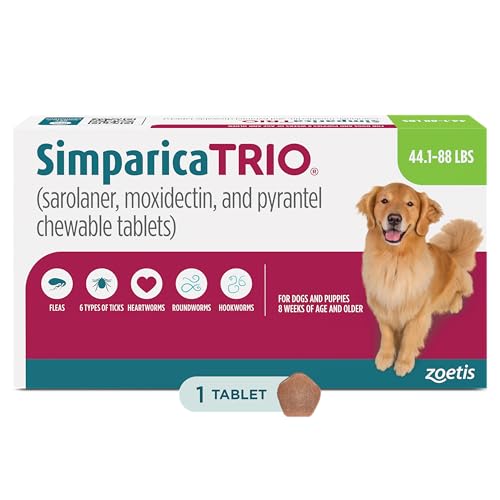
Simparica Trio Chewable Liver Flavor 44.1-88 lbs
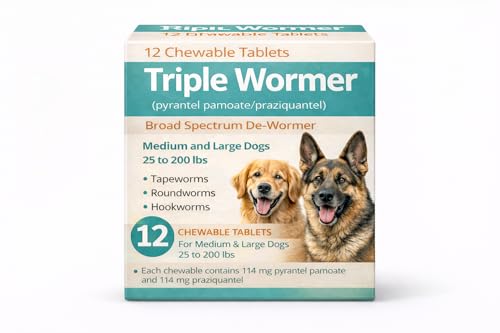
Pyrantel Pamoate & Praziquantel Tablet Medium & Large Dogs

Alltripal Broad Spectrum Dog Dewormer Liquid 4 OZ

ViNet Broad Spectrum Dewormer Liquid
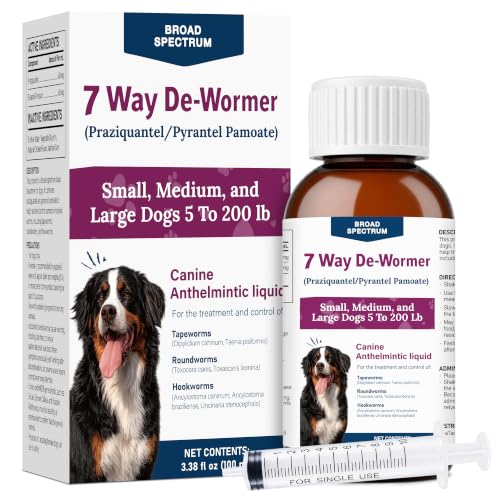
Cestolife Praziquantel & Pyrantel Liquid 100 mL
More Details On Our Top Picks
This packet keeps things deliberately simple: three single-gram doses, pre-measured, with nothing to mix or measure at home. For a first-time dog owner dealing with a suspected roundworm situation, that lack of prep work matters more than any fancy formulation.
The listing itself is sparse on technical detail, which is worth knowing before you order. You get a health-supplies product in a fixed three-dose format, and not much published information about active ingredients or weight guidance, so confirming suitability with your vet before dosing is a sensible step.
Strong Points
- Pre-portioned gram doses remove measuring errors entirely.
- Three-dose supply covers an initial treatment course in one purchase.
- Compact packet slips into a travel bag or glovebox easily.
Things To Consider
- The listing provides limited ingredient and dosing detail, so vet confirmation is wise.
- Fixed dose count means larger or multi-dog households may run through it fast.
Who It Suits Best
First-time owners who want a low-cost, no-fuss starting point for a single small or medium dog.
A Better Fit Elsewhere
Owners of big breeds will find more documented coverage in the Luckyond Pyrantel Pamoate & Praziquantel tablet, which spells out its 25 to 200 pound range clearly.
Where the ThePetStop packet serves one dog at a time, this Giarcidia suspension is built for homes with both species under one roof. One bottle handles tapeworm management for cats and dogs, which cuts down the number of products cluttering your pet cabinet.
The roasted chicken flavor does real work here. Picky eaters are the usual reason liquid dewormers end up half-wasted, and mixing this one into food or squirting it directly from the included 3ml dropper gives you two escape routes when a dog turns stubborn.
What We Like
- Cross-species formula covers cats and dogs from a single bottle.
- Weight-based chart takes the math out of dosing different-sized pets.
- Chicken flavor improves acceptance in fussy animals, per the manufacturer’s design intent.
- Flexible administration: straight from the dropper or stirred into meals.
Minor Gripes
- Tapeworm-only focus means roundworm or hookworm cases need a broader product.
- Liquid bottles can leak in transit, a complaint occasionally reported with similar suspensions.
Feature Snapshot
Made For
Houses with a cat and a dog sharing space, where a single tapeworm-focused bottle simplifies the routine.
Where A Sibling Pick Shines
Roundworm-heavy situations call for the Alltripal broad spectrum liquid instead, since it lists whipworms and ascarids alongside tapeworms.
This is the prescription-tier option on the list, and the difference shows immediately. One monthly liver-flavored chew covers heartworm, six tick species, fleas, roundworms, and hookworms, collapsing what used to be two or three separate products into a single treat your dog will actually take.
The manufacturer’s studies supporting its regulatory clearance showed full heartworm protection from a single dose, and it’s cleared for puppies from eight weeks old weighing at least 2.8 pounds. Because it acts on fleas before they lay eggs, it also interrupts the flea-tapeworm cycle indirectly. The trade-off is cost and the prescription requirement, so a vet visit comes first.
Reasons To Buy
- Triple-category coverage replaces multiple monthly products.
- Acts against six tick types, including the Gulf Coast and Asian longhorned tick.
- Flea control before egg-laying breaks infestation cycles.
- Treats and controls roundworms and hookworms alongside the external parasites.
- Liver flavor and chew format suit dogs that refuse pills.
Small Caveats
- Requires a veterinary prescription, adding a step before purchase.
- This size band tops out at 88 pounds, so giant breeds need a different variant.
At A Glance
Right Fit For
Owners committed to year-round, vet-supervised parasite prevention for a medium or large dog in a tick-heavy region.
Swap It Out When
Anyone avoiding prescriptions should reach for the Cestolife liquid, which uses comparable active ingredients without the vet gatekeeping.
Luckyond pairs two of the most established deworming actives in veterinary use. Pyrantel pamoate handles roundworms and hookworms, while praziquantel targets tapeworms, so one chewable covers the three worms most commonly diagnosed in adult dogs.
The 25 to 200 pound range is the headline here. Owners of German Shepherds, Labradors, and other large breeds often find OTC options capped well below their dog’s weight, forcing awkward dose-splitting. A chewable format also beats hiding tablets in cheese, though some strong-jawed dogs have been known to spit chews out, so a quick check of the floor afterwards never hurts.
Highlights
- Dual-ingredient formula covers roundworms, hookworms, and tapeworms together.
- Weight range extends to 200 lbs, rare among non-prescription options.
- Chewable form skips the wrestling match of pill pockets.
- No preparation steps, just dose as part of the regular care routine.
Points To Note
- Not intended for small dogs under 25 pounds.
- Whipworm coverage isn’t specified, unlike some liquid rivals.
Quick Facts
Who Will Love This
Owners of large and extra-large breed dogs wanting documented dual-active coverage without a prescription.
Consider Something Else When
Small-breed households should look at the Cestolife liquid, whose range starts at just 5 pounds.
Alltripal approaches worms as an ongoing wellness issue rather than a one-off crisis. The 4-ounce bottle ships with a schedule baked in: an initial serving, a follow-up a week later, then a top-up every two to three months. That rhythm suits owners who’d rather maintain than react.
The formula positions itself as a natural remedy working alongside the dog’s own immune response against hookworms, tapeworms, whipworms, and ascarids. Storage is straightforward too, anything at or below 86 degrees Fahrenheit, which covers most kitchens. The honest caveat: natural-support formulas generally act more gradually than pharmaceutical actives, so heavy infestations may still warrant a vet-directed product first.
Upsides
- Built-in repeat schedule supports long-term prevention habits.
- Covers four worm categories including whipworms, often missed by tablets.
- Generous 4-ounce volume suits multi-dog homes.
- Simple storage requirements fit ordinary household conditions.
Softer Spots
- Natural mechanism may work slower than drug-based alternatives.
- Bottle must stay cool, awkward during summer travel.
- Keep away from children and pets between doses, per package directions.
Details At A Glance
Whose Shelf It Belongs On
Prevention-minded owners of multiple dogs who prefer a gentle, scheduled maintenance approach over acute treatment.
Reach For A Different Pick When
A confirmed heavy infestation calls for the faster-acting Luckyond dual-active tablet instead.
Puppies are where ViNet earns its spot. The formula is rated safe from six weeks of age, earlier than most competitors here, which matters because roundworms pass from mother to litter and show up early. Weight-based dosing keeps amounts proportional as the pup grows.
The liquid mixes into food or goes down directly, useful for puppies still learning to accept handling. Coverage spans roundworms, hookworms, whipworms, and tapeworms, matching the Alltripal’s breadth. Where it differs is positioning: ViNet leans on digestive comfort and gut balance as selling points rather than a fixed maintenance calendar, giving you flexibility in how often you dose.
Bright Spots
- Suitable for puppies from six weeks old.
- All four common intestinal worm types covered.
- Mixes into food for stress-free feeding.
- Weight-based chart scales from tiny pups to adults.
Worth Noting
- No specific active ingredients named in the listing.
- Smaller bottle than the Alltripal for multi-dog rotation.
Best Suited To
New puppy owners managing their first roundworm cycle in a young dog.
Another Choice May Suit
Adult-dog homes wanting a documented dual-active formula will prefer the Luckyond chewable tablet.
Cestolife essentially combines the best traits of the picks above it: the same two proven actives found in the Luckyond tablet, delivered in a liquid like the ViNet, across a 5-to-200-pound span that fits nearly any dog. That versatility is why it closes this list.
Praziquantel and pyrantel pamoate each target different parasite groups, so together they cover tapeworms, roundworms, and hookworms with a track record vets know well. The 100 mL bottle includes a printed weight-based guide and a suggested follow-up schedule, which removes most of the guesswork for at-home dosing. Mixed into food or given straight, it tends to go down easier than tablets for anxious dogs.
Plus Points
- Dual pharmaceutical actives with established veterinary track records.
- Weight range from 5 to 200 lbs suits nearly every breed.
- Included dosing guide and follow-up schedule simplify home routines.
- Liquid format reduces stress for needle-shy or pill-spitting dogs.
Honest Caveats
- Whipworms aren’t listed among covered parasites.
- Liquid measuring demands slightly more care than a pre-scored tablet.
Core Details
The Right Fit
Households with dogs of different sizes that want pharmaceutical-grade actives in an easy-to-give liquid.
Where Another Pick Suits Better
Tick and flea season demands push owners toward Simparica Trio, whose monthly chew adds external parasite coverage these liquids lack.
What Matters Most Before Choosing Dog Worm Medications
Match The Product To The Worm
Not every dewormer handles every parasite. Tapeworm-focused liquids won’t touch whipworms, and natural-support formulas may act more slowly than praziquantel-based ones. A fecal test at the vet tells you exactly which worm you’re fighting, turning a guessing game into a targeted purchase.
Know Your Dog’s Weight And Age
Dosing charts live and die by accurate weights. Weigh your dog before ordering, since a product capped at 88 pounds won’t serve a Mastiff, and some formulas exclude puppies under a certain age. Underdosing wastes money; overdosing risks side effects.
Prescription Versus Over-The-Counter
Products like Simparica Trio require a vet’s authorization but bring multi-parasite coverage backed by formal studies. OTC liquids and tablets skip that step and cost less upfront. Your dog’s lifestyle, hunting, daycare, tick country, usually decides which tier makes sense.
Think In Routines, Not One-Offs
Reinfection is common because worm eggs persist in soil and bedding. Options with built-in repeat schedules, like the Alltripal’s every-two-to-three-months cadence, make prevention passive rather than something you have to remember.
Key Considerations Across These Picks
Where Shoppers Go Wrong
The classic error is buying on price alone and ending up with a formula that misses the worm your dog actually has. Skipping the weight check is a close second, especially for owners of dogs near a product’s upper limit. Read the covered-parasite list first, always.
The Case For Spending Up
Higher-tier options buy proven active ingredients, wider weight ranges, and third-party study backing. A prescription chew costs more per month but folds flea and tick control into the same dose, often offsetting separate products entirely.
Bottom Line
There’s no single right answer here, only the right match for your dog’s size, age, and exposure risk. Puppies do well with the ViNet liquid, large breeds get solid value from the Luckyond tablet, and busy households wanting everything handled at once will appreciate Simparica Trio. Confirm the worm type with your vet, weigh your dog honestly, and pick accordingly. Your dog’s tail will tell you the rest.
