

A dog that barks at every passing car can strain your patience and your relationship with the neighbors. The right bark collar steps in with a calm correction, usually a beep or vibration first, so training happens even when you’re not standing there. This shortlist focuses on humane options: adjustable sensitivity, escalation from sound to touch, and safety cutoffs that stop over-correction. Multi-dog households get extra attention here too, since several of these come as two-packs.
The Shortlist At A Glance

Keoge Smart Bark Collar 2 Pack, 5 Sensitivity Levels

Svtrat Smart Anti Bark Collar
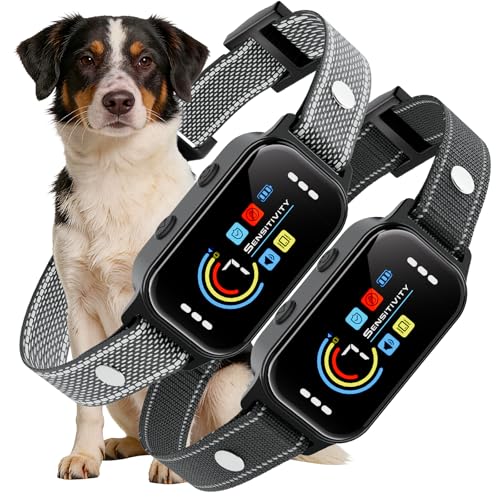
Koguzl Auto Anti Barking Collar 2 Pack, 11-120lbs

Koguzl Auto Anti Barking Collar, 5 Training Modes

Koguzl No Shock Bark Collar (Pink)

Kollgux Smart Anti Barking Collar, 4 Correction Modes

PawPets Rechargeable No Shock Anti Bark Collar 2 Pack
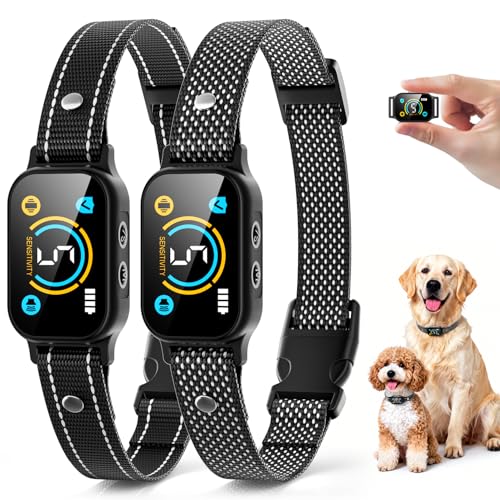
ianciu Ultra-Light Rechargeable Bark Collar 2 Pack
More Details On Our Top Picks
Owning two dogs that feed off each other’s barking is a special kind of chaos, and this Keoge two-pack exists for exactly that situation. Each collar runs automatically, escalating through beep and vibration before any static correction, with five sensitivity levels to match a quiet Shih Tzu or a booming German Shepherd.
The strap uses soft reflective nylon with double stitching, which matters more than it sounds: reflective trim keeps evening walks visible to drivers, and the adjustable band grows with a young dog instead of being replaced at six months.
Strong Points
- Two collars in one purchase, handy for multi-dog homes
- Reflective stitching improves visibility on dark walks
- Five sensitivity settings let you tune corrections per dog
- Beep-first escalation keeps early training gentle
Things To Consider
- The strap should be checked weekly for wear where it meets the housing
- You may find sensitivity tuning takes a few evenings to dial in
Who It Suits Best
Housesholds with two vocal dogs of different sizes who want one consistent training system.
A Better Fit Elsewhere
Single-dog owners who want granular mode control will get more mileage from the Svtrat Smart Anti Bark Collar.
Where the Keoge pack leans simple, the Svtrat goes deep on control. Its recognition chip filters out neighboring dogs’ barking, so the collar only reacts to the throat it’s strapped to. That single feature saves you from the classic apartment problem: your dog getting corrected because the dog next door started up.
Four modes split into no-shock options (beep alone, or beep plus vibration) and shock-assisted ones, each with seven intensity levels and seven sensitivity levels. A digital display shows status at a glance.
Highlights
- Smart chip ignores other dogs’ barking
- Four modes let you start shock-free and escalate only if needed
- Seven-level vibration and shock adjustment for fine tuning
- Digital display makes current mode obvious
- Built-in protection pauses the unit after excessive triggers
Worth Noting
- More buttons and levels mean a steeper learning curve than basic models
- The safety timeout reactivates via power button, an extra step some owners report forgetting
Quick Facts
Made For
Owners of persistent barkers who want the option to step up correction gradually without buying a second device.
Consider Something Else When
Dogs that respond to sound alone may never need this much hardware; the PawPets collar covers that case more gently.
This Koguzl two-pack spans dogs from 11 to 120 pounds, which covers nearly every breed short of a mastiff. The anti-misfire chip is the headline here: it’s designed to cut false triggers substantially, meaning fewer phantom corrections from door slams or passing trucks.
Operation stays refreshingly simple. Five training modes and seven sensitivity levels sit behind a single M button, so adjusting between a nervous beagle and a headstrong husky takes seconds rather than a manual.
Upsides
- Fits an unusually wide weight range per collar
- Anti-false-trigger chip reduces unnecessary corrections
- One-button mode switching keeps daily use frictionless
- Two units included for multi-dog value
Small Caveats
- Minimalist controls mean less visual feedback than display-equipped rivals like the Svtrat
- Owners commonly report needing to confirm strap tension on thick-coated breeds for reliable contact
At A Glance
Right Fit For
Value-focused owners with two medium-to-large dogs who want set-and-forget automation.
Swap It Out When
Toy-breed owners under 11 pounds should look at the ianciu ultra-light model instead.
This is the single-collar version of the Koguzl above, same 11-120 pound range, same five modes and seven sensitivity levels, minus the second unit. Everything said about the two-pack’s anti-misfire chip and one-button operation applies here too.
For a first-time trainer, that simplicity is genuinely useful. There’s no app, no pairing, no menu diving; press M until the mode you want appears and clip it on. The trade-off is that you’re paying per-collar efficiency, so single-dog homes get the better arithmetic here.
Reasons To Buy
- Identical feature set to the two-pack at a lower entry point
- Single-button interface suits beginners
- Automatic operation works while you’re out
- Wide breed compatibility from terriers to shepherds
Points To Note
- Buying two separately costs more than the bundled pack for multi-dog homes
- Contact points need periodic cleaning on long-haired dogs, a commonly reported maintenance task
Who Will Love This
First-time bark-collar users with one mid-size or large dog who want minimal fuss.
Another Choice May Suit
Households with two barkers save money and stay consistent with the Koguzl 2 Pack version reviewed above.
Some dogs simply don’t need static correction, and some owners won’t consider it regardless. This pink variant of the Koguzl line carries the same 11-120 pound fit, seven sensitivity levels, and anti-false-trigger chip, with a no-shock emphasis for sensitive temperaments.
In our view, that makes it the natural starting point within the Koguzl family: begin here, and only move to the shock-capable siblings if sound and vibration prove insufficient. The color is a small thing, but it helps in multi-dog homes where identical black collars get mixed up.
Bright Spots
- Gentle correction path suits anxious or rescue dogs
- Same wide 11-120 lb compatibility as the rest of the line
- Distinctive color prevents mix-ups between pets
- False-trigger filtering spares dogs random corrections
Softer Spots
- Stubborn barkers may outgrow sound-and-vibration-only correction
- Strap material benefits from occasional wiping down after muddy walks
Whose Shelf It Belongs On
Owners of timid, senior, or rescue dogs who want firm boundaries without static correction.
Reach For A Different Pick When
Headstrong breeds that ignore vibration are better served by the Svtrat’s graduated shock modes.
The Kollgux stretches the fit range further than anything else here, accepting dogs from 5 to 150 pounds. That bottom end matters: toy breeds often fall below other collars’ minimums, leaving owners with a device that either doesn’t trigger or overwhelms a six-pound body.
Four correction modes handle everything from backyard alert-barking to outdoor excitement, and the brand positions response speed as a core strength. For home-and-outdoor rotation, one collar covering both a Chihuahua and a Labrador is a practical simplification.
Plus Points
- Widest weight span in this roundup, 5 to 150 lbs
- Covers tiny breeds other collars exclude
- Four modes adapt to indoor and outdoor contexts
- Fast response timing suits reactive barkers
Room For Improvement
- At the smallest sizes, you’ll want to verify the strap cinches small enough for comfort
- Marketing claims around speed are manufacturer figures, so expectations deserve a modest cushion
Core Details
Who Should Grab It
Mixed-size households, especially those with a small dog under 10 pounds that standard collars can’t fit.
Not Your Match When
Two-dog homes wanting matched pairs will find better economics in the Koguzl 2 Pack.
The PawPets pair takes the gentlest approach on this list: the first bark earns only a sound signal, and vibration joins in only on subsequent barks. That graduated start gives nervous dogs a warning phase rather than an immediate surprise, which tends to build trust faster.
Both collars are fully automatic with no remote, ideal for dogs left alone during work hours. The kit includes USB cables, two prong types, and four color covers, so each dog gets a distinguishable look. Neck sizes run 9 to 22 inches for dogs 5 to 110 pounds.
What We Like
- Sound-first escalation is the softest correction curve available here
- Water-resistant straps handle rain and damp grass
- Swappable color covers personalize each collar
- Rechargeable design avoids battery purchases
- Works unattended while you’re away
Honest Caveats
- No static option means deeply stubborn barkers may tune it out
- Charging ports should be kept sealed and dry, a routine care point owners mention
Details At A Glance
Who It Suits Best
Owners of anxious or noise-sensitive dogs, and anyone uncomfortable with static correction entirely.
Where A Sibling Pick Shines
Dogs that ignore vibration will respond better to the Svtrat’s optional shock tiers.
Small dogs feel every ounce, and the ianciu pair is built around that reality with an ultra-light frame and a seamless back panel designed to prevent the chafing and raw spots that seamed collars sometimes cause. Three gentle modes (beep, vibration, or both together) keep correction firmly in humane territory.
An AI voice-recognition chip paired with motion sensors activates correction only on your dog’s own bark, ignoring background noise and other animals. Reflective nylon adds visibility for evening walks, and five sensitivity levels cover different home environments.
Standout Traits
- Seamless contact surface reduces skin irritation risk
- Extremely light build suits puppies and toy breeds
- Voice recognition plus motion sensing cuts false triggers
- Reflective strap improves nighttime safety
- Two rechargeable units included
Minor Gripes
- No static mode limits options for persistent large-dog barkers
- Reflective nylon threads can fray over months of daily wear, based on commonly reported wear patterns
Feature Snapshot
Built With In Mind
Owners of small breeds, puppies, and delicate-skinned dogs who prioritize comfort above all.
Look Elsewhere When
Large stubborn breeds needing stronger correction belong with the Kollgux or Svtrat instead.
Choosing Between These Humane Bark Collars
Match The Correction To The Temperament
A confident, headstrong dog often shrugs off beeps within days, while an anxious dog can be set back weeks by overly strong correction. Start with the softest mode available and give it a solid week before escalating. Sound-plus-vibration handles the majority of household barkers, and static tiers exist for the stubborn minority, not as a default.
Sensitivity And False Triggers
Sensitivity determines how loud a bark must be before the collar reacts. Too high, and dropped pans or a neighbor’s dog set it off; too low, and quiet whining barks slip through. Models with dedicated voice-recognition chips, like the ianciu and Svtrat, filter background noise electronically, which matters most in apartments and multi-dog homes.
Fit, Weight, And Comfort
Check both ends of the stated weight range against your dog. A collar rated 11-120 lbs won’t sit correctly on a Chihuahua, and contact points need to touch skin through fur without pressing hard. You should fit two fingers flat between strap and neck, then recheck weekly as coats change seasonally.
Power And Daily Routine
Rechargeable units avoid the ongoing cost of button cells, but they add a charging habit. Most owners plug in overnight once or twice a week. Automatic operation is non-negotiable for dogs left alone, since remote-controlled systems do nothing when nobody’s home.
Key Considerations Across These Picks
Traps First Timers Fall Into
The most common mistake is maxing sensitivity immediately, which teaches the dog to fear the collar rather than connect correction to barking. Another frequent misstep is skipping the fit check: loose contact points cause inconsistent triggering, and owners then blame the device. Give any collar a supervised first session before leaving your dog alone with it.
The Case For Spending Up
Higher-tier models buy smarter detection chips, finer adjustment granularity, and safety timeouts that pause correction automatically. Those features translate directly into fewer false corrections and faster learning. Budget picks still work well for calm, responsive dogs; the upgrade pays off mainly for stubborn breeds, noisy environments, or multi-dog households.
Frequently Asked Questions
Are vibration-based bark collars safe for small dogs?
Yes, provided the collar’s weight rating includes your dog’s size and the strap fits correctly. Models like the ianciu and PawPets are specifically built for smaller frames with lighter housings.
How long does bark collar training usually take?
Most dogs show noticeable improvement within one to two weeks of consistent use. Stubborn habits can take longer, and pairing the collar with verbal praise speeds results considerably.
Can a bark collar tell my dog’s bark from another dog’s?
Higher-end models use voice-recognition chips tuned to the wearing dog’s throat vibrations and sound. Basic models rely on sound alone, which raises false-trigger risk in shared walls or multi-dog homes.
Should the collar be worn all day?
Most manufacturers recommend limiting wear to 8-12 hours and removing it overnight. Continuous wear risks skin irritation at the contact points regardless of collar quality.
Do these collars work for whining or howling too?
Detection varies by model; many trigger primarily on barked vocalizations. Check the product page for the specific detection behavior before relying on it for howlers.
Bottom Line
The right pick comes down to your dog’s size and temperament more than any spec sheet. Small or sensitive dogs do best with the ianciu or PawPets, stubborn large breeds justify the Svtrat or Kollgux, and two-dog homes get the cleanest value from the Keoge or Koguzl packs. Whichever route you take, start gentle, supervise the first sessions, and let consistency do the heavy lifting.
