

A dog that bolts after squirrels or ignores recall at the park can turn every walk into a negotiation. A remote training collar gives you a way to communicate at a distance, using tone, vibration, or stimulation levels matched to your dog’s temperament. The seven options below cover everything from budget two-dog kits to professional-grade systems, so you can match the tool to your yard, your trails, and your dog’s size.
The Shortlist At A Glance

Asrcs Rechargeable Dog Training Collar IPX7 Waterproof

BLACKDOG Military Dog Shock Collar 4200ft (Dark Blue)

Educator ME-300 Micro E Collar with Remote

SLOPEHILL Dog Shock Collar 2 Dogs (8-140Lbs)
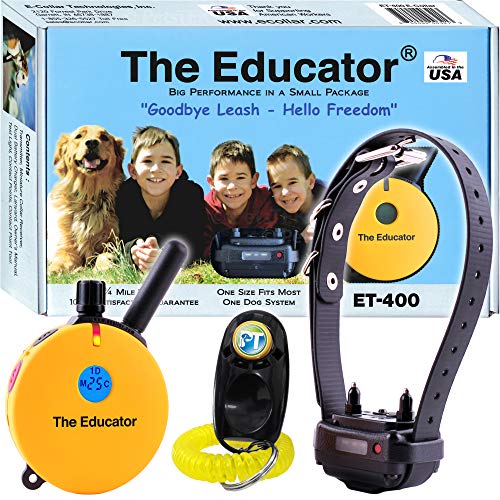
Educator ET-400 E Collar with Remote
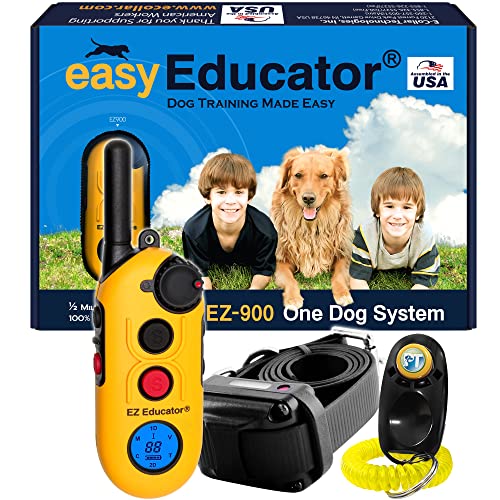
Educator EZ-900 E Collar with Remote
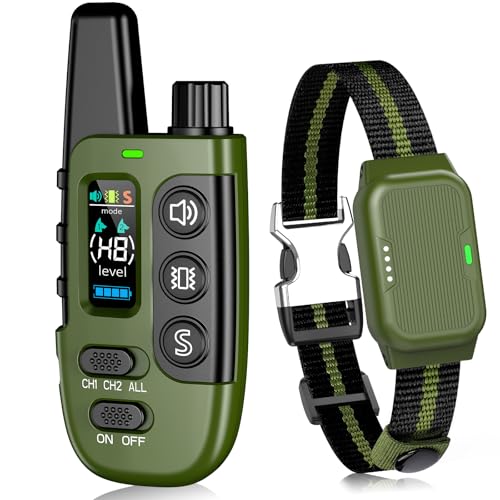
Snsng Dog Training Collar with Remote Control
More Details On Our Top Picks
The Asrcs kit hits a sweet spot most first-time owners care about: enough range to matter, four correction styles, and a receiver that shrugs off water. Its 2000-foot signal covers a typical suburban lot or an open park field without you needing line of sight.
Dual-channel support is the quiet standout here. One remote runs up to four dogs at once, which turns a chaotic multi-dog walk into something manageable. Compared with the pricier Educator units later in this list, you give up some stimulation granularity but keep everyday capability intact.
Strong Points
- 2000-foot range handles parks, yards, and trailheads with room to spare
- Four modes (flashlight, beep, vibration, adjustable shock) let you start gentle and escalate only when needed
- IPX7 waterproofing means rain, puddles, and swims won’t sideline training sessions
- Dual-channel remote trains multiple dogs from a single transmitter
- Rechargeable design cuts down on battery purchases over the collar’s life
Things To Consider
- Owners commonly report the contact points need periodic checking for tightness and skin comfort during long wear
- Stimulation adjustment is coarser than what dedicated training brands offer
Key Specs
Who It Suits Best
Households with one to four dogs that want a single dependable kit for backyard obedience and park recall work.
A Better Fit Elsewhere
Handlers who need finer stimulation steps for a sensitive dog will get more mileage from the Educator ME-300 below.
Where the Asrcs aims at suburban backyards, the BLACKDOG is built for people whose training ground is a muddy trail, a lake shore, or a storm-soaked mountain path. The reinforced casing is specified to take serious crush force and repeated bite contact, which matters for chewers and working breeds alike.
Range jumps to 4200 feet, and the manufacturer states the signal pushes through trees and rain. An ON/OFF safety switch on the remote prevents pocket activations, a small detail that saves headaches once you’ve carried a transmitter on a long hike.
What We Like
- Military-grade housing resists crushing and chewing damage
- 4200-foot reach suits beaches, forests, and open hunting terrain
- Signal penetration through obstacles keeps commands connected in dense cover
- Flashlight and strobe modes double as visibility aids on dark walks
- Three-month battery life reduces charging downtime between outings
Minor Gripes
- IP67 sealing covers submersion to one meter for 30 minutes, so deep or prolonged swimming sits outside its rating
- The rugged build adds bulk compared with slimmer micro collars like the Educator ME-300
Right Fit For
Hikers, hunters, and owners of strong-jawed breeds who train hard in rough weather and need gear that keeps pace.
Where A Sibling Pick Shines
Suburban owners who rarely leave paved paths will find the lighter Asrcs collar easier to live with day to day.
This is where the category gets serious about finesse. The ME-300 offers 100 distinct stimulation levels, which sounds excessive until your dog flinches at level 12 and ignores level 10. That granularity lets you land on the lowest effective setting instead of guessing between three coarse steps.
The “blunt” stimulation style Educator uses is designed to feel less sharp than typical static pulses, and the unit fits necks from 10 to 26 inches on dogs over 5 pounds. A night tracking light helps you spot a dark-coated dog across a dim yard, something neither budget kit here includes.
Highlights
- 100 stimulation levels allow precise, low-intensity communication
- Vibration and tone modes cover dogs that respond without static at all
- Lightweight micro receiver stays comfortable through all-day wear
- Night tracking light improves visibility during evening sessions
Small Caveats
- The 1/3-mile range trails the ET-400’s 3/4-mile reach for wide-open property work
- Charging contacts on precision receivers benefit from occasional cleaning to maintain reliable connection
At A Glance
Made For
Owners of sensitive, small, or reactive dogs who want professional-grade adjustability in a compact package.
Swap It Out When
Anyone training across acreage beyond a third of a mile should step up to the Educator ET-400 instead.
Two-dog households usually face an ugly choice: buy one collar and rotate it, or pay nearly double for a second receiver. The SLOPEHILL sidesteps that by shipping two collars in the box, both controlled from a single remote with a stated 4200-foot range.
Five modes are on tap, including beep, vibration, flashlight, safe shock, and a no-shock option for dogs that only need sound cues. In our view, that no-shock mode is the smartest inclusion here, since many dogs never progress past the beep stage anyway. Fit spans 8 to 140 pounds, so mismatched pairs like a beagle and a shepherd share one system cleanly.
Upsides
- Two receivers included means no rotating a single collar between dogs
- No-shock mode supports purely tone-based training from day one
- 4200-foot range matches far pricier single-collar kits
- Wide 8 to 140 lb fit covers mixed-size households
Points To Note
- Straps on budget kits tend to need replacement sooner than premium bands, especially with daily wear and swimming
- Build materials don’t carry the reinforced-casing claims of the BLACKDOG unit
Who Will Love This
Multi-dog homes that want complete coverage in one purchase without stretching into professional-system pricing.
Consider Something Else When
Single-dog owners chasing maximum durability per dollar may prefer the tougher BLACKDOG build instead.
Range is the headline here: three-quarters of a mile, the longest reach in this roundup. On a farm, a large unfenced property, or an open field trial ground, that distance is the difference between a usable tool and a wish.
The stopwatch-shaped transmitter is designed for eyes-up handling, letting you deliver quick nicks or constant bursts without staring at buttons. Like its sibling ME-300, it carries 100 blunt stimulation levels plus tone and vibration, so the refinement carries over even as the range triples. A night tracking light rounds out the package for low-light work.
Bright Spots
- 3/4-mile range outdistances every other pick in this guide
- Ergonomic remote supports fast corrections without looking down
- Both momentary nick and continuous stimulation delivery options
- Waterproof construction holds up in wet field conditions
- Night tracking light aids recovery of dark dogs after dusk
Softer Spots
- More capability than a typical suburban owner will ever use, so the spend can outrun the need
- Larger transmitter takes up more pocket space than compact remotes
Quick Facts
Whose Shelf It Belongs On
Rural owners, hunters, and anyone training across multiple acres where shorter-range systems simply drop out.
Reach For A Different Pick When
City and suburb handlers working inside normal yards will find the ME-300 delivers the same precision at a lower commitment.
The EZ-900 splits the difference between the ME-300’s compact reach and the ET-400’s long leash on distance, landing at half a mile. What sets it apart is the dial: 256 stimulation levels, more than double any other unit here, giving you near-infinite tuning room as your dog’s sensitivity becomes clear over weeks of use.
You still get the blunt stimulation profile, tone and vibration alternatives, and the night tracking light that defines the Educator line. Depending on your property size, that half-mile figure comfortably covers most rural lots while keeping the hardware a touch more manageable than the ET-400’s setup.
Plus Points
- 256 stimulation levels offer the finest adjustment in this roundup
- Half-mile range balances reach with everyday practicality
- Tone and vibration modes support non-static training approaches
- Night tracking light assists evening visibility
Worth Noting
- With this many levels, finding your dog’s baseline takes patience during early sessions
- Contact points should be checked regularly for fit and skin condition, a routine with any long-wear receiver
Details At A Glance
Who Should Grab It
Dedicated hobby trainers running structured programs who want maximum adjustment headroom without field-trial range.
Not Your Match When
Casual owners wanting simple button-and-go operation will find the SLOPEHILL kit less fiddly to learn.
Starting at the entry end of the market, the Snsng makes a sensible first collar. Three modes cover the essentials: eight selectable beep tones, 16 vibration steps, and 99 static levels, each adjustable independently so you can tailor output to a specific dog rather than accepting factory presets.
Dual-channel control manages two dogs separately, and a combined 1+2 mode fires commands to both at once, handy when two dogs bolt toward the same squirrel. You give up the extended range figures and reinforced builds of higher picks, but for basic household obedience the honest read is that this covers it.
Reasons To Buy
- Eight beep tones let you assign distinct cues per command
- 99 static levels provide reasonable granularity for a budget unit
- 1+2 broadcast mode corrects both dogs simultaneously in urgent moments
- Low entry cost makes it a low-stakes first collar
Areas To Watch
- Range and durability sit well below the Educator and BLACKDOG offerings
- As with most value receivers, keeping charging ports clean and dry extends usable life considerably
Feature Snapshot
Who Should Grab It
First-time collar users working on basic commands with one or two dogs close to home.
Another Choice May Suit
Once training moves to open fields or stubborn recall cases, the Educator EZ-900’s finer control earns its cost.
Choosing Between These Systems Without Guesswork
Range Should Match Your Terrain
A 2000-foot collar covers a quarter-acre lot and a public park with ease, while 4200 feet or three-quarters of a mile belongs to farms, beaches, and wooded acreage. Buying more range than your property demands wastes money; buying less leaves you shouting at a disconnected receiver. Measure your actual training space before committing.
Stimulation Granularity Beats Raw Power
The difference between 4 levels and 256 isn’t marketing, it’s whether you can find the exact lowest setting your dog notices. Sensitive dogs often react strongly to small changes, so fine steps prevent over-correction. Start every dog on tone or vibration before touching static, regardless of which kit you own.
Durability Follows Lifestyle
Swimmers and mud-lovers need genuine waterproof ratings like IPX7 or IP67, not just splash resistance. Chewers and rough play demand reinforced housings. Match the build spec to how your dog actually spends weekends, and the collar lasts years instead of months.
Multi-Dog Math Changes Everything
Two-dog kits like the SLOPEHILL change the cost equation entirely, since separate receivers otherwise double your spend. Dual-channel remotes also simplify handling, one transmitter in hand instead of juggling two.
Key Considerations Across These Picks
Traps First Timers Fall Into
The most common mistake is starting at too high an intensity, which teaches fear instead of obedience. Always begin with tone alone. Another frequent slip is skipping the strap-fit check: a loose receiver loses contact with the skin and stops working, while an overtight one irritates. Check fit weekly during heavy use.
The Case For Spending Up
Premium units earn their price through stimulation precision, verified waterproofing, and transmitters you can operate without looking down. Casual backyard training rarely needs that tier. Field work, sensitive dogs, or multi-year daily use is where the upgrade pays for itself in consistency and reliability.
Closing Thoughts
Every collar here solves the same core problem, communicating clearly with a dog at distance, just at different scales of range, precision, and toughness. Match the spec sheet to your actual terrain and your dog’s temperament, start gentle, stay consistent, and the right pick from this list will do its job quietly for years.
