

Camping with a dog sounds idyllic until your hound bolts after a squirrel into the treeline. A portable invisible fence gives you a boundary that travels with you, whether you’re parked at an RV site or setting up base at a friend’s acreage. Below you’ll find eight systems suited to different setups, from GPS collars with no monthly fees to expandable wireless transmitters and buried-wire kits. Each entry covers what works well, where the compromises sit, and which type of camper each one fits best.
The Shortlist At A Glance
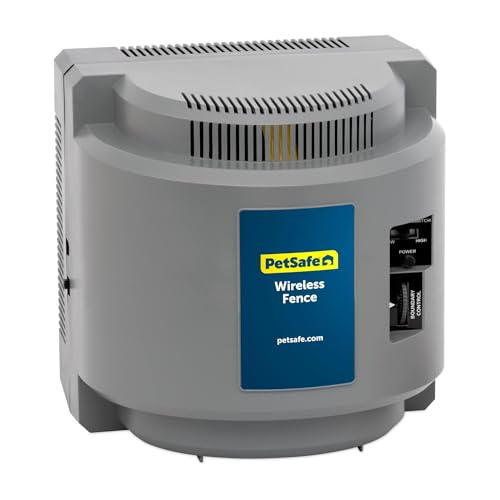
PetSafe Wireless Fence Extra Transmitter

GPS Wireless Dog Fence Collar 2 Modes 2 Pack
GPS Wireless Dog Fence Collar 2 Modes 1 Pack

Dogtra GPS Fence No Subscription IPX9K Collar

PcEoTllar Underground Electric Fence 2 Collars

MIMOFPET Wireless Dog Fence 2 Dogs with Remote

Jewyow 2026 Underground Dog Fence 2 Dogs

PetSafe Stay & Play 2-Dog Wireless Fence
More Details On Our Top Picks
This unit isn’t a standalone fence; it’s an add-on transmitter that widens the boundary of an existing PetSafe wireless setup by roughly half an acre. For campers whose rigs already run a PetSafe system, that means overlapping circular fields instead of buying an entirely new kit.
The practical payoff shows up at larger or irregular campsites, where one transmitter’s round coverage leaves dead corners. Two overlapping circles fill those gaps and give a high-energy dog more room to run. Coming from the parent company of the Invisible Fence brand, it slots into a mature ecosystem rather than a niche one.
Strong Points
- Adds roughly half an acre to a compatible PetSafe wireless boundary without replacing your current collars.
- Overlapping fields smooth out coverage gaps at L-shaped or oversized sites.
- Works for both dogs and cats within the PetSafe ecosystem.
- Backed by one of the longest-established names in pet containment.
Things To Consider
- It only makes sense if you already own a compatible PetSafe Stay & Play or Wireless Pet Containment system.
- Circular radio boundaries can drift near large metal objects, so placement takes some trial at crowded campgrounds.
Who It Suits Best
Owners who already run a PetSafe wireless collar and want more roaming room at big or awkwardly shaped sites.
A Better Fit Elsewhere
Starting from zero? The PetSafe Stay & Play 2-Dog Wireless Fence below gives you a complete kit in one box.
Where radio transmitters draw a circle around a base station, this DJNFGQ two-pack leans on GPS satellites to define the boundary. The collar listens for satellite signals and triggers correction as your dog approaches the line you’ve set, which makes it genuinely portable: no transmitter to plug in at the campsite.
That portability is the whole appeal for travelers. Arrive, power up, set your radius, and the boundary moves wherever you do. The trade-off is that GPS accuracy depends on open sky, so heavy tree cover can shift the effective line a bit. With no monthly fee attached, running costs stay at zero after purchase, which matters if you camp often.
Bright Spots
- Satellite-based boundary means nothing to bury, stake, or plug in at each new site.
- No subscription fees, so long-term cost is just the hardware itself.
- Two collars cover a pair of dogs from one purchase.
- Correction activates automatically as the dog nears the set limit.
Worth Noting
- Dense forest canopy can weaken satellite reception, softening boundary precision.
- You’ll want to recharge both collars before multi-day trips since there’s no hardwired power fallback.
Feature Snapshot
Made For
Boondockers and RV campers with two dogs who want a wire-free setup they can reconfigure at every stop.
Swap It Out When
One-dog owners can save money with the single-collar DJNFGQ pack reviewed next.
This is the single-collar version of the DJNFGQ system above, built on the same GPS satellite approach with the same two operating modes and no recurring fees. Everything said about portability applies here: the boundary lives in the collar, not in a base station, so setup at a new campsite takes minutes.
The honest read is that this is the entry point into satellite containment. You give up the second collar, and like its sibling, accuracy can wobble under thick canopy. For solo campers with one well-trained dog, though, it covers the core job at the lowest commitment level in this list.
Reasons To Buy
- Same GPS boundary flexibility as the two-pack at a lower entry point.
- No monthly fees keep ownership costs flat over time.
- Lightweight kit: one collar, nothing else to haul or store.
Small Caveats
- A second dog means buying a separate collar later, which erodes the savings.
- Boundary precision depends on clear sky view, a real factor under dense trees.
Right Fit For
Solo travelers and weekend tent campers with a single dog and light gear loads.
Another Choice May Suit
Running two dogs? Step up to the DJNFGQ 2-pack earlier in this list rather than piecing collars together.
Dogtra plays in a different league than the budget GPS collars above. The app lets you draw circular or fully custom-shaped boundaries, and once the fence is saved, the collar runs independently with no phone required. Up to 30 distinct fences can be stored, which suits people splitting time between home, a cabin, and regular campsites.
Protection comes layered: a warning zone, a primary fence, and two backup fences behind it. A return reminder using tone, vibration, or correction nudges a wandering dog back toward the line. The IPX9K rating (a high-pressure waterproofing standard) and 15-pound minimum weight signal a build meant for serious outdoor use on properties of three-quarters of an acre or more.
Standout Traits
- Custom-shaped boundaries match real property lines, not just circles.
- Four layers of protection reduce escape risk compared to single-zone systems.
- IPX9K waterproofing handles rain, mud, and river crossings.
- App is only needed during setup; the collar operates standalone afterward.
- No subscription fees despite the premium positioning.
Points To Note
- Designed for parcels of three-quarters of an acre or larger, so small campsites undersell it.
- The manufacturer advises removing the collar indoors, adding a daily routine step.
Details At A Glance
Who Will Love This
Owners of rural or large-parcel properties who want app-level control and layered safety without monthly bills.
Reach For A Different Pick When
Tight budgets are better served by the DJNFGQ single-collar GPS unit, which covers basic satellite containment for less.
Buried-wire systems are the old guard of invisible fencing, and this PcEoTllar kit shows why they persist. The included boundary wire encloses up to four-fifths of an acre, and because the loop sits underground, there’s no visible hardware and no signal drift from metal buildings or thick foliage.
Installation is straightforward in principle: lay the loop, connect both ends to the transmitter, power up, and sync the two included collars. An attached tag card helps you relocate the wire later, a small touch that saves real frustration. The catch for campers is obvious: you’re digging at every new location, so this fits semi-permanent sites far better than weekend hops.
Plus Points
- Wire loop covers up to 4/5 acre, generous for a temporary enclosure.
- Buried line stays unaffected by weather, terrain clutter, or signal interference.
- Two collars included for multi-dog setups.
- Tag card marks wire location for easy future maintenance.
Softer Spots
- Burying the wire at each new site is labor you won’t face with GPS options.
- Exposed wire creates trip hazards, so burial or careful staking is strongly advised.
Core Details
Whose Shelf It Belongs On
Long-stay campers and homesteaders who don’t mind one afternoon of digging for rock-solid reliability.
Consider Something Else When
Frequent movers will find the MIMOFPET wireless system below far less work per stop.
This MIMOFPET kit doubles as a containment system and a handheld training rig, which is its defining trick. The remote reaches roughly 5,900 feet, letting you correct behavior well beyond the fence line, something none of the pure containment picks here offer.
Correction options span beep, vibration across nine levels, and static across thirty, with the sensible advice to start low. Battery life is a genuine strength: up to 185 days on standby, dropping to about 85 hours with the fence function active. The IPX7 waterproofing shrugs off rain and splashes. One habit worth building: switch the fence mode off when idle, or you’ll burn through that standby figure quickly.
What We Like
- Remote control extends training reach to roughly 5,900 feet beyond containment.
- Three correction modes with wide adjustment ranges suit timid and stubborn dogs alike.
- 185-day standby battery minimizes charging chores between trips.
- IPX7 waterproof collars handle wet weather and water play.
- Two collars support a pair of large or medium dogs.
Minor Gripes
- Fence mode drains the battery fast when left on, so powering down between uses becomes routine.
- Thirty static levels demand careful dialing-in per dog to avoid over-correction.
Who Should Grab It
Owners actively training recall and manners alongside containment, especially with two energetic medium-to-large dogs.
Not Your Match When
Set-and-forget simplicity seekers will prefer the PetSafe Stay & Play system closing out this list.
The Jewyow kit keeps things modest: a wall-mounted, pre-wired transmitter and a 721-foot cord that frames roughly one acre of play space. Compared to the PcEoTllar’s four-fifths acre, coverage is slightly smaller, but the shorter loop also means faster installation at a new site.
The collars charge fully in about 1.5 hours, among the quicker top-ups in this category, and carry an IPX7 waterproof rating suitable for swimming, though prolonged submersion isn’t recommended. Note that this listing is positioned as an extra-collar option in some configurations, so confirm the full kit contents before ordering.
Highlights
- Fast 1.5-hour collar charging keeps downtime short between outings.
- IPX7-rated receivers tolerate rain and swimming sessions.
- Pre-wired transmitter simplifies first-time assembly.
- 721-foot loop defines about an acre of contained space.
Room For Improvement
- Some listings position this as an extra collar, so verify you’re getting the complete system.
- Long soaks aren’t advised despite the waterproof rating, a limit lake-loving dogs may test.
Quick Facts
Best Suited To
Weekend campers with one or two dogs who want a compact wired kit that deploys in an afternoon.
Look Elsewhere When
Needing maximum wired coverage points back to the PcEoTllar system and its larger 4/5-acre loop.
This is the complete-kit counterpart to the extra transmitter that opened this list. One base station projects a circular boundary covering up to three-quarters of an acre, and the box includes two collars plus boundary flags to start training immediately. Plug it in at the campsite, walk the perimeter with flags, and you’re operational the same day.
Training flexibility is the standout: a tone-only mode for sensitive dogs, plus five static levels for persistent ones, adjusted based on how each dog responds. Add-A-Dog collars extend capacity later. The circular-only shape is the main limitation at irregular sites, which is precisely where pairing it with the extra transmitter earns its keep.
Upsides
- Complete two-collar kit with flags, ready to train out of the box.
- Tone-only mode suits sound-sensitive or easily startled dogs.
- Five adjustable static levels accommodate stubborn temperaments.
- Expandable with additional Add-A-Dog collars as your pack grows.
- Compatible with the PetSafe extra transmitter for expanded coverage.
Honest Caveats
- Boundaries are strictly circular, so oddly shaped sites leave corners unprotected.
- Radio signals can fluctuate near large metal objects, common at RV parks.
At A Glance
The Right Fit
First-time invisible-fence owners wanting a trusted, complete system with gentle training options.
Where A Sibling Pick Shines
Already own this system? The PetSafe extra transmitter at number one is the natural expansion.
What Matters Most Before Choosing Invisible Dog Fences For Camping
Match The Technology To Your Movement Pattern
GPS collars win on portability since the boundary lives in the receiver and resets in minutes at each new site. Radio-transmitter systems project a reliable circle but depend on consistent power and open space. Buried-wire kits deliver the most stable boundary of all, yet every relocation means laying wire again. Campers who move weekly should weight portability heavily; seasonal residents can justify the dig.
Coverage Area And Terrain Reality
Manufacturer coverage figures assume ideal conditions. Dense tree canopy degrades GPS accuracy, metal RV bodies distort radio circles, and rocky ground complicates burial. Size your system one tier above your actual needs, and treat quoted acreage as a ceiling rather than a promise.
Correction Style And Dog Temperament
A timid border collie and a stubborn beagle need very different correction profiles. Tone-only modes protect sensitive dogs, while wider static ranges give room to escalate for determined roamers. Systems offering multiple modes let you start gentle and adjust, which is how responsible training actually works.
Ongoing Costs And Power Logistics
Subscription-free systems keep lifetime costs predictable, but all of them live and die by battery management. Check charge times and standby figures against your trip length, and build recharging into your packing routine before departure day.
Key Considerations Across These Picks
Traps First Timers Fall Into
The most common mistake is buying on acreage claims alone, then discovering canopy or metal interference shrinks the usable zone. Another frequent misstep: skipping the flag-training phase entirely. Dogs learn boundaries through repetition, and a week of supervised walks along the flagged line prevents most early escapes.
What Separates Premium From Basic
Higher-tier units buy layered protection zones, custom boundary shapes, and tougher waterproofing standards like IPX9K. Those features matter most on large rural properties with real escape consequences. Weekend campers on open ground rarely need them, and the savings fund better leashes and crates instead.
Frequently Asked Questions
Do invisible fences work at remote campsites?
Yes, provided the technology matches the environment. GPS collars need open sky, radio systems need power and clearance from metal, and wired kits need installable ground.
Can I use these systems for cats?
Some can. The PetSafe ecosystem explicitly supports both dogs and cats, though collar fit and correction levels should always suit the animal’s size.
How long does training usually take?
Most dogs grasp a flagged boundary within one to two weeks of short, supervised sessions. Stubborn or anxious temperaments may need longer.
Are monthly fees ever required?
None of the systems covered here charge subscriptions. All operate on purchased hardware alone, with costs limited to electricity for recharging.
Is static correction safe for my dog?
Modern collars use low-level stimulation comparable to a static shock from a doorknob, adjustable across levels. Start at the lowest setting and consult a trainer or veterinarian with any concerns about your specific dog.
Closing Remarks
The right choice comes down to how often you move and how your dog responds to correction. Frequent travelers should lean GPS, long-stay campers get the most from wired loops, and PetSafe’s ecosystem rewards anyone planning to grow their setup over time. Whichever direction you go, invest the training week up front; the hardware only works as well as the habits built around it.
