An invisible fence solves a problem every dog owner knows well: a beautiful yard your dog can’t safely enjoy off-leash. Whether you’re tired of watching a determined escape artist test the property line or you simply want containment without a physical fence blocking your view, these systems handle it. The eight options below cover both buried-wire setups and newer GPS-based collars, so there’s a fit whether your yard is a quarter acre or several acres. Each entry breaks down who it suits, where it falls short, and what daily ownership actually looks like.
The Shortlist At A Glance
PickWhy We Picked ItBest ForAction
Editor’s Choice
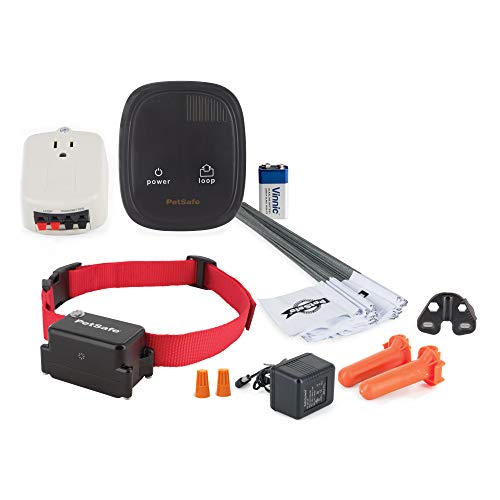
PetSafe Stubborn Dog In-Ground Fence
Stronger corrections for tough dogs
Headstrong escape artists

Premium Pick
Halo Collar 5 GPS Wireless Dog Fence
Dual-band GPS precision tracking
Tech-forward multi-property owners

Practical Pick
PetSafe YardMax In-Ground Fence
Correction fires past the line
Yards up to a third of an acre
![]()
Budget Friendly
DJNFGQ GPS Wireless Dog Fence Collar
Satellite boundaries, zero digging
Renters and first-timers

Feature Rich
Dogtra GPS Fence IPX9K Waterproof Collar
Layered virtual boundary zones
Large rural properties

Value Pick
PcEoTllar Underground Dog Fence System, 2 Collars
Two collars, big coverage
Multi-dog households

Reliable Runner Up
PetSafe Rechargeable In-Ground Fence
Months per charge, expandable
Low-maintenance owners

Upgrade Pick
PetSafe Guardian GPS Dog Fence
No-dig setup, subscription-free
DIYers avoiding trenching
More Details On Our Top Picks
Some dogs treat a standard boundary like a suggestion. This PetSafe kit exists for exactly that dog: the one who barrels through a mild tone-and-static warning without slowing down. The system uses a buried loop to define the perimeter, and the included receiver collar delivers stronger correction levels than PetSafe’s standard collars.
The catch is that this version ships without boundary wire, so you’ll source and lay your own loop before anything works. That’s a real weekend project involving trenching or stapling along a fence line, but it also means you control the layout completely. Owners with large or oddly shaped lots tend to appreciate that flexibility.
Strong Points
- ✓Higher-intensity correction settings give persistent dogs a boundary they actually respect.
- ✓You choose your own wire gauge and length, so the perimeter matches your lot instead of a preset kit.
- ✓PetSafe’s long track record means replacement collars, batteries, and parts stay easy to find years later.
- ✓Buried wire keeps the yard visually open, with no posts or panels to mow around.
Worth Noting
- •Wire isn’t included, so budget extra time and money for the loop installation itself.
- •Trenching through rocky or root-heavy soil is genuinely hard work, as many first-time installers report.
Who It Suits Best
Owners of strong-willed, high-drive dogs on properties where they’re willing to invest a day in proper wire installation.
Where A Sibling Pick Shines
Gentler or average-tempered dogs are better matched to the PetSafe Rechargeable In-Ground Fence, which pairs standard correction levels with a rechargeable collar.
Check on Amazon
Where buried-wire systems measure position relative to a cable, the Halo Collar 5 works out the dog’s location from satellites alone. It pulls signals from two GPS frequency bands, L1 and L5, then refines them with real-time corrections from a network of ground stations. The result, per Halo’s own materials, is positioning accurate to roughly two feet.
In practice that matters most near the boundary line, where cheaper GPS collars drift and fire false corrections. Realtree camo styling aside, this is a premium-priced device aimed at people who move between multiple properties or want fences drawn in an app rather than dug into soil.
Bright Spots
- ✓Dual-frequency GPS with ground-station corrections keeps the boundary tight instead of wandering.
- ✓No wire, transmitter, or trenching means setup happens entirely in software.
- ✓Drift prevention and obstacle filtering reduce the phantom corrections common on basic GPS units.
Trade Offs
- •This sits at the top of the price range here, a serious investment compared to wired kits.
- •GPS accuracy depends on sky view, so heavy tree canopy may soften performance in wooded yards.
At A Glance
| | Feature | Specification | Why It Matters |
|---|
| Positioning | Dual-frequency L1 and L5 GPS satellites | Two bands together resist signal bounce and drift |
| Corrections | Real-time updates from global ground stations | Keeps reported location close to the dog’s true spot |
| Stated accuracy | Within about 2 feet of actual position | Fewer false warnings near the boundary edge |
Made For
Tech-comfortable owners with larger or irregular properties who want app-drawn fences and don’t mind paying for precision hardware.
A Better Fit Elsewhere
Shoppers wanting similar satellite containment at a friendlier price should look at the PetSafe Guardian GPS Dog Fence later in this list.
View Latest Price
Most in-ground systems warn the dog before he crosses the wire, which shrinks usable yard space by the width of the correction zone. YardMax flips that logic: the correction triggers after the dog steps over the line, so nearly the whole covered area stays playable. On a third-of-an-acre lot, that difference is easy to feel underfoot.
The kit arrives with a 20-gauge wire loop and flags for training, plus support for adding extra collars if a second dog joins the household. Compared to the Stubborn Dog model reviewed above, corrections run gentler, which suits most temperaments better.
Reasons To Buy
- ✓Post-line correction design reclaims yard space that standard systems sacrifice to their warning zone.
- ✓Includes 500 feet of 20-gauge wire, enough to enclose up to a third of an acre out of the box.
- ✓Add-a-dog collar compatibility lets one transmitter serve multiple pets.
Small Caveats
- •You still bury the wire yourself, and lawn edgers or aerators are a commonly reported way loops get cut.
- •A third of an acre is the ceiling without buying additional wire.
Key Specs
| | Feature | Specification | Why It Matters |
|---|
| Coverage | Up to 1/3 acre with included wire | Suits typical suburban backyards |
| Wire | 20-gauge kit included | Ready to lay on day one |
| Expansion | Add-a-Dog collar supported | One system covers several pets |
Right Fit For
Suburban owners with modest yards who want maximum play space and a straightforward single-dog-or-two setup.
Reach For A Different Pick When
Lots beyond a third of an acre call for the PcEoTllar underground system, whose included wiring stretches to roughly four-fifths of an acre.
Check Latest Price
This collar takes the simplest possible approach to containment: draw a circular boundary around a center point, and the collar watches GPS satellites to enforce it. There’s no transmitter, no wire, and no recurring service plan attached. For renters or anyone testing whether their dog will accept a virtual boundary, that low commitment is the whole appeal.
The honest trade-off shows up in precision. Consumer-grade single-band GPS wanders more than the dual-frequency systems from Halo or Dogtra, so you may find the effective line shifts a few feet depending on weather and tree cover. Setting the radius generously helps. Two operating modes give some flexibility in how corrections are delivered, though the listing keeps deeper detail sparse.
Upsides
- ✓Satellite-based boundary means zero installation, useful for rental homes where digging isn’t allowed.
- ✓No ongoing subscription cost keeps the total cost of ownership flat after purchase.
- ✓Single-collar simplicity makes this an easy first system to learn on.
Things To Consider
- •Basic GPS positioning is less stable near dense tree cover, so boundaries can feel loose in wooded yards.
- •Only one collar ships in this pack, unlike the two-collar PcEoTllar bundle.
Who Should Grab It
First-time owners and renters with open, unobstructed yards who want to try wireless containment without a big outlay.
Swap It Out When
Anyone needing tighter positional accuracy should step up to the Dogtra GPS Fence, which layers correction data for steadier lines.
View on Amazon
Dogtra built its reputation on e-collars for hunting and working dogs, and that DNA shows here. Instead of one boundary, the system stacks four layers: a warning zone, a primary fence, and two backup fences behind it. A return reminder nudges a wandering dog back toward home before things escalate. Boundaries are drawn in the companion app, which supports up to 30 saved fences, and the collar runs independently once configured.
Two constraints deserve attention. The design targets properties of three-quarters of an acre or larger, so small suburban lots aren’t the intended canvas. And Dogtra specifies removing the collar indoors, a habit worth building since the unit is rated IPX9K, meaning it withstands high-pressure, high-temperature water jets, a step beyond ordinary splash resistance.
Highlights
- ✓Layered zones give a dog graduated feedback instead of one abrupt correction at the line.
- ✓Custom-shaped boundaries follow your actual property edges, not just circles.
- ✓IPX9K waterproofing shrugs off ponds, downpours, and muddy lake days.
- ✓Thirty storable fences suit owners juggling home, cabin, and field locations.
- ✓Guidance tones and vibration offer non-static options during training.
Honest Caveats
- •Not intended for properties under 3/4 acre, which rules out many suburban plots.
- •The collar must come off indoors, an easy routine to forget at first.
Quick Facts
| | Feature | Specification | Why It Matters |
|---|
| Zones | Warning zone, primary fence, two backup fences | Graduated response reduces startle corrections |
| Waterproofing | IPX9K rating | Handles immersion and pressurized spray |
| Capacity | Up to 30 custom fences via app | Multiple properties from one collar |
| Minimum property size | 3/4 acre or larger | Designed for open rural space |
| Dog weight | 15 lbs and up | Covers most adult breeds |
Who Will Love This
Rural and hobby-farm owners with several acres, water-loving dogs, and a need for multiple saved boundaries.
Look Elsewhere When
Smaller-lot owners will get more value from the PetSafe YardMax, whose included wire fits a third of an acre neatly.
Check on Amazon
Two dogs usually means buying a second collar separately, which is what makes this PcEoTllar bundle stand out: both receivers ship in the box. The included boundary wire covers up to four-fifths of an acre, comfortably more than either PetSafe wired kit here, and the manufacturer recommends burying the line to keep it out of reach of mowers and foot traffic.
Installation follows the familiar pattern: connect both wire ends to the transmitter, power everything on, and walk the boundary with a collar to confirm the signal. An included tag card marks where the wire runs, a small touch that saves headaches when you eventually dig nearby. Build quality sits a tier below PetSafe’s, in our view, but the price reflects that honestly.
Plus Points
- ✓Two collars included means a two-dog household needs nothing else to get started.
- ✓Nearly an acre of coverage from the supplied wire beats the bundled length of comparable kits.
- ✓Tag-card labeling makes future yard projects less risky for the hidden loop.
Minor Gripes
- •Brand support and spare-parts availability trail established names like PetSafe.
- •Burying the full loop across a large lot is a multi-hour dig for most owners.
The Right Fit
Multi-dog families with generous yards who prioritize coverage and included hardware over brand pedigree.
Consider Something Else When
Single-dog owners on smaller lots will find the PetSafe Rechargeable In-Ground Fence simpler and better supported.
View Latest Price
Battery costs are the quiet tax of owning any containment collar, and this PetSafe kit removes most of it. The receiver recharges in two to three hours, and a full charge lasts up to two months depending on use, according to the manufacturer. Over several years that adds up to real savings versus swapping disposable cells.
The wired side mirrors the YardMax reviewed earlier: a 20-gauge loop covering up to a third of an acre, expandable to 25 acres with extra wire and flags sold separately. Correction behavior is conventional, warning before the line, so very headstrong dogs remain better served by the Stubborn Dog kit at the top of this list. The collar strap ships as a two-pack sized six to twenty-six inches, fitting a wide range of neck sizes.
What We Like
- ✓Rechargeable receiver eliminates recurring battery purchases for years of ownership.
- ✓Compatibility across PetSafe in-ground collars makes mixed-pet households easier to manage.
- ✓Expandability to 25 acres gives growing properties room to scale.
Room For Improvement
- •Standard pre-line correction may not deter truly determined escape artists.
- •Charging becomes part of your routine, even if only every couple of months.
Core Details
| | Feature | Specification | Why It Matters |
|---|
| Battery | Recharges in 2-3 hours, lasts up to 2 months | Minimal maintenance between charges |
| Coverage | 1/3 acre included, expandable to 25 acres | Room to grow with added wire |
| Collar straps | Two straps, 6-26 inches | Fits small through large breeds |
Built With In Mind
Set-and-forget owners who want dependable wired containment without a battery-buying habit.
Skip It When
Dogs that ignore mild static warnings belong with the PetSafe Stubborn Dog In-Ground Fence instead.
Check Latest Price
GPS fences live or die on how accurately they know where the dog actually is, and PetSafe leans on its AccuGuard technology here, a positioning stack the company describes as its most precise yet. Unlike the Halo Collar 5’s dual-band approach, Guardian focuses on delivering solid accuracy without a subscription hanging off the hardware, which changes the long-term math considerably.
Setup requires no digging and no buried loop, so moving the boundary or relocating entirely is a software task rather than a shovel job. Coverage starts at three-quarters of an acre, matching the Dogtra’s minimum footprint. For owners who want satellite containment from an established brand with wide parts availability, this hits a sensible middle path between budget GPS collars and premium dual-frequency units.
Standout Traits
- ✓AccuGuard positioning aims to keep the virtual line where you drew it.
- ✓No recurring service charges after the initial purchase.
- ✓Wire-free setup means the fence moves with you, useful for seasonal relocations.
- ✓PetSafe’s ecosystem simplifies finding replacement straps and accessories.
Points To Note
- •Three-quarters of an acre minimum leaves small urban yards outside its comfort zone.
- •Satellite reception still depends on open sky, so heavily wooded lots may see softer performance.
Feature Snapshot
| | Feature | Specification | Why It Matters |
|---|
| Positioning tech | AccuGuard GPS | PetSafe’s stated highest-accuracy platform |
| Subscription | None required | No recurring cost after purchase |
| Coverage | 3/4 acre and up | Suits larger suburban and rural lots |
| Installation | No digging or wire burial | Setup measured in minutes, not weekends |
Best Suited To
Owners of larger open properties who want brand-backed GPS containment without ongoing service commitments.
Another Choice May Suit
Those wanting maximum positional precision regardless of cost will prefer the dual-frequency Halo Collar 5.
View on Amazon
What Matters Most Before You Choose
Wired Versus GPS Containment
Buried-wire systems deliver the most consistent boundary because the loop physically defines the line, rain or shine. The trade-off is labor: laying 500 feet of wire across a yard is an afternoon of trenching, and lawn equipment remains the most common cause of broken loops. GPS collars invert that equation, trading installation effort for dependence on satellite reception.
Match The System To Your Dog
Temperament matters more than breed. Determined, high-drive dogs often shrug off standard static levels, which is precisely why the Stubborn Dog variant exists with stronger correction tiers. Sensitive or small dogs generally do better with systems offering tone and vibration stages, like the Dogtra, before any static engages.
Property Size And Shape
Check the minimum and maximum coverage honestly. Several GPS options here require three-quarters of an acre or more, while wired kits top out at a third of an acre unless you buy extra wire. Irregular lots favor systems with custom-shaped boundaries over fixed-radius circles.
Key Considerations Across These Picks
Traps First Timers Fall Into
Skipping the flag-training phase is the classic error. Dogs need one to two weeks of supervised boundary walks before trusting the collar alone, and owners who rush this stage commonly report confusion and repeated escapes. The second trap is ignoring wire depth: loops laid too shallow fall victim to aerators and edgers within a season.
When Paying More Pays Off
Premium GPS units justify their cost through positioning accuracy, which directly reduces false corrections near the line. Dual-frequency receivers and layered warning zones mean fewer startling surprises for the dog. On basic models, expect to compensate with wider buffer margins and more patient training instead.
Frequently Asked Questions
QHow deep should boundary wire be buried?
Two to four inches is the usual recommendation, deep enough to dodge rakes and aerators yet shallow enough to repair easily. Some owners staple it along existing fence lines instead to skip digging altogether.
QDo invisible fences work for every dog?
No system overrides instinct entirely, and prey-driven dogs chasing wildlife have been known to push through corrections. Success depends heavily on consistent training and matching correction intensity to temperament.
QAre GPS fences accurate enough for small yards?
Consumer GPS typically drifts a few feet, which is why most models specify minimum lot sizes around three-quarters of an acre. Small yards are better served by buried wire, where the boundary is physically fixed.
QCan multiple dogs share one system?
Yes, provided the transmitter supports additional collars. PetSafe’s add-a-dog compatibility and the PcEoTllar two-collar bundle both make multi-pet setups straightforward.
QWhat happens during a power outage?
Wired transmitters stop broadcasting when power cuts, releasing the boundary until electricity returns. Battery-powered GPS collars keep enforcing their stored boundary independently, which is worth weighing in storm-prone areas.
Closing Thoughts
The right invisible fence comes down to three honest questions: how much digging you’ll tolerate, how stubborn your dog is, and how much sky your yard can see. Wired kits like the PetSafe YardMax reward a weekend of labor with rock-solid boundaries, while GPS options such as the Guardian trade that certainty for speed and flexibility. Whichever direction fits your property, commit fully to the training phase, because the collar only works as well as the habits you build around it. Your dog’s first season of safe off-leash freedom starts with that choice.


