

A dog that bolts through an open gate or chases a squirrel across the road is every owner’s quiet fear. Buried-wire kits and GPS collars solve that without turning your yard into a cage, but the options vary wildly in accuracy, setup effort, and ongoing cost. This shortlist covers both approaches so you can match containment to your property, your budget, and your dog’s temperament.
The Shortlist At A Glance

Halo Collar 5 GPS Wireless Dog Fence
Halo Collar 5 GPS Wireless Dog Fence
Extreme Dog Fence Pro Grade Kit 2-Dog 500 ft
Extreme Dog Fence Pro Grade Kit 2-Dog 1000 ft
DJNFGQ GPS Wireless Dog Fence Collar No Monthly Fee

Dogtra GPS Fence IPX9K Waterproof Collar

PcEoTllar Underground Dog Fence System 2 Collars
More Details On Our Top Picks
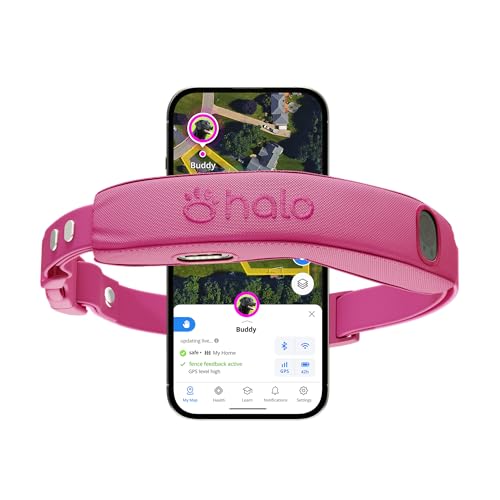
The Halo Collar 5 skips buried wire entirely and draws its fence from satellites instead. It reads both L1 and L5 GPS bands, which matters because single-band collars tend to wander near tree cover or tall buildings. Real-time corrections from ground stations keep positioning tight enough that the collar knows where your dog actually stands.
For anyone who moves often or rents, that portability is the whole point. You can redraw a boundary at a campsite or a relative’s farm from your phone, something the wired kits below simply cannot do.
Strong Points
- Dual-frequency GPS holds its position where cheaper collars drift
- No digging, no trenching, no transmitter to mount in the garage
- Boundaries travel with you, useful for vacations and second homes
- Training features are built into the same collar, so one device covers two jobs
Things To Consider
- Ongoing service costs may apply depending on the plan you choose, so check current terms before committing
- GPS accuracy depends partly on sky view; heavily wooded lots can see some wobble
Who It Suits Best
Renters, frequent travelers, and owners of irregular-shaped properties who want containment without touching a shovel.
Where Another Pick Suits Better
Owners of large rural acreage who prefer a one-time purchase will find the Extreme Dog Fence Pro Grade Kit 500 ft more economical over years of use.
This listing carries the same Halo Collar 5 hardware as our first entry, offered as a separate variant on the retailer’s catalog. Functionally you get the identical package: satellite-based fencing, app setup, and the dual-band positioning that keeps the virtual line honest within a couple of feet.
The practical difference comes down to availability and seller terms rather than capability. Compare the two listings side by side before ordering, since stock and bundled accessories can differ between them.
What We Like
- Same Precision+ positioning as the primary listing
- An alternate source when the first variant runs out of stock
- Wire-free setup suits patios, farms, and everything between
Worth Noting
- Owners commonly report a learning curve with the companion app during first-time boundary drawing
- Collar fit needs checking on very small neck sizes before purchase
Right Fit For
Tech-comfortable owners who want premium GPS containment and don’t mind managing settings through a phone.
A Better Fit Elsewhere
Shoppers wanting zero recurring fees should look at the DJNFGQ GPS Wireless Dog Fence Collar instead, which operates without a subscription.
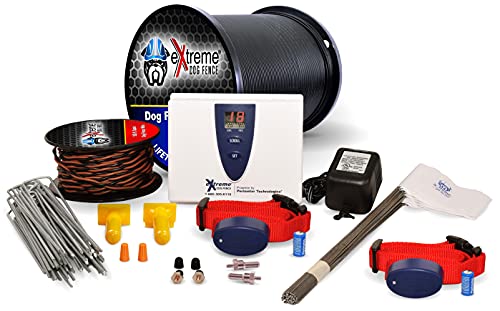
Where the Halo leans on satellites, this Extreme Dog Fence kit relies on a physical loop of wire you bury around your yard. The trade-off is real work up front in exchange for rock-steady signal that never depends on sky view. The electronics have been refreshed with three antennas plus battery, temperature, and wire checks, so faults announce themselves early.
Swimmers are the standout case here. The receiver is fully waterproof and submersible to ten feet, meaning lake days don’t require removing the collar.
Highlights
- Covers up to 10 acres with the included hardware
- Receiver survives full submersion, ideal for dogs who swim
- Built-in diagnostics flag wire breaks and low batteries before failures happen
- Two-dog capacity out of the box
Trade Offs
- Trenching 500 feet of wire takes an afternoon, longer in rocky soil
- Boundary shape is fixed once installed; moving it means re-burying
Key Specs
Made For
Homeowners with water-loving dogs and stable property lines who plan to stay put for years.
Consider Something Else When
Anyone renting or planning a move soon will be better served by the portable Halo Collar 5, since buried wire stays behind.
This is the sibling of the 500-foot kit above, carrying the same three-antenna electronics, self-checking system, and submersible receiver. The difference is pure reach: double the boundary wire means you can enclose larger frontages or add interior loops, such as keeping dogs away from a garden bed, without buying spools separately.
For a half-acre corner lot or a small farmette, that extra footage removes the most common upgrade regret owners report with starter kits.
Upsides
- 1000 ft of wire supports bigger perimeters and interior exclusion zones
- Same 10-acre maximum coverage and swim-proof receiver as the smaller kit
- Two collars included for multi-dog households
Minor Gripes
- Laying twice the wire doubles installation time, realistically a full weekend project
- Excess coiled wire must be stored dry to prevent corrosion at connection points
At A Glance
Who Will Love This
Rural and large-suburban homeowners ready to invest a weekend in permanent, subscription-free containment.
Not Your Match When
Smaller urban yards waste the extra wire here; the PcEoTllar system covers modest plots more affordably.
This collar brings GPS fencing down to a no-frills price point, and crucially it does so without a monthly bill. The unit pulls position data from satellites, lets you set a circular boundary, and triggers correction prompts as your dog nears the edge. Two operating modes give you some say in how firm those reminders feel.
Honestly, you’re trading polish for savings. Compared with the Halo Collar 5’s ground-station corrections, expect looser precision under heavy tree cover, though open yards generally behave fine.
Bright Spots
- No subscription fees at any point of ownership
- Single-collar pack keeps the entry cost low
- Adjustable radius adapts to different yard sizes
- Rechargeable design avoids disposable battery spending
Points To Note
- GPS-only positioning can drift near dense foliage or structures
- One collar means adding a second dog requires a second unit
Quick Facts
The Right Fit
Budget-conscious owners of open, unobstructed yards who want basic wireless containment.
Look Elsewhere When
Wooded properties need the steadier dual-frequency tracking of the Halo Collar 5 to avoid false corrections.
Dogtra built its reputation on training collars, and that pedigree shows in how thoughtfully this fence communicates. Boundaries come in layers: a warning zone first, then the primary fence, then two backup fences behind it. A return reminder nudges a wandering dog back toward home before corrections even enter the picture.
You draw circular or custom-shaped fences in the free app, and after setup the collar runs independently, no phone required. Properties under three-quarters of an acre aren’t the intended use, and the collar should come off indoors.
Reasons To Buy
- Layered warning-plus-backup zones reduce surprise corrections
- IPX9K-rated housing shrugs off mud, rain, and rough play
- Up to 30 stored fences suit multi-property owners
- No subscription fees after purchase
- Custom shapes follow odd lot lines better than fixed circles
Softer Spots
- Not intended for properties smaller than 3/4 acre
- Rated for dogs 15 lbs and up, ruling out toy breeds
Feature Snapshot
Best Suited To
Owners of medium and large dogs on spacious rural or suburban parcels who want layered safety logic.
Another Choice May Suit
Small-dog households should weigh the PcEoTllar underground system, whose lighter receivers suit petite necks better.
For a first wired fence, this PcEoTllar kit keeps things refreshingly simple. Enough border wire ships in the box to enclose roughly four-fifths of an acre, and the manufacturer includes what you need to test the loop before backfilling. Connect both wire ends to the transmitter, power up, switch on the collars, done.
A locating tag card helps you remember where the wire runs, which sounds minor until you’re planting shrubs two summers later. Burying the line keeps walkways clear and the yard visually untouched.
Plus Points
- Two collars cover a pair of dogs immediately
- Beginner-friendly assembly with testing gear included
- Buried wire leaves no visible fencing anywhere
- Works for cats as well as dogs per the maker
Small Caveats
- Wire breaks from digging or landscaping are the most commonly reported issue; mark the route well
- Coverage tops out below what the Extreme Dog Fence kits handle
Core Details
Whose Shelf It Belongs On
First-time installers with standard suburban lots and one or two pets who want dependable basics.
Swap It Out When
Owners needing acreage-scale coverage should step up to the Extreme Dog Fence Pro Grade Kit 1000 ft.
What Matters Most Before Choosing Electric Fences For Dog
Wired Versus GPS: Know Your Property First
Buried-wire systems deliver consistent signal regardless of weather or tree canopy, but they demand installation labor and suit only properties you own long term. GPS collars install in minutes and travel with you, yet their accuracy depends on open sky. Walk your lot honestly: heavy woods push you toward wire, while rental situations all but demand satellite-based containment.
Correction Style And Your Dog’s Temperament
Most systems layer tone and vibration ahead of any static correction, and sensitive or anxious dogs do best when those gentler cues carry the training load. Check the minimum weight ratings too; several collars here start at 15 lbs, leaving toy breeds with fewer options.
Total Cost Of Ownership
The sticker is only the opening number. Subscription-based GPS collars add monthly fees, wired kits occasionally need replacement wire or batteries, and rechargeable designs save money over replaceable cells. A cheap collar with a costly plan can outspend a pricier standalone unit within a year.
Key Considerations Across These Picks
Traps First Timers Fall Into
Skipping the training phase is the biggest misstep; a fence only works if your dog learns the boundary through supervised sessions over a week or two. Shoppers also underestimate wire length, then splice extensions that become future break points. Measure your perimeter before ordering anything.
Why Top Tier Costs More
Premium units like the Halo Collar 5 pay for dual-frequency receivers, ground-station corrections, and software refinement, which translate into fewer false corrections and tighter boundaries. Basic models work fine in open yards; the upgrade earns its keep on wooded, irregular, or multi-property setups.
Closing Thoughts
Every option here solves the same problem differently, and the right answer follows from your property more than from any spec sheet. Renters and travelers lean GPS, settled homeowners lean wire, and swimmers need that submersible receiver. Match the tool to your yard, commit to the training period, and your dog gains safe freedom without a visible fence in sight.
