

Raising a litter without mom nearby is stressful, and the first six weeks leave no room for guesswork. The right formula keeps weight gain steady, digestion calm, and vet visits rare. This roundup covers ready-to-feed liquids, mixable powders, weaning foods, and the feeding gear that ties it all together, so you can match a product to your kitten’s exact stage.
The Shortlist At A Glance

Delectables Squeeze Up Kitten Variety Pack 0.5 oz (20 Tubes)

PetAg KMR Kitten Milk Replacer Liquid 11 oz (Pack of 4)

Weruva Kitten Fur Baby Favorites Variety Pack 3oz (12 Cans)
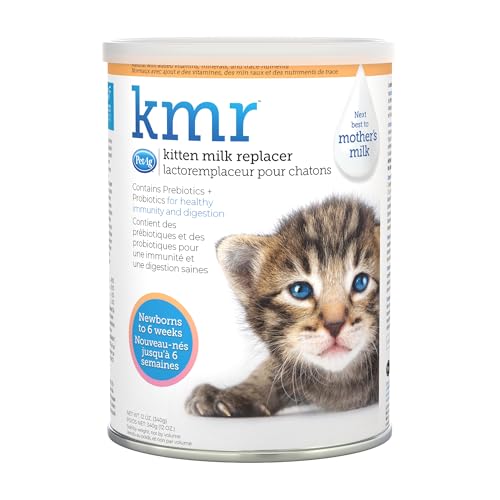
Pet-Ag KMR Kitten Milk Replacer Powder 12 oz

Exotic Nutrition Specialty Milk Replacer 8.8 oz

Doggiema Kitten Feeder Bottle with Nipples and Syringes

Pet-Ag PetLac Pet Powder 10.5 oz

Choolip Berry Good Milk Pouches for Cats & Dogs (100mL x 8)
More Details On Our Top Picks
This is not a milk replacer in the strict sense, and that distinction matters. It is a thick tuna-and-salmon puree built for kittens under a year old, squeezed straight from a half-ounce tube onto your finger or a dish. Where the KMR formulas below handle the newborn phase, this one shines during weaning, when kittens are learning that food comes from something other than a bottle.
The texture does double duty as a socialization tool. Hand-feeding a shy foster kitten from a tube builds trust faster than any bowl ever will, and the small portion size means nothing goes stale between feedings.
Strong Points
- Roughly 90% moisture content versus about 10% in dry treats, which quietly boosts daily water intake.
- Vitamins A and D plus calcium and phosphorus support bone growth and eye development during the fastest growth window.
- Grain-free recipe with no added fillers, by-products, or preservatives, so sensitive stomachs tend to cope well.
- Tube format makes portion control effortless and mess nearly nonexistent.
Things To Consider
- It is a treat or topper, not complete nutrition, so it cannot replace formula or balanced kitten food.
- Opened tubes are single-serving by design; buying the larger multi-packs only pays off with multiple kittens.
Who It Suits Best
Foster carers and new owners working through the weaning stage who want a low-mess bonding treat alongside a proper formula.
A Better Fit Elsewhere
Newborns under four weeks need actual nutrition, and the PetAg KMR Liquid below is purpose-built for exactly that job.
At 3 a.m., with a squealing orphan in one hand, nobody wants to measure powder and whisk warm water. That is where this ready-to-feed liquid earns its place. PetAg positions KMR as the closest nutritional match to mother’s milk among widely available formulas, covering protein, fat, and carbohydrate ratios for kittens from birth to six weeks.
The liquid format removes mixing error entirely, which matters more than most first-time fosters expect. Underfeeding or over-diluting a batch is one of the most common ways hand-reared litters fall behind, and a pre-mixed product sidesteps that risk completely.
What We Like
- No measuring or mixing, just gentle shaking and warming to body temperature before each feeding.
- Prebiotics and probiotics support gut health and immunity during weeks when kittens cannot yet regulate much on their own.
- A special fiber blend aids digestion, and owners commonly report fewer loose stools compared with generic formulas.
- Four 11-oz cans cover a good stretch of a single-kitten feeding schedule.
Worth Noting
- An opened container must be refrigerated and discarded after 72 hours, so plan portions carefully with one kitten.
- Liquid costs more per feeding than the powdered version lower on this list.
Key Specs
Made For
First-time foster carers who value speed and consistency over cost per ounce during the fragile newborn weeks.
Where A Sibling Pick Shines
Larger litters get better economics from the Pet-Ag KMR Powder further down, since you mix only what each feeding requires.
Once kittens are lapping reliably, wet food takes over from formula, and this variety pack smooths that handoff. Twelve three-ounce cans span seven different recipes, including chicken breast in hydrating puree, chicken and pumpkin in gravy, and chicken-and-tuna combinations. That range lets you discover preferences early instead of committing to a case of one flavor a finicky kitten rejects.
Weruva skips grain, gluten, carrageenan, and artificial flavors across the lineup, an ingredient list that reads cleaner than most grocery-shelf kitten foods. The gravy and puree textures also keep hydration high, which pairs nicely with the Delectables tubes reviewed earlier if you want both a meal and a treat in rotation.
Highlights
- Seven recipes in one box, ideal for mapping out what your kitten actually enjoys.
- Grain-free, gluten-free, and free of carrageenan or artificial flavorings.
- High-moisture gravies and purees support hydration through the transition off milk.
- Three-ounce cans suit small appetites with less waste than larger tins.
Small Caveats
- Not a milk replacer; kittens under four weeks still need a dedicated formula like KMR.
- With seven flavors, some cans will inevitably become favorites while others linger.
Right Fit For
Owners moving four-to-eight-week-old kittens onto solid food who want variety without buying full cases per flavor.
Swap It Out When
Very young or unweaned kittens belong on the PetAg KMR Liquid above until they lap confidently on their own.
Same science as the liquid KMR, different logistics. The powder carries the identical nutritional profile, matched closely to queen’s milk in protein, fat, and carbohydrates, with prebiotics, probiotics, vitamins, minerals, and trace nutrients layered in. The difference shows up at feeding time: you whisk one part powder into two parts warm water, making exactly the volume your litter needs right now.
For anyone fostering a full litter, that flexibility translates into real savings and far less refrigerated waste. The honest trade-off is prep work. Mixing takes a minute or two, and the manufacturer warns against blenders, which whip in air and can upset tiny stomachs.
Plus Points
- Mix per feeding, so nothing sits in the fridge past its usable window.
- Identical digestibility credentials to the liquid version, including the fiber blend for gut health.
- A 12-oz can stretches considerably further than canned liquid for multi-kitten households.
Points To Note
- Prepared batches should be consumed within 24 hours, so late-night feeds require fresh mixing.
- Clumping can occur in humid kitchens; store the can sealed and dry.
Quick Facts
Best Suited To
Experienced fosters and rescue volunteers running multiple kittens who want formula economics without sacrificing nutrition.
Consider Something Else When
Solo-kitten owners who dread measuring at 3 a.m. will find the ready-to-feed PetAg KMR Liquid worth the extra cost.
Most milk replacers are species-specific, and that becomes awkward when a rescued animal arrives and you are not entirely sure what it is. Exotic Nutrition builds this powder for baby squirrels, rabbits, opossums, and raccoons, formulated to mirror mother’s milk across protein, fat, and carbohydrates. The proteins are instantized, meaning they disperse into water easily without clumping, which speeds up mixing when an animal needs feeding quickly.
Cat-specific buyers should pause here though. While some rehabilitators have used generalist replacers on kittens in a pinch, the PetAg KMR options earlier in this list are engineered around feline nutritional requirements and remain the safer default for cats.
Bright Spots
- One can covers several common orphaned wildlife species, useful for rehabbers juggling rescues.
- Instantized proteins mix smoothly and digest readily.
- Enriched with quality protein sources, vitamins, minerals, and essential amino acids for development.
Honest Caveats
- Not formulated specifically for kittens, so it works better as a wildlife tool than a feline staple.
- Smaller 8.8-oz size means frequent reordering during a busy rehabilitation season.
Whose Shelf It Belongs On
Licensed wildlife rehabilitators and rural homeowners who regularly encounter orphaned squirrels, rabbits, or opossums.
Reach For A Different Pick When
Kittens deserve a cat-formulated option, and the Pet-Ag KMR Powder handles feline needs with far greater precision.
Formula is useless without a delivery method, and weak newborns often refuse standard bottle nipples. This Doggiema set covers both paths: a 60 ml bottle with soft silicone nipples for strong nursers, plus syringes for the tiniest or weakest kittens who cannot generate suction yet. The bottle sits at a 45-degree angle, letting a kitten drink while lying flat, which mirrors how they would nurse from their mother.
That angled design also spares your wrist during marathon sessions. Anyone who has held a rigid bottle through eight daily feedings knows how quickly fatigue sets in, and the ergonomic shape genuinely helps there.
Reasons To Buy
- Five replacement nipples plus three syringes, so a lost or damaged part never halts a feeding schedule.
- 45-degree angle supports natural lying-down nursing posture.
- Syringe backup covers neonates too weak to suckle from a nipple.
- Lightweight build stays comfortable through long sessions.
Softer Spots
- Silicone nipples need thorough cleaning and inspection after every use; worn tips can flow too fast.
- The 60 ml capacity suits single kittens; large litters mean frequent refills.
Details At A Glance
Who Should Grab It
Anyone hand-raising newborn kittens who wants a complete feeding kit rather than sourcing bottles and syringes separately.
Not Your Match When
Owners already past the bottle stage should skip straight to the Weruva variety pack for weaning-age appetites.
PetLac occupies the middle ground between the kitten-specific KMR line and the wildlife-focused Exotic Nutrition can. It is a generalist milk replacer aimed at orphaned, rejected, nursing, or weaning pets of many kinds, mixed at one part powder to two parts room-temperature water. PetAg also notes it suits stressed adult animals needing highly digestible nutrients, which gives it a second life beyond the nursery.
For a kitten-only household, the KMR products remain the sharper tools. But in homes juggling a nursing litter alongside other young animals, one can that serves everyone simplifies the pantry considerably.
Standout Traits
- Complete nutrition profile supporting growth across multiple pet species.
- Doubles as a digestible nutrient source for stressed adults recovering from illness or travel.
- Palatable enough that reluctant eaters generally take to it without coaxing.
Room For Improvement
- Reconstituted batches last only 24 hours refrigerated, tighter than some competing powders.
- Less precisely tuned to feline needs than the dedicated KMR formulas.
Spec Overview
The Right Fit
Multi-species homes and small homesteads that want one reliable replacer covering kittens, puppies, and other young animals.
Another Choice May Suit
Kitten-only fosters get tighter feline targeting from the Pet-Ag KMR Powder, which was designed around cat milk composition.
Once kittens are weaned, cow’s milk becomes a digestive gamble because most adult cats lose the ability to process lactose, the sugar naturally found in milk. Choolip solves that with lactase, an enzyme that breaks lactose down before it reaches the bowl. Developed by a veterinarian, these 100 ml pouches start from Grade-A cow’s milk and layer in cranberry, CoQ10, glucosamine, and omega-3 fatty acids for urinary tract and joint support.
The resealable pouch travels well and pours cleanly, serving chilled or at room temperature as a drink, topper, or reward. In a multi-pet home, one box covers cats and dogs alike, which echoes the household-friendly thinking behind PetLac but in a fresher, modern format.
Upsides
- Lactose-free formulation means sensitive stomachs can enjoy milk without the usual upset.
- Cranberry, CoQ10, glucosamine, and omega-3 add functional support for bladder, kidney, and joints.
- Free of grains, gluten, carrageenan, preservatives, and artificial colors or flavors.
- Resealable pouches store neatly and survive travel.
Minor Gripes
- A supplement-style drink, not a milk replacer, so it cannot nourish unweaned newborns.
- Eight small pouches go quickly in multi-pet homes; larger packs make more sense long term.
Core Details
Perfect Match For
Owners of weaned kittens and adult cats who want a safe, functional milk treat without lactose drama.
Look Elsewhere When
Unweaned kittens under four weeks need true formula, and the PetAg KMR Liquid remains the dependable choice there.
What Matters Most Before Choosing Kitten Milk Replacers
Match The Product To The Age Window
Newborns to six-week-olds need a complete formula such as KMR, nothing else. From roughly four weeks onward, weaning foods like the Weruva cans and Delectables tubes take over. Buying ahead of your kitten’s actual stage wastes money and risks improper nutrition.
Liquid Versus Powder
Ready-to-feed liquids eliminate mixing mistakes and save precious minutes during night feeds. Powders cost less per prepared ounce and let you batch exactly what a litter needs. Solo-kitten owners usually favor liquid; foster volunteers with multiple mouths lean powder.
Digestibility Features That Count
Prebiotics and probiotics feed beneficial gut bacteria, while fiber blends firm up stools. Kittens with recurring loose stool on a basic formula often settle once switched to a blend containing those additions.
Don’t Forget Delivery Gear
The finest formula fails without a nipple a kitten will accept. A feeder kit with spare nipples and syringes, like the Doggiema set, prevents a cracked or clogged nipple from derailing a feeding schedule at the worst possible moment.
Key Considerations Across These Picks
Traps First Timers Fall Into
The biggest mistake is feeding cow’s milk straight from the fridge; most cats cannot digest lactose, and diarrhea follows fast. Another common slip is treating treats like meals. Puree tubes and lactose-free milks supplement a diet, they do not replace formula or complete kitten food. Check age ranges on the label before opening anything.
What Separates Premium From Basic
Higher-tier formulas add prebiotics, probiotics, and targeted vitamin blends that show up as steadier weight gain and firmer stools. You pay more per ounce, but with a fragile newborn, fewer digestive setbacks typically justify the difference. Budget powders work well once kittens are thriving and eating reliably.
Frequently Asked Questions
Can regular cow’s milk replace kitten formula?
No, cow’s milk lacks the fat and protein ratios kittens require and contains lactose most cats cannot digest. Use a purpose-made replacer instead.
How long do kittens need milk replacer?
Most kittens nurse or take formula until four to five weeks, then transition to wet food by eight weeks. Your veterinarian can confirm readiness based on weight and teeth.
How do I warm formula safely?
Warm it to roughly body temperature using a bowl of warm water, never a microwave, which creates hot spots. Test a drop on your wrist before feeding.
What is the difference between KMR and PetLac?
KMR is formulated specifically around queen’s milk for kittens, while PetLac is a broader multi-species replacer. Kitten-only households benefit from the tighter feline targeting of KMR.
How should leftover prepared formula be stored?
Refrigerate immediately in a sealed container and follow the label window, typically 24 hours for mixed powder and 72 hours for opened liquid. Discard anything left beyond that point.
Closing Thoughts
Hand-raising a kitten is demanding work, but the right supplies remove most of the guesswork. Start with a stage-appropriate formula, add a dependable feeder kit, then bring in weaning foods and treats as your kitten grows. Every pick here earned its place through clear labeling, sensible nutrition, and practical design. Whichever route fits your situation, your kitten’s steady weight gain will tell you it is working.
