Mice love the same things you do: a warm engine bay in January, a quiet pantry shelf, a stored RV nobody checks until spring. The damage they leave behind, chewed wiring and shredded insulation, costs real money to fix. Electronic repellents offer a hands-off answer, pushing rodents out with sound instead of traps or poison. This shortlist covers plug-in units for indoor rooms plus under-hood models built for vehicles, so you can match the tool to the actual problem you’re facing.
The Shortlist At A Glance
PickWhy We Picked ItBest ForAction

Editor’s Choice
MouseBlocker Prox Plug-in Rodent Deterrent
Strong long-term storage power
Garages and sheds
Value Pick
Jqely Ultrasonic Indoor Pest Repeller 6 Pack
Six units per pack
Whole-home coverage

Everyday Favorite
Jqely Ultrasonic Indoor Pest Repeller 10 Pack
Covers many rooms at once
Larger homes

Practical Pick
TERMX Ultrasonic Mice Repellent Indoor
No-touch four-mode design
Mess-free households

Heavy Duty Pick
MouseBlocker 12V Under Hood Rodent Deterrent
Battery-powered constant output
Vehicles and equipment
Premium Pick
MouseBlocker Prox 12V Under Hood Deterrent
Aluminum case, dual LEDs
Severe rodent pressure

Compact Choice
Molding Excellence Ultrasonic Pest Repeller
Wide single-room coverage
Apartments and offices
More Details On Our Top Picks
The brand positions this plug-in version of its Pro unit specifically for storage stretches longer than two weeks, which tells you something about its intent. It’s built for the garage, shed, or shop where a car, tractor, or snowmobile sits untouched while mice move in.
About the size of a deck of cards, it runs off any standard 120V outlet through a 30-inch cord, so placement near the protected vehicle stays flexible. Owners commonly report it shrugging off both extreme heat and deep cold, which matters in unheated spaces.
Strong Points
- ✓Runs continuously from wall power, so there are no batteries to die mid-winter
- ✓Works across cars, trucks, boats, ATVs, and farm gear wherever 120V exists
- ✓Tolerates the temperature swings typical of sheds and detached garages
- ✓Small footprint tucks behind storage without hogging outlet space
Things To Consider
- •Needs an outlet within reach of the vehicle, which limits placement in some shops
- •Overkill for a single apartment room compared with cheaper plug-ins like the Jqely pack
Key Specs
| | Feature | Specification | Why It Matters |
|---|
| Power source | 120V plug-in with 30-inch cord | Continuous operation without battery swaps |
| Footprint | Roughly deck-of-cards size | Fits tight corners near stored vehicles |
| Environment rating | Handles extreme heat and cold | Suitable for unheated garages and sheds |
Who It Suits Best
Anyone storing a vehicle or machine for weeks at a time in a garage, barn, or shop with accessible outlets.
Where A Sibling Pick Shines
For protection that travels with the vehicle itself rather than staying tied to a wall socket, the MouseBlocker 12V Under Hood model below is the stronger match.
View on Amazon
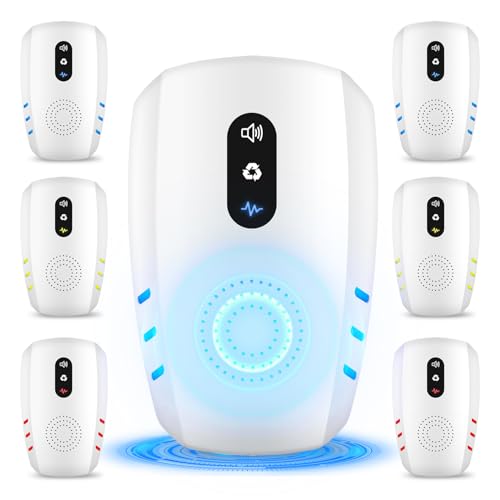
Ultrasonic means sound pitched above human hearing, typically above 20kHz, which is why these units stay silent to your ears while bothering pests. This six-pack spreads that coverage across several rooms at once, one outlet at a time.
The multi-frequency output spans roughly 10kHz to 65kHz, a wide band aimed at mice along with roaches, ants, spiders, and mosquitoes. Three selectable modes let you shift frequencies, useful because pests can reportedly acclimate to a single steady tone over time.
Highlights
- ✓Six units cover a whole floor or small home without buying singles
- ✓Wide 10kHz-65kHz range targets more than just mice
- ✓Three modes help counter pest adaptation to one fixed tone
- ✓Plug-in setup takes seconds, no bait or cleanup involved
Worth Noting
- •Sound doesn’t pass through walls well, so each room needs its own unit
- •Some pets, especially rodents and certain dogs, may react to ultrasonic output
Quick Facts
| | Feature | Specification | Why It Matters |
|---|
| Frequency range | 10kHz-65kHz multi-frequency | Broader pest targeting than single-tone units |
| Modes | Three adjustable settings | Reduces habituation risk |
| Pack size | Six repellers | Multi-room coverage in one purchase |
Made For
Households wanting low-effort, mess-free deterrence across kitchens, basements, and bedrooms simultaneously.
Swap It Out When
Larger homes with ten-plus rooms get better value from the same brand’s 10-pack listed next.
Check Latest Price
Same hardware as the six-pack above, stretched to ten units. Because ultrasonic waves stop at walls and absorb into soft furnishings, room count drives how many plugs you actually need, and bigger homes burn through a six-pack fast.
You still get the three-mode switching and the broad 10kHz-65kHz frequency spread, so behavior matches its smaller sibling exactly. The honest read is that this is purely a quantity decision: identical technology, more outlets covered.
Upsides
- ✓Ten units handle multi-level homes or apartments plus a garage office
- ✓Spares remain if a unit fails or an outlet gets repurposed
- ✓Same three-mode flexibility against mice, roaches, ants, and spiders
Minor Gripes
- •Wasteful for studio apartments where two or three units would suffice
- •Requires enough free outlets in every target room, a real constraint in older homes
Right Fit For
Families in larger houses who want every bedroom, kitchen, and basement corner plugged in from day one.
Another Choice May Suit
Smaller spaces make more sense with the six-pack version, or the single-room-focused Molding Excellence unit further down.
View on Amazon
Where the Jqely packs win on volume, the TERMX leans on flexibility. Four operating modes give you more granular control over output than most budget plug-ins manage, letting you adjust the approach depending on which pest is causing trouble.
The no-touch framing is the practical hook here: nothing to set, empty, or dispose of, which suits households that would rather not deal with trap cleanup at all. In our view it’s a sensible middle option between bare-bones single-mode units and pricier multi-room kits.
Reasons To Buy
- ✓Four modes offer finer tuning than typical three-mode competitors
- ✓No-touch operation means zero mess, zero disposal, zero maintenance routine
- ✓Plug-in format works in any standard indoor outlet
Softer Spots
- •Single-unit packaging means buying multiples for whole-home coverage
- •Owners commonly report needing one device per room since ultrasound won’t cross walls
Who Will Love This
Renters and tidy-minded homeowners who want adjustable deterrence without committing to a bulk pack.
Reach For A Different Pick When
Multi-room coverage on a budget points you back to the Jqely six-pack instead.
Check on Amazon
This is the pick for the classic winter nightmare: opening the hood to find a nest sitting on your wiring harness. It mounts directly in the engine bay and draws power from the vehicle’s own battery through a simple two-wire hookup.
Output hits 85 decibels at a frequency chosen to read like a jackhammer to rodents, making the engine compartment an unpleasant place to settle in. The unit tolerates high under-hood heat, sub-zero cold, and moisture, and it’s about the size of a playing-card deck.
Bright Spots
- ✓Vehicle-battery power means it never goes dead like flashlight-style battery units
- ✓85-decibel targeted output discourages nesting before wiring damage starts
- ✓Rated for heat, freezing cold, and damp conditions common in engine bays
- ✓Transfers easily between cars, tractors, snowmobiles, or boat engines
Points To Note
- •Two-wire installation requires basic comfort working under the hood
- •Constant draw adds a small parasitic load, worth considering for vehicles parked many months
At A Glance
| | Feature | Specification | Why It Matters |
|---|
| Power | 12V direct-to-battery, two wires | No batteries to check or corrode |
| Output | 85 dB ultrasonic frequency | Disruptive to nesting rodents |
| Durability | Heat, freeze, and moisture tolerant | Survives real engine-bay conditions |
Who Should Grab It
Commuters and rural drivers parking vehicles outdoors or in rodent-prone barns through winter.
Consider Something Else When
Severe infestations justify stepping up to the Prox version with eviction mode, reviewed next.
View on Amazon
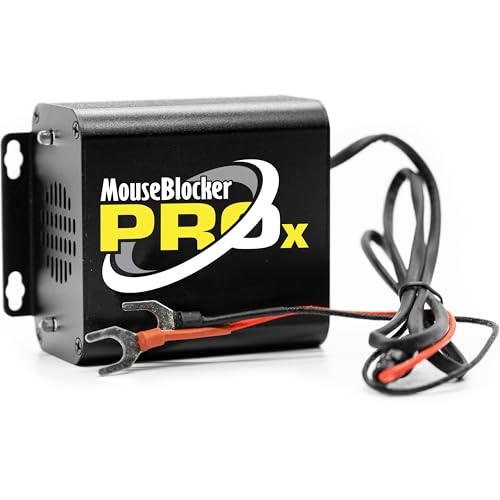
Think of this as the standard 12V unit with the stakes raised. The housing switches to aluminum, which shields the internal microcomputer and helps dissipate heat during long summer park-outs, a meaningful durability step over plastic enclosures.
Two additions define the upgrade: dual strobing white LEDs add a visual deterrent layer, and the eviction mode pushes already-nested rodents out rather than only preventing new arrivals. Output is billed as the brand’s strongest ultrasonic performance yet.
Plus Points
- ✓Aluminum case improves heat management and long-term reliability
- ✓Eviction mode actively clears existing nests, not just new ones
- ✓Dual strobing LEDs layer visual disruption onto the audio deterrent
- ✓Same simple two-wire 12V installation as the base model
Honest Caveats
- •Costs more than the standard unit, hard to justify for mild seasonal problems
- •Strobing light may be visible through hood gaps when parked in dark garages
Core Details
| | Feature | Specification | Why It Matters |
|---|
| Housing | All-aluminum case | Protects electronics, dissipates heat |
| Deterrents | Ultrasonic output plus dual strobing LEDs | Two sensory channels against nesting |
| Special mode | Eviction mode | Removes rodents already inside |
Whose Shelf It Belongs On
Owners of classic cars, campers, or farm equipment with a known recurring mouse problem worth solving once, properly.
Not Your Match When
Light seasonal prevention in a daily driver makes the cheaper standard MouseBlocker 12V the smarter spend.
Check Latest Price
Closing out the list is a single-unit option aimed squarely at open-plan living. The manufacturer rates coverage up to roughly 1290 square feet, generous for one plug, though soft furniture and cluttered rooms shrink that figure in practice.
Three adjustable modes let you cycle frequencies to suit the pest at hand, from mice to mosquitoes, and the plug-in body disappears into any outlet. For a studio apartment or a single problem room, it’s a tidy, low-commitment starting point.
Standout Traits
- ✓Large rated coverage area suits open lofts and combined living spaces
- ✓Three modes let you retune output as the pest situation changes
- ✓Simple plug-in use with no refills, bait, or upkeep
Small Caveats
- •One unit per purchase, so multi-room homes add up quickly versus the Jqely packs
- •Real-world reach drops in furnished or partitioned rooms, per widely reported user experience
Feature Snapshot
| | Feature | Specification | Why It Matters |
|---|
| Coverage | Up to approx. 1290 sq ft | One plug can serve an open-plan space |
| Modes | Three adjustable settings | Targets different pest types |
The Right Fit
Apartment dwellers and office workers dealing with one problem area rather than a whole house.
Look Elsewhere When
Whole-home coverage for less per room makes the Jqely six-pack the better call.
Check on Amazon
What Matters Most Before Choosing Electronic Mouse Repellents
Match The Unit To The Space
Indoor plug-ins and under-hood models solve different problems. Wall-powered units protect rooms; 12V versions protect engine bays, and neither crosses into the other’s territory. Start by naming the exact space where damage happens, then buy for that space alone.
Understand Coverage Limits
Ultrasound reflects off hard surfaces and dies at walls, curtains, and upholstery. That’s why manufacturers sell multipacks, and why a single unit rarely covers a whole floor. Plan roughly one device per enclosed room, and place it low and unobstructed for best results.
Power Source And Placement
Battery models go dead quietly; owners often discover this only after finding a nest. Direct-wired 12V units and plug-ins avoid that failure mode entirely. Check outlet availability indoors and battery access under the hood before ordering anything.
Pets And Household Tolerance
Most humans hear nothing, but rodents kept as pets, and occasionally dogs, may respond to ultrasonic output. Households with hamsters, guinea pigs, or sensitive animals should weigh that honestly before plugging units into every room.
Key Considerations Across These Picks
Traps First Timers Fall Into
The most common mistake is buying one powerful unit and expecting it to guard an entire house. Sound doesn’t travel through drywall, so coverage is always per-room. Shoppers also skip the placement question: a repeller hidden behind a sofa loses much of its effective range. Finally, people pair these with an untouched food source, then blame the device when activity continues. Seal food, close gaps, and let the sound do its supporting role.
What Separates Premium From Basic
Higher-tier models earn their price through build and features rather than louder noise. Aluminum housings, like the Prox under-hood unit’s, survive years of engine-bay heat that warps plastic. Eviction modes and strobing lights address active infestations, not just prevention. Paying up makes sense for stored vehicles and repeat problems; casual prevention rarely needs it.
Closing Thoughts
Electronic repellents work best as part of a layered approach: seal entry points, remove food temptation, and let consistent ultrasonic pressure make your space unwelcome. Match the format to the actual problem, whether that’s a pantry, a basement, or a wiring harness, and give any unit a few weeks to show results. One of these seven should fit the job in front of you.