

Fleas and ticks don’t care how tidy your lawn looks. They wait in tall grass, shaded soil, and along fence lines, then hitch a ride indoors on your dog’s fur or your kid’s socks. The seven treatments below cover the realistic ways homeowners fight back: concentrates you mix and spray, granules you spread, hose-end sprays, and plant-based options for households that want to skip synthetic insecticides altogether. Each one fits a different yard size, pest pressure, and comfort level, so the right choice depends more on your situation than on any single product being universally better.
The Shortlist At A Glance

Agrisel Bifenthrin Pro 7.9 Insecticide 1 Gallon

Talstar One Insecticide Concentrate 1 Gallon
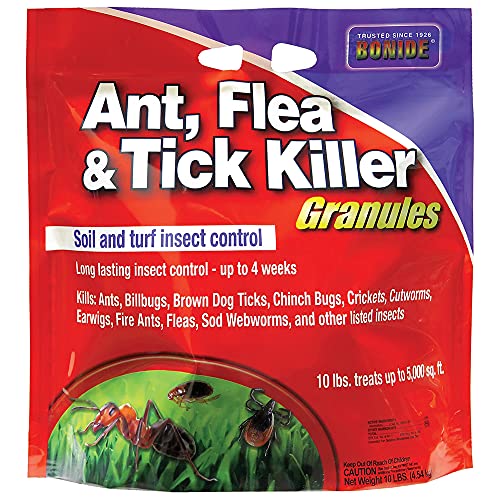
Bonide Ant, Flea & Tick Killer Granules 10 lbs.

Cedarcide Original Cedar Granules 8 lbs.

PetArmor Home Yard Spray for Dogs 32oz

Wondercide Flea and Tick Spray Concentrate 128 oz

Ortho Lawn Insect Killer Granules 10 lbs.
More Details On Our Top Picks
This gallon jug of bifenthrin concentrate is the workhorse option here. Bifenthrin is a synthetic pyrethroid, a lab-made cousin of chrysanthemum compounds that disrupts insect nervous systems on contact. At a 7.9% active concentration, a small measured dose mixes into a tank sprayer and covers serious ground.
The label spans lawns, ornamental beds, and agricultural settings, which matters when your flea problem doesn’t respect property lines between grass and garden. One honest note: because it’s a concentrate, you’ll want gloves, a pump sprayer, and five minutes of measuring patience before anything touches your lawn.
Strong Points
- Handles fleas, ticks, ants, spiders, mole crickets, and stink bugs from one bottle, so you’re not buying three products for one yard.
- Concentrate format stretches far: a single gallon dilutes into many sprayer loads across a season.
- Labeled for lawn, ornamentals, and ag use, giving flexibility around flower beds and borders.
- Once the sprayed surface dries, the treated area is intended to be safe again for pets walking through.
Things To Consider
- You supply the equipment: no hose-end attachment means mixing, measuring, and cleaning a tank sprayer after each session.
- Synthetic insecticides demand careful storage away from kids and pets while undiluted.
Key Specs
Who It Suits Best
Homeowners with half an acre or more who already own a pump sprayer and want maximum pest range per dollar.
Where A Sibling Pick Shines
Prefer zero mixing? The Bonide Ant, Flea & Tick Killer Granules handle smaller lawns straight from the spreader.
Talstar One runs on the same bifenthrin chemistry as the Agrisel above, but its real differentiator is scope: the label covers more than 75 pest species and extends indoors as well as out. That dual territory is why professional pest controllers have kept this name in their trucks for years.
In practice, the perimeter application is where it earns its keep. Spraying a band around foundations, door frames, and window casings creates a barrier that intercepts pests before they cross into living space, then the same mix handles the lawn. For most suburban lots, that two-front approach closes the loop a yard-only treatment leaves open.
Highlights
- Covers ants, spiders, roaches, fleas, ticks, and mosquitoes under one label, trimming your product shelf considerably.
- Approved for both indoor and outdoor surfaces, unusual among yard-focused picks on this list.
- Perimeter banding around foundations stops pests at the entry points where they actually get in.
- Gallon size supports an entire season of reapplications on typical residential properties.
Worth Noting
- It’s a concentrate requiring your own sprayer and precise dilution, so first-timers should read the label twice before mixing.
- Indoor use adds responsibility: ventilation and keeping pets off wet treated surfaces are part of the deal.
Made For
Detail-oriented DIYers fighting a recurring indoor-outdoor pest cycle who want one professional-grade solution instead of separate products.
Swap It Out When
Yard-only treatment is enough for your situation, and the Agrisel Bifenthrin Pro delivers similar chemistry at a lower commitment level.
Granules flip the workflow of the first two picks: nothing gets mixed, nothing gets sprayed. You pour pellets into a broadcast spreader, walk your usual mowing pattern, water them in lightly, and done. Ten pounds treats up to 5,000 square feet, which comfortably handles most city and suburban lawns in one pass.
The pellet format also reaches where liquid can’t easily go. Because the granules settle into soil and thatch, they address insects both above and below the surface, including flea larvae developing down in the turf where adult fleas lay eggs. Owners commonly report the four-week residual window holds well in moderate weather, though heavy rain can shorten it.
Reasons To Buy
- Ready-to-use pellets mean no sprayer, no measuring, no cleanup beyond rinsing the spreader hopper.
- Works up to four weeks per application, cutting re-treatment frequency during peak flea season.
- Soil-and-surface action targets larvae underground, not just the adults you can see.
- Doubles as a foundation barrier treatment against ants, earwigs, crickets, and brown dog ticks.
Minor Gripes
- A spreader is required for even lawn coverage, an extra tool if your garage is currently empty of one.
- Watering-in is part of activation, so timing applications ahead of dry spells takes a little planning.
Quick Facts
Right Fit For
First-time applicators and busy households on quarter-acre lots who want effective control without owning spray equipment.
Consider Something Else When
Your lot exceeds 5,000 square feet, where the Ortho Lawn Insect Killer Granules double the coverage per bag.
This is the gentlest entry on the list, and it plays by different rules. Instead of killing insects outright, these cedar chips release aromatic oils that repel mosquitoes, fleas, chiggers, ants, aphids, and spiders. Think of it as a scent fence rather than a chemical strike, which is exactly why households with crawling babies or curious dogs gravitate toward it.
Application couldn’t be simpler: scatter the granules by hand around patios, play areas, kennels, and garden edges. The fresh cedar smell reads like a closet, not a pesticide aisle. The trade-off shows up in persistence, since aroma-based deterrence fades faster than synthetic residuals and needs refreshing every few weeks, especially after rain.
Bright Spots
- All-natural cedar composition suits families avoiding synthetic insecticides entirely.
- Pleasant forest scent instead of chemical odor, a genuine quality-of-life difference on patios.
- Hand-scatter application requires zero tools and takes minutes around targeted zones.
- Repels a wide roster: fleas, chiggers, mosquitoes, ants, aphids, and spiders.
Small Caveats
- Repelling isn’t eliminating: established infestations usually need a killing agent alongside this.
- Granules break down outdoors, so expect to replenish beds and borders periodically through the season.
Who Will Love This
Parents of toddlers and pets, organic gardeners, and anyone treating play spaces where harsh chemistry feels wrong.
Another Choice May Suit
Active flea populations call for something lethal, and the Wondercide concentrate kills on contact while staying plant-based.
PetArmor approaches the problem from the pet-owner angle rather than the landscaper angle. The 32-ounce bottle screws directly onto a garden hose, turning your standard spigot into an application system: attach, turn on water, and walk the perimeter spraying as you go. No pump, no measuring cup, no rinse-out afterward.
That convenience shapes who this serves best. Dog owners dealing with a recurring flea cycle, where the yard keeps reinfesting the animal despite topical preventatives, get a fast way to break the loop. The six-week claimed protection window is generous for the category, though in our view heavily shaded or frequently watered lawns tend to need touch-ups sooner than the maximum suggests.
What We Like
- Hose-end applicator makes treatment nearly effortless, closer to watering the lawn than pest control.
- Targets fleas, ticks, mosquitoes, and ants in one pass around the property perimeter.
- Protection lasting up to six weeks reduces how often the chore repeats.
- Compact bottle stores easily on a garage shelf between uses.
Points To Note
- Water pressure dictates spray reach, so large backyards may leave far corners under-treated.
- Smaller volume than concentrate options means frequent buyers of big-lot coverage will cycle through bottles quickly.
Who Should Grab It
Dog owners on small-to-medium urban lots who value speed and simplicity over maximum square footage per dollar.
Not Your Match When
You’d rather dilute once and treat all season, which is the Agrisel Bifenthrin Pro’s whole appeal.
Wondercide occupies the middle ground the Cedarcide granules can’t reach: it actually kills, using plant-derived active ingredients rather than synthetic pyrethroids. The manufacturer states the formulation meets the same effectiveness standards required of conventional flea and tick yard treatments, targeting both adult fleas and their eggs, which is the detail that separates a real killer from a pleasant-smelling deterrent.
The 128-ounce jug is the economy move within the brand’s lineup. Diluted per label directions, it feeds a hose-end or tank sprayer across repeated treatments of a typical yard and garden. Expect a botanical scent on application that dissipates within hours, and plan on reapplying somewhat more often than synthetic options since plant oils degrade faster in sun and rain.
Plus Points
- Kills flea adults and eggs, addressing the reproduction cycle rather than just visible insects.
- Plant-based actives suit vegetable gardens and homes prioritizing gentler chemistry.
- One-gallon volume supports a full season of diluted applications on average lots.
- Also targets mosquitoes, extending usefulness into summer evenings outdoors.
Softer Spots
- Botanical formulas generally demand more frequent reapplication than bifenthrin-based competitors.
- Per-ounce cost runs higher than conventional concentrates, a real consideration on acreage.
At A Glance
Built With In Mind
Eco-conscious gardeners with pets who roam treated lawns daily and want lethal efficacy without synthetic insecticides.
Reach For A Different Pick When
Budget and longevity lead your decision, since the Ortho granules cover more ground for less ongoing spend.
Same 10-pound bag weight as the Bonide granules, but Ortho stretches it across up to 10,000 square feet, doubling the coverage per purchase. That efficiency comes from a contact-kill formulation labeled for more than 100 insect species, spanning ants, spiders, fleas, ticks, and grubs. Contact kill means the insect must touch or ingest the treated material, so thorough spreading matters more than with residual sprays.
Vegetable and flower gardens are explicitly permitted use sites, which broadens where you can apply it compared to several listmates. Apply it proactively in spring or immediately after spotting activity, and water it in so the granules start working into the turf layer where flea larvae develop.
Standout Traits
- Up to 10,000 sq ft per bag, the widest coverage of any granular pick here.
- Labeled for vegetable and flower gardens alongside lawns and home perimeters.
- Contact action on 100+ listed insects consolidates seasonal pest control into one product.
- Works both preventively and reactively once insect activity appears.
Honest Caveats
- Contact-kill chemistry offers less lingering residual than some liquid concentrates, so timing relative to pest activity matters.
- Even distribution requires a functioning spreader; clumped piles waste product and leave gaps.
Details At A Glance
The Right Fit
Owners of larger suburban or rural lots who want granular simplicity stretched across maximum square footage.
Look Elsewhere When
Long-lasting residual protection outranks raw coverage, pointing you back to the Talstar One concentrate.
What Matters Most Before Choosing Flea And Tick Killers For Yard
Match The Format To Your Routine
Spray concentrates reward homeowners comfortable with measuring, mixing, and maintaining a tank sprayer, and they deliver the lowest cost per treated square foot. Granules and hose-end sprays trade some economy for speed: pour or attach and go. Be honest about which chore you’ll actually repeat every few weeks, because an abandoned product protects nobody.
Coverage Math Beats Bottle Size
Always convert the label’s square footage against your actual lot. A 32-ounce ready-to-spray bottle sounds convenient until it covers a fraction of what a diluted gallon handles. Measure your lawn once, write the number down, and let it filter every comparison on this page.
Residual Window And Reapplication Reality
Treatments differ sharply in how long they keep working. Four-to-six-week residuals mean two or three applications per season; shorter-lived botanical and repellent options may need monthly refreshes. Factor your climate too, since heavy rain and intense sun shorten nearly every formula’s lifespan.
Household Tolerance For Chemistry
Synthetic pyrethroids like bifenthrin offer proven knockdown but demand careful handling and storage. Plant-based and cedar options lower that burden at the price of frequency and, sometimes, raw killing power. Homes with toddlers, grazing pets, or edible gardens usually justify the gentler route.
Key Considerations Across These Picks
Traps First Timers Fall Into
The classic error is treating only the visible adults and ignoring the egg-and-larva stage living in soil and thatch, which restarts the population within weeks. Another common slip is skipping the watering-in step on granules, leaving product sitting inert on top of the turf. Read the label’s reapplication interval before buying, not after.
What Separates Premium From Basic
Higher-tier concentrates earn their cost through concentration itself: stronger active percentages, longer residuals, and broader pest labels mean fewer purchases and fewer passes with the sprayer each year. Paying up pays off on large lots or persistent infestations. On a small patio-side lawn, a modest granule bag does the same job without the premium.
Closing Thoughts
Fleas and ticks are a season-long negotiation, not a one-afternoon fix. Pick the format matching your routine, respect the coverage numbers, and stay ahead of the egg cycle with timely reapplications. Start with the smallest effective treatment for your lot size, watch how your yard responds, and adjust from there. Consistency beats intensity every time in this category.
