

Nobody plans for a rodent problem, yet a single mouse in the pantry or a rat in the barn can turn a normal week into a frustrating one. The right trap ends that quickly, without poisons sitting where kids or pets can reach them. This roundup covers eight options across every style: classic snap traps, covered tunnels, live-catch cages, and multi-catch bucket lids. Whether you’re dealing with an occasional mouse in a city apartment or a recurring rat issue around outbuildings, there’s a fit here for your situation.
A Side-By-Side Look

NAMEK Rat Trap 12-Pack, Large Reusable Snap Traps

Pirosim 3pc Bucket Mouse Trap

Filpestco Large Rat Traps, Black Heavy Duty Snap, 6 Pcs

Tratper Mouse Tunnel Traps, Covered Snap, 4 Pack
Pivmuth Humane Rat Traps 12.5″x5.5″x4.5″, 2 Pack

PAMAX Mouse Traps Indoor for Home, 4-Pack Reusable
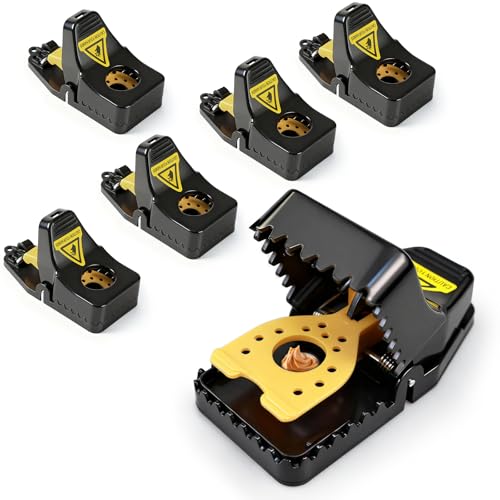
Insoma 6-Pack Mouse Traps, Small High Sensitive

Tougher Than Tom Sure-Catch Rat Trap (2-Pack)
A Deeper Look At The Lineup
A dozen traps in one pack changes how you approach a rodent problem. Instead of playing whack-a-mole with a single device, you can blanket a barn aisle, a garage wall, or the perimeter of a yard in one afternoon. The large clamp plate paired with a reinforced spring widens the trigger zone, which matters when you’re targeting animals of mixed sizes rather than uniform house mice.
Because these are reusable, wash-down-and-reset units, they suit anyone maintaining outbuildings season after season. For most rural properties, twelve stations is enough to cover entry points and feed storage areas simultaneously.
Noteworthy Benefits
- The oversized clamp plate catches both mice and larger rats, so one purchase handles a mixed problem.
- Reusable construction means you rinse, reset, and redeploy instead of tossing traps after each catch.
- No poison involved, which keeps the area safer around pets, chickens, and children.
- Twelve units let you cover multiple rooms or structures at once, cutting down repeat trips.
Things To Consider
- Open snap plates demand careful placement away from where pets roam.
- After outdoor use, owners commonly report needing a thorough rinse before indoor reuse to avoid lingering odor.
Key Specs
Who It Suits Best
Rural homeowners and smallholders who need broad, repeatable coverage across sheds, coops, and living spaces.
Where A Sibling Pick Shines
For a serious rat-specific problem indoors, the Tougher Than Tom Sure-Catch Rat Trap offers heavier-duty construction and cleaner disposal.
This is the set-and-forget option of the group. Three lids clip onto any standard five-gallon bucket (not included), turning it into a rolling multi-catch station that holds roughly ten mice or several medium rats per fill. Where a single snap trap ends its shift after one animal, this keeps working overnight and resets itself automatically.
There’s no glue and no chemical involved, and because the action happens inside the bucket, you can carry the whole setup outside and release or dispose of contents without getting close to the mess. In our view, that hands-off quality is the real selling point for anyone squeamish about the usual cleanup.
Features That Help
- Automatic reset means one bucket can clear an entire infestation cycle without daily attention.
- Holds up to ten mice per session, far beyond single-catch alternatives like the NAMEK 12-pack’s individual plates.
- Glue-free and chemical-free operation suits households avoiding toxins entirely.
- Disposal happens at arm’s length, since you carry the bucket rather than handling each rodent.
Worth Noting
- You’ll need to supply your own five-gallon bucket, so factor that into setup day.
- The open-bucket format works best in garages and sheds; indoors it takes up visible floor space.
- Live-caught rodents still need a plan for release or disposal, which some owners find awkward.
Right Fit For
Anyone facing heavy mouse traffic in a garage, workshop, or outbuilding who wants a low-maintenance, high-volume solution.
Swap It Out When
In tight indoor spaces where a bucket won’t fit, the compact Insoma 6-pack slides under appliances instead.
Rats are strong animals, and undersized springs are the most common reason a snap trap fails them. Filpestco builds these six black units around a precision-engineered spring mechanism intended to secure large rats immediately, with a reinforced strike housing holding the high-tension trigger in place. The result is a trap built for force first.
Placement flexibility is another plus: the heavy-duty bodies hold up in damp basements as well as along fence lines outdoors. Compared with the NAMEK bulk pack, you get fewer units here but a sturdier feel aimed squarely at bigger animals.
A Few Highlights
- The engineered spring delivers enough striking force for full-grown rats, not just mice.
- Reinforced housing keeps the trigger mechanism aligned through repeated use.
- No chemicals anywhere in the mechanism, keeping basements and gardens toxin-free.
- Six units give you sensible coverage for a basement perimeter or yard line.
Small Caveats
- High-tension springs demand firm, careful setting; rushed fingers will regret it.
- Exposed strike bars mean placement matters around curious pets.
Quick Facts
Made For
Homeowners confronting confirmed rat activity in cellars, crawl spaces, or along exterior walls.
Another Choice May Suit
Shoppers prioritizing finger safety over raw force should look at the Tratper tunnel traps instead.
Most snap traps leave the killing bar exposed, which is exactly why parents hesitate to place them along baseboards. Tratper solves that by enclosing the mechanism inside a dual tunnel: a mouse walks in, the sensitive trigger fires, and little fingers stay out of the strike path. It’s a mouse-sized design too, so it isn’t meant for rats.
Setting takes seconds with no hooks or wires to wrestle. Add bait, press the lever down, position it where you’ve seen droppings, done. For households with toddlers or a nosy dog, this is the least stressful way to run snap traps indoors.
The Helpful Details
- The enclosed tunnel physically shields the snapping bar from accidental contact by pets or children.
- Lever-set design means no pinched fingers during setup, unlike traditional wooden traps.
- Four units cover a typical apartment’s kitchen and pantry routes at once.
- Reusable bodies wipe clean between deployments.
Points To Note
- Mouse-size only; a rat will simply ignore or overpower it.
- The covered body makes checking whether something was caught less obvious than with open traps.
Who Will Love This
Families with young kids or indoor pets who want effective mouse control without exposed mechanisms underfoot.
Reach For A Different Pick When
When live capture matters more than a quick kill, the Pivmuth humane cage traps are the better match.
Not everyone wants a kill trap, and this two-pack of live-catch cages respects that. Each unit measures 12.5 by 5.5 by 4.5 inches, sized for mice, chipmunks, and smaller rats, with a single door that locks shut the moment an animal steps on the pedal. You then transport and release the catch well away from the house.
The build leans on chew-resistant material that resists deformation, so the cages survive repeated seasons of use. One honest caveat: local rules sometimes restrict relocating wildlife, so check before releasing anything in a park or neighbor’s woodlot.
Practical Pluses
- No-kill capture lets you resolve the problem without harming the animal.
- The responsive pedal-and-door lock improves capture rates versus flimsier cage designs.
- Chew-resistant construction holds its shape through years of reuse.
- Works equally well in kitchens, garages, gardens, and yards.
Factors To Consider
- Caught animals must be checked and released promptly, which requires daily attention.
- Two cages cover less ground than multi-catch options such as the Pirosim bucket lids.
- Relocation rules vary by region and may limit where releases are permitted.
Details At A Glance
Best Suited To
Animal-conscious homeowners dealing with occasional chipmunk or mouse intrusions near gardens and patios.
Not Your Match When
For established rat populations needing immediate removal, the Filpestco heavy-duty snaps act faster.
Wooden snap traps have one flaw everyone learns eventually: they soak up odor and fall apart after a few washes. PAMAX molds its four traps from ABS plastic instead, a rigid polymer that won’t warp, rot, or hang onto smells. Wipe one down, reload the bait cup, and it goes back on duty.
The visible bait cup deserves mention too. Loading peanut butter becomes a ten-second job with no smearing bait onto a tiny metal pedal. A high-sensitivity trigger and strong spring handle the rest. For apartment dwellers cycling traps through a kitchen, that easy-clean loop is what keeps this pick practical month after month.
Strong Points
- ABS plastic bodies resist warping and odor absorption, extending usable life well past wooden traps.
- The exposed bait cup makes reloading quick and keeps fingers away from the trigger during setup.
- A sensitive trigger paired with a powerful spring aims for a fast, decisive catch.
- Simple pull-back setting needs no instructions or practice.
Less Ideal Details
- Only four units, so larger homes may want a second pack.
- Plastic bodies can crack if stepped on, a commonly reported issue with polymer traps generally.
The Right Fit
Apartment renters and home cooks who want dependable, washable indoor traps for kitchens and pantries.
Look Elsewhere When
When maximum trigger sensitivity for light-footed mice matters most, the Insoma six-pack edges ahead.
Ever found a licked-clean bait pedal and no catch? Light mice often steal bait without tripping a standard trap. Insoma’s updated version addresses that directly: the trigger now fires at roughly 0.03 pounds of pressure, down from about 0.11 pounds in the earlier model. That difference turns bait theft into a caught mouse.
Sharp teeth on the strike bar add gripping force so nothing slips away, backed by a stainless steel spring. These are small-body traps tuned for small mice, and the quick-set lever makes deploying all six around a kitchen or garden shed a five-minute chore.
Well-Handled Touches
- The ultra-sensitive trigger catches bait-stealing mice that evade conventional pedals.
- Toothed strike bar increases bite force and prevents escapes after firing.
- Stainless steel spring resists corrosion in humid garages or outdoor corners.
- Six compact units tuck into narrow gaps behind appliances where rats-scale traps won’t fit.
A Few Limitations
- High sensitivity cuts both ways; expect occasional false trips from vibration or debris.
- Sized for small mice only, so juvenile rats will walk past untouched.
Feature Snapshot
Who Should Grab It
Households battling small, quick house mice in kitchens, garages, and garden sheds.
Consider Something Else When
With rats confirmed on site, step up to the Tougher Than Tom Sure-Catch for its reinforced build.
Plenty of products labeled for rats are just stretched mouse traps, and rats defeat them easily. The Sure-Catch takes the opposite approach: a reinforced polymer body, a high-tension steel spring, and a bottom-loading bait cup that keeps your fingers out of the strike zone entirely. Setting happens with one hand via a rear lever, in seconds.
The disposal story is where it pulls ahead of everything else here. A one-click release drops the rodent straight into the trash, meaning you never touch the business end or the animal itself. Two units won’t blanket a farm, but for a focused rat problem in a home or garage, few designs handle the dirty work this cleanly.
Everyday Advantages
- Reinforced polymer and steel-spring construction stands up to full-size rats without bending or breaking.
- One-click no-touch disposal sends the catch directly into the bin, hands staying clean throughout.
- Rear-lever setting and bottom-loading bait cup keep fingers clear during both setup and cleanup.
- Rated for indoor and outdoor use, covering basement runs and patio lines alike.
Trade Offs To Consider
- Only two traps per pack, so widespread activity calls for multiple purchases.
- The larger footprint needs open floor space, unlike slim options such as the Insoma six-pack.
The Numbers That Matter
Whose Shelf It Belongs On
Homeowners and property managers facing a confirmed rat problem who value hygienic handling above all else.
Skip It When
Broad, budget-driven coverage across a barn or yard is the goal; the NAMEK 12-pack stretches further.
What Matters Most Before Choosing Mice And Rat Traps
Match The Trap To The Animal
A mouse weighs a fraction of a rat, and the hardware reflects that gap. Small-body triggers like the Insoma fire at barely an ounce of pressure, while rat-class traps need reinforced springs and wider strike bars. Buying mouse gear for a rat problem wastes weeks, so identify your intruder by droppings size and gnaw marks first.
Think About Who Shares The Space
Households with children or pets change the calculus entirely. Exposed snap bars demand careful placement behind appliances or inside cabinets, while covered tunnels and live cages remove most of that risk. Open-floor setups such as bucket stations belong in garages and sheds, not hallways.
Count Your Coverage Needs
One trap rarely ends an infestation. Rodents travel established routes, so overlapping several units along walls and entry points outperforms a lone device in the middle of a room. Bulk packs earn their keep here, especially in outbuildings where activity spreads wide.
Weigh Cleanup Before You Buy
Disposal is the part nobody enjoys. No-touch release designs, washable plastic bodies, and self-resetting bucket lids all reduce the unpleasant moments. Choosing with cleanup in mind saves more frustration than any other feature decision.
Key Considerations Across These Picks
Mistakes Worth Dodging
The most common error is underestimating the pest. A mouse trap set against rats fails silently, and a rat trap set for mice never triggers. Another frequent slip is buying a single unit; rodents avoid new objects initially, so thin coverage reads as failure when it’s really patience and placement running short.
What The Higher Tier Buys
Premium traps spend their extra cost on materials and mechanics: steel springs that resist corrosion, polymer bodies that survive washing, and disposal systems that spare your hands. For a one-time mouse visitor, basic gear suffices. For recurring seasonal pressure, the sturdier builds pay for themselves in reused seasons.
Frequently Asked Questions
Where should traps be placed for the best results?
Set them perpendicular to walls where you’ve spotted droppings, since rodents hug edges while traveling. Kitchens, pantries, garages, and utility rooms see the most consistent activity.
How many traps does a typical home need?
Most homes do well with four to six units spread along suspected routes. Heavier infestations or outbuildings justify a dozen or more working simultaneously.
Are reusable traps actually worth cleaning?
Yes, plastic-bodied models wash down in seconds and hold their trigger sensitivity for many seasons. Wooden versions absorb odor and degrade, which is why most modern picks use polymers.
Do live-catch traps work as well as kill traps?
They capture reliably when checked daily, but success depends on prompt release and legal relocation in your area. Kill traps suit situations requiring immediate, permanent removal.
How long before a trap stops being effective?
A well-built spring trap stays functional for years with cleaning and proper storage. Replace any unit with a rusted spring, cracked body, or trigger that no longer fires crisply.
Closing Thoughts
Rodent control comes down to matching the tool to the animal, the space, and your tolerance for cleanup. Start by confirming what you’re dealing with, then choose coverage accordingly: bulk snaps for wide areas, covered tunnels for family homes, buckets for volume, and no-touch designs for hygiene. Whichever route fits your situation, acting early beats waiting out the problem.
