

Nobody wants to share a kitchen with mice, and nobody wants to clean up after snap traps either. Sound-based repellents offer a middle path: plug something in, let high-frequency waves make the space uncomfortable for rodents, and skip the poison entirely. This roundup covers eight options for 2026, from a cordless portable unit for sheds and garages to multi-packs sized for whole apartments. Whether you’re protecting a pantry, an attic, or a two-bedroom rental, there’s a fit here.
The Lineup, Simplified

PestContro Portable Ultrasonic Rodent Repeller
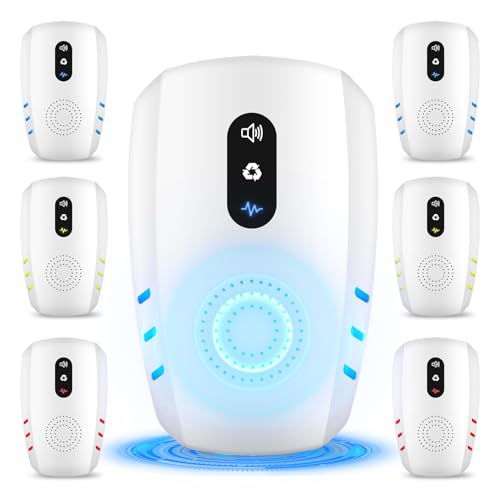
Jqely Ultrasonic Indoor Pest Repeller 3-Mode 6 Pack

Jqely Ultrasonic Indoor Pest Repeller 3-Mode 10 Pack

TERMX Ultrasonic Pest Repeller Indoor 4-Mode

OWLTRA OW-5 Ultrasonic Rodent Repellers 4 Pack

NexKey 2026 Upgraded Ultrasonic Pest & Insect Repeller 6 Pack

Nexkey Ultrasonic Pest & Insect Repeller Plug in 6 Pack

Loraffe 4-in-1 Plug-in Ultrasonic Rodent Repellent
The Picks, Examined More Closely
Most units in this category live and die by the nearest outlet. The PestContro doesn’t, because it runs cordless, which changes where you can actually deploy it. A detached garage, a storage shed, an attic corner with no wiring nearby, or a cottage you visit seasonally all become fair game.
The design targets rodents specifically, with dual-frequency ultrasonic output aimed at rats, mice, and squirrels rather than a broad insect claim. For anyone storing feed, seed, or seasonal gear in outbuildings, that focus matters more than versatility.
What Works In Its Favor
- Cordless operation means placement follows the problem, not the wiring.
- Dual-frequency sound gives you two deterrent profiles instead of one fixed tone.
- An LED power indicator confirms the unit is running, which matters in spaces you rarely enter.
- Non-lethal approach means no traps to empty and no poisons near stored goods.
Things To Consider
- Battery-powered units need periodic battery checks; owners commonly report forgetting them in low-traffic sheds until activity returns.
- Ultrasonic sound doesn’t pass through walls, so one unit covers one open area.
Key Specs
Who It Suits Best
Renters of sheds, cabin owners, and anyone dealing with rodents in unwired outbuildings will get the most from this pick.
Where Another Pick Suits Better
Whole-apartment indoor coverage is better served by the Jqely 6 Pack, which spreads multiple plug-in units room by room.
Ultrasonic sound stops at walls, so apartment dwellers quickly learn that a single repeller protects a single room. The Jqely six-pack solves that math directly: one unit per room covers a typical two-bedroom layout without leaving gaps. Where the cordless PestContro trades portability for placement freedom, this one trades it for permanent, set-and-forget wall coverage.
The three-mode switching lets you vary the output over time, which is useful because rodents can habituate to a constant tone. In practice, rotating modes every few weeks keeps the environment unpredictable for anything scurrying behind your baseboards.
Useful Highlights
- Multi-frequency output spans roughly 10kHz to 65kHz, a range wide enough to bother both rodents and common crawling insects.
- Six units handle an entire apartment floor, not just the kitchen where you first noticed droppings.
- Plug-in design means zero maintenance once installed; no batteries, no refills, nothing to clean.
- Three modes give you rotation options to counter habituation.
Points To Note
- Each unit needs its own outlet, so crowded power strips in older apartments can get tight.
- Results typically take days to weeks as pests relocate; patience is part of the deal.
Right Fit For
Renters and small-household owners who want whole-floor rodent and insect coverage from one purchase.
Another Choice May Suit
Larger homes with more rooms should step up to the Jqely 10 Pack version for gap-free coverage.
This is the same hardware as the six-pack above, scaled up. Ten units instead of six means a full house, a basement plus main floor, or a home office setup with spare units left over for the garage entry point. The frequency range runs roughly 10kHz to 65kHz, targeting mice alongside roaches, ants, spiders, and mosquitoes.
The honest read is that most buyers don’t need ten. But if your home has a finished basement, an attic, and a main level, under-buying is the most common mistake in this category, and the extra units cost less than buying a second pack later.
Benefits That Matter
- Ten plug-ins cover multi-level homes without dead zones between rooms.
- Three operating modes allow scheduled variation so pests don’t adapt to a single tone.
- Broad frequency span addresses both rodent and insect pressure from one device type.
- Spares can be redeployed seasonally to garages or sunrooms as problems shift.
Small Caveats
- Ten outlets occupied year-round is a real commitment in homes with limited socket access.
- Ultrasonic coverage still ends at closed doors, so placement planning takes a few minutes.
Who Will Love This
Owners of larger or multi-story homes who want to blanket every living space in one order.
Swap It Out When
Studio and one-bedroom residents waste money here; the six-pack Jqely matches their footprint better.
Four modes is more adjustment range than most plug-ins offer, and that flexibility is the TERMX’s core argument. Where the Jqely packs give you three settings, this one adds a fourth, letting you cycle through more distinct sound profiles before repeating. For households fighting a stubborn infestation that seems to ignore standard output, extra variation is worth having.
The no-touch framing also matters. There’s no bait to refresh, no trap to reset, and nothing to dispose of, which makes it a low-drama option for bedrooms and nurseries where you’d rather not think about pest control at all.
Notable Gains
- Four distinct modes provide the widest rotation range among the plug-ins here.
- Completely silent to human ears, so bedside placement won’t cost you sleep.
- Set-and-forget operation suits busy households with no time for trap maintenance.
Honest Caveats
- Single-unit packaging means you’ll likely need several for multi-room coverage, unlike the bundled Jqely packs.
- Some owners report needing two to three weeks before noticing reduced activity.
Feature Snapshot
Made For
Light sleepers and parents who want adjustable, silent protection in bedrooms and quiet living areas.
Look Elsewhere When
You need immediate multi-room deployment; the OWLTRA four-pack ships ready to cover several rooms at once.
Pet owners face a specific worry with sound repellents: will the noise bother the dog? The OWLTRA OW-5 addresses that head-on, emitting frequencies tuned to distress rodents while staying inaudible to humans and non-rodent pets like cats and dogs. That positioning makes it the safest default for mixed households.
Each unit is rated for a medium-sized room, and the brand frames expectations realistically, suggesting rodents may leave within about two weeks of continuous use. Compared with the TERMX’s mode flexibility, the OWLTRA keeps things simpler: plug in, forget, wait.
Advantages To Know
- Silent to humans, cats, and dogs, which removes the biggest hesitation pet owners have.
- Four units cover a medium home’s key rooms, including kitchens and pantries.
- Poison-free approach eliminates risk to curious pets nosing around floor level.
- Realistic two-week expectation sets proper patience levels up front.
Worth Bearing In Mind
- Rodent-only focus means insects aren’t part of the pitch, unlike broader claims from the Jqely line.
- White housing shows dust and scuffs near baseboards; an occasional wipe-down keeps it tidy.
Product At A Glance
Who Should Grab It
Households with dogs or cats that want rodent deterrence without any audible disturbance to the animals.
Reach For A Different Pick When
Insects are part of your problem too; the NexKey upgraded model targets roaches and spiders alongside mice.
The 2026 upgrade in NexKey’s lineup centers on intelligent frequency conversion, sweeping across roughly 15kHz to 75kHz instead of holding fixed tones. That sweep matters because constant single-frequency output is what rodents eventually ignore. Two switching modes alternate the wave pattern automatically, doing the rotation work the Jqely packs leave to you.
The target list is broad too: roaches, spiders, ants, mosquitoes, and rodents all fall under the same umbrella. For a household dealing with more than one pest type, consolidating into one device category simplifies everything.
Real Benefits
- Automatic frequency sweeping reduces the habituation risk that fixed-tone units carry.
- 15kHz to 75kHz range reaches both rodent and insect hearing bands.
- Six units suit a typical apartment or single floor without additional purchases.
- Dual-mode switching runs hands-free once plugged in.
Details To Watch
- Broad-spectrum claims are harder to verify room by room; results may vary by pest species present.
- Higher-frequency output near the top of the range may affect pet rodents or rabbits, so small-animal owners should place carefully.
Core Details
The Right Fit
Households juggling both mouse activity and crawling insects who want automated frequency variation.
Consider Something Else When
Simplicity outranks features for you; the plain NexKey plug-in model below strips away the extras.
Strip away the marketing and this is the most honest interface in the category: a side switch toggling between a steady frequency and a sweeping one, across a 15kHz to 75kHz band. That’s the entire learning curve. First-time users who found the mode menus on other units confusing will appreciate how little there is to get wrong here.
The six-unit count reflects a truth the brand states plainly: ultrasound doesn’t cross walls or closed doors, so one box never covers a house. Six handles a two-bedroom apartment or a single floor, matching the Jqely pack size while adding the manual sweep option.
Well-Handled Touches
- Two-mode switch offers steady or sweeping output with zero configuration effort.
- Wide 15kHz to 75kHz range covers mice, rats, ants, and general bugs.
- Six plug-ins align with real apartment layouts rather than wishful single-unit thinking.
- No chemicals, no bait, nothing to store or replace over time.
Less Ideal Details
- Manual switching means remembering to toggle modes yourself; automation fans should look at the upgraded NexKey model.
- Coverage stops at walls, so interior doors left closed reduce effectiveness.
Best Suited To
Beginners and minimalists who want effective hardware with the smallest possible setup burden.
Not Your Match When
Outbuildings without outlets are your battleground; the cordless PestContro portable fills that role.
Every other pick here relies on sound alone. The Loraffe layers four deterrents into one unit: ultrasonic waves, electromagnetic impulse waves through household wiring, recorded predator sounds, and LED strobe lighting. Stacked pressure like this suits hard cases, such as a garage where mice have already settled in and ignored simpler devices.
The strobe panel carries twelve LEDs arranged in three triangular groups with a dusk-to-dawn sensor, so lights run only after dark. One honest trade-off: visible flashing makes this a poor bedroom neighbor, but ideal for unoccupied utility spaces.
Where It Delivers
- Four combined deterrent methods create layered pressure sound-only units can’t match.
- Twelve LED strobes with dusk-to-dawn sensing add a visual deterrent without wasting energy by day.
- Impulse waves travel along wiring, extending influence beyond direct line of sight.
- Pack of two covers a garage-plus-basement pairing in one order.
Trade Offs To Consider
- Strobe flashes and predator audio rule out bedrooms, nurseries, and any occupied living space.
- Only two units per pack, so large homes need multiple purchases compared with the six-pack alternatives.
Technical Reference
Whose Shelf It Belongs On
Homeowners battling entrenched rodents in garages, basements, and workshops where flashing lights cause no disruption.
A Better Fit Elsewhere
Occupied rooms call for the silent OWLTRA OW-5 pack, which keeps every deterrent inaudible to people and pets.
What Matters Most Before Choosing Mouse Repellent Sound Devices
Coverage Math Comes First
Ultrasound behaves like light: it stops at walls, floors, and closed doors. Count your rooms honestly, then buy enough units to cover each enclosed space. Under-buying is the single most common regret in this category, since a lone plug-in in the kitchen leaves the attic and garage untouched.
Match the Device to the Space
Cordless models like the PestContro shine in sheds and cabins without convenient outlets. Plug-in packs suit apartments and finished rooms. Spaces with entrenched activity respond better to layered systems such as the Loraffe, which combines sound, impulses, predator calls, and strobes.
Think About Ears in the House
Most ultrasonic output sits above human hearing, and reputable units stay silent to cats and dogs. Pet rodents, rabbits, and ferrets are a different story, since they hear in the same ranges these devices target. Place accordingly or choose rodent-specific tuning.
Set Realistic Timelines
These devices encourage pests to relocate rather than killing them. Expect one to three weeks of continuous operation before activity drops, and keep food sealed during the transition period.
Key Considerations Across These Picks
Traps First Timers Fall Into
The classic error is buying one powerful-sounding unit and expecting it to protect a whole house. Coverage is per room, always. A second slip is quitting after five days; rodents often grow bolder briefly before leaving, so judge results at the two-week mark, not the fifth morning.
Why Top Tier Costs More
Higher-priced units pay for frequency breadth, automatic sweeping, and layered deterrents like strobes and impulse waves. Basic plug-ins work fine for light, recent activity. Spending up earns its keep against established infestations or mixed pest problems, where single-tone devices tend to stall out.
Frequently Asked Questions
Do ultrasonic mouse repellents really work?
They can discourage rodents from settling in treated rooms, though results depend on severity and placement. Most manufacturers frame them as part of a broader strategy alongside sealed food and blocked entry points.
How long until I see results?
Plan on roughly one to three weeks of continuous use. Activity sometimes spikes briefly as pests flee the area.
Are these devices safe for cats and dogs?
Units like the OWLTRA are designed to be inaudible to non-rodent pets. Pet rodents, hamsters, and rabbits share the target frequency range, so keep those animals in untreated rooms.
Can one repeller cover my entire house?
No, because ultrasonic sound doesn’t pass through walls or closed doors. Budget one unit per enclosed room for reliable coverage.
Do I still need traps or poison?
Many households use sound devices as a first line and avoid poisons entirely. Severe infestations may still warrant professional help alongside any device.
Closing Thoughts
Sound-based repellents reward realistic expectations and honest room counts. Start by mapping your space, then match the device style to it: cordless for outbuildings, plug-in packs for apartments, layered systems for stubborn garages. Give any unit a fair two-week window, keep food sealed, and seal obvious entry gaps while you wait. Done right, these devices earn their outlet quietly.
