

Anyone who keeps goats knows the drill: grain scattered across the pen, animals pawing through dirt-contaminated feed, and a vet bill you didn’t plan for. A proper trough lifts feed off the ground, cuts waste dramatically, and keeps parasites where they belong, away from your herd’s dinner. This roundup covers seven troughs that handle goats, sheep, poultry, and everything in between, from compact two-packs for backyard flocks to nine-quart workhorses for larger livestock. Each entry breaks down what the manufacturer specifies, where the trade-offs sit, and which setup each option genuinely fits.
The Picks In Brief
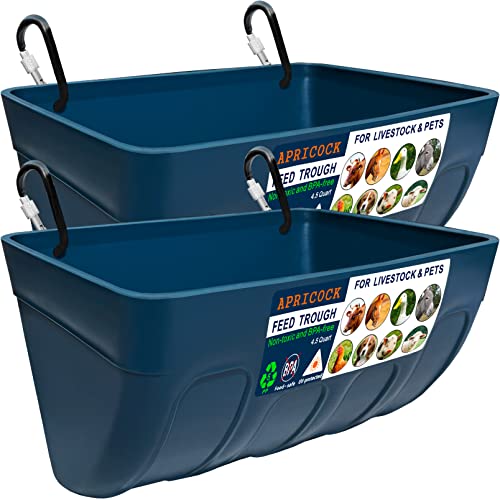
APRICOCK Goat Feeder 2 Pack, 5.5 Quart

APRICOCK Goat Feeder 2 Pack, 5.5 Quart

APRICOCK Goat Feeder 2 Pack, 5.5 Quart

Goovilla Large Feed Trough, 9 Quart, Black

Goovilla Large Feed Trough, 9 Quart, Blue

Goovilla Chicken Feeder Waterer, 5 Quart

mozoba Hanging Chicken Feeder Trough
More On The Choices That Made The List
This two-pack of 5.5-quart troughs is built around one idea: feed should never touch the ground. The thickened polypropylene body is made without additives, which matters in a pen where animals will chew, lick, and bump the walls daily. For a small homestead running goats alongside chickens or ducks, having two identical troughs lets you split feed and water into separate stations.
The 5.5-quart depth is generous enough for a morning ration for a few goats yet shallow enough that birds can reach the bottom. In our view, that balance is why this pick suits mixed flocks better than single-purpose designs.
A Favorable Mix
- Additive-free PP plastic holds up to chewing and daily knocks better than thin utility tubs.
- Two troughs per order means separate feed and water stations without buying twice.
- Elevated feeding keeps grain off bedding, cutting waste and reducing parasite exposure risk.
- The 5.5-quart size works for goats, sheep, piglets, ducks, and turkeys alike.
Things To Consider
- Plastic troughs left in direct sun year-round tend to fade and eventually turn brittle, so shaded placement extends their life.
- Strong adult goats may tip an unsecured trough, so anchoring or wedging it against a wall helps.
Key Specs
Who It Suits Best
Small-scale keepers running a handful of goats alongside poultry will get the most out of this pair.
A Better Fit Elsewhere
Keepers with full-grown meat breeds or cattle should step up to the Goovilla Large Feed Trough, whose nine-quart volume matches bigger appetites.
Here’s a listing that shares its design with the first pick but earns its own spot for a different reason: breadth of use. The manufacturer positions this trough for goats, chickens, ducks, geese, turkeys, dogs, piglets, deer, and sheep, and the 5.5-quart format genuinely accommodates that range. Barnyard juggling acts, where species share space, benefit most from equipment that serves everyone.
Like its sibling above, the body uses additive-free polypropylene, so cleaning is a hose-and-rinse affair rather than a scrubbing session. One honest note: because the design mirrors item one closely, the choice between them comes down to whichever listing has availability and terms that suit you at checkout time.
Where It Delivers
- One trough design covers small livestock and poultry, simplifying your supply list.
- Raised feeding keeps hay and grain out of mud and manure.
- Smooth plastic interior sheds stuck grain, so weekly cleaning stays quick.
Points To Note
- With no dedicated hanging hardware specified, you’ll want a level, stable spot to set these down.
- Ducks and geese splash heavily, so expect to top up water more often than with a covered waterer.
Built With In Mind
Mixed-species backyards where goats share a pen with ducks, turkeys, or a farm dog fit this trough’s range naturally.
Swap It Out When
Large-breed goat owners needing serious volume will find the Goovilla Large Feed Trough in black a stronger match.
A third take on the same proven APRICOCK trough, and honestly the simplest way to describe it: no mounting brackets, no installation, just set it down and pour. New goat owners often overcomplicate their first setup, and a floor-standing trough removes that friction entirely. You can reposition it as your pen layout evolves, something fixed hardware never allows.
The trade-off shows up with determined animals. Goats are notorious for flipping lightweight containers, so wedging this against fencing or weighing the base makes sense in most pens. Compared with the mozoba hanging trough later in this list, you sacrifice tip-resistance for total placement freedom.
Key Advantages
- Zero-install setup means feeding starts the day the box arrives.
- Additive-free thickened plastic tolerates freezing mornings and hot afternoons without cracking easily.
- Two units let you rotate one through cleaning while the other stays in service.
Softer Spots
- Unanchored troughs invite tipping games from bored goats, a commonly reported frustration with free-standing plastic.
- Ground placement near wet soil can let rain dilute feed unless you position it under cover.
Feature Snapshot
Right Fit For
Beginners setting up their first goat pen, especially anyone who wants equipment that works before lunch on arrival day.
Reach For A Different Pick When
Tip-prone pens are better served by the Goovilla Chicken Feeder Waterer, which screws or hangs securely to a wall or fence.
Step up in scale and the Goovilla nine-quart trough starts making sense immediately. Where the APRICOCK units serve a handful of animals, this one targets large goats, sheep, cattle, pigs, donkeys, llamas, and alpacas, according to the maker. Nine quarts translates to fewer refill trips during a busy week, which anyone managing a full barn appreciates by midwinter.
The mounting flexibility is the real story here. You can hang it on fence rails or screw it directly to a wall, lifting feed well clear of bedding and hooves. Black also hides scuffs and algae tint better than lighter colors, a small thing that adds up over seasons of outdoor exposure.
Everyday Wins
- Nine quarts per trough cuts daily refills roughly in half versus five-quart designs.
- Dual mounting options suit both wire fence lines and solid barn walls.
- Elevated installation keeps large hooves from trampling or fouling feed.
- Sized for big livestock, from mature goats up to donkeys and camelids.
- Two troughs support split rations or separate mineral and grain stations.
Small Caveats
- Screwing into a wall means committing to a location, so measure animal shoulder height before drilling.
- Full, a loaded trough carries real weight, so fence rails need to be sound before hanging.
At A Glance
Who Will Love This
Hobby farmers running mature goats, sheep, or donkeys who want mounted feeders that survive rough daily treatment.
Consider Something Else When
Backyard flocks of just chickens and ducks don’t need this volume; the Goovilla five-quart orange model fits them better.
Same trough, different coat. This blue version carries the identical nine-quart capacity, two-pack count, and hanging-or-screw-in mounting as the black Goovilla reviewed above, so the functional case is unchanged. What the color changes is visibility: bright blue stands out against grass, straw, and mud, making it easier to spot feed levels from a distance and harder to misplace around a sprawling property.
Some keepers also report that distinct colors help separate purposes, blue for water, black for grain, for instance. That’s a workflow trick worth borrowing if you run multiple stations. Functionally, everything said about the black version applies here, including the caveat about securing mounts before filling.
Useful Touches
- High-visibility blue makes low feed levels obvious at a glance.
- Identical nine-quart volume handles large goats, sheep, pigs, and poultry flocks.
- Wall or rail mounting adapts to whatever infrastructure your pen already has.
Where It May Fall Short
- Bright plastic shows sun fading sooner than black, purely cosmetic but noticeable after a season or two.
- Installation requires tools and a solid surface, unlike free-standing trough options.
Whose Shelf It Belongs On
Keepers who color-code their feeding stations or simply want equipment that’s easy to locate across a large yard.
Not Your Match When
Anyone wanting a tool-free, move-anywhere setup should look back at the APRICOCK free-standing trough instead.
Between the APRICOCK’s 5.5 quarts and Goovilla’s own nine-quart beast sits this orange five-quart middle child, and it carves out a sensible niche. The maker aims it at chickens, ducks, geese, turkeys, goats, sheep, ponies, mini pigs, calves, cats, and dogs, essentially every animal under about a hundred pounds. Orange might read as a styling choice, but in a dim coop corner it genuinely helps you spot the trough.
Mounting is the same story as its larger sibling: hang it or screw it in. For poultry-heavy setups, wall height becomes your friend, since raising the rim to bird-back level keeps scratch-happy hens from flinging grain everywhere.
Notable Gains
- Five quarts balances capacity against weight, so fence rails hold it without strain.
- Mounted positioning reduces scratching waste, a real cost saver on grain over months.
- Works double duty as a waterer for ducklings, dogs, and small stock.
- Bright orange improves visibility inside dark coops and shaded runs.
Details To Watch
- Full-size dairy goats may empty five quarts quickly, so expect more frequent refills than the nine-quart model demands.
- As with any open trough, debris falls in, so a quick daily skim keeps water fresh.
Quick Facts
Perfect Match For
Backyard flock owners with a couple of dwarf goats or mini pigs who want one trough system covering everyone.
Another Choice May Suit
Herds of standard-size goats will outgrow this quickly; the Goovilla nine-quart black trough is the natural upgrade.
The mozoba trough closes the list as the value play. It hangs directly on fencing, which solves the tipping problem that plagues free-standing tubs, and the maker specifies plain polypropylene without additives for the body. Grain, minerals, or fresh water all work in it, giving smaller operations genuine flexibility from a single purchase.
Compared with the Goovilla models, you’re trading documented capacity figures and mounting hardware detail for simplicity and cost. For a starter flock or a quarantine pen that needs temporary feeding, that trade reads as reasonable. Owners commonly note that hook-style hangers benefit from a check now and then, since gate rattling can loosen them over time.
Standout Benefits
- Fence-hook design installs in seconds with zero drilling.
- Additive-free PP construction rinses clean and resists odor buildup.
- Handles grain, mineral supplements, or drinking water interchangeably.
- Serves ducks, geese, turkeys, sheep, piglets, and ponies alongside chickens and goats.
Worth Bearing In Mind
- Capacity isn’t published by the manufacturer, so match expectations to visual size rather than a stated quart figure.
- Hanging hooks on frequently opened gates may shift, worth a periodic glance.
Core Details
Who Should Grab It
New keepers testing the waters with a small mixed flock, or anyone outfitting a secondary pen on a lean budget.
Look Elsewhere When
Documented high-volume feeding calls for the Goovilla Large Feed Trough, whose nine-quart rating removes guesswork.
What Matters Most Before Choosing Goat Feeders
Capacity And Herd Math
Match trough volume to headcount, not hope. A five-quart trough feeds a few chickens and a pair of dwarf goats comfortably, while nine quarts suits mature meat breeds or a dozen birds. Underestimating capacity means refilling twice daily, and refills skipped on busy days leave animals competing, which is when feed gets trampled and wasted.
Mounting Style And Pen Layout
Free-standing troughs offer flexibility but invite tipping; hung or screwed-in designs stay put but lock you into a spot. Walk your pen before ordering. Solid walls and sturdy fence rails favor mounted units like the Goovilla line, while shifting layouts or rented property favor the APRICOCK approach.
Material And Cleaning Reality
Thickened, additive-free polypropylene dominates this category for good reason: it shrugs off chewing, freezes, and hose-downs. Whatever you choose, plan on a weekly rinse and a deeper scrub monthly. Smooth interiors matter more than any marketing claim here.
Species Mix
Mixed barnyards reward versatile troughs sized for your smallest regular user, usually poultry. A rim too tall for ducks defeats the purpose entirely.
Key Considerations Across These Picks
Traps First Timers Fall Into
The classic error is buying on price alone and ending up with a thin tub that cracks by winter. Another common slip: ignoring mounting needs, then discovering your fence wire can’t hold a filled trough. Measure first, buy second.
When Paying More Pays Off
Higher-capacity troughs earn their cost through fewer refills and less wasted grain, which compounds over a year. Mounted designs also cut contamination losses. For anyone feeding more than three or four animals regularly, the upgrade typically pays for itself in saved feed.
Closing Thoughts
Ground feeding costs you money twice: once in spilled grain, again in avoidable health issues. Every trough on this list fixes that basic problem, so the real decision comes down to scale and mounting style. Small mixed flocks do well with the APRICOCK packs, growing herds justify the Goovilla nine-quart pair, and cautious starters can begin with the mozoba hanging trough. Match the container to your animals, secure it properly, and keep it clean. Your feed budget will thank you within a season.
