

A dog that barks at every passing car can wear down a household fast, and your neighbors feel it too. The right no bark collar steps in with a beep or vibration at the exact moment barking starts, teaching your dog to settle without you hovering nearby. Below are eight options worth a close look, from a rugged pro-grade unit to featherweight two-packs built for small dogs.
A Snapshot Of The Selections
Dogtra YS600 Rechargeable Waterproof No Bark Collar

Keoge 2 Pack Smart Dog Bark Collar (Black)

ODIFRBI Bark Collar 2 Pack 8-120lbs

Tallentrol 2-in-1 Dog Bark & Shock Collar IPX7

Svtrat Smart Anti Bark Collar

Koguzl Auto Anti Barking Collar (Pink)

Kollgux Instant Bark Solution Anti Barking Device
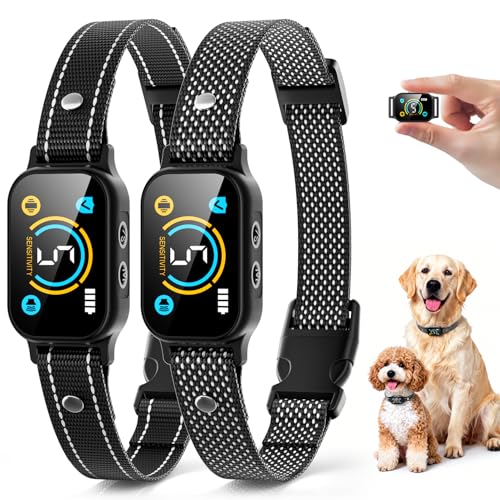
ianciu 2 Pack Ultra-Light Bark Collar (Black)
Meet The Standout Selections
The YS600 sits at the professional end of this list, and its build shows it. An accelerometer-based bark sensor reads the physical vibration of your dog’s throat rather than just sound, which cuts down sharply on false corrections from passing trucks or a neighbor’s dog.
Ten correction levels let you dial in the lowest setting that actually works, and the HPP vibration pager can run on its own for dogs that respond to touch alone. Owners of high-drive breeds commonly report this is the unit they reach for when lighter collars get ignored.
Benefits That Matter
- Accelerometer sensing means fewer corrections triggered by ambient noise, so your dog learns faster without confusion.
- The Persistent Bark Indicator logs excessive barking while the unit is off, helping you judge whether a level increase is needed.
- Vibration-only operation suits sound-sensitive dogs during early training stages.
- Rechargeable design removes the recurring cost of replacement batteries.
Things To Consider
- The housing is bulkier than budget models, which some owners of very small dogs find oversized.
- Contact points need regular checking and cleaning to keep consistent skin contact, especially on thick-coated breeds.
Key Specs
Who It Suits Best
Experienced owners working with large, determined, or working-breed dogs who need dependable correction in real outdoor conditions.
A Better Fit Elsewhere
Puppy and toy-breed owners will likely prefer the ianciu ultra-light two-pack, whose featherweight receiver suits dogs where every ounce counts.
Two collars in one package changes the math for anyone with more than one vocal dog. Each unit runs on soft reflective nylon with double stitching, so evening walks stay visible to traffic while the adjustable strap grows with your dog.
You get four training modes built around beep and vibration, with an added option for more persistent barkers, plus five sensitivity settings to tune how readily the collar reacts. Compared with the single-unit Koguzl below, the Keoge trades a few refinements for sheer coverage across a multi-dog home.
Good Reasons To Consider
- A two-pack covers two dogs, or gives you a backup while one charges.
- Reflective stitching improves visibility on dark neighborhood walks.
- Five sensitivity levels help you adapt to quiet apartments versus noisy yards.
- Lightweight strap design keeps smaller dogs comfortable over long wear.
Worth Noting
- Owners commonly report needing a week or two of adjustment time to find the right sensitivity for each individual dog.
- The nylon strap, like any fabric band, benefits from occasional hand washing to control odor.
Made For
Households with two barking dogs of mixed sizes who want one purchase to cover both.
Where A Sibling Pick Shines
For a single dog and a preference for fully shock-free correction, the Koguzl pink model offers a dedicated no-shock path instead.
Some collars bury you in menus; this one gives you two buttons and gets out of the way. One button handles power and sensitivity, the other cycles training modes, which makes it a genuinely low-friction choice for anyone trying a bark collar for the first time.
The wide 8-to-120-pound fit range spans most family dogs, and the IP67 rating means dust and rain won’t interrupt a session in the yard. Seven sensitivity levels add tuning room that the simpler Keoge pack doesn’t offer, though the brand itself notes it isn’t recommended for very small dogs.
The Practical Payoff
- Two-button operation means less fumbling at the door before walks.
- IP67 water and dust resistance holds up through muddy yards and wet weather.
- Seven sensitivity levels suit both timid and headstrong barkers.
- Rechargeable units cut long-term battery spending.
Points To Note
- The manufacturer flags it as unsuitable for very small dogs, so toy breeds should look elsewhere on this list.
- Beep-plus-vibration is the core correction here; owners wanting static options should compare the Tallentrol combo.
Feature Snapshot
Right Fit For
First-time collar users with medium or large dogs who want straightforward controls and weatherproof durability.
Swap It Out When
Owners of tiny or young puppies will find the ianciu ultra-light pair a gentler starting point given its sub-lightweight receiver design.
This is the only pick here that doubles as a remote trainer. In auto mode the receiver detects barking and responds on its own; switch to manual and the included remote reaches roughly 3300 feet, useful for recall work at the park or correcting jumping before guests sit down.
An IPX7 rating means the receiver survives full submersion, a step above the splash-level protection on most rivals. Battery life is another strong point, with the remote rated up to 180 days and the receiver around 40 days per charge, topping off in about two hours.
A Strong Showing
- Remote and auto anti-bark functions in one receiver replace buying two separate devices.
- A dedicated button disables static stimulation entirely for dogs that only need tone and vibration.
- Roughly 3300 feet of remote range supports off-leash field training.
- Long battery intervals mean fewer charging interruptions during busy weeks.
Some Limits To Know
- More modes mean more setup decisions than the two-button ODIFRBI offers.
- The receiver carries extra hardware, so it sits heavier on the neck than ultralight alternatives.
Core Details
Who Will Love This
Hands-on owners running active obedience or field training who also want automatic bark control between sessions.
Consider Something Else When
Anyone wanting pure set-and-forget simplicity will be happier with the Svtrat, which focuses entirely on automatic bark response.
The standout detail here is the protection mode. Should the collar trigger more than seven times within thirty seconds, it pauses automatically and flashes an “E” on the display, resuming only after you press the power button. That guardrail matters for anxious dogs prone to barking spirals.
Four modes split cleanly into no-shock pairs (beep, or beep with vibration) and shock-enabled pairs, each with seven intensity and seven sensitivity levels. Its recognition chip also filters out other dogs’ barking, a common pain point in apartment buildings and dense neighborhoods.
A Favorable Mix
- Automatic timeout protects reactive dogs from overcorrection loops.
- No-shock modes let you train gently before ever enabling static.
- Bark-recognition chip ignores neighboring dogs and background noise.
- Digital display makes the current mode readable at a glance.
Details To Watch
- The pause requires a manual restart, so check the display if corrections seem to stop mid-day.
- Seven-by-seven level combinations take some experimentation to dial in correctly.
Quick Facts
Who Should Grab It
Owners of nervous or reactive dogs who want strong safeguards against excessive correction built into the hardware.
Reach For A Different Pick When
Working-breed handlers needing rugged, high-output correction will get more from the Dogtra YS600’s accelerometer platform.
This is the gentlest entry on the list, built around five training modes with a genuine no-shock option and seven sensitivity levels spanning dogs from 11 to 120 pounds. A single “M” button handles mode selection, keeping day-to-day use uncomplicated.
The anti-misfire chip is tuned to reduce false triggers substantially, according to the maker, which translates to fewer pointless buzzes for your dog. Compared with the Keoge two-pack, you give up the second unit but gain a softer correction philosophy and a color option many owners appreciate.
Features That Help
- No-shock mode keeps training entirely to sound and vibration.
- One-button mode switching avoids menu digging before walks.
- Wide 11-to-120-pound fit range suits growing adolescents.
- Anti-false-trigger processing spares your dog random corrections.
Minor Gripes
- Single-collar packaging means a second dog needs a separate purchase.
- As with all auto-sensing collars, expect a short calibration period to settle on the right sensitivity for your home’s noise level.
Best Suited To
Gentle-first households, especially those with sensitive or rescue dogs, that want effective feedback without static stimulation.
Not Your Match When
Multi-dog homes needing two units at once will find better economy in the Keoge or ianciu two-packs.
Speed is this collar’s whole argument. Dual 12000R brushless motors drive its vibration response, which the manufacturer credits with noticeably faster interruption of barking than standard single-motor designs. In practice, faster response means the correction lands closer to the bark itself, tightening the association your dog forms.
Four correction modes cover the usual beep-and-vibration territory, and the 5-to-150-pound range is the widest here, edging past even the ODIFRBI. It’s positioned for both home and outdoor use, though the source details on waterproofing and battery specifics are thin, so verify those on the listing before committing.
What Pays Off
- Dual brushless motors deliver quicker vibration response at the moment of barking.
- Widest stated weight range on this list, up to 150 pounds.
- Four modes give room to step intensity up or down as habits change.
Factors To Consider
- Published specs on battery life and water resistance are sparse compared with rivals like the Tallentrol.
- Stronger motor output may feel intense for timid dogs; start at the lowest setting.
The Right Fit
Owners of large, loud, outdoor-oriented dogs who prioritize immediate response over extra features.
Another Choice May Suit
Cautious first-timers will likely find the Koguzl’s no-shock, one-button approach an easier introduction to bark training.
Small dogs get the short end of the stick with most bark collars, and this pair exists to fix that. The seamless back design does away with seams and pointed edges, so there’s nothing to rub raw spots into a delicate neck over a full day of wear.
Correction stays gentle throughout: three modes (beep, vibration, or both), five sensitivity levels, and no static at all. An AI voice chip paired with motion sensors activates only on your dog’s own bark, ignoring background noise. Reflective nylon adds a safety margin on evening walks, echoing the Keoge’s visibility focus.
Where It Excels
- Seamless contact surface reduces chafing during all-day wear.
- Ultra-light build suits puppies and toy breeds that reject heavier units.
- AI recognition plus motion sensing filters out other animals’ sounds.
- Two collars cover a pair of small dogs or provide a charging backup.
Small Caveats
- No static mode means very stubborn large-breed barkers may outgrow it quickly.
- Reflective nylon stitching, like any fabric, collects dirt and needs periodic cleaning.
Product At A Glance
Whose Shelf It Belongs On
Owners of small breeds, seniors, or young puppies who want the lightest, kindest automatic correction available.
Look Elsewhere When
Handlers of powerful adult breeds needing firmer correction should step up to the Dogtra YS600 instead.
What Matters Most Before Choosing No Bark Collars
Match Correction Style To Temperament
Sound and vibration handle most everyday barkers, especially puppies and sensitive breeds. Static modes exist for persistent cases, but start at the lowest setting and move up slowly. A collar that overwhelms a timid dog teaches fear, not quiet.
Sensitivity And False Triggers
The best modern units combine sound detection with motion or accelerometer sensing, so a slamming door or another dog’s bark doesn’t fire a correction. Apartment dwellers and multi-dog homes benefit most from this filtering; a quiet rural yard can tolerate simpler sensors.
Fit, Weight, And Daily Comfort
Weigh the receiver against your dog’s neck size. Anything over a couple of ounces sits heavily on a Chihuahua, while a Labrador barely notices. Look for smooth contact surfaces, adjustable straps, and ratings like IP67 or IPX7 if your dog swims or plays in rain.
Power And Upkeep
Rechargeable units beat disposable batteries on cost within months. Plan on wiping contact points weekly, checking strap tension as coats change seasonally, and recharging on a schedule so training never lapses mid-week.
Key Considerations Across These Picks
Mistakes Worth Dodging
The most common error is starting at maximum intensity, which can frighten a dog and worsen barking. Another frequent slip is sizing a heavy collar onto a small breed; weight limits exist for good reason. Skip collars lacking any false-trigger filtering in noisy neighborhoods.
What Separates Premium From Basic
Higher-tier models like the Dogtra YS600 spend their cost on sensor accuracy, durable housings, and finer level control. Budget two-packs win on coverage and simplicity. Paying up makes sense for working breeds, outdoor lifestyles, or dogs that ignored gentler gear.
Frequently Asked Questions
Are no bark collars safe for small dogs?
Yes, provided the unit is lightweight and sized for the breed. Models like the ianciu pair are designed specifically for small frames and use only sound and vibration.
How long does training usually take?
Most dogs show improvement within one to three weeks of consistent wear. Stubborn habits can take longer, so patience and steady routines matter more than intensity.
Can a bark collar tell my dog’s bark from another dog’s?
Modern units with accelerometer sensors or AI voice chips generally can. Basic sound-only models cannot, which is why sensor quality matters in shared spaces.
Should I leave the collar on all day?
No, most manufacturers recommend limiting wear to training periods of several hours. Regular breaks protect the skin and keep the collar effective.
Do these collars work without a remote?
All eight picks here operate automatically once fitted. Only the Tallentrol adds an optional remote for command training beyond bark control.
Closing Thoughts
Every dog barks for a reason, and a collar works best alongside attention to what’s triggering the noise in the first place. Start gentle, match the unit to your dog’s size, and give the training a fair few weeks. One of these eight should fit your household well, and quieter evenings are closer than they look.
