

Small breed puppies burn through calories fast, and their tiny jaws need kibble sized to match. Feed them an adult formula built for bigger dogs and you risk missing the DHA, calcium, and protein density a growing Chihuahua or Yorkie actually needs. This shortlist covers seven options that fit small mouths and fast metabolisms, including one wet-food companion pick for fussy eaters. Each entry below breaks down what works, what doesn’t, and who each bag truly suits.
The Shortlist At A Glance

Wellness CORE Small Breed Puppy Turkey & Salmon Recipe, 4 lb

NutriSource Small & Medium Breed Puppy Dry Dog Food, 4 lb
Nutrish Small Breed Dry Dog Food with Chicken, 5 lb Bag

Beneful IncrediBites Farm-Raised Beef Dog Food, 56 Ounce

Hill’s Science Diet Puppy Dry Dog Food
Pedigree Puppy Soft Wet Dog Food 8-Count Variety Pack

Bil-Jac Small Breed Puppy Dry Dog Food with Chicken & Yams, 6 lb
More Details On Our Top Picks
This bag leads with responsibly sourced turkey and leans on a meat-heavy philosophy: 53% of the recipe comes from quality protein ingredients. That density matters for toy breeds, whose fast metabolisms demand more nutrition per cup than larger puppies. There are no corn, wheat, soy, poultry by-products, artificial colors, or preservatives in the mix.
In a busy household with a zooming Papillon, you’d portion this like any premium kibble, but expect smaller servings to deliver more. One honest note: because the facility also processes grains, ultra-sensitive allergy households may want to confirm fit with their vet first.
Strong Points
- Guaranteed DHA levels support brain development during the critical first year.
- Calcium and phosphorus ratios back healthy bone and muscle growth in small frames.
- Added probiotics help keep digestion steady through growth spurts.
- Antioxidants give developing immune systems extra support.
- The 4 lb bag stays fresh before small-breed appetites can finish a big sack.
Worth Noting
- Grain-free formulas cost more per pound than conventional puppy kibble.
- Owners of extremely sensitive dogs sometimes prefer single-protein recipes over turkey-and-salmon blends.
Key Specs
Who It Suits Best
Growth-stage toy and small breed puppies with high energy whose owners want a meat-first, additive-light formula.
Where A Sibling Pick Shines
Hill’s Science Diet Puppy suits owners who prefer a widely vet-recommended grain-inclusive recipe at a gentler price point.
Where Wellness CORE goes grain-free, NutriSource keeps things conventional and centers its recipe on chicken meal, a concentrated protein that supplies the amino acids small puppies need for muscle development. The brand also builds in prebiotics and probiotics, which is the detail that separates it from basic grocery-store bags.
Heart-support nutrients round out the formula, a thoughtful touch for breeds prone to cardiac concerns later in life. The 4 lb format matches the small-breed feeding pace well, so kibble doesn’t sit stale in a bin for months.
What We Like
- Chicken meal as the leading ingredient delivers dense, usable protein.
- Built-in digestive support helps firm up stools during the transition to solids.
- Omega fatty acids contribute to coat condition as the adult coat grows in.
Trade Offs
- Contains grains, so it won’t suit owners committed to grain-free feeding.
- Listings for this bag sometimes come from third-party sellers, so check who ships it.
- Smaller brand presence means fewer size options than Hill’s offers.
Made For
Owners of small and medium breed puppies who want digestive support built into an everyday formula without paying premium grain-free prices.
Another Choice May Suit
Bil-Jac Small Breed Puppy fits better for very young puppies still learning to chew, thanks to its softer bite texture.
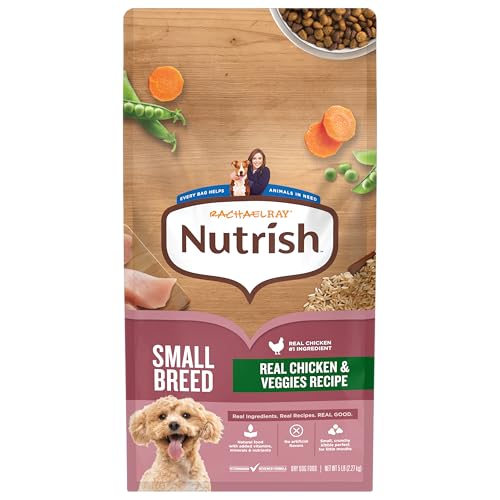
Rachael Ray’s Nutrish keeps the ingredient list refreshingly simple: real chicken leads, followed by added vitamins and minerals, with no artificial flavors in the bag. The kibble pieces run small and crunchy, shaped for little mouths, which is why picky eaters tend to finish the bowl.
One thing worth flagging honestly: this is formulated for adult small breed dogs, not puppies, so it earns its place here as a budget bridge once your pup matures or as a value option your vet signs off on. Sales also support animals in need through the Rachael Ray Foundation, a nice bonus at checkout.
Bright Spots
- Real chicken as the first-listed ingredient keeps protein familiar and palatable.
- Veterinarian-reviewed recipe adds confidence for cautious shoppers.
- Small crunchy pieces suit tiny jaws and slow chewers alike.
- Each purchase channels support toward shelter animals.
Minor Gripes
- It’s an adult formula, so growing puppies need a true puppy recipe first.
- Some owners report the 5 lb bag goes stale faster than expected in humid kitchens; an airtight container solves it.
Feature Snapshot
Right Fit For
Budget-minded owners of mature small breed dogs who want a clean, simple chicken recipe without premium pricing.
Reach For A Different Pick When
Wellness CORE Small Breed Puppy is the stronger match while your dog is still actively growing and needs DHA-fortified nutrition.
Beef is the headline here, and the IncrediBites line shapes its kibble into genuinely tiny pieces aimed at small dogs and those with sensitive teeth. Compared with Nutrish’s chicken-forward bag, this one swaps protein sources and lands at a friendlier price per ounce, which matters when you’re feeding through a growth phase.
The 56-ounce size stretches further than the 4 and 5 lb bags earlier on this list, though that bulk only pays off if your dog finishes it while fresh. No artificial colors, flavors, or preservatives are added, a respectable touch at this tier.
Reasons To Buy
- Real farm-raised beef provides a high-quality protein base.
- Bite-sized kibble suits small dogs and dental-sensitive eaters.
- Essential vitamins and minerals round out daily nutrition.
Points To Note
- Like the Nutrish bag, this targets adult small dogs rather than growing puppies.
- The large 56 oz bag needs sealed storage to stay crisp in humid climates.
At A Glance
Who Will Love This
Multi-dog small-breed households watching food costs who still want real meat leading the ingredient panel.
Where Another Pick Suits Better
Hill’s Science Diet Puppy is the better call for anyone feeding a puppy under one year old rather than an adult small dog.
Few puppy foods carry the name recognition of Hill’s Science Diet, and the brand backs it with two flavor routes: chicken and brown rice, or lamb and brown rice. Both build around what the company calls its five essential building blocks for lifelong health, plus a prebiotic fiber blend designed to feed the gut microbiome.
The range of bag sizes is the practical standout here, running from small trial bags all the way up to 25 pounds. In our view, that flexibility makes this the easiest pick to start small with and scale once you know your puppy tolerates it well.
Highlights
- Prebiotic fiber blend supports digestive balance during weaning and beyond.
- Two protein flavors let you rotate or match a fussy palate.
- Wide size range means you can buy small first, then commit.
- Long veterinary track record gives first-time owners peace of mind.
Softer Spots
- Grain-inclusive recipe won’t suit owners avoiding rice or wheat entirely.
- Per-pound pricing sits above grocery-tier brands like Beneful.
Quick Facts
Whose Shelf It Belongs On
First-time puppy owners who want a veterinarian-trusted, research-backed formula and value flexibility in bag sizing.
Skip It When
Wellness CORE Small Breed Puppy fits better for households committed to a grain-free, meat-first ingredient philosophy.
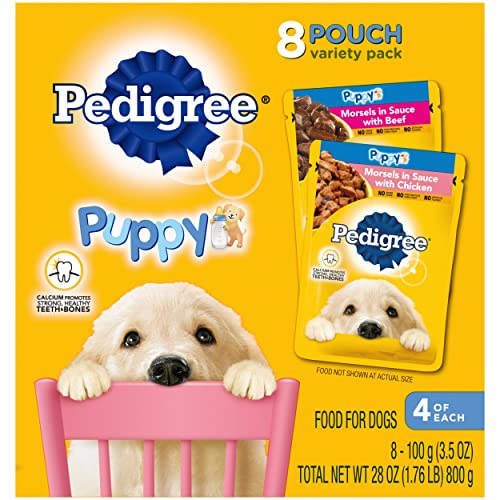
Yes, this one is wet food sitting in a dry-food lineup, and that’s deliberate: it’s the companion piece that makes dry kibble work for reluctant eaters. The variety pack pairs chicken and beef morsels in sauce, both complete and balanced for puppies, with DHA for brain development and calcium for teeth and bones.
Spoon it over dry kibble as a topper, mix it through, or serve it alone on rough days. There’s no added sugar, no high fructose corn syrup, and no artificial flavors. Production facilities are committed to zero waste to landfill, a quiet sustainability note worth knowing.
Plus Points
- Soft morsels ease the jump from weaning to textured food.
- DHA and calcium support the same growth milestones dry puppy foods target.
- Works as a topper, mixer, or standalone meal depending on appetite.
Honest Caveats
- Wet pouches cost more per calorie than any dry bag on this list.
- Opened portions need refrigeration and quick use, unlike shelf-stable kibble.
- Not a replacement for a complete dry puppy diet long term for most budgets.
The Right Fit
Owners of fussy or newly weaned puppies who need an appetite booster alongside a dry staple like Hill’s or Bil-Jac.
Swap It Out When
Any of the dry picks above serves better as a primary everyday diet, since kibble offers better value and easier storage.
Bil-Jac does something unusual: every 6 lb bag is made using 5 lbs of fresh chicken, slow-cooked and gently dried rather than rendered at high heat. The result is a soft, porous kibble shape that tiny puppy teeth can actually manage, which smooths the weaning-to-solids transition better than hard-crunch alternatives.
Oatmeal and yams supply gentle fiber aimed at sensitive stomachs, and vitamin C and E fortification backs the immune system through that vulnerable first year. Protein and fat levels are tuned for rapid small-breed growth without overwhelming young digestion. Owners commonly report less backyard waste, likely tied to that digestibility.
Standout Traits
- Fresh chicken in every bag delivers complete amino acids for lean muscle.
- Soft, easy-to-chew bites suit teething puppies and recent weanlings.
- Oatmeal and yams calm touchy tummies and aid nutrient absorption.
- Vitamins C and E reinforce immunity during early development.
- Calorie-dense formula means smaller portions per feeding.
Things To Consider
- Soft kibble can clump in humid storage; an airtight container keeps it workable.
- Higher price per pound than Beneful or Nutrish.
Core Details
Built With In Mind
Very young small breed puppies transitioning off weaning food, especially those with delicate digestion.
Look Elsewhere When
NutriSource Small & Medium Breed Puppy covers the same growth window at a lower cost for owners past the weaning stage.
What Matters Most Before Choosing Puppy Kibble
Match The Formula To The Life Stage
A puppy recipe isn’t marketing fluff; it carries higher protein, DHA for brain development, and calibrated calcium for bones that are still forming. Adult small breed formulas like the Nutrish and Beneful bags above make sense only after growth plates close, typically around 9 to 12 months for toy breeds. Check the life-stage statement on the bag before committing.
Size The Kibble To The Mouth
Yorkies, Chihuahuas, and Pomeranians struggle with standard-size kibble. Look for explicitly small-breed shaping, or soft-texture options like Bil-Jac’s porous bites. A dog that can’t comfortably chew will either swallow whole, risking choking, or walk away from the bowl hungry.
Read The First Three Ingredients
Ingredients are listed by weight before cooking. Real meat or meat meal leading the panel, as with Wellness CORE’s turkey or NutriSource’s chicken meal, signals a protein-forward recipe. Long filler lists starting with corn or vague by-products usually mean you’re paying for less nutrition per cup.
Plan For Storage And Freshness
Small breeds eat slowly relative to bag size. Fat in puppy formulas oxidizes once exposed to air, so a 25 lb bag can go stale before a 6 lb Maltese finishes it. Buy smaller bags or invest in a sealed container.
Key Considerations Across These Picks
Traps First Timers Fall Into
The most common slip is buying adult food for a growing puppy because it’s cheaper on the shelf. The second is switching formulas abruptly; transition over seven to ten days by blending old and new to avoid stomach upset. Skipping the feeding-guide math is another one, since small breeds need precise portions, not free pouring.
The Case For Spending Up
Premium bags justify their cost through named proteins, guaranteed nutrient levels like DHA, and digestive support such as probiotics or prebiotic fibers. Cheaper kibble often meets baseline standards but spends less on bioavailable ingredients. The upgrade pays off most during the first year, when nutrition compounds fastest.
Closing Thoughts
Feeding a small breed puppy well comes down to three checks: a true puppy formula, kibble sized for a tiny mouth, and ingredients led by real meat. Any of the seven above clears those bars within its own niche, whether that’s grain-free density, gentle digestion, or budget value. Start with a small bag, watch how your pup responds over two weeks, and adjust from there. Your vet remains the best final word on any dietary switch.
