

A reliable e collar solves one stubborn problem: your dog listens at home but goes deaf the moment a squirrel crosses the yard. The seven systems below cover everything from budget two-dog kits to precision trainers with hundreds of stimulation levels. Each one earns its spot through range, waterproofing, or humane correction options that suit real training sessions, not showroom conditions.
The Shortlist At A Glance

Asrcs Rechargeable Dog Training Collar IPX7 (8-150lbs)

BLACKDOG Military Dog Shock Collar 4200ft (Dark Blue)

Educator ME-300 Micro E Collar

SLOPEHILL Dog Shock Collar 2 Dogs (8-140Lbs)
Educator ET-400 E Collar

PATPET 2 Dogs Training Collar IPX7 Waterproof
More Details On Our Top Picks
Multi-dog homes rarely get much attention from collar makers, so the dual-channel remote here stands out immediately. One handset manages up to four receivers at once, which turns chaotic park sessions into something you can actually coordinate.
The 2000-foot range covers most suburban yards and open trails comfortably, though dense tree cover may trim that figure a bit. An IPX7 rating means the receiver shrugs off rain, puddles, and swimming without drama.
Strong Points
- One remote trains up to four dogs simultaneously, cutting gear clutter
- IPX7 waterproofing survives swims and stormy walks alike
- Flashlight mode doubles as a low-light recall cue
- Fits dogs from 8 to 150 pounds, so mixed-size packs work
Things To Consider
- Owners commonly report recharging both units weekly with daily use
- Signal strength through heavy brush is less certain than in open ground
Quick Facts
Who It Suits Best
Homes juggling two to four dogs of different sizes who want a single remote doing all the work.
A Better Fit Elsewhere
Anyone wanting finer stimulation granularity should look at the Educator EZ-900 instead, since its 256 levels beat this four-mode setup for sensitive dogs.
Where the Asrcs above aims at everyday yards, this Blackdog unit is built for people whose weekends involve mud, lakes, and thorny trails. The reinforced casing carries a stated crush tolerance and bite-cycle rating that few consumer collars bother publishing.
Range stretches to 4200 feet, and the signal is designed to punch through trees and rain rather than dropping out mid-recall. A dedicated ON/OFF switch prevents pocket activations, a small detail you’ll appreciate once a stray bump has ever fired a correction.
Upsides
- Reinforced housing tolerates crushing force and repeated chewing attempts
- IP67 sealing handles submersion up to a meter for 30 minutes
- Strobe and flashlight modes aid visibility on dark trails
- Three-month battery claim reduces charging chores between trips
Minor Gripes
- The rugged build adds bulk that small breeds may find cumbersome
- Extreme-duty claims are hard to verify outside manufacturer figures
Right Fit For
Hikers, hunters, and farm-dog owners running medium to large breeds through genuinely rough terrain.
Swap It Out When
Apartment dwellers and city walkers will find the Educator ME-300’s lighter micro receiver far more comfortable for daily wear.
Small dogs get shortchanged by most e collars, and that’s the gap the ME-300 fills. The micro-sized receiver suits necks from 10 to 26 inches on dogs over 5 pounds, so a 12-pound terrier isn’t wearing hardware meant for a Malinois.
Correction comes through 100 stimulation levels plus tone and vibration, giving you room to start gentle and adjust in tiny steps. A night tracking light helps you locate your dog after dusk, handy for campsite and backyard use alike.
What We Like
- Genuinely lightweight receiver suits toy and small breeds
- 100 levels allow gradual, low-stress intensity tuning
- Tone-only option works for sound-responsive dogs
- Night tracking light improves visibility on evening walks
Softer Spots
- The 1/3-mile range trails the longer-reach Educator models here
- Contact points need periodic checking for fit on thin-coated necks
At A Glance
Made For
Owners of small or temperament-sensitive dogs who want professional-grade adjustment without bulky hardware.
Where A Sibling Pick Shines
Working over acreage beyond a third of a mile points you toward the Educator ET-400, which triples the reach.
Two receivers in the box changes the math entirely for households with a pair of dogs. Instead of buying a second system later, the Slopehill arrives ready to train both animals off one remote, and the price sits at the accessible end of this list.
You still get a 4200-foot range and five modes including a no-shock setting, which matters more than any spec sheet line. Beep and vibration handle most routine corrections, keeping static as a last resort rather than a default.
Reasons To Buy
- Two complete collars included, no second purchase needed
- No-shock mode lets timid dogs train on sound alone
- 4200-foot range matches pricier rivals in this roundup
- Fits an unusually wide 8-to-140-pound span
Points To Note
- Build materials feel lighter than the Blackdog’s reinforced casing
- With two receivers sharing one charger, charging rotation becomes routine
Feature Snapshot
Who Should Grab It
Budget-conscious owners of two dogs who refuse to sacrifice range to save money.
Consider Something Else When
Shoppers prioritizing tank-like durability over value should step up to the BLACKDOG Military collar and its crush-rated housing.
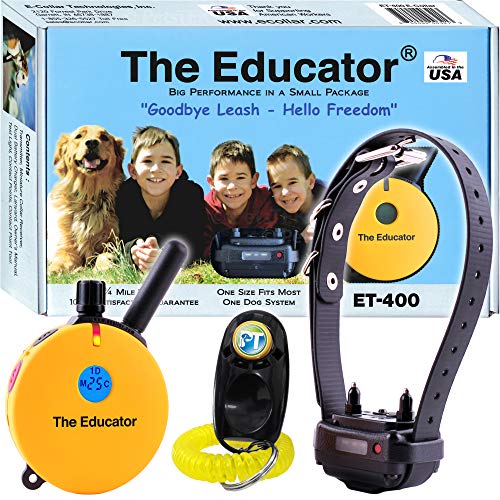
Three-quarters of a mile is serious reach, and nothing else on this shortlist comes close. Field trainers and rural owners working livestock or hunting breeds will put that distance to work every single outing.
The stopwatch-shaped transmitter keeps your eyes forward while delivering taps, tones, or stimulation in quick nicks or constant bursts. Like its siblings, it offers 100 blunt stimulation levels, a term meaning the pulse spreads across contact points rather than concentrating sharply, which most dogs tolerate more calmly.
Bright Spots
- Longest range available in this entire comparison
- Blunt stimulation design softens the sensation at each level
- Ergonomic remote supports quick, eyes-up corrections
- Night tracking light aids recovery in low light
Worth Noting
- Reach you’ll rarely use in a standard suburban yard
- Premium positioning puts it above casual-budget alternatives like the Slopehill kit
Whose Shelf It Belongs On
Rural property owners, field-trial handlers, and anyone training at distances past half a mile.
Not Your Match When
Suburban walkers staying under a quarter mile can save money with the PATPET two-dog system and lose little in practice.
First-time e collar users tend to drown in menus, and PATPET deliberately keeps things simple. Three modes, beep, vibration, and 16 static levels, cover the full correction ladder without overwhelming someone holding a remote for the first time.
The kit includes two receivers for a pair of dogs ranging from 10 to 140 pounds, and the 3000-foot range handles typical neighborhood and park distances with margin. IPX7 sealing means lake days and downpours won’t end the session early.
Plus Points
- Streamlined three-mode interface suits nervous beginners
- Two receivers included for dual-dog training
- 16 static steps offer gentler granularity than basic models
- IPX7 receivers keep swimming and rain off the worry list
Small Caveats
- No dedicated no-shock-only mode like the Slopehill offers
- Range falls short of the 4200-foot competitors for open-field work
Core Details
Perfect Match For
Novice owners training two medium or large dogs who want clarity over configurability.
Look Elsewhere When
Handlers needing hundreds of intensity steps will prefer the Educator EZ-900 and its 256-level dial-in precision.
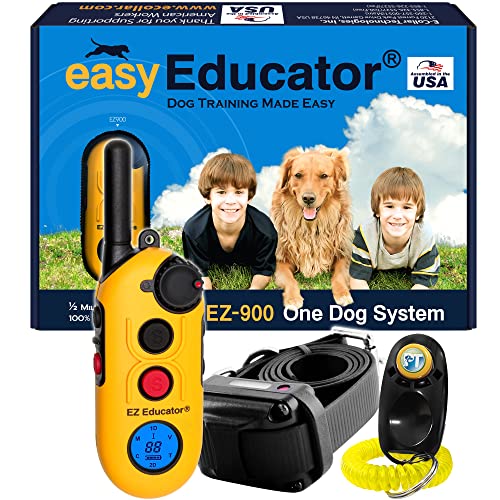
Compared with the ME-300’s 100 levels, the EZ-900 pushes adjustment to 256 distinct steps, and that difference shows up the moment you’re dialing in a dog who reacts to even slight jumps in intensity. Half a mile of range splits the difference between the micro model and the long-range ET-400 nicely.
Tone and vibration modes come standard, along with the night tracking light shared across the Educator line. In our view, this is the sweet spot of the family for owners who want pro-level tuning without paying for field-trial distance.
Standout Traits
- 256 stimulation levels deliver the finest tuning on this list
- Half-mile range balances reach against everyday practicality
- Blunt stimulation spreads output for a milder feel per level
- Night tracking light supports after-dark visibility
Honest Caveats
- Level-count abundance can overwhelm absolute beginners
- Single-collar base kit means a second dog needs the two-dog variant
Details At A Glance
Who Will Love This
Detail-oriented owners of sensitive or reactive dogs who want surgical control over every correction level.
Another Choice May Suit
People who value simplicity over granularity will be happier with the PATPET’s stripped-back three-mode layout.
What Matters Most Before Choosing E Collars For Dog Training
Match Range To Your Actual Terrain
A 4000-foot figure sounds impressive until trees and hills eat the signal. Suburban yards rarely demand more than 2000 feet, while farms and field work justify the longer-reach Educator units. Buy for the ground you actually train on, not the biggest number on the box.
Count Your Dogs Before You Count Features
Two-dog households should prioritize kits shipping with two receivers, like the Slopehill or PATPET. Adding a second single-collar system later usually costs more than choosing a dual kit upfront, and managing one remote beats juggling two handsets at the park.
Start At The Bottom Of The Correction Ladder
Tone and vibration resolve most unwanted behavior when introduced consistently. Models offering many low static levels, such as the Educator line’s blunt stimulation designs, let you find the minimum effective setting rather than jumping straight to a strong pulse.
Weight And Fit Decide Comfort
A receiver sized for a Labrador drags on a Beagle’s neck. Check the manufacturer’s weight and neck-size ranges carefully, because an ill-fitting unit causes rubbing, inconsistent contact, and a dog that associates the collar with discomfort rather than training.
Key Considerations Across These Picks
Traps First Timers Fall Into
The classic error is buying maximum range and maximum intensity when neither fits the dog. Oversized receivers slip on small breeds, and starting at high static levels teaches fear instead of commands. Another common miss: ignoring charging routines, since a dead receiver mid-session undoes weeks of progress.
What Separates Premium From Basic
Higher-tier models spend their extra cost on signal reliability, finer stimulation steps, and tougher housings. Paying up makes sense for sensitive dogs, rough terrain, or distances past half a mile. For a calm family pet in a fenced yard, a simpler kit delivers nearly identical results.
Closing Thoughts
The right choice comes down to honest self-assessment: how many dogs, what terrain, and how sensitive your companion runs. Multi-dog homes should start with the Slopehill or PATPET kits, rough-country handlers belong with the Blackdog, and precision-minded owners will find the Educator EZ-900 worth every penny. Whichever direction you lean, begin on the gentlest setting and let results guide the rest.
