

A dog that bolts after a squirrel or ignores your recall call is stressful in ways every owner knows. A good e training collar closes that gap, giving you a way to communicate clearly at distance without shouting yourself hoarse. The seven options below cover everything from budget two-dog kits to premium trainers built for serious field work, so you can match the tool to your dog’s size, temperament, and your training style.
The Shortlist At A Glance

Asrcs Rechargeable IPX7 Waterproof E Collar (8-150lbs)

Snsng Dog Training Collar with Remote for 2 Dogs

BLACKDOG Military Dog Shock Collar 4200ft (Dark Blue)

SLOPEHILL Dog Shock Collar 2 Dogs (8-140Lbs) 4200FT
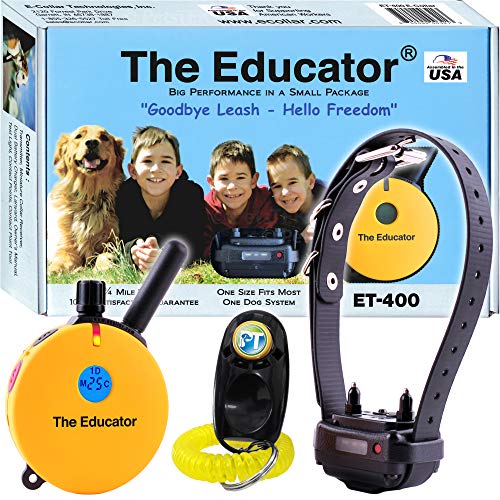
Educator ET-400 E Collar for Dog Training
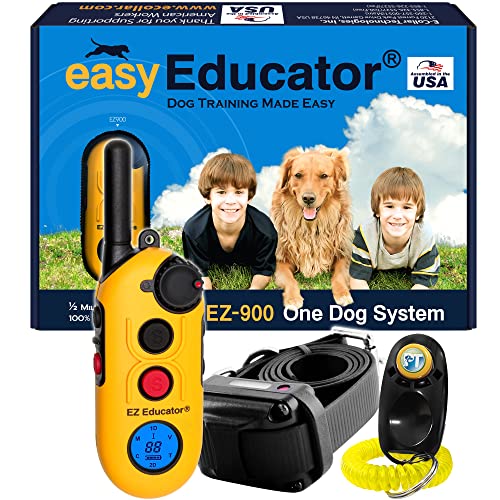
Educator EZ-900 E Collar for Dog Training
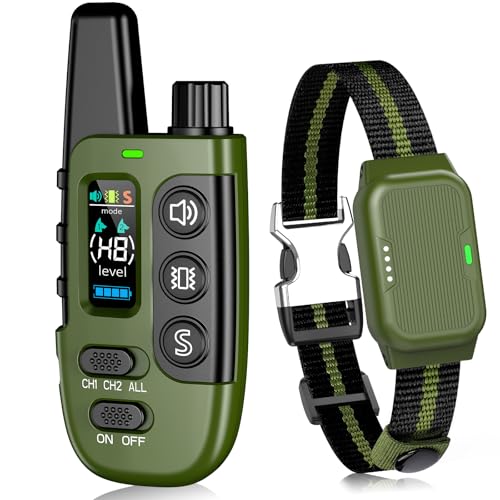
Snsng Dog Training Collar with Remote Control
More Details On Our Top Picks
The Asrcs unit earns its top slot by covering the widest spread of real situations. Its 2000-foot remote reach handles a suburban backyard or an open park trail, and dual-channel support means you can run up to four dogs from one handheld without juggling separate remotes.
Because the receiver carries an IPX7 waterproof rating, meaning it survives full submersion, lake swims and rainy hikes stop being a concern. That combination of range, multi-dog capacity, and weatherproofing makes this the most flexible kit here for mixed households.
Strong Points
- 2000-foot range gives you control across large yards and open trails
- Dual-channel design trains several dogs from a single remote
- IPX7 waterproofing shrugs off swims, rain, and muddy conditions
- Flashlight mode doubles as a low-light locator on evening walks
- Suits dogs from 8 to 150 pounds, so one kit covers most breeds
Things To Consider
- Owners commonly report that contact points need regular checking and cleaning to keep consistent skin contact, especially on thick-coated breeds
- Four-dog simultaneous training works best when all dogs are at similar training stages
Key Specs
Who It Suits Best
Households with multiple dogs or anyone who trains outdoors in unpredictable weather will get the most from this kit.
A Better Fit Elsewhere
Shoppers who want finer intensity granularity should look at the Educator EZ-900 instead, since its 256 levels suit sensitive dogs better.
Where the Asrcs chases maximum flexibility, this Snsng kit keeps things simple and predictable. You get three correction channels: an audible beep, vibration, and static, each adjustable across 16 levels so you can start gentle and step up only as needed.
The detail that stands out is the battery power display on both the receiver and the remote. Anyone who has had a trainer die mid-session knows why that matters; you always know when a charge is due before you head out the door.
What We Like
- 16-level vibration and static settings let you dial in the mildest effective cue
- Battery indicators on both units prevent surprise shutdowns mid-walk
- Two-dog support handles a pair of dogs without buying a second system
Worth Noting
- No flashlight mode, so locating a dark-colored dog after dusk means carrying a separate light
- Rechargeable receivers benefit from a routine charging schedule; skipping it is the most common complaint pattern among owners of similar kits
Made For
Two-dog homes that want dependable basics without paying for features they’ll never touch.
Where A Sibling Pick Shines
For night walks and off-leash park sessions, the Asrcs collar’s built-in flashlight and longer range make it the stronger companion.
This is the collar you buy when the training ground is a mountain trail rather than a mowed lawn. BLACKDOG specifies a reinforced casing rated to withstand significant crush force and repeated bite attempts, plus an IP67 waterproof seal good for submersion up to a meter for 30 minutes.
Range stretches to 4200 feet, and the manufacturer states the signal penetrates obstacles like trees and rain. An ON/OFF safety button on the remote prevents pocket activations, which matters more than most people expect once you’re scrambling through brush.
Highlights
- 4200-foot reach suits beaches, forests, and wide-open fields
- Reinforced housing stands up to rough handling and determined chewers
- IP67 sealing survives lakes, storms, and stream crossings
- Strobe and flashlight modes aid visibility in low light
- Three-month battery life reduces charging chores on long trips
Trade Offs
- The rugged build adds bulk compared with slimmer everyday collars like the Snsng kits
- Signal penetration claims depend heavily on terrain density, so dense forest performance can vary
Feature Snapshot
Right Fit For
Hikers, hunters, and rural owners whose dogs face mud, water, and hard use week after week.
Swap It Out When
Suburban owners doing basic obedience work will find the SLOPEHILL kit lighter on the wallet and easier to live with daily.
SLOPEHILL packs five correction modes into a two-collar kit: beep, vibration, safe static, flashlight, and a no-shock option for dogs still learning what the collar means. That last mode is genuinely useful, letting a nervous dog acclimate to wearing the receiver before any correction happens.
Range matches the BLACKDOG at 4200 feet, which is generous at this tier. In our view, this is the sensible entry point for someone training two dogs together who doesn’t want to compromise on mode variety.
Upsides
- Five modes include a no-shock option for gradual introduction
- 4200-foot range rivals pricier rugged models
- Two receivers included, sized for dogs from 8 to 140 pounds
- Useful for curbing barking, chasing, and jumping in social settings
Minor Gripes
- Build materials are lighter-duty than the BLACKDOG, so rough terrain wear shows sooner
- With five modes on one remote, some owners report a short learning curve finding buttons quickly
Who Will Love This
New trainers working a pair of medium-to-large dogs in open spaces on a modest budget.
Consider Something Else When
Anyone prioritizing durability over mode count should step up to the BLACKDOG Military collar’s reinforced casing.
Educator builds its reputation on precision, and the ET-400 shows why. Stimulation comes in 100 distinct “blunt” levels, a design that spreads correction across a wider band so you can land on the exact lowest level your dog notices. Corrections fire as quick nicks or constant bursts, and the stopwatch-shaped remote keeps your eyes on the dog rather than the buttons.
Range runs three-quarters of a mile, comfortably beyond any budget kit here. Tone and vibration taps give you non-static options first, and a night tracking light helps you keep tabs on the dog after dark.
Reasons To Buy
- 100 blunt stimulation levels allow surgical fine-tuning
- Nick and constant burst modes suit both quick cues and sustained guidance
- 3/4-mile range outclasses every budget pick in this list
- Ergonomic remote supports fast, eyes-up handling
- Night tracking light improves safety on evening sessions
Small Caveats
- This single-dog configuration costs more than the two-receiver budget kits, so multi-dog homes pay extra for expansion
- The feature depth takes a few sessions to master fully
At A Glance
Best Suited To
Committed trainers running structured programs who value adjustment precision over bundle pricing.
Not Your Match When
Casual backyard users will be better served by the Snsng two-dog kit, which covers fundamentals at a friendlier entry point.
The EZ-900 sits beside the ET-400 in Educator’s lineup with one headline difference: 256 stimulation levels instead of 100. For sensitive or small dogs where even small jumps between settings feel too coarse, that finer ladder is the entire argument for choosing this model.
You trade a little range for it, half a mile versus three-quarters, though that still dwarfs the budget picks. Tone and vibration modes come standard, along with the same night tracking light, and a two-dog variant exists if your household grows.
Bright Spots
- 256 stimulation levels offer the finest adjustment granularity in this roundup
- Half-mile range handles most suburban and park scenarios easily
- Vibration and tone give humane first-line cues
- Night tracking light supports after-dark visibility
Honest Caveats
- More levels mean more button presses to reach a saved setting, which some owners find slower under pressure
- Contact points should be checked weekly for wear and cleanliness to avoid skin irritation, a routine worth building early
Quick Facts
The Right Fit
Owners of timid, small, or highly sensitive dogs who need whisper-fine correction steps.
Reach For A Different Pick When
Long-distance field work calls for the ET-400’s extra quarter-mile of reach instead.
This second Snsng entry surprises with spec depth you rarely see at entry-level pricing. Static correction spans 99 levels, vibration offers 16, and the beep mode cycles through 8 different tones, so you can find a sound your dog actually responds to rather than ignoring.
Dual-channel control handles two dogs separately, and a 1+2 mode fires commands to both at once, handy when two dogs bolt in opposite directions and you need an immediate group recall.
Plus Points
- 99 static levels give unusually fine control for a budget kit
- Eight beep tones let you find one your dog notices
- 1+2 broadcast mode corrects both dogs simultaneously in urgent moments
- Separate channel control avoids over-correcting the calmer dog
Softer Spots
- Manufacturer range figures aren’t specified here, so very large properties may push past comfortable signal limits
- Strap fit should be checked often on growing puppies; a loose receiver loses contact consistency, a widely reported issue with this category generally
Core Details
Who Should Grab It
First-time e collar owners who want granular control without committing to premium pricing.
Another Choice May Suit
Shoppers needing verified long-range performance should compare the SLOPEHILL kit’s stated 4200-foot reach before deciding.
What Matters Most Before Choosing E Training Collars
Match The Range To Your Reality
A 2000-foot collar sounds impressive until you realize most suburban backyards need half that. Buy for the space you actually train in: city and fenced-yard owners are well served by shorter-range kits, while anyone working fields, beaches, or hunting grounds should prioritize the 4200-foot and half-mile-plus models. Overbuying range rarely hurts, but underbuying ends the session early.
Correction Modes Beat Raw Power
The best trainers barely use static at all. Look for kits offering beep and vibration tiers before shock, and favor fine-grained level counts, because landing on the lowest level your dog notices is what keeps training humane and effective. Sensitive dogs especially benefit from systems like the Educator line’s many-step ladders.
Durability And Fit Are Ownership Costs
Waterproof ratings matter more than most listings suggest. IPX7 and IP67 seals determine whether a swim ends your equipment’s life, and reinforced casings earn their keep around chewers and thorny terrain. Whatever you choose, plan on checking strap fit and cleaning contact points regularly; neglected contact points are the most common cause of inconsistent results.
Key Considerations Across These Picks
Traps First Timers Fall Into
The classic mistake is starting at too high an intensity, which teaches fear instead of obedience. Always begin with beep alone and climb gradually. Another frequent slip is skipping the fit check: a receiver that shifts around delivers uneven contact and confusing signals, so snug-but-two-fingers-loose is the target.
What Separates Premium From Basic
Higher-tier models like the Educator units spend their extra cost on stimulation precision, ergonomic remotes, and proven waterproofing rather than gimmicks. Paying up makes sense once basic obedience is established and you’re refining behavior at distance. For teaching sit and recall in a fenced yard, a budget kit does the job honestly.
Closing Thoughts
Every collar here solves the same core problem, keeping your dog responsive and safe when a leash isn’t an option. Start by matching range to your actual training ground, then weigh mode variety against build quality based on how hard your dog plays. Whichever kit fits your situation, commit to patient, low-intensity training and the results tend to follow.
