

A dog that bolts through an open gate is a problem every owner dreads. Electric dog fences solve it without building a physical barrier, using a buried wire or satellite signal to teach your dog where the yard ends. The catch is choosing between wired kits you install yourself and app-driven GPS collars that need no digging at all. This shortlist covers both routes so you can match the system to your property, your dog’s size, and how much installation work you’re willing to take on.
The Shortlist At A Glance
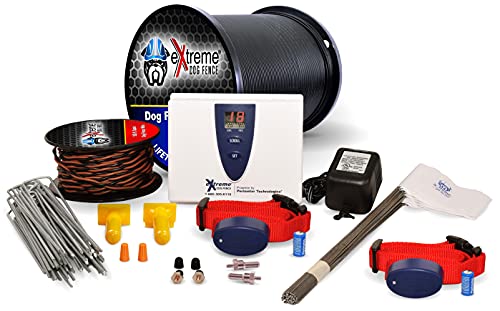
Extreme Dog Fence Pro Grade Kit, 2-Dog, 500 ft
Extreme Dog Fence Pro Grade Kit, 2-Dog, 1000 ft

PetSafe YardMax In-Ground Fence
DJNFGQ GPS Wireless Dog Fence Collar

Dogtra GPS Fence, No Subscription Collar

PcEoTllar Underground Fence System, 2 Collars

Lilyeel GPS Wireless Collar Fence System
More Details On Our Top Picks
This is the kit for anyone with real land to cover. The Pro Grade electronics support up to 10 acres of coverage, and the transmitter runs diagnostics most budget systems skip entirely: battery checks, temperature monitoring, and a wire-break alert that tells you the moment your boundary line fails.
The collar receiver is fully waterproof and submersible to 10 feet, which matters more than it sounds. Dogs who treat the stock tank or pond as a swimming pool won’t knock the receiver out of commission, something owners of lake-loving Labs report as a genuine relief.
Strong Points
- Covers up to 10 acres, enough for most rural homesteads
- Receiver survives full submersion to 10 feet deep
- Built-in wire check flags breaks before your dog finds them
- Two collars included, ready for a multi-dog yard out of the box
Things To Consider
- You’ll spend an afternoon burying or staking 500 ft of wire, and rocky soil slows that down considerably
- The diagnostic features add setup steps compared to simpler transmitters
Key Specs
Who It Suits Best
Rural owners comfortable with a DIY weekend install who want hard-wired reliability over app-based convenience.
A Better Fit Elsewhere
Apartment-adjacent or small-lot owners should look at the PetSafe YardMax In-Ground Fence, which targets compact yards with less wire to manage.
Same Pro Grade electronics as the 500 ft version above, doubled wire. That’s the whole pitch, and honestly it’s the right one for bigger properties. Doubling the boundary line lets you enclose a full perimeter around several acres rather than a tight inner loop, giving your dog far more usable running room.
The three-antenna transmitter, battery and temperature checks, and wire-break detection all carry over unchanged. So does the fully waterproof receiver rated for 10-foot submersion. In our view this is the smarter buy for anyone whose lot exceeds roughly two acres, since stretching the smaller kit’s wire thin tends to weaken signal consistency along long runs.
What We Like
- 1000 ft of wire supports wide perimeters on multi-acre lots
- Identical rugged receiver with 10-ft submersion rating
- Wire-check alerts catch buried-line damage quickly
Worth Noting
- Burying 1000 ft is a serious dig, so plan a full weekend or rent a trencher
- Overkill for quarter-acre suburban yards where the extra wire just sits coiled
Made For
Farm and acreage owners with multiple dogs who want one permanent, self-installed boundary covering the whole property.
Swap It Out When
Smaller-lot owners get everything they need from the PcEoTllar Underground Fence System, which covers up to 4/5 acre with far less wire to lay.
PetSafe flipped the usual correction logic here, and it changes daily life more than you’d expect. Standard in-ground fences correct a dog before he crosses the buried wire, which shrinks his play area by the width of the warning zone. YardMax waits until after he steps over, so the correction zone feels effectively endless from the dog’s side and your yard stays fully usable.
The kit ships with 20-gauge wire sized for up to a third of an acre, plus an add-a-dog collar option for growing households. For typical suburban backyards, that footprint fits comfortably, though buyers with larger lots will need expansion wire.
Bright Spots
- Correction triggers only after the boundary line, maximizing play space
- Trusted brand with widely available add-a-dog collars
- Compact footprint suits standard city and suburban lots
- 20-gauge wire is flexible and easier to trench than heavier gauge
Small Caveats
- One-third-acre ceiling means expansion purchases for anything bigger
- Buried wire still requires digging, and shallow lines can be nicked by future landscaping work
Quick Facts
Right Fit For
Suburban homeowners with a quarter-to-third-acre yard who want a proven brand and maximum usable lawn space.
Where A Sibling Pick Shines
Owners needing ten times the coverage should step up to the Extreme Dog Fence Pro Grade Kit, built for multi-acre properties.
No shovel required. This single-collar system draws its boundary from GPS satellites rather than buried wire, so setup amounts to charging the collar and defining your perimeter. There’s no subscription either, which keeps the long-term cost flat in a category where some brands charge monthly.
Two correction modes give you some training flexibility depending on your dog’s temperament. The honest trade-off is precision: consumer GPS positioning drifts a few meters depending on tree cover and weather, so expect softer edges than a wired loop delivers. For open, unobstructed yards that imprecision rarely matters.
Plus Points
- Zero digging, zero wire, working boundary in minutes
- No recurring fees to track or cancel
- Two modes let you tailor corrections to a sensitive dog
- Single-collar simplicity keeps the learning curve short
Points To Note
- GPS accuracy dips under heavy tree canopy or near tall structures
- One collar means buying a second unit for a second dog
- Collar batteries need regular recharging, unlike passive wired receivers
Feature Snapshot
Who Should Grab It
First-time fence owners renting their home or testing whether containment works before committing to a buried system.
Consider Something Else When
Wooded properties with unreliable sky view suit the wired PcEoTllar Underground Fence System better, since radio signals ignore tree cover.
Dogtra brings e-collar pedigree to the virtual fence space, and it shows in the layered design. Instead of one boundary line, the collar works through a warning zone, a primary fence, and two backup fences stacked behind it. A dog that blows through the first layer still hits reminders deeper in, which is the kind of redundancy anxious owners appreciate.
Setup happens once through the free companion app, where you draw circular or custom-shaped boundaries matching your property. After that the collar operates standalone, no phone required. The IPX9K rating denotes high-pressure water resistance, and the rechargeable collar suits dogs 15 lbs and up on properties of three-quarters of an acre or larger.
Standout Traits
- Four-layer protection: warning zone plus primary and dual backup fences
- Custom-shaped boundaries follow irregular property lines
- App needed only at setup, then the collar runs independently
- IPX9K waterproofing handles rain, mud, and rough play
- Supports up to 30 saved fences for multi-property owners
Honest Caveats
- Not intended for indoor use, so the collar comes off inside the house
- Requires three-quarters of an acre minimum, ruling out small urban yards
Details At A Glance
Who Will Love This
Tech-comfortable owners of mid-size rural or suburban properties who want premium build quality without a monthly bill.
Reach For A Different Pick When
Tighter budgets fit the DJNFGQ GPS Wireless Dog Fence Collar, which offers basic satellite containment at an entry-level cost.
Two dogs, one box, no separate collar purchases. That’s the core appeal of this underground system, which includes enough boundary wire to enclose up to four-fifths of an acre. Compared to the PetSafe YardMax reviewed earlier, you trade brand pedigree and the post-wire correction design for a lower entry point and double the collars included.
Installation follows the familiar pattern: lay the wire, connect both ends to the transmitter, power up, sync the collars. Everything needed for testing and assembly ships in the kit, and an attached tag card helps you locate the buried line years later when landscaping day arrives. Cats are also supported per the manufacturer, a rare mention in this category.
Reasons To Buy
- Two collars included, ready for a pair of pets immediately
- Nearly an acre of coverage from the supplied wire
- All-in-one kit includes testing tools for pre-bury verification
- Tag card marks the wire path for future yard projects
Softer Spots
- Lesser-known brand, so long-term parts availability is harder to judge than with PetSafe or Dogtra
- Standard pre-boundary correction design eats some usable yard space
The Right Fit
Multi-dog households on half-acre to three-quarter-acre lots watching their budget closely.
Another Choice May Suit
Single-dog owners wanting refined electronics will prefer the Dogtra GPS Fence, with its layered protection and app-based setup.
Odd-shaped properties are where this system earns its spot. Rather than forcing a circular boundary like most GPS fences, the free app lets you draw a custom polygon that traces your actual yard, farm plot, or pasture edge. No wire, no digging, and the shape bends to your land instead of the reverse.
The companion app stays free permanently according to the manufacturer, covering boundary settings, training features, and activity monitoring with no hidden tiers. Alerts escalate through beep, vibration, or static correction as your dog nears the edge, and remote training controls live in the same interface. Up to five pets can share one account, which undercuts the per-collar math of nearly every rival here.
Highlights
- Custom polygon boundaries match irregular property shapes
- App access carries no subscription or hidden costs
- Supports tracking for up to five pets from one account
- Three-stage alerts plus remote training in a single app
Room For Improvement
- Depends on stable outdoor GPS signal, so dense tree cover degrades performance
- App-dependent setup frustrates anyone who dislikes phone-based configuration
Core Details
Whose Shelf It Belongs On
Farm owners and anyone with angular or multi-section properties who wants wire-free containment shaped to their actual land.
Look Elsewhere When
Owners prioritizing rock-solid signal consistency over flexibility should choose the Extreme Dog Fence Pro Grade Kit and its buried-wire reliability.
What Matters Most Before Choosing Electric Dog Fences
Wired vs. GPS: Know Your Land First
Buried-wire systems deliver consistent, weatherproof boundaries because a radio signal travels along a physical line. They demand installation labor, sometimes a full weekend of trenching. GPS collars install in minutes but depend on clear sky view, so heavily wooded lots introduce drift at the edges. Match the technology to your terrain before comparing anything else.
Coverage and Correction Design
Check the stated acreage against your actual lot, then add margin. A fence rated for a third of an acre won’t stretch to a half-acre run without weaker signal zones. Correction placement matters too: systems that trigger before the wire shrink usable yard space, while post-wire designs like PetSafe’s YardMax keep every square foot playable.
Ongoing Costs and Expansion
Rechargeable collars need routine charging cycles, and batteries degrade over years of ownership. Count your dogs now and likely additions later, since add-a-dog collars vary widely in price and availability between brands.
Key Considerations Across These Picks
Traps First Timers Fall Into
The most common mistake is buying on acreage alone and ignoring soil and layout. Rocky ground makes burial miserable, and dense trees undermine GPS accuracy. Shoppers also skip the training phase: every manufacturer expects a leash-and-praise introduction period, and skipping it is the leading cause of escapes.
What Separates Premium From Basic
Higher-tier systems pay for redundancy and diagnostics. Dogtra’s stacked backup fences and Extreme Dog Fence’s wire-break alerts exist because failures happen quietly. Paying up buys earlier fault detection, which is cheaper than a lost dog.
Closing Thoughts
The right electric dog fence depends less on specs and more on your property. Big open acreage favors the Extreme Dog Fence kits, small suburban yards fit the PetSafe YardMax, and irregular or wire-free situations point toward the Dogtra or Lilyeel GPS options. Whichever route you take, commit to the training period your dog deserves, and the boundary will hold for years.
