

Mini Aussies burn energy like big dogs packed into small frames, and their first year decides a lot about their joints, coat, and digestion later. Feeding one means finding kibble small enough for a tiny jaw yet dense enough to fuel herding-brain development. This list covers seven options built for exactly that job, from sensitive-stomach formulas to raw toppers for fussy eaters.
The Shortlist At A Glance

NutriSource Small & Medium Breed Puppy Food 4 lb
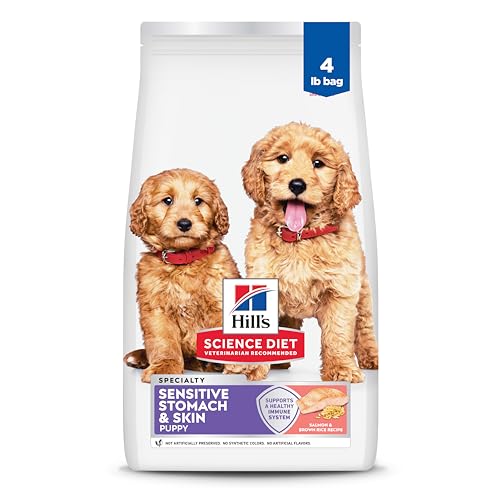
Hill’s Science Diet Puppy Sensitive Stomach & Skin

FARMINA Mini Puppy Lamb, Pumpkin & Blueberry 5.5 lbs

Hill’s Science Diet Puppy Chicken & Brown Rice

Nature’s Protection Superior Care White Fish Puppy 3.3 lb

Open Farm Ancient Grains Puppy Chicken & Salmon 4 lb

Stella & Chewy’s Perfectly Puppy Meal Mixers 3.5 oz
More Details On Our Top Picks
A growing Mini Aussie needs steady muscle support, and this formula puts chicken meal first in the ingredient list, which concentrates amino acids for lean development. NutriSource also builds in digestive helpers, something worth having during the months when a puppy’s gut is still settling into a new home and routine.
The 4 lb bag suits smaller households well since kibble stays fresher in a compact package. Owners commonly report the small-breed sizing works nicely for tiny jaws, though you may find the bag disappears quickly with an energetic pup eating three meals a day.
Strong Points
- Chicken meal leads the recipe, delivering concentrated protein for muscle growth
- Prebiotics and probiotics support smoother digestion during transition months
- L-Carnitine, taurine, choline chloride, and DL-methionine back cardiovascular development
- Omega fatty acids contribute to skin and coat condition
Things To Consider
- The 4 lb size runs out fast for active puppies, so plan on frequent reorders or a larger bag when offered
- This listing is sold by a third-party seller, so check freshness dates on arrival
Made For
Owners who want a straightforward, nutrient-dense daily kibble for a small or medium breed puppy without specialty-diet complexity.
Where A Sibling Pick Shines
Puppies with recurring loose stools tend to do better on Hill’s Science Diet Sensitive Stomach & Skin, which targets digestion directly.
Some puppies simply have touchy digestion, and this Hill’s recipe exists for them. It pairs a highly digestible base with prebiotic fiber, the plant material that feeds beneficial gut bacteria, so nutrients actually get absorbed instead of passing through. Compared with the standard NutriSource above, this one narrows its focus to three fronts at once: stomach comfort, skin, and immunity.
Vitamin E alongside omega-3 and omega-6 fatty acids supports coat shine, which matters for a breed whose fluffy double coat shows dullness fast. DHA rounds things out for brain development during those chaotic early training months.
Highlights
- Prebiotic fiber helps firm stools and improve nutrient uptake
- Triple-action design addresses stomach, skin, and immune health together
- DHA supports cognitive growth during peak learning windows
- Available in 4 lb and 13 lb bags to match household size
Minor Gripes
- Fish-forward recipes don’t appeal to every puppy, so expect a possible transition period
- Specialty formulas typically cost more per pound than standard puppy blends
At A Glance
Who Will Love This
Owners dealing with soft stools, itching, or dull coats in a young Mini Aussie who need one formula covering several issues.
Swap It Out When
Healthy puppies with no sensitivities may find better value in the standard Hill’s Science Diet Puppy recipe reviewed below.
Lamb gives this Farmina recipe a protein source many chicken-sensitive puppies tolerate more easily, and the pumpkin addition brings gentle fiber to the bowl. Blueberry contributes antioxidants, a nice touch for a breed that stays mentally busy. The mini kibble format suits a Mini Aussie’s small muzzle without forcing her to crunch oversized pieces.
It’s formulated to meet AAFCO nutrient profiles for all life stages, including growth, so it carries complete nutrition through the entire puppy phase. In most kitchens, the 5.5 lb bag strikes a reasonable middle ground between freshness and fewer reorder trips.
Upsides
- Lamb-first recipe offers an alternative to common chicken-based diets
- Pumpkin supplies fiber that firms up inconsistent stools
- Blueberries add antioxidant variety rarely seen in mainstream kibble
- Meets AAFCO profiles for all life stages, including growth
Softer Spots
- Imported-style premium formulas usually carry a higher cost per serving than domestic staples
- Lamb recipes can smell stronger, which some owners notice indoors
Quick Facts
Right Fit For
Puppies with suspected chicken sensitivities or owners who prefer European-style formulations with distinctive ingredients.
Another Choice May Suit
Budget-focused shoppers wanting a familiar chicken recipe will likely prefer the Hill’s Science Diet Puppy Chicken & Brown Rice option.
Where the Sensitive Stomach version specializes, this core Hill’s puppy recipe keeps things simple: chicken or lamb meal with brown rice, built around broad developmental support rather than any single problem. That makes it a sensible default for a healthy Mini Aussie puppy with no known sensitivities.
The brand’s ActivBiome+ prebiotic fiber blend aims at gut microbiome balance, and the range of bag sizes, from 4 lb up to 25 lb, means you can scale purchases as your puppy’s appetite grows. Vets recommend this line often, which says something about its consistency over decades.
Reasons To Buy
- Choice of chicken or lamb and brown rice bases
- Bag sizes span 4 lb to 25 lb for every household scale
- ActivBiome+ prebiotic fibers support digestive balance
- Formulated around key building blocks for lifelong health
Points To Note
- Chicken-based recipes won’t suit puppies already showing poultry reactions
- Large 25 lb bags need an airtight container to stay fresh in humid climates
Who Should Grab It
First-time puppy owners who want a trusted, widely stocked everyday formula without specialty pricing.
Look Elsewhere When
Puppies battling tear staining or coat discoloration will get more targeted help from Nature’s Protection White Fish further down this list.
White-coated and light-colored Mini Aussies often develop rusty tear stains and yellowing around the mouth and paws, and this Lithuanian-made formula was designed with exactly that frustration in mind. White fish sits first in the ingredient list, providing lean protein that tends to sit well with sensitive skin.
The recipe skips grains, gluten, wheat, pork, and beef, trimming the usual irritation suspects in one pass. DHA, calcium, and antioxidants cover brain, bone, and vitality needs for juniors aged roughly 3 to 12 months, which maps neatly onto a Mini Aussie’s fastest growth stretch.
Bright Spots
- Targets tear stains and yellowing on light coats, a real pain point for white-marked Aussies
- White fish as the lead ingredient supports lean muscle and coat quality
- Free of grains, gluten, wheat, pork, and beef to reduce irritation triggers
- Small 3.3 lb bag keeps kibble fresh and portions controlled
Small Caveats
- The 3.3 lb size means near-monthly repurchasing once appetite peaks
- Fish-based kibble has a distinct aroma some households find noticeable
Feature Snapshot
Whose Shelf It Belongs On
Owners of white or lightly marked puppies fighting stubborn facial staining despite regular grooming.
Not Your Match When
Households preferring meat-heavy red-protein diets will find the Open Farm chicken and salmon recipe a closer match.
Open Farm takes a middle path between grain-free extremes: oats and quinoa, both old-world grains that digest easily, paired with wild-caught salmon and humanely raised chicken. Ancient grains simply refers to cereal varieties largely unchanged by modern breeding, and they bring fiber, vitamins, and minerals along with the protein.
Non-GMO fruits and vegetables round out the recipe, and the brand publishes sourcing details openly, which matters to anyone who reads labels closely. Four recipe variants, ancient-grain and grain-free in both chicken-salmon and salmon-only forms, give you room to adjust as sensitivities reveal themselves.
Plus Points
- Dual animal proteins deliver a rich amino acid profile for growth
- Oats and quinoa add digestible fiber without heavy grain loads
- Four recipe variants make elimination adjustments simpler
- Transparent sourcing appeals to ingredient-conscious owners
Trade Offs
- Premium positioning means a higher cost per pound than mass-market brands
- Dual-protein recipes complicate elimination trials for allergy investigation
Core Details
Who It Suits Best
Owners who read every label, value ethical sourcing claims, and want grain-inclusive flexibility across recipe variants.
Reach For A Different Pick When
For a budget-friendly staple with similar digestive support, the NutriSource Small & Medium Breed formula costs less per feeding.
This one works differently from everything else here: it’s a freeze-dried raw topper meant to be crumbled over kibble rather than a standalone diet. Roughly 95 percent of each piece comes from cage-free turkey, organs, and bone, giving even plain kibble a scent and taste most puppies chase across the room.
The puppy-specific formulation adds DHA, vitamin E, and L-Carnitine for body and brain development, plus probiotics and antioxidants. A scoop turns a reluctant eater into an eager one, and the whole-prey approach mirrors what canine ancestors ate. You can also serve it as a complete meal in a pinch.
Standout Traits
- Revives appetite in fussy puppies within days, based on widely reported owner experiences
- About 95 percent turkey, organs, and bone for dense raw nutrition
- DHA, vitamin E, and L-Carnitine support growing bodies and brains
- Grain-free with probiotics and no unnecessary fillers
- Doubles as a full meal solution when needed
Honest Caveats
- The 3.5 oz pouch empties quickly as a daily topper, so the 1.13 lb size pays off for regular use
- Freeze-dried pieces should stay sealed and dry, or they lose texture
- Raw-format products cost considerably more per calorie than kibble
Details At A Glance
Built With In Mind
Owners of picky eaters who want to upgrade an existing kibble rather than switch brands entirely.
Where Another Pick Shines
Anyone needing a complete standalone diet at lower cost will get more mileage from the Hill’s Science Diet Puppy Chicken & Brown Rice bag.
What Matters Most Before Choosing Foods For Mini Australian Shepherd Puppy
Kibble Size And Energy Density
Mini Aussies weigh roughly 20 to 40 pounds as adults, placing them squarely in small-to-medium territory. Kibble sized for their muzzle prevents gulping, while calorie-dense recipes fuel high activity without huge volumes. A herding-breed puppy playing hard all afternoon burns through energy faster than a couch-companion breed of similar size.
Protein Source And Sensitivities
Chicken dominates most puppy foods, which becomes a problem the moment a sensitivity appears. Keeping a lamb or fish alternative in mind saves a scramble later. Watch for itching around the paws, ear flare-ups, or loose stools after meals, the signals owners most commonly report.
Growth-Stage Additives Worth Having
DHA supports brain development during the training-heavy first year, calcium builds the frame, and antioxidants shore up a maturing immune system. L-Carnitine and taurine appear in heart-conscious formulas. None of these replace a balanced base; they refine it.
Practical Ownership Factors
Bag size drives freshness more than most people expect. A 4 lb bag stays crisp for a single puppy, while a 25 lb sack demands an airtight bin. Transition any new food gradually over seven to ten days to spare your puppy’s stomach.
Key Considerations Across These Picks
Traps First Timers Fall Into
Switching foods too fast tops the list, followed by buying giant bags that go stale before the halfway mark. Another common slip is chasing grain-free labels blindly; grains aren’t inherently bad, and recipes like Open Farm’s oat-and-quinoa blend digest comfortably. Match the formula to observed symptoms, not marketing.
When Paying More Pays Off
Higher-tier options earn their price through named protein sources, targeted additives like DHA and L-Carnitine, and tighter sourcing transparency. Specialty fixes such as Nature’s Protection’s stain control solve problems cheap food ignores. For a healthy puppy with no complaints, a solid mid-range staple does the job well.
Bottom Line
Your Mini Aussie’s first year sets the tone for a decade of fetch, hikes, and couch cuddles afterward. Start with a complete puppy formula matched to her size and any sensitivities you’ve noticed, then adjust based on stool quality, coat shine, and energy. When in doubt, a quick chat with your veterinarian beats any list, including this one.
