

A dog that drags you down the sidewalk turns a pleasant stroll into an arm workout. The right harness changes that dynamic by shifting pressure from the throat to the chest, so pulling becomes uncomfortable for your dog rather than dangerous. This list covers seven options built for strong pullers, from padded everyday vests to heavy-duty nylon rigs with grab handles. Each one suits a different dog size, walking style, and budget, so match the fit to your routine rather than chasing the flashiest design.
A Closer Look At The Lineup

PetSafe Easy Walk Comfort No Pull Dog Harness
Mengbei Tribe Breathable Mesh No Pull Harness Set

Dog Friendly Co. Dog Harness for Medium Sized Dogs
Forestpaw No Pull Dog Harness with Large Handle

APAKBAK No Pull Dog Harness with Handle

Lukovee No Pull Dog Harness and Leash Set

Azinoo Blue No-Pull Dog Harness with 2 Leash Clips
The Picks, Examined More Closely
The Easy Walk line has been around long enough that many trainers recommend it by name, and this Comfort variant adds extra padding to the formula. That cushioning matters most on longer routes, where thinner straps tend to rub behind the front legs.
The no-pull geometry sits across the chest rather than the throat, so a lunging dog feels gentle steering pressure instead of a choking sensation. In our view, that makes it one of the easier first harnesses to fit correctly.
A Favorable Mix
- Boosted padding reduces chafing on daily walks
- Chest-based design discourages pulling without throat pressure
- Vest-style coverage distributes force more evenly than a collar ever could
- Established brand with widely available replacement guidance
Things To Consider
- Sizing runs specific, so measure the girth before ordering
- Owners commonly report the straps need re-tightening after the first few wears
Who It Suits Best
Medium-dog owners who walk daily on sidewalks and want a proven, low-fuss no-pull design.
Where Another Pick Suits Better
Handlers of powerful 50-to-80-pound pullers will get more control from the Forestpaw’s handle-equipped build.
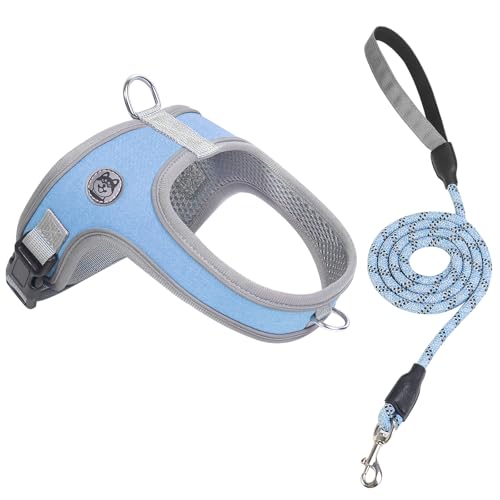
Where the PetSafe focuses on padding, this saddle-style set bets on airflow. The cationic fabric shell pairs with a mesh lining, which keeps dogs cooler on summer jogs than solid nylon panels would. A matching leash comes in the box too.
Getting it on takes two steps: slip it over the neck, then clip the chest strap. Owners of wiggly puppies often find that speed is the whole selling point.
Everyday Wins
- Breathable mesh suits warm climates and year-round wear
- Two-buckle setup means less wrestling at the door
- Adjustable chest strap grows with a young dog
- Reflective trim improves visibility on evening routes
Worth Noting
- Mesh construction trades some abrasion toughness for ventilation
- Better matched to small and medium frames than heavy pullers
Quick Facts
Right Fit For
Small and medium dog households in warm regions who want a complete set without overthinking gear.
Consider Something Else When
Owners of determined large-breed pullers should step up to the Lukovee set’s reinforced triangle design instead.
This brown vest leans into looks without ignoring function. The base unit ships with a single heavy-duty back D-ring for everyday leashing, and the interesting part is what’s optional: a modular front D-ring sold separately, so you add front-clip control only when training actually demands it.
Both neck and chest straps adjust independently, and the size range stretches from XXS through XL. That flexibility makes it easy to dial in a snug fit on odd body shapes.
Notable Upsides
- Modular front ring lets you upgrade control later instead of buying a second harness
- Independent neck and chest adjustment handles unusual proportions
- Heavy-duty back D-ring inspires confidence on strong walkers
- Wide XXS-XL sizing fits multi-dog households shopping one brand
Small Caveats
- The front D-ring costs extra, unlike the dual-clip Azinoo below
- Total spend climbs once the add-on is factored in
Feature Snapshot
Made For
Design-conscious medium-dog owners who prefer building their setup gradually rather than paying upfront for features they may not need.
A Better Fit Elsewhere
Anyone who wants both clips included from day one should look at the APAKBAK harness with its standard front and back rings.
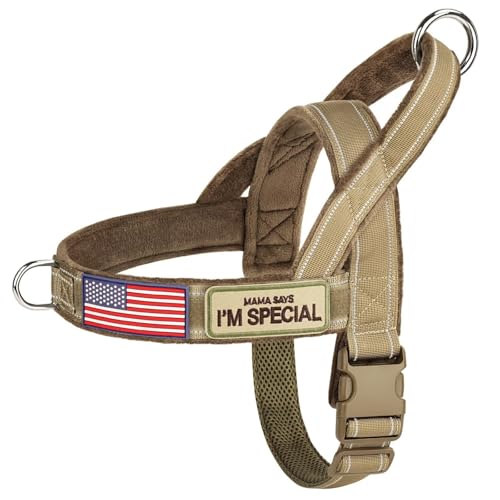
Some dogs don’t just pull, they launch. This brown rig answers with 1000D nylon, a tightly woven shell rated against tears and punctures, plus alloy hardware where cheaper sets use plastic. The oversized top handle gives you an instant grip point near traffic or at the vet.
The trade-off is fit precision: the front chest panel measures 18 inches unadjustable, so the belly strap carries all the tuning. Measure carefully before committing.
What It Does Well
- 1000D nylon shrugs off abrasion from rough play and brush
- POM buckle and alloy D-ring resist failure under sudden lunges
- Large handle offers immediate physical control in tight spots
- Sized for 50-80 lb dogs, covering most strong medium-large breeds
Points To Note
- Fixed 18-inch front chest limits fit flexibility compared to fully adjustable rivals
- Heavier construction can feel bulky on slighter frames
Key Specs
Who Should Grab It
Owners of muscular 50-to-80-pound dogs who need rugged hardware and a grab handle for urban or trail walking.
Skip It When
Narrow-chested or still-growing dogs get a better result from the Azinoo’s four adjustable straps.
Training a puller usually means switching between correction mode and reward mode, and this soft mesh vest is built around exactly that rhythm. Clip the leash to the front ring during loose-leash drills, then move it to the back ring once your dog settles into an easy pace.
Unlike the Forestpaw’s fixed chest plate, adjustment points sit at both the chest and belly here, so the fit stays secure without pinching movement. You may find the padding compresses slightly over months of hard use, though nothing about the spec sheet suggests structural concerns.
Everyday Perks
- Front clip redirects pulling gently toward you during training
- Back ring suits relaxed strolls once manners improve
- Dual chest and belly adjustment creates a snug, escape-resistant fit
- Soft mesh padding keeps contact points comfortable on longer outings
- Top handle adds a safety grip for crowded sidewalks
Less Ideal Details
- No size chart detail in the listing, so verify measurements before purchase
- Mesh panels collect burrs easily on grassy trails
Best Suited To
First-time trainers working through leash-manners programs with small, medium, or large dogs alike.
Reach For A Different Pick When
Shoppers who want a bundled leash from the start will find better value in the Lukovee set.
Everything a new puller household needs arrives together here: a soft padded harness plus a matching leash, sized for medium and large dogs. The clever engineering detail is the triangular chest layout, which spreads leash force across the torso so a sudden lunge doesn’t collapse into throat pressure.
Compared with the Mengbei Tribe set earlier, this one targets bigger, stronger dogs while keeping the same bundle convenience. For mild to moderate pullers, the front clip alone often changes walk quality within a few weeks.
What Helps Most
- Triangle design disperses force to prevent choking on lunges
- Front chest clip redirects direction during loose-leash training
- Back O-ring switches to casual-walk duty instantly
- Soft padding protects the chest through long sessions
- Complete kit means nothing extra to buy before the first walk
Trade Offs To Consider
- Aimed at mild to moderate pullers, not extreme sled-grade strength
- Padding traps hair and needs occasional brushing out between washes
At A Glance
The Right Fit
Medium and large dog owners starting leash training who want a full setup without piecing components together.
Swap It Out When
Owners needing maximum material toughness for outdoor work should choose the Forestpaw’s 1000D nylon instead.
Adolescent dogs change shape fast, and this blue vest is designed to keep up. Four adjustable straps cover neck sizes from 14 to 20 inches and chests from 21 to 27 inches, giving you room to loosen things as a young Husky or Shepherd fills out.
Four metal delta-shaped rings, two up front and two at the back, handle leash attachment from either end. Padded Oxford nylon with a breathable mesh layer guards against chafing, and quick-snap buckles make the whole thing a ten-second job.
Well-Handled Touches
- Four metal delta rings offer flexible leash placement on both ends
- Four-point adjustability tracks a growing dog’s changing frame
- Padded Oxford nylon with mesh prevents rubbing on long walks
- Reflective elements boost visibility after dark
Factors To Weigh
- Four buckles mean slightly slower on-off than two-step designs like the Mengbei Tribe
- Straps benefit from a periodic check for loosening, as owners of active dogs commonly report
Core Details
Who Will Love This
Owners of adolescent Huskies, Labradors, and Shepherds who want one harness to last through growth spurts.
Not Your Match When
Anyone prioritizing lightning-fast on-and-off for a squirmy puppy will prefer the Mengbei Tribe’s simpler two-step closure.
What Matters Before Choosing Harnesses For Dogs Who Pull
Fit Beats Everything Else
Measure the widest part of the chest and the base of the neck, then leave room for two fingers under each strap. A harness that rides too loose lets a determined dog back out of it mid-walk, while one cinched too tight restricts shoulder movement and creates sore spots. Fixed-panel designs like the Forestpaw demand precise measuring; four-strap systems forgive estimation errors.
Front Clip Versus Back Clip
A front chest clip turns your dog sideways when they surge ahead, which interrupts the pulling reflex without any force on the throat. Back clips suit dogs whose manners are already solid. Dual-attachment models let you train with the front ring and graduate to the back ring, which is why most picks here offer both.
Material And Hardware
Look for woven nylon or dense mesh with metal D-rings rather than plastic ones. Strong pullers generate real force at the attachment point, and hardware is where cheap harnesses fail first. Padded contact zones matter equally: raw webbing behind the front legs rubs raw skin within a few long walks.
Match The Build To Your Routine
City walkers dealing with traffic benefit from top handles for instant control. Trail families should prioritize abrasion resistance and washability. Apartment dwellers with small breeds can favor lightweight mesh over rugged 1000D nylon, since the extra bulk buys nothing their dog can’t outgrow in attitude alone.
Key Considerations Across These Picks
Traps First Timers Fall Into
The most common mistake is buying by weight label alone and skipping the tape measure. Girth varies wildly between breeds of identical weight, so always check chest dimensions. Second trap: assuming a no-pull harness fixes pulling instantly. These tools redirect pressure, but consistent loose-leash practice does the actual teaching. Finally, shoppers sometimes order the wrong season’s design, choosing thick padded vests for hot-climate dogs that would fare far better in ventilated mesh.
What Separates Premium From Basic
Higher-tier harnesses spend their cost on three places: denser fabric weaves, metal instead of polymer hardware, and more adjustment points. That combination matters most for dogs above roughly 50 pounds or handlers who walk daily in rough conditions. For a calm 15-pound companion, a basic padded vest performs nearly identically. Spend up when strength, frequency, or terrain pushes past what entry-level stitching tolerates.
Closing Thoughts
Pulling is a habit, and a harness is the tool that makes retraining comfortable for both ends of the leash. Start with accurate measurements, pick the clip layout that matches your training stage, and give your dog a week to adjust to the new feel. Any of these seven can turn a tug-of-war stroll into an actually enjoyable walk. The best harness is simply the one your dog forgets they’re wearing.
