

Labrador puppies chew with the enthusiasm of a wood chipper, and a toy that survives a Beagle often won’t survive a Lab. This roundup covers eight options built for teething gums, high energy, and the kind of play that ends with slobber on the couch. Rope bundles, self-moving gadgets, plush squeakers, and one legendary rubber ring all made the cut. Match the toy to your puppy’s chewing style and your patience for noise, and you’ll save a lot of furniture.
The Shortlist At A Glance

TwoEar Dog Rope Toy 4 Pack

Qraxond Interactive Dog Soccer Ball (Blue)
VYsTN Interactive Fox Puppy Toy

Erhalithegro Interactive Tug of War Puppy Toy

Zeaxuie 9 Pack Puppy Teething Toys

KONG Ring Natural Rubber Chew Toy
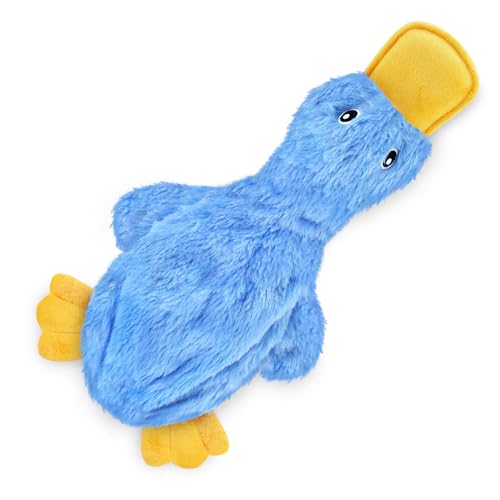
Best Pet Supplies Crinkle Duck Squeaky Toy

Best Pet Supplies Bunny Buddy Squeaky Plush Toy
More Details On Our Top Picks
A puppy in the teething phase wants variety, and this four-piece rope set delivers it without four separate purchases. Each piece plays a different role: one built for tug, one for gnawing, one for tossing, and a rope bone shape suited to fetch. That spread matters more than it sounds, because Labs burn out on a single texture fast.
The cotton rope construction also doubles as a flossing surface, which owners commonly report helps work loose debris off teeth during chewing sessions. For a small-breed Lab puppy under a year old, the sizing fits comfortably in the mouth without overwhelming it.
Strong Points
- Four distinct play styles keep a teething puppy rotating instead of fixating on your shoes
- Rope fibers give gums something to work against during the worst teething weeks
- Machine-washable in most cases, so slobber buildup doesn’t become permanent
- Bundle pricing makes it an easy first purchase for a new puppy household
Things To Consider
- Frayed rope ends are widely reported once heavy chewers get going, so trim loose strands and retire a piece once it unravels badly
- Supervision is wise during tug sessions until you know how your puppy treats fabric
Key Specs
Who It Suits Best
Owners of teething small-breed puppies who want an affordable, varied starter set rather than one premium toy.
Where Another Pick Suits Better
Power chewers who shred fabric will get more mileage from the KONG Ring’s solid natural rubber construction.
Where the TwoEar set is passive, this motorized soccer ball works the room on its own. It runs two modes: a normal bouncing cycle that moves for ten seconds, rests for five, and repeats, plus a higher-intensity “crazy” mode with red lighting for puppies who need more stimulation. Touch detection wakes it back up, so a nudge from a curious nose restarts the action.
That hands-off operation is the whole appeal for anyone working from home. The ball occupies the puppy’s attention in short bursts rather than demanding constant throws, and the built-in lights and beeps give it a visibility edge in dim rooms. One honest caveat: the beeping won’t suit every household, and noise-sensitive owners may find themselves switching it off more often than not.
What We Like
- Touch activation means play resumes automatically after each standby cycle
- Two intensity modes let you match energy output to your puppy’s mood
- Lighted housing keeps the ball easy to track on dark floors
Worth Noting
- Sound effects are a genuine trade-off in apartments or homes with sleeping kids
- Motorized parts mean you’ll want to keep it away from determined chewers
Made For
Puppy owners who need independent entertainment during work calls or short absences around the house.
Consider Something Else When
For a quieter electronic option with rechargeable convenience, the VYsTN Interactive Fox Puppy Toy is the better match.
This plush fox splits the difference between a stuffed toy and a robot. It bounces, vibrates, and emits sounds on its own, with an unpredictable movement pattern that keeps a puppy guessing. During pause cycles it responds to your voice with a shake and a sound, which turns downtime into a small training moment.
The rechargeable design is what separates it from the Qraxond ball. A USB charge takes roughly two hours and delivers up to three hours of play, so you’re not feeding it disposable batteries every few weeks. For a boredom-prone Lab left alone during a workday, that combination of motion, sound, and no battery cost is hard to argue with. The chew-resistant covering helps, though no plush electronic toy is truly indestructible against a determined adolescent Lab.
Highlights
- USB rechargeable, eliminating recurring battery purchases entirely
- Three hours of runtime per charge covers a typical work-morning stretch
- Voice-echo response during pauses adds an interactive layer most toys skip
- Unpredictable bouncing and vibration patterns resist habituation
- Chew-resistant shell holds up better than standard plush
Trade Offs
- Electronics inside mean it needs dry storage and careful cleaning, never a washing machine
- Two-hour charge time means planning ahead rather than grabbing it on demand
At A Glance
Right Fit For
Puppies left alone for stretches who need motion and sound to stay out of mischief.
Look Elsewhere When
Hands-on tug lovers will get more from the Erhalithegro Interactive Tug of War Puppy Toy and its ergonomic handle.
Most plush toys are solo entertainment. This one is built for the two of you, with an ergonomic handle sized for a comfortable human grip during tug sessions. The pineapple velvet exterior is soft enough for teething gums, and a 3D textured surface gives the puppy something to explore beyond the squeaker.
Inside, a high-pitched squeaker pairs with crinkle paper in the belly, the classic one-two combination that taps into a dog’s prey drive. The dual-sound design is genuinely effective at cutting through puppy distraction, and the plush body doubles as a decent photo prop, which sounds trivial until your camera roll fills up. The trade-off is durability: soft plush and intense tug play don’t coexist forever, so this suits gentler mouths best.
Upsides
- Ergonomic handle spares your hands during long tug matches
- Squeaker plus crinkle paper triggers natural hunting instincts
- Pineapple velvet is gentle on sensitive gums and paws
- Hypoallergenic materials reduce irritation risk for delicate skin
Minor Gripes
- Plush construction won’t survive an aggressive chewer for long, a limitation owners of heavy chewers report often
- Surface texture collects drool and needs regular spot cleaning
Best Suited To
Owners who want structured bonding play, fetch, and indoor hide-and-seek with a soft-mouthed puppy.
Not Your Match When
Solo-play households will find the Best Pet Supplies Bunny Buddy a lower-maintenance plush alternative.
Bring home a Lab puppy and you’ll learn that toy rotation is survival strategy. This nine-piece kit covers it in one purchase: four squeaky plush toys, three tougher rope toys, a treat ball, and a dog bag roll thrown in. Compared to the TwoEar four-pack, you’re getting more than double the pieces with a wider material mix.
Two pieces deserve specific mention. The unstuffed fox toy carries a squeaker and crinkle paper without the stuffing mess that follows most destroyed plush toys, a design choice your vacuum will appreciate. The treat ball doubles as a puzzle: the puppy learns to roll it so kibble falls out, which builds problem-solving skills and slows down fast eaters. Sizing runs small-breed friendly, so it’s best matched to a young Lab rather than a full-grown adult.
Bright Spots
- Nine pieces at a bundle price beat buying individually
- Unstuffed fox design avoids the stuffing-cleanup problem entirely
- Treat ball adds mental enrichment, not just physical play
- Material mix spans plush, rope, and hard plastic for varied chewing
- Included bag roll is a practical bonus for walks
Points To Note
- Plush pieces are sized for small puppies and will be outgrown quickly by a growing Lab
- With nine items in circulation, expect a rotation-and-replacement cycle rather than one lasting set
Quick Facts
Who Will Love This
First-time Lab puppy owners building a starter toy box on a single order.
Another Choice May Suit
Owners past the teething stage who want one durable item should go straight to the KONG Ring.
KONG’s reputation in the dog world rests on natural rubber, and this ring shows why. The material has just enough flex to satisfy a chewing instinct without wearing down quickly, which matters enormously once your Lab hits the adolescent chewing peak. It’s offered in small and medium sizing, with single and multi-pack options depending on how many rooms you want covered.
The ring shape itself is smarter than it looks. A puppy can grip it with paws, roll it, and chew any point on the circumference, and the open center gives you a natural spot to smear a bit of peanut butter for extended sessions. There are no squeakers, no stuffing, and nothing to launder, which makes it the lowest-maintenance pick in this whole list. The honest trade-off: it’s a chew toy, not an interactive game, so high-drive puppies may want it paired with something that moves.
Reasons To Buy
- Natural rubber construction outlasts plush and rope by a wide margin
- Supports healthy teeth and gums through satisfying chewing action
- No stuffing, squeakers, or fabric means nothing to shred or wash
- Open ring design works with spreads and treats for longer engagement
Softer Spots
- No sound or motion, so it won’t hold the interest of a puppy that craves interaction
- Rubber picks up floor lint and benefits from an occasional rinse
Feature Rundown
Who Should Grab It
Owners of determined chewers who prioritize durability and dental-friendly chewing over gadget features.
Skip It When
Puppies needing self-play entertainment will do better with the VYsTN Interactive Fox Puppy Toy’s motion and sound.
The duck shape does a lot of work here. It’s recognizable enough that many puppies treat it like prey, and the stuffing-free body means a punctured seam never turns into a snowfall of polyester fluff across your living room. That single design decision puts it ahead of most budget plush toys.
The crinkle body produces noise with every bite, which keeps engagement high without the piercing squeaker some owners dread. Soft construction makes it a sensible pick for teething gums and for puppies who carry toys around the house like comfort objects. Sizing suits small through medium dogs, so a young Lab fits comfortably. Durability is the usual caveat: gentle chewers will keep a duck for months, while heavy chewers will work through seams faster than anyone would like.
Plus Points
- Stuffing-free build eliminates the classic shredded-fluff cleanup
- Crinkle sound engages without an ear-piercing squeaker
- Soft body is gentle on teeth and gums during teething
- Duck shape sparks natural carrying and fetching instincts
Small Caveats
- Seams are the weak point for determined chewers, a commonly reported limitation with plush toys in general
- Fabric surface needs periodic washing once drool and dirt accumulate
Perfect Match For
Soft-mouthed puppies and owners who want quiet-ish plush play without stuffing disasters.
A Better Fit Elsewhere
Puppies who love a classic squeak will prefer the Best Pet Supplies Bunny Buddy’s squeaker-forward design.
From the same brand as the crinkle duck, the Bunny Buddy leans into the classic squeak instead. The medium size suits a growing Lab’s mouth, and the plush body works equally well for a game of indoor fetch and for the end-of-day carry-it-to-the-crate ritual many puppies develop on their own.
Best Pet Supplies offers this line in both squeaky and crinkle versions, so you can match the sound profile to your dog’s preference or your own tolerance. The bunny shape gives a puppy something to shake and toss, tapping into natural play behavior even when nobody’s throwing it. Like the duck, it’s a soft toy with soft-toy limits: it rewards gentle chewers and frustrates destroyers, so pair it with the KONG Ring for a balanced toy box.
Standout Traits
- Classic squeaker drives solo play and fetch alike
- Medium sizing fits a growing Lab puppy comfortably
- Plush body doubles as a comfort object for crate time
- Choice of squeaky or crinkle versions suits different sound preferences
Room For Improvement
- Plush seams give way under sustained heavy chewing, so inspect it regularly
- Machine washing may flatten the plush over repeated cycles
Whose Shelf It Belongs On
Puppies that bond with a single soft toy and owners who want low-key indoor play.
Reach For A Different Pick When
High-energy puppies needing self-driven motion will get far more from the Qraxond Interactive Dog Soccer Ball.
What Matters Most Before Choosing Labrador Puppy Toys
Match The Toy To The Chewing Stage
Lab puppies move through distinct phases: soft gums during early teething, then a hard-chewing adolescent stretch that destroys anything plush. A toy that fits at twelve weeks may be useless at eight months. Buy for the stage in front of you, not the adult dog.
Material Durability Versus Gentleness
Natural rubber and cotton rope survive strong jaws but offer less comfort for sore gums. Plush and velvet feel good during teething but rarely last. The strongest toy boxes mix both, rotating soft options during teething weeks and tough options once adult teeth settle in.
Sound, Motion, And Your Tolerance
Squeakers, crinkle paper, and motorized movement all hold a puppy’s attention, and all of them make noise. Electronic options add rechargeable convenience but require dry storage and careful cleaning. Decide honestly how much sound your household can live with before ordering.
Size And Supervision
A toy sized for a small breed fits a young Lab but gets outgrown fast, while oversized pieces frustrate small puppies. Whatever you choose, supervise early sessions, trim frayed rope, and retire anything with exposed stuffing or loose parts.
Key Considerations Across These Picks
Traps First Timers Fall Into
The most common mistake is buying one premium toy instead of a small rotation. Puppies habituate quickly, so three varied textures beat one expensive item. Another trap: ignoring sound levels until the squeaker becomes a household fixture.
The Case For Spending Up
Higher-tier picks earn their cost through rechargeable electronics, natural rubber construction, and stuffing-free design. Those features cut replacement frequency and cleanup time, which adds up over a puppy’s first year.
Frequently Asked Questions
What toys are safest for a teething Labrador puppy?
Soft plush, cotton rope, and flexible natural rubber all suit sore gums without risking tooth damage. Avoid hard plastic or anything rigid enough to crack developing teeth.
How many toys does a Lab puppy actually need?
A rotation of five to eight pieces across different textures works well for most households. Rotating weekly keeps old toys feeling new.
Are rope toys safe for puppies?
Yes, with supervision. Trim frayed strands promptly and retire any piece that unravels badly, since swallowed fibers can cause digestive trouble.
Do interactive electronic toys replace playtime with you?
No. They fill solo gaps during work or chores, but structured play and training still build the bond a Lab needs. Treat them as a supplement.
When should plush toys be replaced?
Retire any plush toy with exposed stuffing, torn seams, or a missing squeaker once your puppy starts pulling at it. A quick weekly inspection catches problems early.
Closing Remarks
Building a toy box for a Lab puppy comes down to balance: something tough like the KONG Ring, something soft like the Bunny Buddy, and something that moves on its own for the hours you can’t play. Start with a rotation rather than a single purchase, watch how your puppy treats each material, and replace pieces before they become hazards. The right mix saves your furniture and keeps those teething weeks manageable.
