

Big puppies grow fast, and their joints pay the price when the food is wrong. Too much calcium or too many calories can push a Great Dane or German Shepherd past what its developing skeleton can handle. This shortlist covers eight kibbles that respect those limits while still fueling real growth, from budget-friendly everyday bags to calorie-dense formulas for hard keepers.
The Shortlist At A Glance

Bully Max Pro 2X High Calorie Puppy & Adult Dog Food, Chicken, 4 lb

Wellness CORE Large Breed Puppy Dry Dog Food, Chicken & Turkey, 24 lb

Royal Canin Giant Puppy Dry Dog Food, 30 lb Bag

Hill’s Science Diet Puppy Large Breed Dry Dog Food
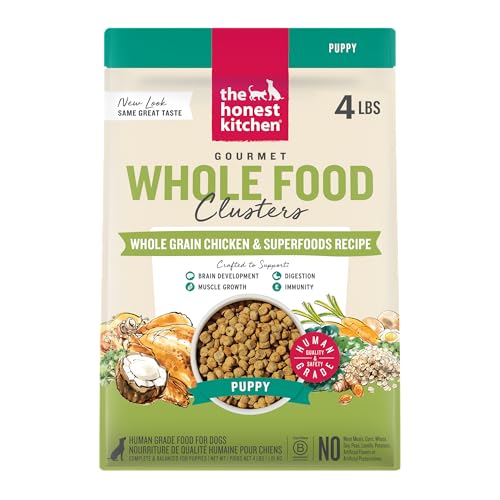
The Honest Kitchen Puppy Whole Food Clusters, Chicken, 4 lb

Royal Canin Large Puppy Dry Dog Food, 30 lb Bag
Royal Canin Large Puppy Dry Dog Food, 4 lb Bag

Nutrish Puppy Dry Dog Food, Chicken & Brown Rice, 5 lb
More Details On Our Top Picks
Most puppy foods ask you to feed huge volumes to hit daily calories. This one flips that around with a slow-cooked chicken recipe built for density rather than bulk, which matters for big-breed pups who need condition without an overstretched stomach.
The honest read is that this is a specialist tool, not an everyday default. Working-line puppies, rescues rebuilding weight, and adolescent dogs that burn through ordinary rations are exactly who it was made for.
Strong Points
- Extremely calorie-dense per cup, so smaller portions still deliver full daily energy needs.
- High protein content supports muscle development during rapid growth phases.
- Flaxseed adds omega fatty acids for coat condition alongside the core nutrition.
- Doubles as an adult maintenance food, so one bag type covers both life stages.
Things To Consider
- Calorie levels this concentrated can overshoot for couch-leaning pups; portion control takes discipline.
- The small 4 lb format means frequent reordering once your dog passes 40 lbs.
Quick Facts
Made For
Owners of underweight, highly active, or working-breed puppies who need serious calories in compact servings.
A Better Fit Elsewhere
Slower-growing family pups do better on Hill’s Science Diet Puppy Large Breed, which paces growth more conservatively.
Where Bully Max chases calories, Wellness CORE plays the long game: lean body mass, steady bone growth, and a fat level tuned so a Lab puppy fills out without getting heavy. The grain-free angle is the headline, but the detail work is what earns its spot here.
You get guaranteed DHA for brain development, a calcium-to-phosphorus balance aimed at skeletal health, and taurine in the mix. In a busy household with kids dropping table scraps, knowing the base diet contains no corn, wheat, soy, or artificial preservatives removes one whole layer of worry.
Highlights
- Guaranteed DHA levels support cognitive development through the critical early months.
- Calcium and phosphorus are balanced specifically for controlled large-breed bone growth.
- No poultry by-products, fillers, or artificial colors, which suits sensitive stomachs.
- Omega fatty acids tend to show up visibly in coat shine within weeks of switching.
- The 24 lb bag stretches further than most premium competitors at similar feeding rates.
Worth Noting
- Grain-free formulas cost more per pound than whole-grain alternatives like Nutrish below.
- Some owners report a slow transition period, so blend old and new food over a week.
Who Will Love This
Homes with grain-sensitive large-breed puppies that want premium nutrition without prescription-level pricing.
Where A Sibling Pick Shines
Giant breeds over 100 lbs at maturity should step up to Royal Canin Giant Puppy instead, since its targets differ.
A Mastiff puppy is not a big Labrador, and Royal Canin builds its entire line around that distinction. This formula targets pups aged 2 to 8 months with an expected adult weight above 100 lbs, a window where joint protection matters more than raw growth speed.
The kibble itself is engineered for giant jaws, crunchy enough to encourage chewing rather than gulping. Prebiotics and selected proteins support gut health, which giant breeds notoriously need given their deep chests and sensitive digestion. At 8 months, the brand expects you to graduate to its Giant Junior formula through 24 months, so treat this as stage one of a two-part plan.
Upsides
- Nutrient profile tailored precisely to the 2-to-8-month giant-breed window.
- Antioxidant blend supports immune function during a vulnerable growth phase.
- Kibble texture pairs cleanly with the matching wet food for mixed feeding.
- Clear upgrade path into Giant Junior removes guesswork later.
Small Caveats
- Premium pricing per pound adds up fast at giant-breed feeding volumes.
- The strict age cutoff means you must plan the switch to Junior food on schedule.
At A Glance
Right Fit For
Great Dane, Mastiff, and Saint Bernard households committed to breed-specific staged feeding.
Swap It Out When
Pups projected between 56 and 100 lbs belong on Royal Canin Large Puppy, the next entry down this list.
This is the kibble most veterinarians reach for first, and the reason is unglamorous: controlled minerals. Growing bones and teeth depend on balanced calcium levels, and Hill’s formulates specifically to pace skeletal development in large frames rather than maximize size.
DHA from fish oil covers brain and eye development, and the chicken and brown rice base sits easier on digestion than richer grain-free recipes. Flavor options include a lamb variant, handy for households rotating proteins. Compared with Wellness CORE, you trade some ingredient-list glamour for a formula with decades of clinical pedigree behind it.
What We Like
- Balanced minerals support healthy bone and tooth formation without overshooting.
- DHA and fish oil back brain and eye development through the puppy year.
- Two flavor options make rotation or picky-eater troubleshooting simpler.
- Widely stocked, so finding a replacement bag mid-week rarely becomes a problem.
Points To Note
- Contains grains, so it won’t suit dogs with confirmed grain sensitivities.
- Larger bags are heavy to haul; consider storage bins to keep kibble fresh.
Feature Snapshot
Who Should Grab It
First-time large-breed owners who want a vet-trusted default without researching niche formulas.
Consider Something Else When
Quality-focused shoppers wanting human-grade ingredients will prefer The Honest Kitchen clusters reviewed next.
Open a bag and the difference is obvious: these look like roasted food, not extruded pellets. Cage-free chicken gets clustered with carrots, broccoli, kale, pumpkin, and apples, then finished with live probiotics. It reads more like a home kitchen than a feed mill, and picky puppies tend to agree.
DHA from fish oil supports the brain-and-eye window every puppy food chases, while the probiotic load aims at digestion. The catch is economics. A 4 lb bag disappears quickly beside a growing Shepherd, so most owners use this as a topper or mix-in rather than a sole ration. That hybrid approach is honestly where it shines.
Bright Spots
- Human-grade ingredients you can visually identify in every cluster.
- Live probiotics plus pumpkin support digestive regularity from day one.
- Antioxidant-rich superfoods bolster immune defenses during growth.
- Roasted texture wins over puppies that reject standard kibble outright.
Softer Spots
- Small bag sizes make exclusive feeding expensive for large breeds.
- Whole-food clusters can carry more moisture sensitivity; seal the bag tightly after opening.
Whose Shelf It Belongs On
Owners who prioritize ingredient transparency and feed premium food as a topper or partial ration.
Another Choice May Suit
Full-time exclusive feeders on a budget get better mileage from the Nutrish chicken and brown rice recipe closing this list.
Think of this as the Giant formula’s middle sibling, retuned for pups heading toward 56 to 100 lbs at maturity. The feeding window stretches much longer too, from 2 all the way to 15 months, which suits slower-maturing breeds like Golden Retrievers and German Shepherds.
Brain development and energy needs get explicit support during growth, and the crunchy kibble pairs with the brand’s thin-slices-in-gravy wet food if you run a mixed routine. Owners commonly report consistent stool quality on this recipe, likely thanks to the same digestive attention its bigger sibling carries. Against Hill’s Science Diet, you’re paying more for tighter size-specific calibration.
Plus Points
- Extended 2-to-15-month window fits slow-maturing large breeds properly.
- Energy levels matched to growth demands without encouraging excess weight.
- Kibble size and texture designed for large jaws and deliberate chewing.
- Multiple bag sizes let you scale purchases as appetite grows.
Minor Gripes
- Cost per pound runs above mainstream brands like Nutrish or Hill’s.
- Transitioning off this food later requires a gradual blend to avoid stomach upset.
Core Details
Who It Suits Best
Shepherd, Retriever, and Rottweiler homes wanting precision nutrition across the entire puppy phase.
Reach For A Different Pick When
Budget-limited households can start with the 4 lb Royal Canin version below to test acceptance first.
Same recipe, same 2-to-15-month window, same 56-to-100-lb target as the 30 lb version above. The only variable is quantity, and that makes this bag quietly useful in ways the big sacks aren’t.
Bringing home a new puppy means unknowns: will she eat it, does his stomach tolerate it, does the breeder’s food need phasing out. A 4 lb bag answers all three questions without locking you into 30 pounds of something your dog rejects. It also works as travel backup or a bridge supply while a larger order ships. Once acceptance is confirmed, stepping up to the 17 or 30 lb format cuts your effective cost noticeably.
Reasons To Buy
- Low-commitment trial size for testing palatability and tolerance.
- Identical nutrition to the larger Royal Canin Large Puppy formats.
- Handy travel and emergency backup that stores easily in a car kit.
Honest Caveats
- Per-pound cost is the least efficient way to buy this formula long term.
- A growing large-breed pup can finish 4 lbs within roughly a week.
The Right Fit
New adopters and anyone transitioning off a breeder’s previous food cautiously.
Not Your Match When
Established Royal Canin households should reorder the 30 lb bag directly for better value.
Every list needs a sensible floor, and this is it. Real chicken leads the ingredient panel, brown rice rounds out the energy base, and there are no artificial flavors anywhere in the recipe. For a food at this tier, that’s a respectable showing.
DHA and EPA support brain and vision development, and the formula is veterinarian-reviewed, which adds a layer of assurance the price point doesn’t usually buy. Each bag also channels support to animals in need through the Rachael Ray Foundation, a small but genuine differentiator. Against Wellness CORE, you give up grain-free formulation and some premium sourcing, yet keep complete puppy nutrition for all breeds.
Positives
- Real chicken as the first ingredient delivers taste picky pups accept readily.
- DHA plus EPA back cognitive and visual development affordably.
- Veterinarian-reviewed recipe with no artificial flavors added.
- Foundation contributions give repeat purchases a charitable angle.
Trade Offs
- Contains grains, ruling out grain-sensitive dogs.
- Not size-calibrated specifically for large breeds, so monitor portions against growth charts.
Details At A Glance
Built With In Mind
Multi-puppy households and budget-minded owners feeding mixed-size litters.
Look Elsewhere When
Your pup has known grain sensitivities; Wellness CORE’s grain-free recipe handles that case far better.
What Matters Most Before Choosing Large Breed Puppy Kibbles
Controlled Calcium Beats Maximum Protein
Large-breed skeletons develop on a schedule, not a deadline. Excess calcium accelerates bone growth faster than joints can stabilize, which is why veterinary nutritionists emphasize moderated mineral levels over sheer nutrient volume. Check the guaranteed analysis and favor formulas explicitly labeled for large or giant breeds.
Match The Formula To Projected Adult Weight
A pup destined for 70 lbs has different needs than one headed past 120. Royal Canin splits its line at that boundary for good reason. Estimate your dog’s mature size from breed standards and parental history, then choose accordingly.
DHA And Digestive Support Are Non-Negotiable
DHA, an omega-3 fatty acid, drives brain and eye development in the first year. Probiotics and prebiotics keep stools firm while the gut matures. Both features appear across this list at every price point, so neither requires a premium budget.
Buy Bag Sizes That Fit Your Reality
A 40 lb bag saves money only if your dog eats it fresh. Smaller households benefit from 4 to 13 lb formats rotated frequently, while giant-breed homes justify bulk purchases with proper sealed storage.
Key Considerations Across These Picks
Traps First Timers Fall Into
The classic error is buying adult food early because it looks cheaper per pound. Puppy formulas exist because growth-stage nutrient demands genuinely differ. Another slip is free-feeding large breeds; measured meals protect both joints and house-training progress.
What Separates Premium From Basic
Higher-tier foods spend on targeted research, size-specific kibble engineering, and traceable sourcing. That investment pays off most for giant breeds and sensitive stomachs. For average-sized Labs with iron constitutions, a solid mid-tier option often serves just as well.
Frequently Asked Questions
How long should a large breed puppy stay on puppy food?
Most large breeds need puppy nutrition until 12 to 15 months, and giant breeds until 18 to 24 months. Follow the feeding window printed on your chosen formula.
Is grain-free necessary for large breed puppies?
No, unless your dog shows a diagnosed sensitivity. Whole grains like brown rice provide digestible energy and fiber for most puppies.
Can I mix wet and dry puppy food?
Yes, and several brands design their wet and dry lines to pair deliberately. Just reduce dry portions slightly to avoid overfeeding calories.
How do I switch my puppy to a new kibble?
Blend increasing amounts of the new food into the old over seven to ten days. A gradual transition minimizes digestive upset.
Does calorie density matter for large breed puppies?
It matters in the opposite direction of small breeds. Large puppies generally need moderate calories to grow slowly enough for healthy joints.
Closing Remarks
Feeding a big puppy well comes down to pacing, not pushing. Every option here respects controlled growth while covering the DHA, mineral, and digestive bases that matter in year one. Start with your dog’s projected adult size, match the formula to it, and adjust portions as your vet advises. Your future adult dog will thank you with years of sound movement.
