

A lost pet’s microchip is useless without a reader that can actually find it. Whether you run a rescue, work at a vet clinic, or simply want peace of mind about a newly adopted dog, a handheld scanner turns a tiny glass tag under the skin into a number you can act on. The six options below cover everything from budget one-button readers to Bluetooth-connected units built for clinic workflows, so you can match the tool to how often you’ll really use it.
The Picks In Brief

Sonew Pet Microchip Reader RFID 134.2Khz with OLED Display

Halo Microchip Scanner Black

Zerone Handheld Pet Microchip Scanner RFID Reader

Yanzeo Animal Microchip Scanner 134.2KHz/125KHz
Alacrity 3-in-1 Bluetooth Pet Microchip Reader with 1.44” TFT Screen
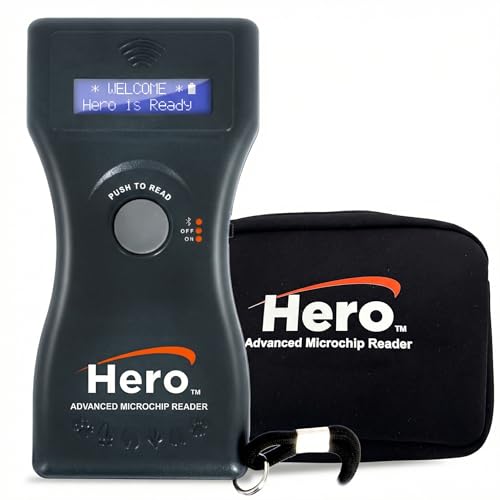
Hero Universal Microchip Scanner with Bluetooth
What Each Pick Brings To The Table
Scanning a wiggly cat outdoors is where most cheap readers fall apart, because washed-out screens make the chip number hard to confirm. The Sonew leans on a small but high-brightness OLED display that stays legible even in direct sun, which matters more than you’d expect during a driveway rescue.
It reads FDX-B chips conforming to the ISO 11784/11785 standard, the format used by most pet microchips worldwide, plus EMID tags. Charging runs over USB Type-C, so any phone cable in your glovebox works.
Advantages To Know
- OLED screen stays readable in bright outdoor light, so you can verify numbers on the spot instead of squinting.
- Type-C charging means no proprietary cable to lose or replace.
- A low-battery alarm warns you before an important scan dies mid-read.
- Pocket-sized footprint suits glovebox or intake-desk storage.
Small Caveats
- The 0.91-inch display shows one chip number at a time, which gets tedious when logging several animals in a row.
- No onboard memory for saved scans, so write numbers down as you go.
Key Specs
Who It Suits Best
Homeowners and foster volunteers who scan occasionally and want a simple, sunlight-readable unit that charges like their phone.
Where A Sibling Pick Shines
Anyone logging dozens of scans per day will outgrow this quickly; the Alacrity 3-in-1 Bluetooth Pet Microchip Reader stores up to 240 records and syncs them to a computer.
Some tools earn their reputation by simply showing up every day, and the Halo has been a fixture at shelters and animal-control offices for years. Its roughly 135mm loop-style body gives you a wide scanning area, useful when a frightened dog won’t hold still for precise placement.
It reads most common pet chips in dogs and cats, recharges by plugging into a PC’s USB port, and can store previously scanned chip numbers so you’re not re-scanning the same animal twice. Compared with the Sonew above, it trades a fancy screen for proven, no-drama reliability.
What Works In Its Favor
- Wide scanning head covers more of the animal’s neck and shoulders per pass, cutting down missed reads on restless pets.
- USB recharging from a computer keeps it topped off between shelter shifts.
- Stores chip numbers from earlier scans, handy for repeat intakes.
- Long track record in professional settings speaks to its durability.
Points To Note
- The larger body takes up more drawer space than pocket models like the Zerone.
- Owners commonly report wanting to confirm chip-format compatibility before purchase, since older non-ISO chips vary by region.
Made For
Shelter staff, rescuers, and animal-control officers who scan many animals daily and value a battle-tested tool over extra features.
Swap It Out When
Horse owners and livestock handlers dealing with varied chip brands may prefer the Hero Universal Microchip Scanner, which explicitly covers ISO and non-ISO formats.
First-time users tend to overthink scanning, pressing menus and second-guessing settings while a nervous pet waits. The Zerone strips all of that away: press the button, sweep the animal, read the number. That single-button workflow is why it earns a spot here.
Under the hood it handles ISO 11784/11785 FDX-B chips along with ID64 RFID tags, and an internal reading mode lets you pull up history data from previous scans. For a household adopting a chipped rescue, that’s genuinely all the technology required.
What Earns Its Place
- One-button operation removes the learning curve entirely, ideal for households where several people might use it.
- ID64 support adds flexibility beyond standard pet chips.
- Internal reading mode recalls past scan results without paper notes.
- Lightweight handheld form makes one-handed scanning comfortable.
Things To Consider
- Standby behavior means the unit powers down after idle periods, so expect to restart it between animals.
- Screen and build are basic compared with the Alacrity’s color TFT display.
Quick Facts
Right Fit For
New adopters and occasional foster homes that want dependable FDX-B reads with zero configuration fuss.
Reach For A Different Pick When
Dual-frequency coverage is a priority for mixed-species foster networks, and the Yanzeo Animal Microchip Scanner handles both 134.2kHz and 125kHz tags.
Frequency is the spec most shoppers skip, then regret. Most modern pet chips run at 134.2kHz, but some older or regional tags use 125kHz, and a single-frequency reader simply won’t see them. The Yanzeo AR180C covers both bands, closing that gap at a price that leaves room in a rescue’s budget.
Its high-sensitivity scanning chip is designed for fast, repeatable reads, which helps when you’re working through a litter of kittens at intake. Against the Sonew, you give up the premium OLED screen but gain broader tag compatibility.
Useful Strengths
- Dual-band design reads both 134.2kHz and 125kHz chips, so regional or legacy tags don’t slip through.
- High-sensitivity internals aim to shorten scan time on squirmy animals.
- Supports the ISO 11784/11785 FDX-B standard used by most current pet implants.
- Approachable cost makes multi-unit purchases realistic for volunteer groups.
Worth Bearing In Mind
- Display quality is functional rather than bright, so shaded conditions help when confirming long numbers.
- As with most import-brand electronics, long-term parts support depends on the seller rather than a service network.
Best Suited To
Foster coordinators and multi-cat households who want maximum chip compatibility without stretching the budget.
Another Choice May Suit
Users who need stored records and computer transfer should step up to the Alacrity 3-in-1 Bluetooth Pet Microchip Reader instead.
Writing chip numbers on index cards stops scaling fast. The Alacrity attacks that problem with three connection paths, 2.4GHz wireless, Bluetooth, and USB, plus onboard storage for 240 scan records, so a full day of clinic intakes lives on the device until you sync it.
A 1.44-inch color TFT screen makes entries easy to read, and a rechargeable 800mAh battery keeps it cordless through a shift. One detail professionals appreciate: it outputs both hexadecimal and decimal chip formats, switchable by button, since registry databases don’t agree on which they want.
What Helps Most
- 240-record internal storage turns end-of-day paperwork into a quick USB or Bluetooth sync.
- Hex and decimal output modes match whatever format your registration database expects.
- Color TFT display renders chip numbers clearly for verification before entry.
- Reads ISO 11784/11785 FDX-B and EMID chips across dogs, cats, and other animals.
- Three transfer options mean it slots into almost any existing office workflow.
Honest Caveats
- It does not read AVID-format chips, worth confirming against your local chip mix before committing.
- More features mean more buttons, so expect a short learning period versus the one-button Zerone.
Feature Snapshot
Whose Shelf It Belongs On
Breeders, catteries, and small clinics that scan regularly and need records they can export, not transcribe.
Not Your Match When
Field rescuers who mostly need a rugged grab-and-go loop scanner will find the Halo Microchip Scanner simpler to live with.
Mixed-animal practices face the messiest chip landscape of anyone: horses implanted years ago, imported dogs, livestock tags from different manufacturers. The Hero is built for exactly that chaos, reading all ISO-standard chips plus 9-, 10-, and 15-digit chips regardless of brand.
Bluetooth sends each scanned number to a paired device within roughly 25 feet, so a barn check can flow straight into your phone’s notes or practice software. Where the Alacrity focuses on storage volume, the Hero focuses on never meeting a chip it can’t read.
The Practical Payoff
- Universal compatibility spans ISO chips and 9-, 10-, and 15-digit formats from any manufacturer.
- Bluetooth transfer within a 25-foot range speeds up record-keeping in clinics and barns.
- Suits horses, livestock, and companion animals alike, one tool for the whole property.
- Wireless syncing cuts manual transcription errors out of busy workflows.
Factors To Weigh
- Professional-grade capability comes at a higher commitment than basic household readers.
- Bluetooth pairing adds a setup step that solo home users may never need.
Core Details
Who Will Love This
Veterinary clinics, equine facilities, and livestock operators who cannot afford a chip their scanner misses.
Consider Something Else When
A household doing rare checks on one dog will be better served by the affordable Zerone Handheld Pet Microchip Scanner.
What Matters Most Before Choosing Microchip Scanners
Chip Standards Come First
Nearly every pet microchip sold today follows the ISO 11784/11785 standard using FDX-B technology, which encodes a 15-digit number at 134.2kHz. Readers that only handle that format cover most dogs and cats. Older implants, some EMID tags, and certain regional chips run at 125kHz or use proprietary encoding, so dual-frequency or universal readers earn their keep in mixed populations.
Match The Tool To Your Volume
Scanning one adopted cat twice a year demands very little: a one-button reader with a clear display does the job. Shelters and clinics scanning dozens of animals daily need onboard memory, fast repeated reads, and ideally a way to export records. Buying below your real workload is the most common mismatch in this category.
Screen And Power Practicalities
You’ll often scan in garages, driveways, or barns rather than ideal lighting, so a bright OLED or TFT display matters more than spec sheets suggest. Rechargeable units with common connectors such as USB Type-C avoid the dead-battery-at-the-worst-moment problem, and a low-power alert is quietly one of the most useful features available.
Data Handling For Regular Users
Anyone keeping records benefits from stored scan history and computer transfer, whether over USB or Bluetooth. Hexadecimal and decimal output options matter once you start registering chips with databases that expect a specific format.
Key Considerations Across These Picks
Traps First Timers Fall Into
The biggest mistake is assuming every reader sees every chip. AVID-format and some legacy tags aren’t covered by all models, so check your animal’s chip brand first. Shoppers also overlook frequency, discovering too late that a 134.2kHz-only unit ignores a 125kHz implant.
Where The Extra Money Goes
Higher-tier models pay for memory, wireless transfer, brighter screens, and wider chip compatibility. That spend pays off the moment you’re logging twenty scans a day; for two scans a year, a basic reader is honestly enough.
Frequently Asked Questions
Will one scanner read every pet microchip?
No, compatibility varies by chip standard and frequency. Models covering ISO 11784/11785 FDX-B handle most modern pets, while universal units add older and proprietary formats.
How do I find my pet’s chip if I lost the paperwork?
A scan reveals the 15-digit number, which registries can trace back to the implanting clinic. Any of the readers above can retrieve it in seconds.
Do these scanners hurt the animal?
Scanning is completely passive; the reader emits a low-power radio signal and the chip responds. Most pets barely notice the wand passing over their scruff.
How often should a pet’s microchip be scanned?
A yearly check during routine vet visits confirms the chip still reads and the registration details are current. Chips rarely fail, but verification costs nothing.
Is Bluetooth worth paying extra for?
For clinics, breeders, and anyone logging many scans, wireless transfer saves real time and transcription errors. Occasional home users won’t miss it.
Bottom Line
Your scanning volume should drive the decision more than anything else. Households and occasional fosters get everything they need from the Sonew or Zerone, while the Yanzeo adds dual-frequency insurance for little money. Busy shelters should look hard at the Halo, record-keepers at the Alacrity, and mixed-animal professionals at the Hero. Whichever you choose, scan your pet once a year so the number stays verified and ready.
