

Sharing your home with a dog or cat changes every pest-control decision. A snap trap under the couch becomes a vet visit waiting to happen, and poison is off the table entirely. This roundup focuses on eight options built with pet households in mind: covered tunnels, live-catch cages, plant-based repellents, and set mechanisms designed to keep curious paws out of trouble. Each entry below breaks down what works, what doesn’t, and which reader profile fits best.
The Choices Worth Comparing
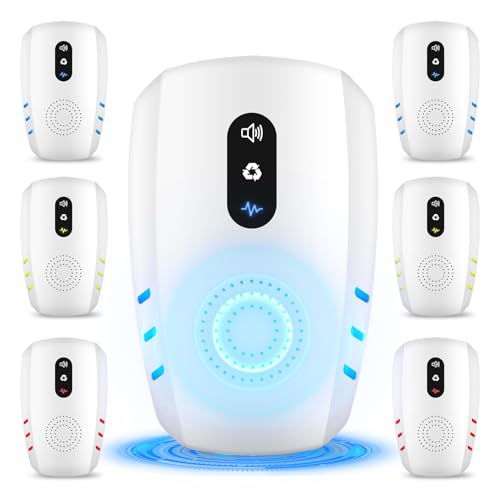
Jqely Ultrasonic Pest Repeller 3-Mode 6 Pack
Nameiec Peppermint Rodent Repellent 24pc

Qualirey Multi-Catch Humane Mouse Trap 4 Pack

Victor M070B Safe-Set Power Kill Mouse Trap

Tratper Mouse Tunnel Traps 4 Pack

USKICH No-Kill Live Mouse Traps 2 Pcs

PAMAX Reusable Humane Snap Traps 4-Pack
tenerolike Peppermint Oil Mouse Repellent 25 Pack
The Details Behind The Selections
Ultrasonic repellers work by emitting high-frequency sound waves, typically above the range of human hearing, that make indoor spaces unpleasant for rodents and insects. The Jqely unit covers a 10kHz to 65kHz span across three modes, so you can adjust output depending on the room and the pest you’re targeting.
For a household with pets, the appeal is obvious: there’s no bait, no spring mechanism, and nothing your cat can investigate at 2 a.m. Six units in one pack means you can cover a kitchen, basement, and garage without buying separately. The honest caveat is that results vary by home layout, since sound doesn’t pass through walls well.
Well-Handled Touches
- Three adjustable modes let you tune frequency output room by room instead of running one fixed setting everywhere.
- A six-pack footprint suits multi-room coverage, which matters in homes where mice travel between the garage and pantry.
- Plug-in operation means zero maintenance, no bait refills, and no cleaning after an incident.
- Nothing mechanical sits on the floor, so pets and toddlers have nothing to disturb.
Things To Consider
- Ultrasonic waves don’t penetrate walls or furniture effectively, so placement behind clutter weakens results considerably.
- Owners commonly report a waiting period before noticing reduced activity, so patience is part of the deal.
Who It Suits Best
Renters and pet owners who want a maintenance-free, prevention-first layer across several rooms rather than a single-point capture solution.
Where A Sibling Pick Shines
Shoppers facing an active mouse problem right now will get faster confirmation from the Victor M070B, whose physical capture gives clear proof of progress.
This 24-piece set takes a scent-based route: strong minty pouches that make enclosed spaces uncomfortable for mice and rats, encouraging them to move along. Because the formula relies on natural plant ingredients rather than poisons or springs, it slots into garages, attics, sheds, and even vehicle engine bays without risk to a sniffing dog.
The trade-off shows up in expectations. Scent repellents discourage activity rather than removing rodents already inside, so this works best as a perimeter strategy. Tuck pouches near entry points, storage boxes, and wall gaps, then refresh them as the mint fades over weeks of use.
What Helps Most
- Plant-derived peppermint formulation avoids the hazards that make traditional rodenticides a non-starter around animals.
- Indoor-outdoor versatility covers RVs, storage units, basements, and engine compartments from one purchase.
- Twenty-four pieces spread easily across a large garage or multiple outbuildings.
- No setup skill required; place a pouch and move on with your day.
Points To Note
- Pouches lose potency over time and need periodic replacement, an ongoing cost worth budgeting for.
- In our view, heavy existing infestations call for a capture tool alongside these, not instead of one.
Key Specs
Made For
Owners of garages, campers, and seasonal storage spaces who want ongoing deterrence without any mechanism near their pets.
Swap It Out When
Anyone needing actual removal should pair this with the USKICH live traps below, which physically catch and release what the scent alone won’t dislodge.
Where the Nameiec pouches push rodents away, the Qualirey four-pack catches them alive. Each unit measures roughly 26 x 16 x 5 cm, sized for small mice and young rats, with a transparent top that lets you see at a glance whether there’s a guest inside. The non-contact design means you never touch the animal during release.
That clear lid earns its place in a busy hallway or laundry room: a quick walk-by tells you everything. The generous interior also reduces stress on the captured mouse, which matters if relocation is your goal. One caution from widely reported owner feedback: very large rats may overwhelm the enclosure, so match the trap to the pest.
What Works In Its Favor
- Transparent tops eliminate guesswork, so checking four stations takes seconds during a morning routine.
- The roomy 26 cm body accommodates small mice and young rats, giving flexibility most slim traps lack.
- Non-contact handling keeps your hands clean and keeps skittish family members willing to help.
- Four units let you cover parallel runways along baseboards simultaneously.
Small Caveats
- Larger adult rats may not be held securely, so confirm your visitor’s size before relying on these alone.
- Live catches require prompt release, ideally far from the house, or the same mouse returns.
Feature Snapshot
Right Fit For
Gentle-souled households, especially those with children learning about wildlife, who prefer relocation over any other outcome.
Reach For A Different Pick When
Speed matters more than sentiment; the PAMAX snap traps later in this list resolve a sighting in one night.
Victor has made snap traps for generations, and the M070B refines the formula with a Safe-Set mechanism that resists accidental triggering while you load and position it. Setup takes one click, and once sprung, another click releases the catch for disposal without your fingers going anywhere near it.
The built-in bait hood deserves attention too. It shields peanut butter from clever mice that would otherwise steal bait cleanly off an exposed tray, so the trap fires when it should. Both units are reusable: wash, reload the cup, reset, redeploy. Compared with the Qualirey’s gentle approach, this is the decisive option for an active problem.
The Helpful Details
- Safe-Set engineering prevents premature firing during placement, a common frustration with traditional wooden snaps.
- One-click setup and one-click disposal mean you never handle the catch directly.
- The covered bait cup blocks bait theft, keeping the trigger honest until the target commits.
- Reusable bodies accept any bait you prefer, cutting long-term cost versus disposable traps.
Less Ideal Details
- Only two traps per pack, so larger infestations may require buying multiples.
- Being an open snap design, placement away from pet traffic remains essential despite the safety features.
At A Glance
Who Will Love This
Practical homeowners dealing with confirmed mouse activity who want proven snap performance with modern safety touches.
Consider Something Else When
Homes with floor-roaming dogs are better served by the fully enclosed Tratper tunnels next, which hide the mechanism completely.
The Tratper design answers the exact worry behind this whole article: a snapping bar hidden inside an enclosed tunnel, reachable only by something small enough to enter. Mice follow the tunnel naturally, the sensitive trigger fires, and paws and fingers stay outside the action entirely.
Operation stays simple. Add bait, press the lever down, and place the unit along a wall where droppings have appeared. The dual-tunnel layout gives mice two approaches, which owners commonly report improves contact rates compared with single-entry designs. Four compact units suit kitchens, pantries, and utility rooms alike.
The Practical Payoff
- Fully enclosed housing shields children and pets from the internal mechanism, the key differentiator versus open snaps like the Victor M070B.
- Dual-entry tunnels give cautious mice more than one way in, improving encounter odds.
- Lever-set arming takes seconds with no wires or hooks to wrestle.
- Reusable construction supports repeated deployments through a season.
Where It May Fall Short
- Tunnel interiors need occasional cleaning between uses, a small but real maintenance step.
- The mouse-sized openings exclude rats entirely, so identification comes first.
Quick Facts
Who Should Grab It
Families with toddlers or ground-level pets who want snap-trap effectiveness without any exposed hardware.
Another Choice May Suit
Relocation-minded users will prefer the USKICH cages, which catch without harm and release outdoors.
First-time trappers often freeze at the cleanup stage, and that’s where this two-pack earns its keep. A spring-loaded door closes behind the mouse, and a separate tail door opens for bait loading and for releasing the catch without touching anything. The sequence is simple enough that nervous first-timers manage it confidently.
Build quality holds up to repeat duty too. The cage material is waterproof, so rinsing under clean water after each use restores it fully, unlike wooden traps that absorb odors and get discarded. Against the Qualirey’s larger multi-catch body, these run smaller and lighter, better suited to tight spots behind appliances.
Where It Excels
- Spring-loaded door captures without injury, keeping the humane promise intact end to end.
- Dedicated tail door separates baiting from release, so your hands never meet the mouse.
- Waterproof build rinses clean after every use, extending service life well past disposable options.
- Compact footprint slides into gaps beside stoves and refrigerators where mice actually travel.
Honest Caveats
- Only two units ship per pack, so wide coverage means a second purchase.
- Live catches demand a same-day release trip, which some schedules find inconvenient.
Core Details
Who Should Grab It
Nervous beginners and apartment dwellers handling their first mouse, especially where a no-harm outcome feels non-negotiable.
Look Elsewhere When
Multi-room coverage calls for the six-piece Jqely repeller set instead of adding more cages piecemeal.
Old wooden snap traps warp, splinter, and soak up odors until they’re unusable. The PAMAX four-pack replaces that cycle with molded ABS plastic, a rigid polymer that shrugs off moisture and washing season after season. Four units arrive ready for a serious clearing effort.
Inside, a high-sensitivity trigger pairs with a strong spring for a fast, decisive strike, which the maker frames as the humane choice among lethal options because suffering is minimal. Loading is refreshingly easy thanks to a visible bait cup: pull back the kill bar, seat the cup, done. Compared with the Victor M070B’s two-pack, this gives you double the stations for covering parallel walls.
A Favorable Mix
- ABS plastic bodies resist warping and odor absorption, so cleaning between uses actually works.
- High-sensitivity trigger with powerful spring delivers quick resolution once armed.
- Visible bait cup makes peanut-butter loading straightforward even for first-timers.
- Four reusable traps lower the per-catch cost across a full season.
Trade Offs
- Open snap design means placement discipline matters greatly in homes with roaming pets.
- Strong springs demand careful finger positioning during resets, a point several owners mention.
Technical Highlights
Whose Shelf It Belongs On
Experienced homeowners facing recurring mouse pressure who value durable gear over disposables.
Skip It When
Curious pets roam unsupervised; the enclosed Tratper tunnels remove the exposure risk entirely.
This 25-ball set rounds out the list as pure prevention. Each ball releases layered mint scents that rodents find overwhelming, encouraging them to avoid treated zones altogether. There’s nothing to arm, empty, or wash; drop a ball where you’d rather no mouse ever appear and forget about it.
Think of these as the quiet complement to the capture tools above. Place them near door sweeps, cable penetrations, and pantry corners while the USKICH or PAMAX traps handle whatever already moved in. The honest read is that scent strength fades gradually, so rotating fresh balls into older positions every few weeks keeps the barrier believable.
Strong Points
- Twenty-five balls cover an entire home’s vulnerable points from a single purchase.
- No mechanism, bait, or residue means zero interaction risk for pets and kids.
- Works in closets, cabinets, and crawl spaces where traps are awkward to place.
- Layered mint formulation targets the sensitive noses that guide rodent exploration.
Worth Bearing In Mind
- Scent potency diminishes over time, so plan on periodic replacement for consistent coverage.
- Repellents shift behavior rather than removing established nests, so pair with a capture tool for active problems.
The Right Fit
Prevention-focused pet owners protecting pantries, seasonal storage, and entry points before mice ever settle in.
Not Your Match When
An active infestation needs removal now, and the Victor M070B delivers that certainty faster than any scent can.
What Matters Most Before Choosing Mouse Traps For House With Pets
Match The Tool To The Threat
A stray mouse behind the stove and a colony in the garage need different answers. Identify the species and scale first: mouse-size tunnels like the Tratper won’t hold adult rats, while ultrasonic units address prevention better than removal. Ten minutes of observation, droppings, gnaw marks, travel paths, saves wasted purchases.
Safety Architecture Beats Promises
In a pet household, look for physical separation between the mechanism and the floor. Enclosed tunnels, protected bait cups, and anti-trigger setups such as Victor’s Safe-Set reduce accidents far more reliably than careful placement alone. Anything with exposed springs belongs in rooms pets can’t access.
Reusability Changes The Math
Disposable traps seem cheap until a season of activity adds up. Washable ABS bodies from PAMAX and waterproof cages from USKISH survive dozens of cycles, and refillable bait cups accept whatever works in your home. Over a year, reusable gear usually costs less and creates less waste.
Layer Prevention With Removal
The strongest setups combine approaches: peppermint barriers from Nameiec or tenerolike along entry points, plus a capture tool where activity shows. Scent alone rarely clears an established nest, and traps alone don’t stop the next arrival.
Key Considerations Across These Picks
Mistakes Worth Dodging
The classic error is buying one trap for a multi-room problem; mice travel predictable wall lines, so a single station misses most traffic. Another slip is ignoring placement: traps floating in open floor space catch almost nothing, while units flush against baseboards perform dramatically better. Skip poison entirely in pet homes, since secondary exposure is a real risk.
When Paying More Pays Off
Higher-tier designs charge for engineering, not branding. Anti-trigger mechanisms, enclosed housings, and washable materials each solve a specific failure mode of cheap wooden snaps. Spending up makes sense for households with pets or children, where a misfire costs far more than the price difference between basic and considered designs.
Frequently Asked Questions
Are ultrasonic repellers safe around cats and dogs?
Most common household pets don’t hear the frequencies these units emit, though rodents, and some small pets like hamsters, can. Keep the device out of rooms housing rodents, rabbits, or similar companions.
Do peppermint repellents actually work?
They discourage exploration in treated zones, and many owners report fewer sightings near placed balls. They work best as prevention alongside a capture method, not as a standalone fix for an active nest.
How often should live traps be checked?
Twice daily is the responsible standard, since a confined mouse dehydrates quickly. Prompt checks also allow same-day release, which improves relocation outcomes.
Where should traps go in a house with pets?
Along baseboards behind furniture, inside cabinets, or in enclosed tunnels placed under appliances. The goal is locations mice travel but paws rarely reach.
How do I clean reusable traps safely?
Wear gloves, rinse with hot water and mild soap, and let the trap dry fully before rebaiting. Waterproof ABS and plastic cage designs tolerate this routine indefinitely.
Closing Thoughts
Protecting a home from mice while keeping pets safe comes down to matching the tool to the moment. Prevent with scent barriers, capture with enclosed or humane designs, and stay patient through the first week of deployment. Start with the option that fits your household’s risk level, adjust placement based on what you observe, and the problem usually resolves faster than expected.
