

Doves are ground feeders with simple tastes, yet the wrong mix leaves you sweeping hulls off the patio or watching birds ignore the tray entirely. The right feed changes that: less waste, more visits, and healthier plumage on your regulars. This shortlist covers no-mess backyard blends, targeted dove-and-quail formulas, and a fortified diet for companion birds, so you can match the bag to your yard or aviary instead of guessing.
The Shortlist At A Glance

Kaytee Seed & Suet No Mess Blend (Blueberry, 10 lb)
Cool Birds All Birds Wild Bird Seed 10 lb

Sunseed Vita Sunscript Dove & Pigeon Food 5 lb

Scott Pet Wild Bird Seed Deluxe Blend 11lb
Wild Delight Dove & Quail Food 10 lb

SLEEK & SASSY Dove & Quail Bird Food (4 lbs.)

SLEEK & SASSY Dove & Quail Bird Food (20 lbs.)
More Details On Our Top Picks
Most seed blends announce themselves by the hull pile they leave under the feeder. This one skips that problem entirely because every component, seeds and suet nuggets alike, is fully edible, so nothing gets discarded on your lawn.
The blueberry-scented suet nuggets are the interesting part here. You pour straight from the bag without touching greasy suet cakes, which matters more than it sounds once you’ve cleaned suet residue off a feeder pole in July. Kaytee claims the blend draws roughly double the traffic of black oil sunflower alone, and the 10-pound bag suits a season of casual feeding.
Strong Points
- Everything in the bag is edible, so there’s no shell debris to rake up after a busy weekend
- No handling of soft suet cakes means cleaner hands and faster refills
- Suet nuggets add fat and calories that plain seed mixes lack, useful in cold snaps
- Reported to attract about twice as many birds as black oil sunflower on its own
Things To Consider
- In warm weather, owners commonly report suet-based pieces can soften, so store the bag somewhere cool and feed smaller amounts at a time
- The blueberry scent is noticeable to people too, which some neighbors love and others don’t
Key Specs
Who It Suits Best
Homeowners with patios, decks, or manicured lawns who want steady bird traffic without the cleanup chore.
Where A Sibling Pick Shines
Shoppers feeding a dedicated dove and quail crowd will get better value from the Wild Delight Dove & Quail Food, which targets ground feeders directly rather than a general audience.
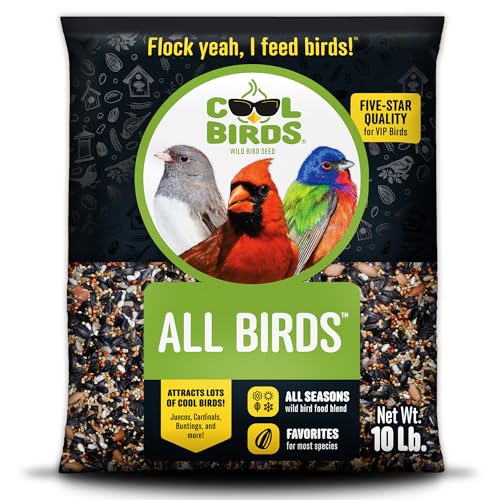
Where the Kaytee blend chases tidiness, this one chases variety. The ingredient list reads like a buffet line: sunflower, safflower, millet, peanuts, and wholesome grains, each pulling in a different species. Doves and sparrows work the ground below while jays and chickadees hit the perches above.
That two-level appeal is the real selling point. One bag covers tray, tube, hopper, platform, and smart camera feeders, so you don’t need separate products for different stations. The energy and protein content is pitched at year-round feeding, which matters most through winter when natural forage thins out. For most mixed backyards, this is the low-effort default worth starting with.
Highlights
- Five ingredient groups mean one purchase serves every feeder type you own
- Ground-feeding favorites like doves get millet and grains they can actually use
- Protein and energy density supports birds through lean winter months
- Works in smart camera feeders, handy for anyone logging species visits
Minor Gripes
- Whole peanuts and sunflower in the shell create some hull litter, unlike the Kaytee no-mess option earlier in this list
- A generalist blend won’t deliver the fortified nutrition a pet dove needs, so keep it outdoors only
Right Fit For
Backyard hosts running several feeder styles who want a single versatile bag doing all the work.
Swap It Out When
Anyone keeping indoor or aviary doves should reach for the Sunseed Vita Sunscript formula instead, since it’s built as a complete captive-bird diet.
This is the odd one out on the list, and deliberately so. Everything before and after it feeds wild yards; the Vita Sunscript is formulated as a staple diet for companion doves and pigeons kept in lofts or aviaries. That changes what matters: nutrition completeness beats attraction power.
The fortification package is where it earns its place. Vitamins, chelated minerals (minerals bound to amino acids for easier absorption), probiotics, and omega fatty acids are baked into a base of grains, seeds, and vegetables. Probiotics support digestion, while the omega content shows up in feather condition over time. Made in the USA, the five-pound bag is a sensible trial size before committing to a larger routine.
Upsides
- Chelated minerals absorb more readily than standard mineral forms, a genuine edge for long-term health
- Probiotics help captive birds maintain steady digestion, especially during diet transitions
- Doubles as foraging food, giving loft birds enrichment along with calories
- Omega fatty acids support skin and feather quality you can actually see at molt
Softer Spots
- Five pounds goes quickly with more than a couple of birds, so frequent reordering is likely
- Fortified diets shouldn’t be scattered outdoors where weather degrades the vitamins
Feature Snapshot
Made For
Keepers of pet ringnecks, mourning doves in rehabilitation settings, or homestead pigeons who want one dependable daily ration.
Consider Something Else When
For open-yard feeding stations, the Cool Birds All Birds Wild Bird Seed handles weather exposure and mixed visitors far better than a fortified indoor diet.
Longevity counts for something here: this deluxe blend has been a fixture in the category for years, and the recipe explains why. Milo, wheat, millet, and black oil sunflower form the backbone, with split and whole peanuts plus sunflower hearts layered on top for protein and fat.
Compared with the Cool Birds mix reviewed earlier, the Scott Pet leans harder on filler grains like milo and wheat. That’s not automatically bad, since doves and mourning doves eat milo happily and it stretches the bag further, but pickier songbirds may sort through it looking for the good stuff. Expect some spillage under the feeder as a result. For high-volume feeding on a budget, though, the math works in your favor.
Reasons To Buy
- Peanuts in both whole and split form add serious protein for jays and woodpeckers alongside your doves
- Sunflower hearts give shell-free bites that smaller birds appreciate
- Eleven pounds per bag keeps refill trips infrequent through peak season
- Grain-heavy base delivers solid fiber content for ground-feeding species
Points To Note
- Milo and wheat are classic sorting targets, so expect discarded grain beneath tube feeders
- Store in a sealed metal bin; grain-heavy blends commonly attract rodents when left in the original bag
Quick Facts
Who Should Grab It
Rural and suburban feeders going through large volumes of seed who care more about total cost than zero waste.
Not Your Match When
Tidiness-focused patio hosts should stick with the Kaytee No Mess Blend, whose fully edible composition avoids the hull and grain litter this mix produces.
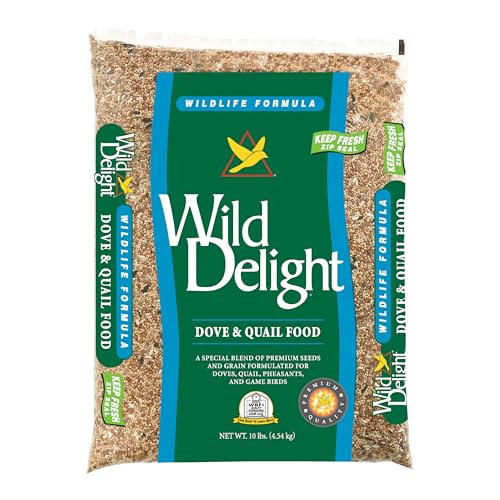
Scatter this one on the ground or a low platform and watch what happens. Wild Delight builds its blend specifically around the birds that skip hanging feeders altogether: doves, mourning doves, quail, pheasants, and grouse. Millet, milo, wheat, popcorn, oat groats, safflower, and sunflower kernels make up the mix, sized and shaped for beaks that prefer pecking flat surfaces.
The oat groats and popcorn are the distinguishing touches here, ingredients most generic songbird bags leave out. Ground-feeding birds crack through them easily, and the variety keeps visits consistent once the local covey learns your yard. A four-pack option exists for anyone feeding through multiple seasons, though the single 10-pound bag is the usual starting point.
Bright Spots
- Ingredient list is purpose-built for doves and quail rather than adapted from a songbird formula
- Oat groats and popcorn add texture and interest that plain milo-millet blends lack
- Works scattered directly on the ground, matching how these species naturally forage
- Also draws pheasants and grouse on rural properties
Honest Caveats
- Ground scattering invites squirrels and other mammals, so pace your portions accordingly
- Damp climates call for covered platform feeding, since wet ground seed spoils faster than feeder seed
At A Glance
Whose Shelf It Belongs On
Country-lot and edge-of-town properties where mourning doves and quail coveys patrol the ground line daily.
Another Choice May Suit
Apartment and suburban patio feeders without ground space will see better results from the Cool Birds All Birds Wild Bird Seed in elevated feeders.
This Oregon family operation has been mixing bird diets since 1983, and the attention shows in the details. Grass seeds, oil seeds, and whole grains form the base, chosen partly for their naturally occurring enzymes, which aid digestion and nutrient uptake in birds with fast metabolisms.
The enrichment list separates it from commodity blends: added vitamins, minerals, and amino acids, with no artificial colors and no sulfites, the preservative compounds some sensitive birds react poorly to. Four pounds is a modest quantity, which cuts both ways. It stays fresh between refills and works well as a trial run, but committed feeders will burn through it quickly. In our view, treat this size as your test batch before stepping up to bulk.
Plus Points
- Amino acid enrichment supports muscle maintenance and feather growth beyond what raw seed provides
- No artificial colors or sulfites, a cleaner label than most shelf blends offer
- Grass seed content brings digestible carbohydrates and soluble fiber to the bowl
- Four-pound format stays fresh and fits small storage spaces
Small Caveats
- The small bag means frequent repurchasing for anything beyond a handful of birds
- Per-pound cost runs higher than the Scott Pet deluxe blend, a trade-off for the enrichment package
Best Suited To
Aviary keepers and small-backyard hosts with a few doves who prioritize ingredient quality over volume pricing.
Reach For A Different Pick When
Feeding a large outdoor population year-round makes the 20-pound version of this same SLEEK & SASSY diet the smarter buy.
Same recipe as the four-pound bag reviewed just above, scaled five times over. That’s the entire pitch, and it’s a good one: identical grass seed, oil seed, and whole grain base, the same vitamin, mineral, and amino acid enrichment, still free of artificial colors and sulfites, now priced at bulk economics.
Twenty pounds covers a busy feeding station for months rather than weeks, which also means fewer shipping cycles and less packaging waste. The trade-off is storage discipline. Seed kept past its freshness window loses palatability, so plan on an airtight container in a cool, dry spot. Owners commonly report this diet holds up well when stored properly, and the family-owned Oregon operation has been refining the formula since 1983.
Standout Traits
- Bulk sizing drops the effective cost per pound versus the four-pound sibling
- Full vitamin, mineral, and amino acid profile carried over unchanged
- Fewer reorder cycles across a full feeding season
- Enzyme-rich grass seeds support digestion the way fresh forage would
- Sulfite-free formulation suits sensitive birds
Areas To Watch
- Twenty pounds demands real storage space and a sealed bin to stay fresh
- Overkill for a single pair of pet doves, where the smaller bag makes more sense
Details At A Glance
Who Will Love This
Dedicated backyard feeders and small homesteads running doves, quail, or mixed ground flocks through every season.
Look Elsewhere When
First-timers still testing which blend their local birds prefer are better served starting with the Wild Delight 10-pound bag before committing to bulk.
What Matters Most Before Choosing Dove Feeds
Match The Feed To The Setting
Outdoor feeding and captive care demand different products entirely. Wild blends tolerate weather and attract passing flocks, while fortified diets like the Sunseed formula assume controlled conditions where vitamins stay intact. Buying a fortified indoor diet for open-air use wastes money, since moisture and sunlight degrade the enrichment quickly.
Read The Ingredient Order
Ingredients appear in descending proportion, so a bag listing milo first is mostly milo regardless of the front-label imagery. Doves handle milo and millet well, but hull-heavy sunflower creates cleanup work. Fully edible compositions such as the Kaytee blend eliminate that chore at a modest premium.
Size Your Purchase Honestly
Bulk pricing only pays off when the seed gets eaten before it stales. A pair of backyard doves consumes far less than a rotating covey, so match bag weight to realistic traffic. An airtight bin in a cool spot extends any purchase’s usable life considerably.
Key Considerations Across These Picks
Traps First Timers Fall Into
The most common error is buying a songbird mix and expecting doves to thrive on it. Many generic blends skimp on the millet, milo, and cracked grains ground feeders rely on, leaving most of the bag untouched. Another frequent misstep is storing seed in the original paper bag, which invites moisture, mold, and rodents within weeks.
What Separates Premium From Basic
Higher-tier formulas spend their extra cost on fortification and cleanliness: added amino acids, probiotics, sulfite-free processing, or fully edible compositions that cut waste to zero. Basic blends win on cost per pound but shift the burden back to you, in spilled hulls and thinner nutrition. Frequent, high-volume feeders usually recover the premium through reduced waste alone.
Closing Thoughts
The right choice comes down to where and how you feed. Patio hosts chasing a tidy yard will appreciate the Kaytee no-mess blend, rural ground-feeder setups have a clear ally in Wild Delight, and keepers of companion doves should look straight at the Sunseed fortified diet. Whichever direction fits your setup, start with a size you can finish fresh, and let the birds tell you what’s working.
