

A good hunting collar does two jobs at once: keeps your dog visible at distance and holds up through mud, water, and brush. The wrong one frays in a season or disappears against autumn cover, and that’s a problem you don’t want to solve mid-hunt. This shortlist covers both sides of the category, rugged everyday webbing collars and remote training e-collars, so you can match gear to how you actually run your dog. Every pick here was chosen on materials, fit range, visibility, and real-world durability signals rather than marketing copy.
The Shortlist At A Glance

SportDOG FieldTrainer 425X & SportHunter 825X Add-A-Dog Collar

Carhartt Nylon Dog Collar Hunter Orange L
Carhartt Nylon Dog Collar Hunter Orange M

BLACKDOG Military Dog Shock Collar 4200ft IP67 (Dark Blue)
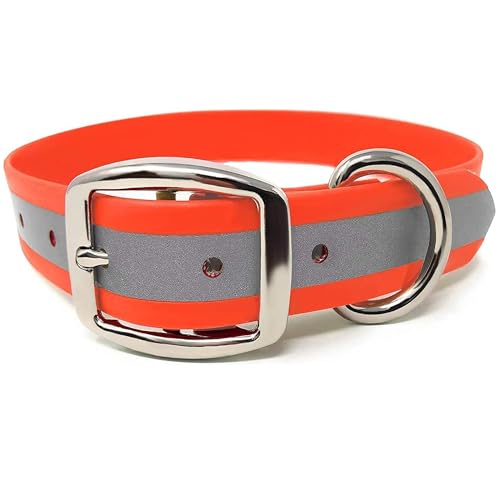
Regal Dog Products Reflective Dog Collar Medium Orange

Waterproof Rubber Dog Collar Quick Release Buckle Orange M

Carhartt Nylon Wide Dog Collar Blaze Orange Large

Browning Classic Webbing Camo Collar Large
More Details On Our Top Picks
This is an add-a-dog receiver collar, meaning it pairs with a SportDOG 425X or 825X handheld remote so one transmitter can run several dogs at once. Handlers running a brace or a small pack tend to build their systems this way: buy the full kit first, then add receivers as new dogs join the truck.
The orange strap is easy to track against stubble and cut corn, and the receiver design follows SportDOG’s field-focused approach, built around straightforward stimulation levels rather than app menus. In our view, that simplicity is the point when your hands are cold and your dog is 200 yards out.
Strong Points
- Expands an existing 425X/825X system so one remote controls multiple dogs
- High-visibility orange strap helps you keep eyes on each dog in heavy cover
- Purpose-built electronic training hardware, not a repurposed pet trainer
- Suits both young dogs learning basics and seasoned dogs sharpening responses
Things To Consider
- It’s a receiver only, so budget for the handheld unit if you’re starting from zero
- E-collars need regular contact-point cleaning and charging between outings
Key Specs
Made For
Multi-dog handlers who already run a 425X or 825X remote and want consistent, no-nonsense control across every dog in the string.
Where A Sibling Pick Shines
Handlers who want a standalone system with a longer listed range should look at the BLACKDOG Military Dog Shock Collar instead.
Dogs that wear a collar around the clock need webbing that shrugs off fence lines, kennel gates, and bramble. Carhartt builds this large-size version from 600-denier nylon with a duck canvas weave worked into the construction, which is the same heritage fabric logic behind its workwear. Translation: the strap resists abrasion far better than smooth budget nylon.
The hunter orange color pulls double duty as blaze visibility during season. Owners commonly report the material softens slightly with wear while keeping its structure, which is what you want from an all-day collar.
Bright Spots
- 600-denier nylon with woven duck canvas stands up to daily friction
- Hunter orange doubles as high-visibility hunting wear
- Holds shape through years of constant wear, per widespread owner feedback
Small Caveats
- Nylon absorbs water, so expect slower drying than coated or rubber collars after swims
- Standard-width strap spreads less pressure than the wide Carhartt variant below
The Right Fit
Large-breed owners wanting one tough, visible collar for both season and everyday wear.
Swap It Out When
Medium-sized dogs fit the Carhartt Hunter Orange M better, since the large sizing will sit loose on narrower necks.
This is the medium-neck version of the large Carhartt above, and the construction carries over unchanged: 600-denier nylon webbing with duck canvas weave built in for abrasion resistance. For brittanies, springers, and other mid-size gun dogs, the medium sizing sits closer to the neck without extra strap dangling past the buckle.
Fit matters more than most shoppers assume. A collar sized correctly rides flat, distributes tag and leash load evenly, and stays put when a dog hits thick cover. The same hunter orange finish keeps your dog readable at distance during upland work.
What We Like
- Same canvas-reinforced durability as the large model, scaled to medium necks
- Tighter sizing range reduces excess strap that snags on brush
- Blaze-orange visibility works year-round, not just in season
Points To Note
- Measure your dog’s neck before ordering, since medium spans a specific band and guessing leads to returns
Who Should Grab It
Owners of medium gun dogs and active mixed breeds who want workwear-grade toughness in a properly scaled size.
Another Choice May Suit
Swimmers and mud-lovers do better with the Waterproof Rubber Dog Collar, whose coated surface rinses clean in seconds.
Range is where this e-collar separates itself. The manufacturer lists 4,200 feet of remote reach with signal penetration through trees and rain, which covers most public-land scenarios where a dog works well ahead of you. Four training modes let you escalate from tone to vibration to stimulation, and a built-in flashlight and strobe help you locate the dog after dark.
The reinforced casing is rated for heavy crush force and repeated bite cycles, and the IP67 waterproofing means submersion up to a meter for 30 minutes. An ON/OFF safety button guards against pocket activations, a small detail that prevents a lot of accidental corrections.
Reasons To Buy
- 4,200-foot range suits big open fields and long retrieves
- IP67 rating handles lakes, storms, and stream crossings
- Flashlight and strobe modes aid low-light recovery
- Three-month battery life cuts charging chores during season
- Fits breeds from 5 to 150 pounds
Honest Caveats
- Real-world range drops in dense forest, as with any RF-based system
- More modes mean more of a learning curve than simpler remotes like the SportDOG add-a-dog setup
Quick Facts
Right Fit For
Trainers working wide-open terrain who need maximum reach, night visibility, and a casing that survives rough handling.
Look Elsewhere When
Multi-dog households already invested in SportDOG hardware will find the FieldTrainer 425X add-a-dog receiver more practical.
Plastic buckles are the usual failure point on cheap collars, and Regal sidesteps that with a solid metal buckle and metal D-ring. The vinyl-coated webbing underneath resists chewing and water, so the strap holds up through swims and rainy walks without turning into a soggy rag.
A built-in reflective strip is the quiet standout here. Drivers pick up the glow from headlights well before they’d spot plain orange fabric, which matters on pre-dawn walks along rural roads. Compared with the Carhartt picks earlier in this list, this one trades canvas-style abrasion resistance for easier cleaning and better nighttime visibility.
Plus Points
- Metal buckle and D-ring hold adjustment under real leash load
- Vinyl coating wipes clean and shrugs off moisture
- Reflective strip makes roadside walks noticeably safer after dark
Softer Spots
- Coated webbing can feel stiffer than soft nylon during the first weeks of wear
- Chew-prone dogs may still mark the strap edges despite the coating
At A Glance
Whose Shelf It Belongs On
Suburban and rural walkers whose routines start before sunrise or end after dark near traffic.
Not Your Match When
All-day comfort for very large breeds points toward the Carhartt Wide Blaze Orange collar, whose broader strap spreads neck pressure better.
Retrievers and swamp dogs destroy ordinary nylon collars slowly, through smell and grime more than outright breakage. This one uses coated nylon webbing that sheds dirt and odor, so a rinse under the tap after a beach session is the whole maintenance routine. The quick-release buckle comes off in one press, handy for wet, cold hands.
The medium size spans roughly 11.8 to 18.5 inches, with small and large variants covering the rest of the range. Compared with the Regal reflective collar, you give up the reflective strip but gain a softer, more flexible feel that many dogs seem to tolerate better for all-day wear.
Highlights
- Coated surface resists dirt and odor buildup entirely
- Rinses clean in seconds, no scrubbing or machine washing
- Quick-release buckle simplifies on-and-off routines
- Soft flexible feel suits sensitive-skinned dogs
Trade Offs
- No reflective element, so pair it with a light-up tag for night work
- Coated straps can develop a slight sheen over time with heavy use
Details At A Glance
Who Will Love This
Owners of swimming, digging, mud-loving dogs who’d rather rinse a collar than replace one every season.
Consider Something Else When
Classic webbing fans who prefer traditional texture will likely favor the Browning Classic Camo Collar covered below.
Width is the whole story here. Where the standard Carhartt collars use a conventional strap, this wide-webbing version spreads pressure across a broader patch of neck, which reduces the hot-spot effect narrow collars create on muscular breeds during long days of pulling and training.
The blaze orange finish is brighter than standard hunter orange, useful in snow cover or late-season fields where visibility gets tricky. Build quality matches the rest of the Carhartt line, aimed at big dogs that wear a collar continuously and need it comfortable, secure, and easy to spot. You may find the wide profile looks bulky on lean-necked breeds, though, so it’s genuinely a large-dog tool.
Standout Traits
- Extra-wide webbing distributes load and reduces neck strain
- Blaze orange maximizes visibility in snow and dim light
- Heavy-duty nylon suits continuous all-day wear
- Comfortable enough for strong pullers on long walks
Minor Gripes
- Oversized look overwhelms slender or narrow-necked dogs
- Plain nylon still absorbs water and dries slower than rubber-coated options
Built With In Mind
Owners of large, powerful breeds such as Labradors and hounds that log hours in a collar every single day.
Skip It When
Medium-size dogs are better served by the standard-width Carhartt Hunter Orange M, which fits slimmer necks cleanly.
Some handlers want their gear to disappear into the landscape, and this Browning delivers that in Realtree MAX-7 camo on heavy-duty polyester webbing. Polyester holds color and resists mildew better than many nylons, and the weave stays lightweight enough that dogs barely notice it during long upland days.
Two details earn its place here. The locking buckle won’t unfasten on its own, a real concern when a dog rolls through dense cover, and reflective stitching adds back some of the visibility the camo pattern sacrifices. The large size spans 18 to 28 inches, covering most retrievers and pointing breeds. Against the blaze-orange Carhartt options, this is the subtler choice for hunters who prioritize concealment.
Positives
- Realtree MAX-7 camo blends into field environments
- Locking buckle prevents accidental unfastening
- Reflective stitching restores low-light visibility
- Lightweight polyester webbing stays comfortable on long outings
Areas To Watch
- Camo trades away the instant spotting power of blaze orange at distance
- Large sizing only, so smaller breeds need a different option from this list
Core Details
Best Suited To
Upland and waterfowl hunters running large dogs who value a concealed, classic look with sensible safety stitching.
Reach For A Different Pick When
Maximum visibility outranks aesthetics for you, in which case the Carhartt Blaze Orange Wide collar is the stronger call.
What Matters Most Before Choosing Hunting Collars For Dogs
Visibility Comes First
Blaze orange shows up against stubble, snow, and timber in ways camo never will. Hunters working open fields usually rank visibility highest, while those prioritizing concealment accept the trade-off and add a beacon or bell instead. Decide which side of that line you’re on before anything else.
Material Matches Lifestyle
Nylon webbing is the classic choice, tough and affordable, but it holds water and odor. Vinyl-coated and rubberized straps cost a bit more and rinse clean in seconds, which matters enormously for dogs that swim weekly. Canvas-reinforced weaves sit in between, trading quick drying for serious abrasion resistance.
Fit Beats Features
Measure the neck with two fingers of slack and buy inside that range. A collar that’s too loose snags on brush, and one that’s too tight rubs fur raw within a week. Wide straps suit big, strong breeds; standard widths flatter everything else.
E-Collar Basics
Remote training collars add tone, vibration, and stimulation levels controlled from a handheld unit. Range ratings assume open air, so dense woods cut real-world reach noticeably. Start with the lowest effective setting and treat the collar as a communication tool, never a punishment device.
Key Considerations Across These Picks
Traps First Timers Fall Into
Guessing neck size is the number-one mistake, and it’s also the easiest to avoid with a cloth tape measure. Shoppers also mix up categories, ordering a basic webbing collar expecting remote-training functions, or buying an e-collar receiver without checking which handheld system it pairs with. Read the compatibility line twice before checkout.
What Separates Premium From Basic
Higher-tier collars spend money where failures happen: metal instead of plastic hardware, reinforced casings, waterproofing ratings, and longer battery life. Those upgrades pay off fastest for handlers running multiple dogs, hunting in wet climates, or logging long seasons. Casual neighborhood walkers rarely need them.
Frequently Asked Questions
Are orange collars required for hunting dogs?
No law mandates them in most areas, but blaze orange dramatically improves your ability to track and identify your dog around other hunters. Many handlers consider it basic field courtesy.
Can a dog swim while wearing these collars?
The waterproof and vinyl-coated options handle swimming without issue. Standard nylon collars tolerate occasional dips but dry slowly and may develop odor over time.
How tight should a hunting collar sit?
You should fit two fingers comfortably between the strap and the neck. That allows rotation without slipping over the ears.
Do e-collar ranges hold up in wooded terrain?
Manufacturer range figures assume clear line of sight. Expect meaningful reduction among trees, hills, or heavy rain, so leave yourself margin.
How often should I replace a dog collar?
Inspect monthly for fraying, cracked coating, or worn buckle teeth. Well-built collars often last several years, but any structural wear warrants replacement immediately.
Closing Thoughts
The right collar depends less on brand loyalty than on honest answers about your dog and your terrain. Swimmers do best with coated waterproof straps, big pullers benefit from wide webbing, and multi-dog handlers should build around a compatible e-collar system. Measure first, prioritize visibility second, and let the materials follow the lifestyle. Any of the eight above will serve you well once it’s matched to the right neck.
