

Hatching your own chicks, ducklings, or quail at home comes down to one thing: keeping temperature and humidity steady for three straight weeks. The right incubator does that work for you, turning eggs automatically and warning you before conditions drift. Whether you’re a classroom teacher, a backyard flock starter, or a reptile breeder, this list covers the models worth your counter space in 2026.
The Shortlist At A Glance

MATICOOPX 20 Egg Incubator with Humidity Display

Happybuy Black Reptile Incubator 25L Digital
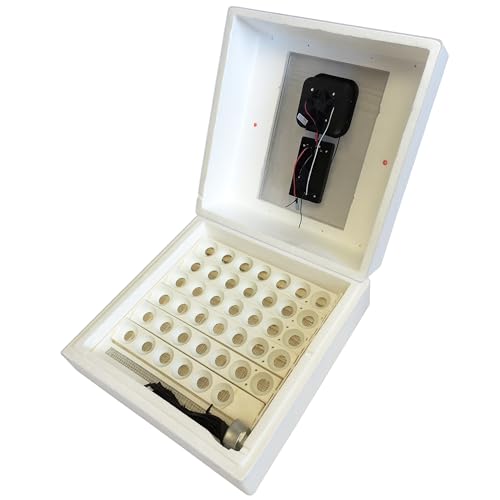
Farm Innovators Model 2450 Pro Series 41 Egg Incubator
Chickcozy 25 Egg Incubator (Sunlit Orange)

IBKINXX 12 Egg Incubator with 360° Viewing

IBKINXX 18 Egg Incubator (Black)

Onsju 18 Egg Incubator with Auto Turning

CluckRun 12 Chicken or 30 Quail Egg Incubator
More Details On Our Top Picks
The MATICOOPX hits the sweet spot most first-time hatchers need: a 20-egg capacity, an automatic turner, and a built-in candler so you can check embryo development without buying a separate light. A fan-driven circulating airflow system keeps the chamber temperature even, which matters because cold spots are the number-one cause of failed hatches in budget units.
Where this model quietly outclasses cheaper rivals like the IBKINXX 12-egg unit below is its external water refill port. You top up humidity without lifting the lid, so the interior climate never takes a sudden dip mid-hatch.
Strong Points
- Circulating fan holds a stable temperature across all tray positions, reducing cold-spot losses.
- External water filling means no lid-opening temperature crashes during lockdown week.
- Built-in egg candler saves you from purchasing a separate candling flashlight.
- Humidity readout on the display removes guesswork about wet-bulb math.
Things To Consider
- Plastic housings in this class benefit from gentle handling; owners commonly report cracks when units get moved while loaded.
- Twenty eggs fills fast once you’re hooked, so serious flock builders may outgrow it within a season or two.
Who It Suits Best
Beginners hatching their first clutch of chicken eggs who want automation without a steep learning curve.
Reach For A Different Pick When
Reptile keepers should look at the Happybuy 25L instead, since its wider temperature range handles species beyond poultry.
Every other unit on this list heats only. The Happybuy goes both directions, adjusting between 5°C and 42°C (41 to 107.6°F), which is why reptile breeders reach for it. Snake and gecko eggs often need cooler, drier conditions than chicken eggs, and a cooling function lets you hold those lower setpoints even in a warm summer room.
The 25-liter chamber gives you room for multiple egg containers or deli cups, and a built-in handle makes it easy to relocate between rooms. An LED panel shows the current chamber temperature at a glance, so a quick walk-by check replaces constant fiddling.
Highlights
- Dual heating and cooling covers the full temperature span reptile species require.
- LED digital readout makes monitoring a two-second task.
- Roomy 25L chamber fits stacked egg cups or small animal containers.
- Carry handle adds genuine portability for breeders working across spaces.
Worth Noting
- No automatic egg turner, so reptile clutches need manual rotation on your schedule.
- Humidity management relies on your own trays and sponges rather than built-in control.
Quick Facts
Made For
Reptile hobbyists breeding geckos, snakes, or lizards who need precise, cooler-than-poultry setpoints.
Swap It Out When
Poultry keepers will be better served by the Farm Innovators Model 2450, whose automatic turner handles chicken eggs hands-free.
Double the MATICOOPX’s capacity and you land here. The Farm Innovators Model 2450 holds 41 eggs under circulated air, making it the natural step-up for homesteaders scaling past a single backyard clutch. Its thermostatically controlled heater pairs with a built-in hygrometer, so temperature and humidity both get regulated rather than merely displayed.
The digital screen shows real-time readings and throws Hi/Lo notification lights when conditions drift outside range. That alert layer matters most during overnight hours, when a failing heater can cost you a whole batch before morning. An adjustable days-to-hatch countdown timer lets you tailor the cycle to different species.
Upsides
- 41-egg capacity suits homesteads hatching replacement layers in volume.
- Hi/Lo alert lights flag drift before it ruins a hatch.
- Automatic turner eliminates daily manual handling entirely.
- Adjustable countdown timer adapts the cycle to chickens, ducks, or other poultry.
Minor Gripes
- The larger footprint demands dedicated shelf or counter space year-round.
- Owners commonly report that the turner rails need careful seating after cleaning to run smoothly.
At A Glance
Right Fit For
Homesteaders and small farms running repeated larger batches of chicken or duck eggs each season.
Another Choice May Suit
Apartment hatchers with limited space will find the Chickcozy 25-egg unit a more manageable footprint with similar automation.
Most incubators stop caring the moment chicks pip. The Chickcozy keeps going: an anti-slip mat protects wobbly newborn legs, and a 2-inch protective wall stops early walkers from tumbling off edges. For families hatching eggs with kids watching, that post-hatch safety design is the whole reason to choose this over the Farm Innovators.
Cleaning gets real thought too. The top fan detaches and the base rinses under water, so end-of-season cleanup takes minutes instead of an afternoon. Dual watering zones labeled C and D let you dial humidity up for dry climates by filling both, a flexibility the single-reservoir MATICOOPX doesn’t offer.
Bright Spots
- Anti-slip mat and 2-inch protective wall safeguard newly hatched chicks.
- Dual watering zones give finer humidity control in dry homes.
- Detachable fan and rinseable base make deep cleaning genuinely quick.
- 360° clear window keeps the hatch visible from any angle, great for classrooms.
Softer Spots
- At 25 eggs, capacity sits below the Farm Innovators for anyone scaling up.
- The bright orange shell won’t blend into every kitchen or classroom aesthetic.
Feature Snapshot
Who Will Love This
Families and teachers hatching eggs as a hands-on project where chick welfare after pipping matters as much as the hatch itself.
Look Elsewhere When
Volume hatchers chasing maximum eggs per cycle should step up to the Farm Innovators Model 2450 and its 41-egg tray.
Twelve eggs, one compact footprint, and a price that won’t sting if your first hatch goes sideways. This IBKINXX is the entry point of the list, and it still carries features beginners actually need: an LED display reading in Fahrenheit, integrated temperature and humidity sensing, and an automatic turner doing the daily rotation for you.
The 360° viewing window turns the whole hatch into something you can watch from any seat at the table, which explains its popularity in classrooms. Compared with the Onsju 18-egg model later in this list, you trade capacity and audible alarms for simplicity and a smaller bill.
Reasons To Buy
- All-in-one temp and humidity display means no separate thermometer purchase.
- Automatic turner removes the most error-prone chore in home hatching.
- Full-circle visibility makes it a strong teaching tool for kids.
- Twelve-egg size stores easily between hatches.
Points To Note
- Small capacity limits you to trial batches or single-clutch hatches.
- Water refills typically mean brief lid openings, so expect minor humidity dips compared with external-fill designs.
Details At A Glance
Who Should Grab It
Complete beginners and classroom teachers running a first supervised hatch on a modest setup.
Not Your Match When
Anyone hatching mixed species regularly will appreciate the quail-ready dual trays of the CluckRun further down this list.
This is the middle sibling of the IBKINXX line: same Fahrenheit LED display and integrated climate sensing as the 12-egg model above, stretched to hold 18 eggs of chicken, duck, or quail size. The upgraded automatic turner is the headline change, giving smaller eggs the consistent rotation they need without you touching a thing.
In practice, this sits comfortably between the beginner-focused 12-egg unit and the Farm Innovators’ 41-egg scale. Backyard keepers running one broody-worthy batch per season tend to find 18 eggs the sweet spot, big enough to justify the electricity, small enough to store in a closet afterward.
Plus Points
- 18-egg capacity bridges hobby and small-flock scales neatly.
- Handles chicken, duck, and quail eggs in one chamber.
- Newly upgraded turner improves rotation consistency for smaller eggs.
- Built-in temp and humidity readout eliminates extra monitoring purchases.
Small Caveats
- Quail keepers may find dedicated small-egg positioning less precise than the CluckRun’s purpose-built 30-slot tray.
- Like most plastic-bodied units, it deserves a stable, level surface away from drafts.
Core Details
Best Suited To
Backyard keepers with a small mixed flock who want one dependable machine for whatever the coop produces.
Consider Something Else When
First-timers on a tight budget can start smaller with the IBKINXX 12-egg model and upgrade once hatching becomes routine.
The Onsju matches the IBKINXX 18-egg capacity but leans harder on monitoring. Real-time tracking pairs with visual and audible alerts whenever conditions move outside the optimal hatching range, so a tripped breaker or a drafty window gets flagged immediately rather than discovered at candling time. A silent-fan airflow system spreads heat evenly without adding background noise.
That alarm-first design suits anyone hatching in a busy household where nobody stands watch over the machine. Teachers and office hatchers, in particular, benefit from being pulled back to the unit by sound instead of by memory.
What We Like
- Audible and visual alerts catch abnormal changes the moment they happen.
- Silent fan technology distributes heat evenly without distracting noise.
- Automatic turning and humidity control cover the two chores beginners miss most.
- Works across chicken, duck, quail, pigeon, pheasant, and partridge eggs.
Areas To Watch
- Alarm sensitivity may take a few cycles to tune so it isn’t crying wolf in drafty rooms.
- Owners commonly report that reservoir levels need checking more often in very dry climates.
Whose Shelf It Belongs On
Busy households, classrooms, and offices where nobody can babysit the incubator but everyone wants to know instantly when something drifts.
Where A Sibling Pick Shines
Quiet operators who prefer visual-only monitoring and a lower entry cost may prefer the IBKINXX 18-egg black model instead.
Quail eggs are awkward. They’re tiny, round, and roll constantly, which is why generic turners chew through them. The CluckRun solves that with two purpose-built trays: a 12-slot chicken tray and a 30-slot tray shaped for quail and other small bird eggs, holding each one steady through every rotation.
The turner itself is unusually configurable. You choose 60-, 120-, or 180-minute intervals, and it shuts off automatically four days before hatch with a countdown timer keeping score. That last detail mirrors what experienced hatchers do manually at lockdown, just handled for you.
Standout Traits
- Dual trays make it genuinely strong for both chicken and quail hatching.
- Selectable turning intervals (60/120/180 minutes) let you match species-specific protocols.
- Auto-stop four days pre-hatch with countdown removes manual lockdown timing errors.
- Stable small-egg positioning supports better quail hatch rates.
Honest Caveats
- Chicken capacity caps at 12, well below the Farm Innovators for poultry-focused keepers.
- Swapping trays between species means handling eggs mid-cycle, best done quickly and gently.
Spec Overview
The Right Fit
Quail and coturnix keepers, or anyone hatching small game bird eggs who wants species-correct turning without improvising.
Skip It When
Purely chicken-focused hatchers wanting bigger batches belong with the Farm Innovators Model 2450 and its 41-egg tray.
What Matters Most Before Choosing Incubators
Capacity Versus Commitment
Egg capacity sounds like a spec-sheet brag, but it really describes how much of your season rides on one machine. Twelve eggs suit a first experiment; forty-plus suits a homestead replacing layers annually. Choose based on how many birds your coop and local rules can actually absorb, not on the biggest number available.
Temperature Stability Above All
A circulating fan matters more than almost any other feature. Forced-air models push warm air across every tray position, eliminating the cold corners that sink still-air units. Look for digital displays with alert functions, since catching a drift at 2 a.m. is the difference between a hatch and a lesson learned.
Turning And Lockdown Automation
Eggs need rotating several times daily until roughly three days before hatch, a stage called lockdown. Automatic turners remove that chore, and models with adjustable intervals or auto-stop timers adapt to different species. Manual turning works, but one forgotten weekend reliably costs you embryos.
Cleaning And Long-Term Care
Plastic chambers rinse clean; crevices around turner rails do not. Detachable fans, removable bases, and wipeable surfaces determine whether end-of-season maintenance takes ten minutes or an hour. Units you can actually clean thoroughly last longer and carry fewer pathogens between batches.
Key Considerations Across These Picks
Traps First Timers Fall Into
The classic error is buying on capacity alone, then discovering the unit lacks a hygrometer or reliable airflow. Another common stumble: skipping the dry run. Running any new incubator empty for 24 hours confirms it holds temperature in your actual room before live eggs depend on it.
What Separates Premium From Basic
Higher-tier machines spend money on regulation, not decoration. Alert systems, external water fill ports, auto-stop turners, and dual-zone humidity control all exist to protect the hatch when life interrupts your attention. Paying up pays off the moment a busy week collides with day 19.
Frequently Asked Questions
How long does a chicken egg take to hatch?
Chicken eggs typically hatch on day 21 under proper incubation. Duck eggs run closer to 28 days, while quail finish in about 18.
Do I need to turn eggs manually?
With an automatic turner, no manual rotation is required. Models without one demand turning several times daily until lockdown begins.
What humidity level should I aim for?
Most poultry guides suggest moderate humidity for the first phase, then higher humidity during the final three days. Follow the species-specific guidance for your eggs.
Can one incubator handle different species?
Several picks here accommodate chicken, duck, and quail eggs. Adjustable turner intervals and countdown timers make multi-species use far easier.
Where should I place my incubator?
Choose a room with stable ambient temperature, away from direct sun, drafts, and vents. A level surface near an outlet keeps readings honest.
Closing Thoughts
Matching the machine to your actual hatch plan beats chasing the biggest spec sheet every time. Start small with the IBKINXX 12-egg if this is your first attempt, go wide with the Farm Innovators for a growing flock, or specialize with the CluckRun for quail. Whichever direction you lean, run it empty first, trust the alerts, and enjoy the payoff of hearing those first peeps.
