

Yellow jackets nesting under a deck or inside a wall void are not a problem you solve with a spray bottle from arm’s length. Dust insecticides work because the powder clings to insects as they pass through treated openings, carrying the active ingredient back into the nest. This roundup covers seven options spanning silica-based dusts, permethrin and deltamethrin formulations, a liquid concentrate alternative, and an applicator that makes reaching awkward entry points far less miserable. Anyone dealing with ground nests, carpenter bee holes, or recurring wasp traffic around eaves will find something here worth a closer look.
The Shortlist At A Glance

Rockwell Labs Cimexa Insecticide Dust 4oz
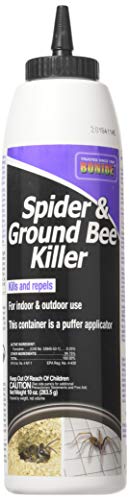
Bonide 363 Spider and Ground Bee Killer, 2 Pack

Revenge Spider & Ground Bee Killer 10 oz Dust
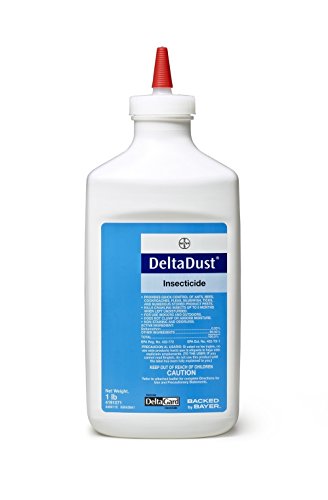
Delta Dust Pest Insecticide 1 LB with Hand Duster

SUNYAY Powder Duster, Adjustable 12″ to 42″

Syngenta Demand Duo Pesticide

Atticus Tirade 1% Dust Insecticide (1.25lb)
More Details On Our Top Picks
The 4-ounce bottle looks unassuming next to a one-pound jug, but CimeXa works differently from pyrethroid dusts. It’s pure amorphous silica, meaning it destroys insects physically by clinging to their waxy outer coating rather than relying on a chemical nerve agent. That mechanism matters for yellow jackets passing through treated wall voids, since resistance isn’t a factor.
Applied to undisturbed cavities, the manufacturer claims effectiveness lasting up to ten years, which dwarfs most competitors on this list. The trade-off is patience: physical kill takes longer than a knockdown chemical, so expect days rather than hours.
Strong Points
- Odorless and non-staining, so treated baseboards and voids stay clean
- Up to ten years of residual life in untouched wall cavities means one application covers many seasons
- Works against ants, roaches, silverfish, spiders, fleas, ticks, and mites alongside stinging insects
- Tiny 4 oz container stores easily on a garage shelf without leaking risk
Things To Consider
- No applicator included, so pairing it with a hand duster like the SUNYAY below makes application far easier
- Slower acting than permethrin-style dusts when speed matters most
Key Specs
Made For
Homeowners treating hidden structural voids who want a set-and-forget solution rather than seasonal reapplication.
A Better Fit Elsewhere
Anyone needing fast knockdown on an active ground nest should reach for the Bonide 363 instead, whose permethrin dust acts quicker at the point of contact.
Ground-nesting yellow jackets and digger bees turn lawns into hazard zones every summer, and this two-pack exists precisely for that scenario. Each 10 oz canister carries a low-dose permethrin dust, a synthetic pyrethroid that disrupts insect nervous systems on contact. The included snorkel tube lets you puff powder directly into burrow entrances without crouching over the hole.
Compared with the single-canister Revenge formula later in this list, buying two at once makes sense for yards with multiple colonies scattered across the property.
What We Like
- Snorkel applicator keeps your hands and face well back from the entrance while dusting
- Rated for both indoor and outdoor use, adding flexibility for basement spider problems
- Two canisters cover a full season of spot treatments across several nest sites
Worth Noting
- At 0.25% active ingredient, the concentration is gentler than pro-grade dusts, so heavily established colonies may need repeat visits
- Canisters are small; large infestations burn through them quickly
Right Fit For
Weekend gardeners spotting fresh burrows in lawn edges who want a simple, low-commitment first response.
Swap It Out When
Property owners facing widespread nesting should step up to the Atticus Tirade’s larger 1.25 lb volume before running dry mid-treatment.
This single 10 oz canister shares Bonide’s DNA but casts a wider net on the label. Beyond spiders and ground bees, it lists ants, roaches, crickets, mites, silverfish, wasps, and hornets, making it a genuine generalist for mixed pest pressure. The applicator cap threads on for directing powder into tight gaps where stinging insects enter siding or foundation joints.
In our view, it suits households dealing with more than one pest type at once, whereas the Bonide 363 two-pack targets a narrower problem with extra supply.
Highlights
- One product handles crawling and stinging species, trimming shelf clutter
- Ready-to-use straight from the canister with no mixing or measuring
- Applicator cap reaches behind siding, under steps, and along fence lines
Small Caveats
- Single canister format means reordering sooner than with bundled packs
- Dust settles in humid crawl spaces, so periodic reapplication keeps treated zones active
Who Should Grab It
Renters and first-time homeowners wanting one versatile canister for assorted indoor and outdoor bugs.
Where A Sibling Pick Shines
Shoppers focused purely on ground nests get better value per ounce from the Bonide 363 twin pack.
Delta Dust is the professional standard many exterminators carry, built on deltamethrin, a potent synthetic pyrethroid effective at very low concentrations. The one-pound jug arrives bundled with a puffer bellow duster, solving the applicator gap that CimeXa leaves open. Its headline trait is water resistance: unlike most dusts, it won’t clump or lose potency in damp wall voids, weep holes, or under eaves where rain finds its way in.
Owners commonly report up to eight months of residual activity in undisturbed spots, a strong middle ground between seasonal sprays and CimeXa’s decade-long claim.
Upsides
- Moisture-resistant formula holds up in wet exterior voids where other dusts cake
- Bundled bellow duster delivers controlled puffs deep into carpenter bee galleries
- Eight-month residual cuts reapplication frequency dramatically versus liquid sprays
- One pound treats numerous entry points across an entire property
Points To Note
- Fill the duster only halfway for proper airflow; overfilling causes clogging, a widely reported frustration
- Professional-grade chemistry warrants careful label reading and glove use during application
Quick Facts
Who Will Love This
DIYers tackling carpenter bees boring into deck joists and fascia boards who want pro-level results.
Consider Something Else When
Those preferring a non-chemical mechanical approach in sensitive indoor areas may favor Rockwell Labs Cimexa’s pure silica action instead.
Not a pesticide at all, and that’s the point. This telescoping duster extends from 12 to 42 inches, letting you puff diatomaceous earth or any loose powder into soffit gaps, second-story eave lines, and attic vents without ladder gymnastics. The bulb is rubber for consistent compression, the tank is thick transparent plastic so you can see remaining product, and the extension tube rides on a stainless steel rod.
Pairing it with the bare-bottled CimeXa turns two separate purchases into a complete treatment kit, which is how many owners run this combination.
Bright Spots
- 42-inch maximum reach eliminates most ladder work for high exterior applications
- Transparent tank shows fill level at a glance, preventing mid-job surprises
- Stainless steel extension resists bending compared with cheaper plastic tubes
Honest Caveats
- Powder only; liquids require a different tool entirely
- Some owners note fine powders can leak around fittings after heavy use, so checking seals between sessions helps
Details At A Glance
Best Suited To
Homeowners with tall eaves or vaulted porches who already own powder insecticides lacking a delivery tool.
Not Your Match When
Anyone wanting an all-in-one pesticide plus applicator out of the box gets that convenience from the Delta Dust bundle above.
Every other item here is a dust, so Demand Duo earns its slot as the liquid counterpoint. Syngenta designed it as a general-purpose perimeter spray controlling a broad range of pests simply and effectively, applied manually with standard spraying equipment. Where dusts excel inside voids, a liquid barrier along foundations, door frames, and window trim intercepts foragers before they locate an entry route.
The honest read is that this small bottle targets precision users rather than bulk treaters; its compact footprint suits targeted spot work, not whole-acre programs.
Plus Points
- Liquid format bonds evenly to vertical surfaces like siding and fence posts
- Trusted Syngenta formulation aimed at wide-spectrum household pest control
- Small container stores easily between seasonal treatments
Softer Spots
- Requires your own pump or hose-end sprayer, an added cost some shoppers overlook
- Concentrated products demand careful dilution per the label before any application
Feature Snapshot
The Right Fit
Meticulous DIYers comfortable with mixing who want a preventive perimeter barrier complementing their dust program.
Reach For A Different Pick When
Shoppers avoiding any measuring step will find the ready-to-use Atticus Tirade dust far simpler to deploy.
Tirade closes the list with volume and muscle. Its 1% cyfluthrin concentration, a pyrethroid chemically related to the actives in Delta Dust, targets flying, crawling, and wood-infesting pests including wasps and bees. At 1.25 pounds, the jug holds roughly five times the product of the Bonide canisters, which translates to whole-property coverage: multiple outbuildings, long fence runs, and every eave line in one purchase.
It ships ready to use with no mixing, though you’ll still want a separate duster since none is bundled.
Reasons To Buy
- Bulk 1.25 lb supply supports repeated seasonal treatments without reordering
- Cyfluthrin chemistry handles flying, crawling, and wood-boring species alike
- No measuring or dilution, cutting prep time to nearly zero
- Effective in hard-to-reach cavities where liquid sprays can’t penetrate
Areas To Watch
- Applicator sold separately, so budget for a hand duster alongside it
- Higher active percentage calls for strict adherence to label directions around pets and pollinator plants
Core Details
Whose Shelf It Belongs On
Rural homeowners and small-acreage owners battling recurring wasp pressure across many structures each summer.
Another Choice May Suit
Apartment dwellers and small-lot gardeners will find the Revenge 10 oz canister a more proportionate quantity for occasional spot jobs.
What Matters Most Before Choosing Dust Mites For Yellow Jackets
Match The Chemistry To The Nest Location
Nest location dictates everything. Underground colonies respond best to permethrin or cyfluthrin dusts puffed directly into the burrow, while wall-void nests favor silica or deltamethrin products that persist in dark, protected cavities. Liquid concentrates like Demand Duo work as preventive barriers but rarely penetrate deep enough to reach a queen inside an established structure.
Residual Life Versus Knockdown Speed
Fast-acting pyrethroids deliver visible results within hours, satisfying urgency when children or pets play nearby. Silica dusts such as CimeXa trade that immediacy for years of passive protection in undisturbed spaces. Decide which matters more for your situation before committing, because the two approaches rarely overlap.
Applicator Access Changes Everything
The finest dust fails if you can’t place it where insects travel. Bundled snorkel tubes and bellow dusters, like those with Bonide 363 and Delta Dust, remove guesswork. Standalone powders demand a separate tool, so factor that purchase into your total plan and check whether your target entry points sit above shoulder height.
Quantity Realism
A single ground nest needs ounces; a farmstead with outbuildings needs pounds. Overspending on bulk wastes storage space, while undersizing forces mid-season reorders right when colonies peak in late summer.
Key Considerations Across These Picks
Wrong Turns To Avoid
The most common slip is treating an active nest entrance from close range without protective clothing, which invites stings regardless of product choice. Another frequent error is applying dust on windy days, where drift wastes product and coats unintended plants. Skipping the label directions entirely ranks third; concentrations differ sharply between a 0.25% consumer canister and a 1% pro-grade jug.
What The Higher Tier Buys
Premium options justify their cost through concentration, longevity, and coverage area. Delta Dust’s moisture resistance and eight-month residual, or Tirade’s 1.25-pound volume, mean fewer purchases and fewer applications per year. Budget canisters remain sensible for isolated nests, yet anyone treating annually across a large property recovers the price difference quickly through saved time.
Bottom Line
Start by locating the nest, then let its position choose your chemistry: silica for hidden voids, pyrethroid dust for burrows and galleries, liquid for preventive barriers. Pair any bare powder with a quality duster, respect the label, and treat during calm evening hours when foragers return home. One well-placed application usually beats three rushed ones, so take the extra minute to aim properly.
