

A stubborn recall at the dog park or a barking fit that wakes the whole street is frustrating for any owner. The right remote trainer gives you a way to communicate clearly from a distance, using tone and vibration before anything stronger. This shortlist covers seven options built for different dogs, budgets, and training styles, so you can match the tool to your situation instead of guessing.
The Shortlist At A Glance

Asrcs Rechargeable IPX7 Waterproof E Collar with Remote

Tallentrol 2-in-1 Bark & Shock Collar 3300FT Remote

BLACKDOG Military Dog Shock Collar 4200ft (Dark Blue)

Educator ME-300 Micro E Collar for Dog Training

SLOPEHILL Dog Shock Collar 2 Dogs (8-140Lbs)
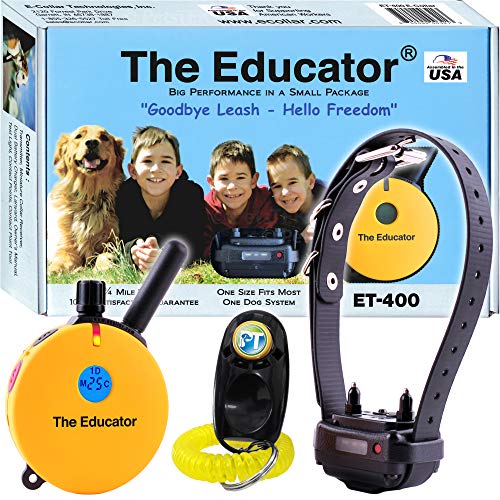
Educator ET-400 E Collar for Dog Training
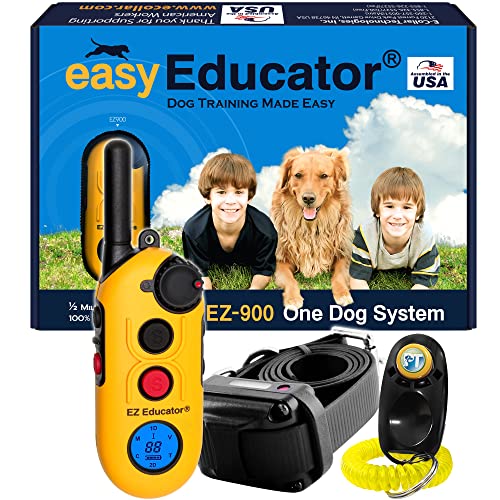
Educator EZ-900 E Collar for Dog Training
More Details On Our Top Picks
The headline number here is range: 2000 feet covers most suburban yards, a large park, or an open trail without you losing contact. Dual-channel support means one remote can run up to four collars at once, which is genuinely rare at this tier and saves multi-dog owners from juggling separate systems.
The four-mode layout starts with a flashlight, then beep, vibration, and adjustable static stimulation, so you can ladder up only as far as your dog’s temperament demands. An IPX7 rating (sealed against submersion) means lake swims and downpours are non-events.
Strong Points
- Dual channels handle four dogs from one handheld unit
- 2000-foot reach suits parks, trails, and big properties
- IPX7 waterproofing survives swimming and heavy rain
- Rechargeable design cuts ongoing battery costs
- Fits a wide 8 to 150 lb weight span
Things To Consider
- Contact points need regular checking and cleaning to avoid skin irritation during long wear
- Owners of very small breeds may find the receiver bulkier than micro-sized alternatives
Key Specs
Who It Suits Best
Owners running two or more medium-to-large dogs through shared off-leash sessions will get the most from this kit.
A Better Fit Elsewhere
Small-dog households sensitive to receiver size should look at the Educator ME-300 instead, whose micro receiver is built for lighter necks.
Most trainers force a choice between a manual remote system and an automatic anti-bark device. Tallentrol merges both into one receiver: flip it into auto mode and the collar detects barking on its own, responding with beep, vibration, or static depending on your setting, no remote required.
Battery life is the other quiet win here. The low-power design stretches the remote to roughly 180 days per charge and the receiver to about 40, with a full top-up taking around two hours. A power lock prevents accidental activation in a bag, and a dedicated button lets you disable shock entirely while keeping tone and vibration live.
What We Like
- Auto bark mode works hands-free when you’re not home
- Remote battery lasts months between charges
- Shock can be switched off completely via button
- Power-on lock stops accidental corrections
Worth Noting
- Auto bark detection can misfire around multiple vocal dogs, so placement and fit matter
- Charging ports and seals deserve a wipe-down after beach or muddy outings to keep the waterproofing honest
At A Glance
Made For
This is the pick for owners dealing with nuisance barking who still want full remote control on walks and hikes.
Where A Sibling Pick Shines
If barking isn’t the issue, the Asrcs collar’s four-dog dual-channel setup serves multi-dog homes better.
Compare this to the first two picks and the difference is armor. Blackdog specifies a reinforced casing rated to withstand 500 lbs of crush force and over 100,000 bite cycles, which is the kind of durability statement aimed squarely at working breeds and rough terrain. The IP67 rating adds submersion protection at one meter for 30 minutes.
Range tops out at 4200 feet, and the signal is designed to punch through trees and rain rather than dropping out in dense cover. Four training modes plus flashlight and strobe give you visibility options after dark, and an ON/OFF safety button guards against pocket activations. A three-month battery claim rounds out a package clearly built for long expeditions.
Bright Spots
- Reinforced casing shrugs off bites and crushing impacts
- 4200-ft signal penetrates trees and stormy weather
- Strobe light aids night tracking in low light
- Three-month battery life suits extended trips
- Safety switch prevents accidental stimulation
Minor Gripes
- The rugged housing adds weight that petite dogs may notice on long wear
- IP67 seals should be rinsed of salt water and grit after coastal use to preserve them over time
Feature Snapshot
Right Fit For
Hunters, hikers, and owners of powerful chewers who train in forests, mountains, or open water will value this build most.
Swap It Out When
Suburban backyard training doesn’t need this much armor; the SLOPEHILL kit delivers similar range in a lighter, simpler package.
Educator’s “blunt stimulation” approach is worth understanding before anything else: instead of sharp spikes, the pulse is wide and flat, which many trainers find gentler on sensitive dogs even at higher settings. On the ME-300 you get 100 levels of it, plus tone and vibration, so dialing in the lowest effective setting is realistic rather than hopeful.
The micro receiver is the draw for small breeds. It fits necks from 10 to 26 inches on dogs 5 lbs and up, and stays light enough for all-day wear, which matters because a bulky box on a 9-lb terrier tends to shift and rub. Range runs a third of a mile, plenty for neighborhood walks and park work, though trail runners covering serious ground may want more reach. A night tracking light helps with evening recalls.
Highlights
- 100 blunt stimulation levels allow very fine adjustment
- Micro receiver suits dogs as small as 5 lbs
- Adjustable 10 to 26 inch strap fits varied neck sizes
- Night tracking light supports after-dark sessions
Softer Spots
- A third-mile range falls short for wide-open field training compared with the ET-400 below
- Single-collar configuration means a second dog needs a separate kit purchase
Who Will Love This
Owners of small, sensitive, or first-time-trained dogs who prioritize gentle, precise cues over raw distance.
Reach For A Different Pick When
Large-property owners needing serious range should step up to the Educator ET-400, which triples the coverage.
This is the budget-friendly route to two-dog training: the kit ships as a pair, so both collars arrive ready rather than requiring a second purchase later. Five modes are on offer, including beep, vibration, safe shock, flashlight, and a no-shock option for owners who want to keep things purely tonal while habits settle.
Range matches the pricier Blackdog at 4200 feet, which is generous for this price bracket and comfortably handles large yards and open fields. The weight window spans 8 to 140 lbs, covering most household breeds. In our view, the trade-off is refinement: expect a more basic remote feel and fewer premium touches than the Educator units, but the core job of teaching recall and curbing chasing gets done.
Plus Points
- Two collars included, ready for a pair of dogs
- No-shock mode keeps training tonal if preferred
- 4200-ft range rivals costlier kits
Points To Note
- Build materials feel more basic than the Educator line, so long-term durability is less certain
- Straps and contact points benefit from periodic inspection since budget receivers commonly see faster wear
Who Should Grab It
First-time e-collar owners training two dogs on a tight budget will find this the easiest entry point on the list.
Another Choice May Suit
Anyone wanting finer stimulation control should consider the Educator EZ-900, whose 256 levels make subtle adjustments possible.
Where the ME-300 stops at a third of a mile, the ET-400 pushes to three-quarters, putting it in genuine field-trial territory. The stopwatch-shaped transmitter is the detail longtime users praise: controls sit where your thumb naturally rests, letting you keep eyes on the dog instead of hunting for buttons mid-correction.
You can send vibration taps, audible tones, and static in quick nicks or constant bursts, and the same blunt stimulation curve as its smaller sibling keeps higher levels usable. A night tracking light carries over for dusk work. The honest caveat is size and spend: this is a bigger receiver on the neck and a bigger number at checkout, so casual backyard users won’t exploit what makes it special.
Reasons To Buy
- Three-quarter mile range suits farms and open country
- Ergonomic transmitter enables fast, eyes-up corrections
- Nick and constant modes add timing flexibility
- 100 blunt levels keep stimulation tunable
Small Caveats
- Overkill for typical suburban lots where the ME-300’s shorter range already suffices
- Higher-tier pricing puts it beyond casual budgets
Core Details
Whose Shelf It Belongs On
Rural owners, sporting-dog handlers, and anyone training across acreage will put this range to real use.
Consider Something Else When
Neighborhood-level training calls for the cheaper Educator EZ-900, which keeps most features at half the reach.
The EZ-900 sits neatly between its two siblings: half-mile range splits the difference between the ME-300 and ET-400, while its 256 stimulation levels actually outnumber both. That granularity is the point. With steps that small, you can land on the exact lowest level your dog notices, which experienced trainers consistently identify as the key to humane, effective correction.
Tone and vibration modes come standard alongside the static function, and the night tracking light returns for evening sessions. Waterproofing holds up for wet-weather training. Depending on your property size, the half-mile figure either feels luxurious or merely adequate, but for most suburban and semi-rural owners it lands right in the sweet spot.
Standout Traits
- 256 stimulation levels offer the finest tuning here
- Half-mile range balances reach and practicality
- Night tracking light aids low-light recalls
- Waterproof build handles rain-soaked sessions
Honest Caveats
- Two-dog households need the EZ-902 variant rather than adding collars ad hoc
- Learning to use 256 levels well takes patience; beginners sometimes overshoot early on
Details At A Glance
The Right Fit
Committed owners who want professional-grade precision without paying for extreme field range will feel at home here.
Not Your Match When
Working farms and hunt tests demand the longer leash of the Educator ET-400 instead.
What Matters Most Before Choosing E Collars For Training Dogs
Range Should Match Your Terrain
A quarter mile sounds like plenty until your dog bolts across a 40-acre field. Match the stated range to your actual training ground, and remember trees, hills, and rain eat into advertised distances. Suburban owners rarely need more than 2000 feet; hunters and rural handlers should look at the half-mile-plus tier.
Levels Of Stimulation Beat Raw Power
More levels means finer adjustments, and finer adjustments mean you can find the lowest setting your dog actually responds to. A collar with 256 steps lets you whisper; one with broad jumps forces you to shout. Tone and vibration modes matter just as much, since most dogs learn on those alone.
Waterproofing And Fit Are Non-Negotiable
An IPX7 or IP67 rating determines whether a swim or a storm ends your session. Fit matters equally: the receiver should sit snug enough for consistent contact without rubbing, and contact points need checking daily on dogs with thick coats or sensitive skin.
Think About How Many Dogs You Train
Multi-dog homes save money and hassle with dual-channel remotes or bundled two-collar kits. Buying single units separately usually costs more and clutters your pockets with extra transmitters.
Key Considerations Across These Picks
Traps First Timers Fall Into
The classic mistake is starting at the highest setting, which teaches fear instead of behavior. Begin with tone, move to vibration, and only introduce static at the lowest perceptible level. Another common slip is skipping the fit check: a loose collar delivers inconsistent signals and confuses the dog.
The Case For Spending Up
Higher-tier models buy finer stimulation steps, tougher housings, and better ergonomics. Casual backyard training rarely needs any of that, but daily field work punishes cheap receivers quickly. Pay more when training frequency and terrain demand it, not because the spec sheet looks impressive.
Bottom Line
Every collar here solves the same core problem, communicating with your dog at a distance, but they solve it for different lives. Multi-dog homes lean toward the Asrcs, bark-prone pups suit the Tallentrol, and precision-minded owners will appreciate the Educator lineup. Match the tool to your terrain and your dog’s temperament, start gentle, and stay consistent. That combination does more for results than any spec sheet ever will.
