

Anyone who owns a cat knows the daily grind: scoop, bag, repeat, sometimes twice a day. Electric litter boxes take that chore off your plate by raking or sifting waste into a sealed bin automatically, some within minutes of your cat stepping out. The catch is that the category is crowded with models that differ wildly in safety sensors, app support, noise, and capacity, so the wrong choice can mean a skittish cat or a unit you end up cleaning manually anyway. This shortlist breaks down seven options for different households, from multi-cat homes to senior cats who need an easy step-in entry.
The Shortlist At A Glance

DuckSky Multi-Function Self Cleaning Litter Box 65L+9L

Lohhuby Automatic Cat Litter Box Self Cleaning (White)

Mimfam AS11 Automatic Self Cleaning Litter Box (Grey)
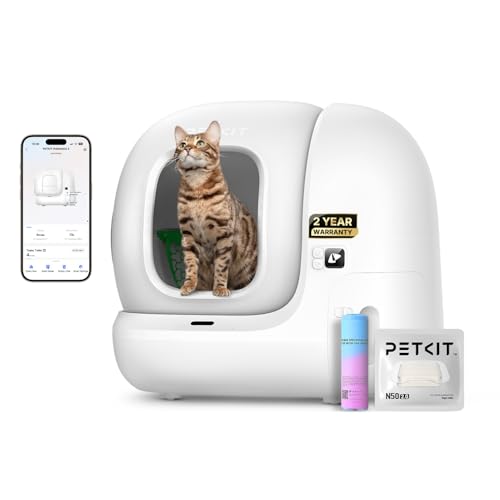
PETKIT PuraMax 2 Automatic Self-Cleaning Litter Box

PetPivot Open Top Self Cleaning Cat Litter Box (Dark Grey)

Invengo Automatic Cat Litter Box Self Cleaning (LightGrey)

vivirata Self Cleaning Litter Box with App Control
More Details On Our Top Picks
Capacity is where this DuckSky unit separates itself from everything else here. The 65-liter toilet chamber paired with a 9-liter waste compartment gives multiple cats genuine room to work with, and the integrated waste system replaces the pull-out drawer design most rivals still use.
In a two- or three-cat home, that layout means fewer trips to the trash and less chance of overflow over a long weekend away. The 2026 revision also emphasizes anti-trap behavior during cleaning cycles, which matters if you have a curious kitten. It ships with three rolls of liner bags plus an odor eliminator, so setup costs nothing extra on day one.
Strong Points
- 65L chamber comfortably serves several cats without crowding
- All-in-one waste disposal cuts down handling compared to drawer designs
- App control lets you schedule cleans from another room or another city
- Liners and odor eliminator included, so no separate starter purchase
- Built-in deodorization keeps the corner of the room fresher between empties
Things To Consider
- The large footprint demands real floor space, a squeeze in small apartments
- Owners commonly report a short adjustment period while cautious cats learn the cycle timing
Key Specs
Who It Suits Best
Households with two or more cats that want maximum capacity and are willing to dedicate floor space to it.
A Better Fit Elsewhere
Single-cat owners in tighter rooms will find the Mimfam AS11’s smaller footprint easier to place.
Where the DuckSky goes big, this white Lohhuby keeps things modest and targeted at medium cats and kittens. The open-design entry lowers the intimidation factor for younger animals, and the smart health monitor logs usage patterns through the companion app, which runs on 2.4GHz Wi-Fi only.
That health-tracking angle is genuinely useful: changes in visit frequency can flag issues early, though it’s a monitoring aid rather than a diagnostic tool. Anti-pinch safety and quiet operation round out a package aimed at first-time automatic box owners. Availability fluctuates on the listing, so confirm current status on the product page before planning around it.
What We Like
- Usage logging gives early visibility into litter habits
- Open entry suits kittens still building confidence
- Anti-pinch mechanism stops the rake mid-cycle when needed
Minor Gripes
- 2.4GHz-only Wi-Fi excludes some mesh router setups
- Sized for medium cats, so large breeds may feel cramped
- Listing availability has been inconsistent, worth verifying before ordering
Made For
Kitten and medium-cat owners who want health insights alongside automated cleaning in a compact white unit.
Where A Sibling Pick Shines
Owners of heavier cats should look at the Invengo instead, which accommodates animals up to 27.6 lbs.
Noise is the quiet dealbreaker nobody thinks about until a 3 a.m. cleaning cycle wakes the whole house. The Mimfam AS11 runs at 32dB, roughly the level of a soft whisper, which makes it one of the least intrusive options in this group. The top entrance measures 16.33 by 15.35 inches, generous enough that larger cats enter and exit without squeezing.
Safety hardware is layered too: four pairs of infrared sensors plus three hall sensors halt cleaning the moment a cat is detected inside, resuming only after exit. The 10L waste container stretches to about ten days between empties for a single cat, and the bundle includes liner bags and a litter mat so you’re covered out of the box.
Highlights
- 32dB operation won’t disturb light sleepers or nervous cats
- Oversized top entry suits big breeds like Maine Coons
- Ten-day waste capacity for single-cat homes slashes chore time
- Mat and liners included, trimming startup costs
Softer Spots
- Top-entry format can challenge arthritic or very senior cats
- Removable bin and disposable liners add recurring supply costs
At A Glance
Right Fit For
Multi-cat or large-breed owners in shared living spaces where noise and frequent emptying are the pain points.
Swap It Out When
Senior cats with mobility limits do better with the PetPivot, whose built-in access step removes the climb entirely.
PETKIT is the established name in this lineup, and the PuraMax 2 shows what a mature product looks like. Odor control gets a two-pronged approach: a sealed waste bin working alongside the N50 2.0 odor remover, a combination that holds smells down noticeably better than open-bin designs in small rooms. The low entrance helps shorter or older cats get in without a jump.
It accepts most clumping litters, which keeps your consumable options wide open, and the basic bundle ships with trash bags, a sifter, and a magnetic litter remover. One placement note from the manufacturer deserves respect: keep it off carpet, since soft flooring interferes with the weight sensors and can trigger malfunctions. Flat, hard flooring only.
Upsides
- Sealed bin plus N50 2.0 remover tackles odor from two directions
- Low entrance welcomes kittens and less agile cats
- Works with most clumping litters, no proprietary refill lock-in
- Generous accessory bundle covers bags and maintenance tools
Honest Caveats
- Hard flooring is required; carpet placement risks sensor faults
- This version doesn’t support the K3 Smart Spray accessory
Quick Facts
Who Will Love This
Apartment dwellers who prioritize odor control above all else and have a hard-floor spot near an outlet.
Not Your Match When
Carpeted bedrooms and hallways point you toward the DuckSky, whose larger chamber tolerates more flexible placement.
Not everyone wants another app account, and the PetPivot respects that. It operates fully standalone: no downloads, no subscriptions, no Wi-Fi dependency, just set the cycle and let it run. That simplicity makes it a natural fit for senior pet owners or anyone tired of connectivity hiccups interrupting automation.
Safety redundancy is the headline spec. Seven pairs of infrared sensors provide full-coverage monitoring, backed by a touch-sensitive pedal that interrupts the mechanism on contact and a mechanical limiter as a final physical stop. Maintenance is equally thoughtful: the modular quick-release design comes apart tool-free in seconds, solving the dust buildup problem that plagues sensor cavities in sealed units. The included access step gives senior cats a stable, assisted path up to the open top.
Bright Spots
- Triple-layer safety: sensors, contact pedal, mechanical limiter
- Zero app or subscription requirements, ever
- Tool-free disassembly makes deep cleaning genuinely quick
- Access step supports aging or mobility-limited cats
Points To Note
- No remote monitoring, so travel check-ins happen in person
- Open-top design releases more scent than sealed rivals like the PETKIT
Core Details
Best Suited To
Owners of senior cats, or anyone who wants dependable automation without apps, accounts, or network setup.
Consider Something Else When
Remote scheduling matters to frequent travelers, in which case the Invengo’s app control fills that gap.
Kittens grow fast, and buying a box they’ll outgrow in a year stings. The Invengo sidesteps that with a supported weight range of 3.3 to 27.6 lbs, covering everything from a young kitten to a substantial adult. The open-top layout gives cats room to turn around freely, and better airflow through the wide entry helps keep the interior inviting.
App control arrives via 2.4GHz Wi-Fi, letting you schedule cleanings, track litter usage, and receive full-bin alerts remotely. The 10.5L waste bin carries meaningful capacity between empties, and two rolls of garbage bags come bundled. Compared to the Lohhuby earlier in this list, the Invengo trades the health-monitoring detail for a much wider weight ceiling, which most growing-cat households will value more.
Plus Points
- Weight range spans kittenhood through large adulthood
- Full-bin alerts prevent surprise overflows
- Open-top airflow keeps the chamber fresher
- 10.5L bin reduces emptying frequency
Small Caveats
- 2.4GHz-only connection limits some router configurations
- Open design contains odor less effectively than sealed units
The Right Fit
Owners raising a kitten who want one purchase to last into full adulthood without a replacement cycle.
Reach For A Different Pick When
Odor containment tops your list, then the PETKIT PuraMax 2’s sealed bin system is the stronger match.
First steps into automated litter care don’t need to be expensive. This gray vivirata unit bundles the essentials: infrared and weight sensors that pause operation the moment your cat enters, plus app-based remote management with full-bin notifications. The dual-sensor approach means both presence and weight are checked before any rake moves, a sensible baseline for pets of any age.
A litter mat and liners ship in the box, so the total cost of getting started stays low. What you give up versus the pricier picks here is refinement: there’s no health tracking like the Lohhuby offers, and published capacity figures aren’t specified, so heavy multi-cat use is harder to predict. As a low-commitment entry point for one cat, though, the honest read is that it covers the fundamentals well.
Reasons To Buy
- Dual infrared and weight sensing pauses cycles reliably
- Mat and liners included, nothing extra to order
- Full-bin alerts arrive through the app
Trade Offs
- No health-monitoring features for habit tracking
- Unspecified capacity makes multi-cat suitability a gamble
Feature Snapshot
Who Should Grab It
Single-cat owners trying automation for the first time who want core safety features without a premium outlay.
Another Choice May Suit
Multi-cat homes should step up to the DuckSky, whose 65L chamber and 9L waste bin are built for shared duty.
Factors To Consider When Choosing Electric Litter Boxes
Safety Sensors Come First
Every automatic box uses either rake or rotating-globe mechanics, and both need reliable ways to know a cat is inside. Infrared pairs detect presence optically, weight sensors confirm load, and the better units layer both. Look for at least two independent systems, since a single failed sensor is the difference between a clean cycle and a frightening one for your pet.
Match Capacity To Your Household
A single cat generates far less waste than three sharing one unit. Waste bins in this roundup range from compact drawers to 10.5L containers, and manufacturers often quote days-per-cat figures. Undersizing means constant emptying, which quietly erases the time savings that justified the purchase in the first place.
Noise And Placement Realities
Cycle noise varies from whisper-level 32dB motors to audible raking, and nervous cats may avoid a loud box entirely. Placement matters just as much: several models require hard flooring because carpet interferes with weight sensors. Measure your intended spot before ordering, including clearance for the lid on top-entry designs.
Connectivity You’ll Actually Use
App control adds remote scheduling and alerts, but most budget units lock to 2.4GHz Wi-Fi only. Homes running mesh networks or 5GHz-only bands should verify compatibility, or consider an app-free option like the PetPivot that sidesteps networking altogether.
Key Considerations Across These Picks
Traps First Timers Fall Into
The most common mistake is buying for today’s cat instead of tomorrow’s. Kittens double in size quickly, so a narrow weight range forces a second purchase. Another frequent slip: ignoring floor type. Placing a sensor-dependent unit on carpet causes false readings and skipped cycles, problems owners commonly report only after setup. Finally, skipping the liner supply math leads to surprise recurring costs.
Where The Extra Money Goes
Higher-tier models spend their budget on three things: redundant safety hardware, sealed odor systems, and quieter motors. Seven sensor pairs cost more than two, but they also cut interruption errors dramatically. Sealed waste bins with dedicated odor removers matter most in apartments where the box shares air with living space. Paying up earns its keep in multi-cat homes and small rooms; a single cat in a house with a spare corner can comfortably start lower.
Closing Thoughts
Automated litter boxes earn their keep the moment the morning scoop disappears from your routine, but the right pick depends on your specific household. Count your cats, measure your floor space, and decide honestly whether app features will actually get used. Any of these seven handles the core job well; matching capacity, noise tolerance, and entry style to your cat is what turns a gadget into a fixture you’d buy again.
