

Saltwater reef tanks punish weak filtration fast. Ammonia spikes, cloudy water, and stressed corals show up within days when a filter can’t keep pace with a bioload-heavy marine setup. This shortlist covers seven options for different tank sizes and budgets, from submersible power filters to ceramic bio media you drop into an existing sump. Whether you run a compact nano reef or a 100-gallon display, there’s a fit here.
The Shortlist At A Glance

Atlantis Aqua Submersible Aquarium Filter (55-100 Gallon)

TARARIUM Turtle Tank Filter 290GPH 20-75 Gal
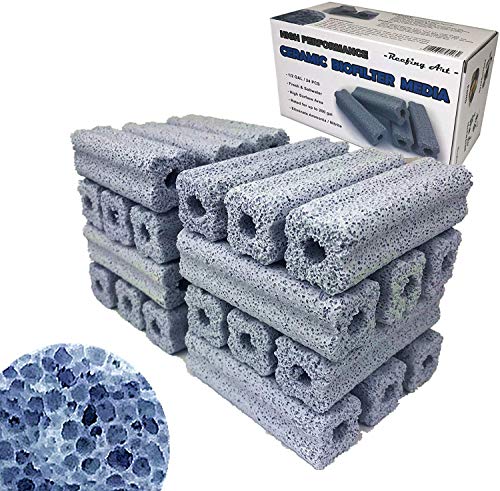
Reefing Art Ceramic Bio Filter Media (24 pcs)

TARARIUM 290GPH Turtle Tank Filter 20-85 Gallon
Aqueon SmartClean Power Filter 10-20 Gallon
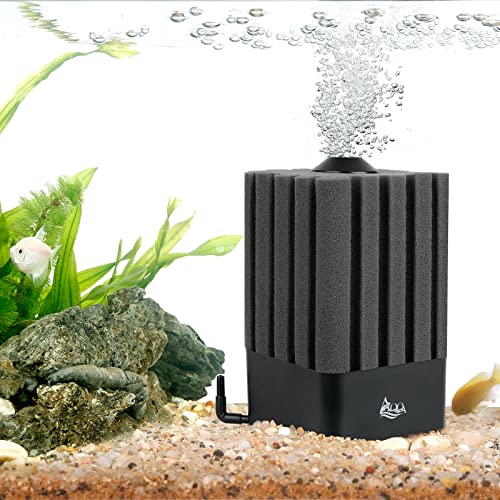
AQQA Aquarium Sponge Filter 20-110 Gallon

Master Pet Supply Aquarium Filter Pad Roll 12×72
More Details On Our Top Picks
Most internal filters pull water through side intakes, which lets some flow shortcut past the media. Atlantis Aqua takes a different route: suction comes from the bottom of the unit, so water travels the whole column before it exits. In a busy reef tank with live rock and heavy feeding, that fuller contact time shows up as clearer water between cleanings.
The submersible format also means no hang-on-back hardware cluttering your rim, and the quiet operation matters in living rooms and bedrooms where a hum gets old fast. For anyone stepping up from a small starter tank into the 55 to 100 gallon range, this is a straightforward upgrade path.
Strong Points
- Bottom intake forces water through the entire filter body instead of letting it bypass the media along the sides.
- Sized generously for 55 to 100 gallon systems, so it keeps headroom in heavily stocked marine tanks.
- Submersible install hides the hardware inside the tank for a cleaner display look.
- Owners commonly report low noise levels, a real benefit in shared living spaces.
Things To Consider
- Being fully in-tank, maintenance means reaching into the display rather than servicing a canister outside it.
- You may find the footprint noticeable in shallower aquascapes with tight rockwork.
Key Specs
Who It Suits Best
Intermediate hobbyists running 55 to 100 gallon saltwater or freshwater displays who want strong internal filtration without external equipment.
A Better Fit Elsewhere
Shallow turtle or paludarium setups with water lines under three inches are better served by the TARARIUM 290GPH model later in this list, which runs at very low levels.
Where the Atlantis Aqua leans on raw volume, this TARARIUM unit wins on structure. Its waterfall-style internal layout runs three stages: a double-sided mesh sponge catches debris first, then a second mechanical layer, then ceramic bio-balls that host the bacteria handling ammonia and nitrite. That sequencing keeps the biological media from clogging prematurely, which is exactly what you want in a messy tank.
Flow is adjustable too, so delicate shrimp or fry aren’t pinned against the glass while larger fish still get turnover. Compared with the sponge filter further down this list, it’s a more complete all-in-one solution out of the box.
Bright Spots
- Three-stage design separates mechanical and biological work, extending time between deep cleans.
- Ceramic bio-ball stage gives waste-breaking bacteria a large, open-pored home.
- Adjustable output lets you dial flow down for shrimp, frogs, or young fish.
- Rated across 20 to 75 gallons, covering most mid-size community and reptile tanks.
Small Caveats
- The sponge layers need regular rinsing in removed tank water; neglect them and flow drops noticeably.
- Internal filters of this style take up visible space along the back wall of smaller aquascapes.
Right Fit For
Hobbyists keeping turtles, amphibians, or mixed freshwater-saltwater setups from 20 to 75 gallons who want staged filtration without plumbing.
Where A Sibling Pick Shines
Larger displays up to 85 gallons with very shallow water suit the newer TARARIUM 290GPH variant reviewed next, thanks to its lower minimum water line.
This isn’t a filter at all, and that’s the point. Biological media is what actually converts ammonia into nitrite and then nitrate, and cheap stock media is usually the weakest link in any sump or canister. Reefing Art’s ceramic blocks use a porous internal structure that gives bacteria far more colonizable surface than solid rings, and each box holds 24 pieces, roughly half a gallon by volume.
The material is non-metallic ceramic rated safe for freshwater, pond, and saltwater use, with no aluminum leaching concerns that plague bargain ceramics. Drop a box into your sump’s bio chamber and let it mature for several weeks before judging results.
Reasons To Buy
- Vast internal pore structure supports denser bacterial colonies than standard ceramic rings.
- Targets ammonia and nitrite directly, the two compounds that stress corals fastest.
- Non-metallic composition avoids heavy-metal leaching in sensitive reef chemistry.
- Works in sumps, canisters, and ponds, so one purchase covers multiple systems.
Points To Note
- Biological media needs four to six weeks to fully colonize; expect no instant improvement.
- Rinse only in discarded tank water, since tap water chlorination kills the bacteria you paid for.
Quick Facts
Made For
Reef keepers running sumps or canisters who want to replace weak stock media with a serious biological foundation.
Swap It Out When
Fine-polishing needs are better handled by the Master Pet Supply pad roll near the end of this list, which handles particulate rather than biology.
Turtles and shallow refugiums break ordinary filters because most intakes need six inches of water just to prime. This newer TARARIUM runs with a minimum water level of 2.6 inches, which opens it up to paludariums, turtle docks, and evaporation-prone tanks that older units simply can’t service. The 290 GPH pump moves enough volume for tanks up to 85 gallons.
It also bundles circulation, debris removal, and oxygenation into one housing, and the bottom-suction design pulls settled waste off the substrate instead of leaving it to rot. Against its sibling earlier in this list, the trade is a wider tank range and shallower operation for a slightly simpler stage layout.
Upsides
- Operates at water depths down to 2.6 inches, rare among internal power filters.
- Combines circulation, filtration, and aeration in a single submersible unit.
- Adjustable power lets you match turnover to sensitive livestock.
- Handles freshwater, saltwater, and murky turtle water up to 85 gallons.
Softer Spots
- Shallow-water operation means the intake sits close to debris; weekly checks keep it from clogging.
- At full power in small tanks, current may be stronger than shy species tolerate.
Details At A Glance
Who Should Grab It
Reptile and amphibian keepers, plus reef hobbyists with shallow lagoon-style tanks, who need reliable filtration at low water lines.
Consider Something Else When
Deep planted displays over 85 gallons get better coverage from the Atlantis Aqua submersible filter at the top of this list.
Nano reef owners know the drill: small water volumes go bad quickly, so frequent partial changes are non-negotiable. Aqueon built this hang-on-back unit around that chore. The SmartClean mechanism lets you divert dirty water out during a change without pulling the filter apart, which turns a ten-minute mess into a two-minute task. Adjustable flow and quiet running round out a very livable daily package.
The included EcoRenew cartridge slots straight in, and the medium size covers 10 to 20 gallon freshwater and saltwater tanks alike. It’s the least intimidating option here for someone setting up their first marine tank.
What We Like
- SmartClean routing drains old water directly during changes, cutting spill risk dramatically.
- Quiet operation suits offices, bedrooms, and other noise-sensitive rooms.
- Adjustable flow protects delicate nano livestock from excessive current.
- EcoRenew cartridge swaps in seconds with no cutting or fitting.
Minor Gripes
- Cartridge-based design means ongoing consumable costs versus reusable sponge media.
- Capped at 20 gallons, so it won’t grow with an expanding system.
Who Will Love This
First-time saltwater keepers and nano reef enthusiasts running 10 to 20 gallon tanks who value quick, low-mess upkeep above raw capacity.
Not Your Match When
Tanks beyond 20 gallons need the AQQA sponge filter or the Atlantis Aqua unit, both of which scale to much larger volumes.
Sponge filters are the quiet workhorses of breeding and quarantine work. This AQQA unit runs off an external air pump, sold separately, pushing water gently through a vertical-pattern sponge that traps particles while hosting beneficial bacteria. There’s no impeller to suck in fry or shrimp, which makes it the safest option on this list for delicate life stages.
The trade-off is honesty about what it is: mechanical and biological only, no chemical stage, and you’ll budget for an air pump plus 4mm airline hose. Sizing spans 20 to 110 gallons depending on the variant, giving it unusual reach for such a simple device.
Plus Points
- Air-driven flow creates almost no noise and zero risk to tiny fish or invertebrates.
- Dual-stage vertical sponge offers both particle capture and bacterial colonization surface.
- No moving parts inside the tank means fewer failure points over years of use.
- Scales from 20 up to 110 gallon systems across available variants.
Worth Noting
- An external air pump and 4mm hose are required purchases, not included in the box.
- Gentle turnover alone won’t handle the bioload of a fully stocked predator tank.
The Right Fit
Breeders, shrimp keepers, and hospital-tank operators who prioritize livestock safety and silence over maximum filtration power.
Reach For A Different Pick When
Heavy-feeding reef displays need staged power filtration, which is where the TARARIUM 290GPH models handle the load far better.
Pre-cut filter cartridges are a subscription you never signed up for. This roll flips that: six feet of one-inch-thick polyester pad, twelve inches wide, cut with scissors to whatever shape your sump, canister, or overflow box demands. One roll yields dozens of custom pads, and the durable fiber holds up through repeated rinsing before retirement.
It pairs naturally with the Reefing Art ceramic media reviewed earlier: the pad catches particulate upfront, the ceramics handle biology downstream. Pond keepers use it too, since the material tolerates outdoor duty. The honest caveat is that it does nothing on its own; it’s a component, not a complete filter.
Standout Traits
- Cut-to-fit sizing eliminates dependence on brand-specific replacement cartridges.
- One-inch thickness captures fine particles while maintaining reasonable flow.
- Durable polyester construction survives multiple rinse cycles before replacement.
- Six linear feet supply dozens of pads for sumps, canisters, and ponds alike.
Honest Caveats
- Requires an existing filter housing or DIY chamber; it filters nothing standalone.
- Cutting produces loose fibers initially, so rinse each pad before installation.
Core Details
Whose Shelf It Belongs On
DIY sump builders and multi-tank keepers who’d rather trim their own media than buy proprietary cartridges forever.
Another Choice May Suit
Anyone wanting a complete plug-and-play unit should start with the Aqueon SmartClean filter, which arrives ready to run.
What Matters Most Before Choosing Filters For Saltwater Reef Aquarium
Match Capacity To Your Bioload
Turnover matters more than brand names. A reef tank with heavy feeding and a dense fish population needs roughly four to five times its volume moved per hour, so a 75-gallon display wants a filter rated well past 300 GPH. Undersizing is the single most common regret among new marine keepers, and it shows up as persistent nitrate rather than sudden crashes.
Understand The Three Filtration Stages
Mechanical filtration traps particles, biological filtration hosts bacteria that convert ammonia to nitrate, and chemical filtration removes dissolved compounds. Every pick on this list emphasizes different stages, which is why pairing items works so well: a sponge filter plus quality ceramic media covers more ground than either alone.
Plan For Maintenance Reality
The best filter is one you’ll actually service. Cartridge systems cost more over time but swap in seconds, while sponge and ceramic media rinse cheaply yet demand hands-in-tank attention. Honest self-assessment here prevents the neglected-filter spiral that ruins more tanks than any hardware flaw.
Mind Your Water Depth And Layout
Shallow paludariums, turtle docks, and low refugiums eliminate half the market immediately. Measure your minimum operating water line before ordering anything, and check whether the unit fits behind your rockwork without blocking swim lanes.
Key Considerations Across These Picks
Traps First Timers Fall Into
The classic error is buying for tank size alone while ignoring bioload. A lightly stocked 40-gallon reef and a heavily fed one have wildly different needs despite identical dimensions. Second mistake: replacing all filter media at once, which discards established bacteria colonies and triggers a mini-cycle. Rinse or stagger replacements instead, and always use discarded tank water for cleaning.
What Separates Premium From Basic
Higher-tier units spend money on pump efficiency, quieter motors, and smarter water paths like bottom-draw intakes that prevent bypass. You’re also paying for adjustability, since tunable flow protects delicate livestock. The upgrade pays off most in larger systems where a weak motor becomes a constant compromise, while nano tanks often run happily on simpler gear.
Closing Thoughts
Filtration is the least glamorous purchase in this hobby and the one that decides whether everything else thrives. Start by matching capacity to your actual bioload, add biological media where your system lacks it, and choose the maintenance style you’ll genuinely stick with. Any of these seven will do honest work in the right tank, and the right pairing matters more than any single purchase. Take your measurements, pick your fit, and enjoy clearer water.
