

A dog that drags you down the sidewalk turns a pleasant walk into a shoulder workout. The right leash changes that equation entirely, whether you need shock absorption, dual control points, or a training tool that redirects momentum instead of fighting it. This roundup covers eight designs built specifically for strong pullers, from padded rope leads to bungee tactical lines to clever attachments that work with gear you already own.
The Shortlist At A Glance
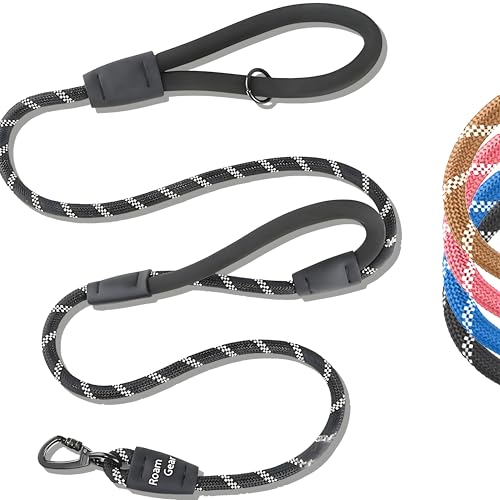
Roam Gear 6 Foot Heavy Duty Rope Leash (Black)

Peflex 20.1 ft Retractable Dog Leash for Dogs 10–100 lbs

AIRUIDOG Heavy Duty Tactical Bungee Dog Leash

PetBonus Heavy Duty Tactical Dog Leash, 5 FT Bungee

TwoEar Heavy Duty Dog Leash, 4-7FT Tactical Bungee

Fida 2-in-1 Slip Lead Dog Leash with 2 Handles, Green
MiracleLeash No Pull Dog Leash Attachment for Strong Pullers
Telooco Two Point Control Dog Leash, Reflective Double Leash
More Details On Our Top Picks
Six feet is the sweet spot for city walking: close enough for heel work, long enough that your dog isn’t glued to your leg. The Roam Gear adds two padded handles along its length, so you can shorten your grip near traffic without re-clipping anything.
The lockable metal carabiner is the detail worth noticing here. Unlike a basic snap hook, a carabiner with a locking gate resists accidental release when your dog whips around or bolts after a squirrel. Silicone clamps reinforce the connection points against repeated tugging, which matters most during the first months of leash training when every walk involves a few sharp corrections.
Strong Points
- Dual shock-absorbing handles let you switch grip positions mid-walk and ease strain on your wrist during sudden lunges.
- The locking carabiner stays shut under twisting forces, a real safety edge over standard trigger snaps.
- Reflective stitching improves visibility on early morning or evening routes.
- Weatherproof rope construction shrugs off rain and mud, and wipes clean with a damp cloth.
Things To Consider
- Rope leashes can feel stiff in hand until they break in; expect a short adjustment period.
- Owners commonly report the extra handle adds slight weight compared to single-grip leads.
Key Specs
Who It Suits Best
Everyday walkers and new puppy owners who want one dependable lead for training, running, and weekend hikes alike.
A Better Fit Elsewhere
Handlers of powerful lunging breeds will get more arm relief from the AIRUIDOG tactical bungee, whose elastic section cushions hard surges better than static rope.
Retractable leads get a mixed reputation among trainers, mostly because cheap ones have mushy brakes. The Peflex addresses that with a one-click brake-and-lock system designed to stop line payout instantly, which is what you want when a dog hits full speed toward another walker.
The reinforced nylon tape runs through an internal mechanism rated for dogs between 10 and 100 pounds, so it covers everything from beagles to retrievers. A 360-degree swivel at the attachment point keeps the tape from twisting into knots as your dog circles trees and lampposts. In our view, this is a park-and-trail tool rather than a busy-sidewalk tool: the extra range rewards open space and punishes crowded areas.
Highlights
- Over 20 feet of range gives your dog genuine freedom to explore and sniff on quiet paths.
- The ergonomic non-slip grip stays comfortable even during long sessions with the handle held continuously.
- One-click lock lets you rein in distance in a fraction of a second.
Worth Noting
- A retractable mechanism needs occasional cleaning of dirt and grit to keep the spool smooth over years of use.
- Tape-style lines offer less precise close-range steering than fixed-length leads like the Roam Gear above.
Right Fit For
Suburban and trail walkers with medium-to-large dogs who value exploration time over tight heel positioning.
Where A Sibling Pick Shines
For structured obedience work, the Fida slip lead below gives far sharper communication at short distances.
Bungee leashes exist for one reason: a dog that hits the end of a static lead transfers all that force straight into your elbow. An elastic section stretches first, converting a violent jerk into a slower, manageable deceleration. The AIRUIDOG builds that principle into a tactical-format lead aimed squarely at large breeds.
The hardware is where it earns its keep. An aviation-aluminum frog clip rotates a full 360 degrees and carries a stated holding strength up to 200 pounds, with an auto-locking gate that closes itself after quick-release use. That combination suits handlers who clip and unclip frequently, since the gate reseals without a separate twist step. Compared to the Roam Gear’s carabiner, this clip prioritizes speed; both stay secure once closed.
Upsides
- Zero-shock bungee section protects your shoulders and back during lunges and sprint starts.
- Auto-lock aluminum clip reseals instantly and resists corrosion better than plated steel hardware.
- Full rotation at the clip prevents the tangling and knotting common with stiff swivel-less leads.
- Tactical styling pairs well with working-breed harness setups.
Small Caveats
- Elastic sections demand a firmer correction signal, so precision-focused trainers may find feedback slightly muted.
- The bungee cord benefits from periodic inspection for wear at the stitched ends, a habit worth building with any elastic lead.
Feature Snapshot
Made For
Owners of strong medium and large dogs who lunge at distractions and need their arms spared during the learning phase.
Swap It Out When
Handlers wanting a longer stretch range should look at the TwoEar model next, which extends further and carries a higher tension rating.
Where the AIRUIDOG leans on brute-strength hardware, the PetBonus tunes its five-foot bungee for teaching pace. The elastic cord ramps resistance gradually rather than stopping abruptly, which gives your dog a chance to self-regulate before hitting a hard limit. Trainers often describe this as the difference between a wall and a spring fence.
The frog clip operates one-handed and locks with a click, while its 360-degree rotation keeps the line untwisted when your dog spins or changes direction quickly. At five feet total, this sits shorter than the Roam Gear’s six-foot rope, trading a little roaming room for tighter control in dense urban settings. Joggers tend to appreciate that compact length; it keeps a running dog predictably close.
Reasons To Buy
- Gradual resistance teaches loose-leash pacing instead of merely absorbing force after the fact.
- One-hand frog clip makes clipping to a harness fast, useful with wriggly or impatient dogs.
- Cushioned lunges mean less jarring on your arm during interval runs or hill sprints.
Points To Note
- Five feet may feel restrictive for tall handlers walking long-legged breeds.
- Like all bungees, the elastic loses some rebound over years; owners commonly report gradual softening rather than sudden failure.
Who Will Love This
Runners and joggers with energetic medium-to-large dogs who want cushioned control at a compact length.
Consider Something Else When
Anyone needing maximum strength ratings for giant breeds will find the TwoEar’s 250-pound tolerance more reassuring.
This is the strongest spec sheet in the lineup. TwoEar rates the wear-resistant nylon body, finished with reinforced stitching, for up to 250 pounds of tension, which puts real headroom beneath breeds like German Shepherds, Pitbulls, and Labradors at full lunge.
The bungee stretches from roughly 4.6 feet out to 7 feet, so the lead behaves differently depending on situation: short and firm for heel work, longer and forgiving on hikes. That variable length is the practical advantage over the fixed five-foot PetBonus, giving one lead two personalities. Sharp tugs get smoothed into steady resistance whether you’re jogging, climbing trails, or drilling recall in the yard.
Bright Spots
- 250-pound tension rating covers the strongest popular breeds with margin to spare.
- Variable 4.6-to-7-foot stretch adapts between training mode and trail mode without swapping gear.
- Reinforced stitching at stress points addresses the failure spot where cheaper nylon leads commonly give out.
- Shock absorption reduces strain on your arm and shoulder across long outings.
Softer Spots
- At full stretch the reach approaches retractable territory, which some trainers avoid for teaching precision.
- Nylon webbing holds onto mud more than coated rope; plan on occasional hand washing.
Details At A Glance
Whose Shelf It Belongs On
Owners of genuinely strong pullers, think Shepherds, Pitbulls, and muscular Labs, who hike and train hard outdoors.
Not Your Match When
Small-dog households under 40 pounds will find the PetBonus or the MiracleLeash attachment a lighter, better-proportioned choice.
A slip lead works differently from everything else here: the loop slips over the dog’s neck directly, no collar required, and an anti-choking ring plus stopper keep the fit honest. The Fida goes further by converting into an eight-shaped head-collar configuration, effectively two training tools in one six-foot lead.
Setup speed is the headline claim, and it tracks with how slip leads behave in practice: seconds from bag to dog, which rescuers, groomers, and shelter staff have relied on for decades. Dual soft-padded handles give you a traffic grip near the rope plus a standard hold further back. Against the clip-based picks earlier in this list, the trade-off is clear: faster on, less hardware, but it demands correct loop placement every single time.
Plus Points
- Converts between slip lead and head-collar modes, covering two training approaches with one purchase.
- Anti-choking ring and adjustable stopper reduce throat pressure when fitted properly.
- Seconds-fast setup suits vet visits, grooming runs, and escape-artist moments.
- Two padded handles support both close-quarters traffic control and relaxed walking.
Minor Gripes
- Slip leads require correct placement technique; a badly positioned loop can ride too high on the neck.
- Not intended for tie-out or unsupervised wear, a limitation worth respecting.
Quick Facts
Who Should Grab It
Trainers, foster homes, and obedience students working on loose-leash skills with dogs of nearly any size.
Reach For A Different Pick When
Dogs with tracheal sensitivity are better served by the Telooco double-clip lead, which spreads force across harness points instead of the neck.
Most entries on this list replace your leash. The MiracleLeash upgrades it instead. This chest-loop attachment clips onto any flat collar, martingale, or harness in seconds, then reroutes forward momentum sideways so your dog naturally swings back toward you rather than dragging ahead.
The design philosophy matters: redirection instead of pressure. There’s no gagging, no face strap, no choke effect, which puts it in the gentlest category of anti-pull gear available. Compatibility is unusually broad too, spanning standard leads, rope leads, retractables, and long training lines, so it slots into whatever setup you already trust. Rated for dogs from 15 to 120 pounds, it scales across most household breeds. The honest caveat is that it adds a fitting step to every walk, and results depend partly on consistent handler technique.
Standout Traits
- Sideways momentum redirection discourages pulling without pain or airway pressure.
- Attaches to existing collars and harnesses, avoiding the cost and bulk of a specialty no-pull harness.
- Wide 15-to-120-pound range fits most dogs in a typical multi-dog home.
- Works alongside retractables and long lines, not just fixed leads.
Honest Caveats
- An extra component means one more thing to attach, check, and store before each outing.
- Fit adjustment takes a few walks to dial in; expect some trial and error at first.
The Right Fit
Owners committed to gentle training methods who already own quality leads and want to add no-pull function without replacing anything.
Another Choice May Suit
Shoppers starting completely from scratch will find the all-in-one Telooco double-clip lead simpler, since it arrives ready to walk.
Steering beats braking. That’s the idea behind the Telooco’s two-point design, which clips to a no-pull harness at two attachment points and distributes your dog’s pull evenly between them. Instead of one strained line, you get two balanced ones, which lowers choking risk and gives you noticeably better directional control.
At four feet, this is the shortest lead here, built for tight sidewalks and training drills rather than open fields. The soft handle keeps grip comfort high during sustained tension, and reflective elements help with low-light visibility. It also converts to a single-line configuration, adding flexibility the fixed dual-clip format usually lacks. Compared to the MiracleLeash attachment, this arrives as a complete solution with no separate fitting step.
What We Like
- Dual attachment points spread pulling force evenly, easing pressure on the throat.
- Two-point steering gives sharper direction changes during leash-training sessions.
- Converts to a single training lead for versatility across exercises.
- Reflective detailing supports visibility on dawn and dusk walks.
Room For Improvement
- Four feet feels short for taller handlers or broad-chested breeds needing more swing room.
- Requires a compatible front-attachment harness to deliver its full benefit.
Core Details
Built With In Mind
Urban owners of medium and large dogs running no-pull harnesses who want gentler, more precise control on crowded streets.
Look Elsewhere When
Trail walkers wanting stretch and range will prefer the TwoEar bungee, whose 7-foot extension suits open terrain far better.
Choosing Between These Leashes Without Regret
Match The Tool To The Pull Style
A dog that pulls constantly needs a different answer than one that lunges occasionally. Constant pullers respond well to redistribution designs like the Telooco or the MiracleLeash, which change geometry rather than absorb force. Sudden lungers suit bungee construction, since the elastic catches the surge your arm otherwise would.
Length Decides Your Control Radius
Four feet keeps a dog tight enough for heel drills and crowded crossings. Six feet is the training standard. Anything beyond that trades precision for freedom, which is why the Peflex retractable belongs on trails rather than downtown corners. Pick the length that matches where you actually walk.
Hardware Deserves Scrutiny
The clip is the single most stressed part of any lead. Locking carabiners and auto-locking aluminum frog clips resist the accidental releases that plain trigger snaps occasionally suffer, especially under twisting loads. Check stitch density at stress points too; that’s where budget nylon leads typically fail first.
Comfort Runs Both Directions
Padded handles matter as much as padded harnesses. During a month of loose-leash training, your hands take hundreds of small corrections, and unpadded webbing will remind you of every one. Dual-handle designs add grip options that pay off daily near roads.
Key Considerations Across These Picks
Traps First Timers Fall Into
The most common mistake is buying for breed size alone instead of actual pull behavior. A calm Mastiff may need less leash than a manic Beagle. Another frequent misstep: pairing a bungee lead with a collar instead of a harness, which routes absorbed force into the throat anyway. Match the attachment point to the lead type.
The Case For Spending Up
Higher-tier leads justify their cost through hardware and stitching. Aviation-grade aluminum clips, locking gates, and reinforced seam work cost manufacturers more, and they last through years of daily strain where budget clips corrode and seams creep. For a strong puller walked twice a day, the upgrade typically pays for itself in longevity.
Frequently Asked Questions
Do bungee leashes actually reduce pulling?
They reduce the impact of pulling on your body by absorbing sudden force. They don’t teach a dog to stop pulling on their own, though the gradual resistance can help some dogs self-regulate their pace.
Are slip leads safe for everyday use?
Yes, when fitted correctly with the stopper positioned to prevent over-tightening. They’re best used during active walks and training, never left on an unsupervised dog.
Can a no-pull attachment work with a retractable leash?
The MiracleLeash is explicitly compatible with retractables and long lines. Results vary by dog, and many trainers prefer fixed-length leads for teaching phase work.
How long should a leash be for a dog that pulls?
Four to six feet covers most training situations. Shorter lengths give sharper control, while longer leads reward dogs that have already learned loose-leash basics.
Do two-point leashes require special harnesses?
The Telooco performs best with a no-pull harness offering multiple attachment points. Standard single-ring harnesses won’t deliver the same force distribution benefit.
Wrap Up
Strong pullers don’t need stronger arms; they need smarter equipment. The Roam Gear covers everyday duty with its dual handles and locking carabiner, the TwoEar brings the highest tension rating for serious power, and the MiracleLeash retrofits gentle no-pull function onto gear you already own. Match the design to your dog’s specific pulling style, prioritize solid clip hardware, and give any new setup a week of consistent walks before judging it. The right pick makes itself obvious within a few blocks.
