

Walking a dog that lunges, barks, or freezes at every passing stranger turns a simple stroll into a stressful event. The right leash gives you leverage, shock absorption, and clear communication with your dog before tension builds. This roundup covers heavy-duty tactical leads, bungee designs, hands-free options, long training lines, and alert sleeves that tell strangers to keep their distance, so you can match gear to your dog’s specific triggers and your own walking style.
The Shortlist At A Glance

ICEFANG Tactical Dog Leash with Quick-Release Metal Clasp
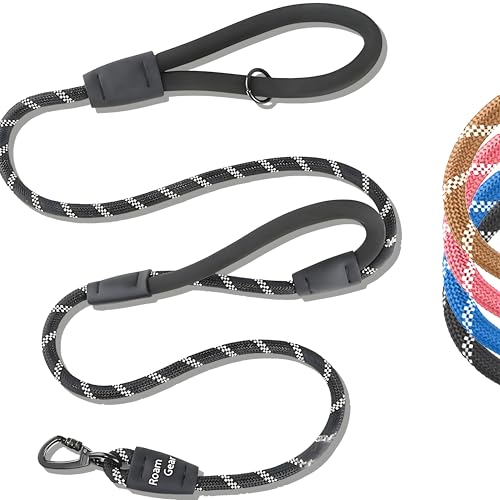
Roam Gear 6 Foot Heavy Duty Rope Leash (Black)

PetBonus Heavy Duty Tactical Dog Leash 5 FT Bungee
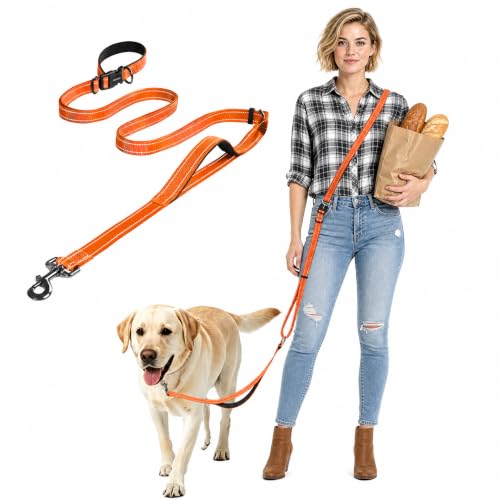
Kazazoo Hands Free Dog Leash Adjustable Waist & Crossbody

Yellow Nervous Stay Back Dog Leash Sleeve Alert Patch

Fida Obedience Recall Training Agility Lead 30FT Orange

Reactive Not Aggressive Dog Leash Wrap Yellow Alert Sleeve

JXGZSO Reactive Not Aggressive Do Not Pet Dog Leash Sleeve
More Details On Our Top Picks
The headline feature here is a locking metal buckle rated through a 2500N tensile test, which means it stays shut even when your dog hits the end of the lead at full speed. That matters most in crowded parks where an accidental brush against a bench or fence could otherwise pop a weaker clip open.
Tubular nylon webbing runs the full length, reinforced with bar-tack stitching at every seam and stress point, and dual handles give you both a standard grip and a traffic position near the collar. Compared with the Roam Gear rope below, this one leans more tactical and more secure at the attachment point.
Strong Points
- Auto-locking metal buckle opens only by hand, so bumps won’t release your dog
- Bar-tack stitching at stress points holds up to repeated hard lunges
- Two handles let you shorten control instantly near traffic or other dogs
- Tubular nylon feels softer in the palm than flat webbing during long walks
Things To Consider
- The locking mechanism takes a deliberate two-step motion to open, which some owners find slow in a genuine emergency
- Tactical styling and hardware add weight compared with a basic nylon lead
Key Specs
Made For
Owners of strong, reactive dogs who prioritize a fail-safe attachment over quick-release convenience.
A Better Fit Elsewhere
The PetBonus bungee lead suits handlers who want shock absorption to soften lunges rather than pure locking hardware.
Six feet is the sweet spot for reactive-dog walking: long enough for slack, short enough to reel your dog in fast. Roam Gear builds this one from weatherproof climbing-style rope with reflective threading woven in, which earns its keep on early-morning and after-dark walks when visibility drops.
Where the ICEFANG above goes tactical, this pick keeps things simple and comfortable. Dual padded handles absorb shock in your grip, and silicone-reinforced clamps back up the lockable carabiner against sustained tugging. Owners commonly report the padded sections hold up well to daily use without fraying at the handle seams.
What We Like
- Two extra-padded handles cut hand strain when your dog surges forward
- Lockable carabiner plus silicone clamps create a redundant, pull-resistant connection
- Reflective threads make you visible to drivers in low light
- Weatherproof rope shrugs off rain and mud on year-round routes
Worth Noting
- Rope construction can feel stiff for the first week or two before it softens with use
- No bungee section, so sharp lunges transfer more force to your arm than elastic designs do
Who Should Grab It
City walkers doing daily leashed outings with medium-to-large dogs who need dependable grip comfort.
Swap It Out When
Choose the ICEFANG Tactical instead if a locking metal buckle at the collar end matters more than rope feel.
Bungee leads change the physics of a lunge. Instead of a hard stop that jolts both of you, the elastic section stretches and ramps up resistance gradually, giving your dog a moment to self-correct while sparing your shoulders. For a reactive dog that hits the end of the leash often, that difference shows up within the first few walks.
The frog clip here operates one-handed and rotates a full 360 degrees, so the lead doesn’t twist into knots when your dog spins toward a trigger. At five feet it runs slightly shorter than the Roam Gear rope, trading reach for tighter control in busy areas.
Highlights
- Elastic bungee cushions lunges and protects your arms and back from jerks
- Gradual resistance helps dogs regulate their own pace rather than hitting a wall
- One-hand frog clip locks and releases quickly mid-walk
- 360-degree rotation prevents tangling during spins and direction changes
Small Caveats
- Elastic stretch adds effective length, so expect less precision than a fixed six-foot lead in tight spaces
- Bungee cords are a wear item; owners commonly report checking the elastic section periodically for fatigue
Feature Snapshot
Right Fit For
Handlers of powerful lungers who want physical shock absorption built into the lead itself.
Not Your Match When
The Kazazoo hands-free option fits joggers better, since this design assumes you’ll keep a hand on the lead.
Jogging with a reactive dog usually means choosing between control and balance. This Kazazoo solves that by converting three ways: waist belt, crossbody strap, or traditional handheld lead. The crossbody mode is the sleeper feature, since wearing the lead across your torso lowers your center of gravity and makes a sudden pull far harder to knock you over.
Adjustability spans roughly 5.5 to 8.5 feet, so you can cinch down to close-control length near roads and loosen up on open trails. Reflective stitching runs along the strap for dusk visibility, and the quick-off buckle lets you detach fast if a situation escalates.
Upsides
- Converts between waist, crossbody, and handheld modes for different activities
- Adjustable range covers tight city control through relaxed trail exploring
- Rated to support dogs up to 120 lbs
- Reflective stitches improve visibility on early or late outings
Points To Note
- Hands-free designs put force on your hips, which some walkers find uncomfortable with chronic back issues
- Fit depends on body size; sizing correctly before committing matters more than with handheld leads
Details At A Glance
Whose Shelf It Belongs On
Runners and hikers with medium-to-large reactive dogs who want stability without sacrificing control.
Reach For A Different Pick When
The Fida 30-foot long line serves recall training far better, since hands-free work assumes your dog already walks politely.
Sometimes the best tool isn’t hardware at all, it’s communication. A bright yellow sleeve reading “Nervous, Stay Back” does quiet work before a stranger ever reaches out to pet your dog, and preventing that approach beats managing the reaction afterward. Yellow has become the recognized color code for dogs needing space, so most people grasp the message instantly.
This sleeve uses hook-and-loop backing, so it moves between leash, vest, or collar in seconds. Polyester construction keeps it waterproof and firm, with printing that stays legible outdoors. At roughly 8.7 by 2.1 inches folded, it fits most standard leash widths without bunching.
Bright Spots
- High-visibility yellow signals “give us space” before contact happens
- Hook-and-loop backing transfers easily among leash, harness, and vest
- Waterproof polyester wipes clean after muddy walks
- Clear, odor-free printing remains readable from a distance
Honest Caveats
- Velcro can collect lint and pet hair over time; a quick pick-clean restores grip
- It’s a signal, not a barrier, since not everyone reads or respects alert patches
Who Will Love This
Owners of anxious or space-sensitive dogs walked regularly in areas with lots of friendly strangers and children.
Another Choice May Suit
The KISJO wrap below offers a similar message with machine-washable fabric, which suits households that prefer tossing gear in the laundry.
Reactivity improves fastest with distance training, and a 30-foot long line is how you build it. This Fida lead lets your dog explore at range while you retain a physical connection, teaching recall and check-ins without the risk of an off-leash failure. The bright orange webbing also makes the line easy to spot in grass, which saves toes and ankles.
The hardware is genuinely thoughtful: a patented slide-lock hook attaches about three times faster than a spring clip, its zinc alloy body rotates to resist twists, and neoprene-padded handles protect against rope burn when your dog bolts to the line’s end. A second traffic handle near the collar gives emergency close control.
Reasons To Buy
- 30-foot length supports real-distance recall work in open fields
- Slide-lock hook connects quickly and resists tangles across thousands of rotations
- Neoprene padding spares your palms during sudden pulls
- Traffic handle near the collar enables instant short-range control
- Reflective threads aid visibility at dawn and dusk
Room For Improvement
- Long lines drag and pick up mud; plan on rinsing and drying it after wet sessions
- Thirty feet is unwieldy on sidewalks, so this is a field tool, not an everyday street lead
Spec Overview
Best Suited To
Owners running structured recall and desensitization sessions in parks, fields, or fenced open spaces.
Consider Something Else When
For daily neighborhood walks, the Roam Gear six-foot rope is far more practical than a dragging long line.
“Reactive, not aggressive” is the phrase reactive-dog owners wish strangers understood, and this sleeve says it plainly. Many reactive dogs look perfectly friendly, which invites approaches they can’t handle; the wording here corrects that assumption without making your dog sound dangerous.
Construction is polyester fiber with adhesive paste backing, sized around 8.7 by 2.4 inches folded to fit most leash wraps comfortably. Unlike the Cgvovgr patch above, this one is machine washable on cold and dries flat, which makes upkeep nearly effortless in muddy seasons. In our view, that washability alone justifies choosing it for daily-walk households.
Plus Points
- Message reframes your dog accurately without alarming passersby
- Machine washable on cold, then laid flat to dry, for easy maintenance
- Adhesive backing secures to most leash widths without slipping
- Lightweight sleeve adds no meaningful bulk to your setup
Softer Spots
- Adhesive attachment generally holds less firmly than snap closures over months of repositioning
- Single-sided messaging means the text faces one direction only
The Right Fit
Owners of sociable-looking reactive dogs walked where well-meaning strangers frequently approach to pet.
Where A Sibling Pick Shines
The JXGZSO sleeve below adds snap hardware and double-sided printing, a stronger fit for handlers who remove and refit the wrap constantly.
This sleeve fixes the biggest complaint about adhesive wraps: staying put. Black snaps come pre-installed, so it clicks onto the leash in seconds and won’t creep or peel the way paste-backed patches sometimes do after repeated handling. Nylon fabric gives it a stiffer, more durable feel than the polyester options earlier in this list.
Printing appears on both sides, pairing “Reactive Not Aggressive” with “Reactive Do Not Pet,” so the message reads correctly no matter which way the leash twists. At 22 cm tall by 6 cm wide, coverage is generous enough to stay visible from several paces away.
Standout Traits
- Pre-installed snaps attach securely and remove instantly between walks
- Double-sided print delivers two messages visible from either angle
- Nylon fabric withstands weather and handling better than lighter sleeves
- Wide 6 cm profile maximizes readability at a distance
Minor Gripes
- Snaps require compatible leash widths; very thin leads may leave the sleeve loose
- Dimensions are manually measured, so slight size variation is possible unit to unit
Core Details
Who It Suits Best
Handlers who swap gear between multiple dogs or leashes and want a durable, reusable alert sleeve.
Skip It When
Owners wanting a washable, budget-simple option will find the KISJO wrap easier to live with day to day.
What Matters Most Before Choosing Leashes For Reactive Dogs
Control Points Beat Length
With a reactive dog, the ability to shorten the lead instantly outweighs having extra reach. Dual handles, a traffic loop near the collar, or a waist anchor all give you a second grab point closer to your dog. Look for that feature first, because a single-handle lead forces you to choke up on wet or thin webbing in tense moments.
Shock Absorption Protects Both Of You
A bungee section converts a violent lunge into a gradual deceleration, sparing your shoulders and giving your dog feedback instead of a jarring stop. Handlers with larger breeds or joint concerns tend to notice the difference immediately. Fixed-rope designs offer more precise positioning, so weigh precision against cushioning based on how often your dog actually hits the end of the lead.
Attachment Hardware Is Non-Negotiable
The clip is the single point of failure on any lead. Locking carabiners, auto-locking buckles, and rotating frog clips each solve the problem differently: they prevent accidental release, resist torque, and speed up one-handed operation. Match the mechanism to your dexterity and your dog’s pulling style rather than defaulting to whatever comes standard.
Visibility And Messaging Work Together
Reflective threading handles drivers; yellow alert sleeves handle pedestrians. Neither replaces training, but both reduce the number of surprise encounters your dog has to recover from. Combining a visible lead with a clear “do not pet” message cuts down the approaches that trigger reactions in the first place.
Key Considerations Across These Picks
Traps First Timers Fall Into
The most common mistake is buying length instead of control. A long, thin lead feels comfortable until your dog reacts and you’re holding nothing but slippery webbing. Another frequent slip is ignoring clip quality entirely; a cheap spring gate is the weakest link on any setup. Check the attachment hardware before anything else.
When Paying More Pays Off
Higher-tier leads earn their cost through load-rated hardware, bar-tack reinforcement, and padded handles that survive years of daily pulling. Budget options work fine for calm walkers, but a strong reactive dog punishes weak stitching and thin gates quickly. Spending up front typically costs less than replacing failed gear mid-training.
Frequently Asked Questions
What length leash works best for a reactive dog?
Six feet is the standard recommendation because it provides slack for comfort while keeping your dog within immediate control. Shorter traffic leads help in dense urban areas, and long lines serve training fields only.
Are bungee leashes good for reactive dogs?
Yes, for dogs that lunge hard, because the elastic section absorbs shock and reduces strain on your arm and back. They trade away some positional precision compared with fixed-length leads.
Why do reactive dog owners use yellow sleeves?
Yellow has become the widely recognized color signaling a dog that needs space. A printed sleeve communicates “do not approach” to strangers before they get close enough to trigger a reaction.
Can a hands-free leash be safe with a reactive dog?
It can be, provided the design includes a quick-release buckle and you use crossbody mode for better stability. Avoid waist-only setups with very large or powerful dogs until their reactivity is well managed.
How long should a training long line be?
Thirty feet is a common starting length for recall and desensitization work because it allows real distance while maintaining connection. Longer lines demand more skill in handling and open terrain.
Closing Thoughts
Matching gear to your dog’s specific triggers changes walks faster than any training shortcut. A locking-clasp lead suits strong pullers, bungee designs suit lungers, and a simple yellow sleeve prevents half the encounters before they start. Start with the scenario that stresses your dog most, choose the pick built for it, and give yourself a few weeks to adjust. Steady walks follow steady setups.
