

A small dog with a pulling habit can turn a ten-minute walk into a tug of war. The right leash changes that dynamic without harsh corrections or complicated gear. This roundup covers eight options built for small breeds, from training-focused slip leads to padded everyday leashes, so you can match the tool to your dog’s temperament and your walking routine.
The Shortlist At A Glance

The Walkie No Pull Dog Leash – Blue, Size Small

Tpotato 6 Foot Fuchsia Reflective Nylon Dog Leash with 2 Handles

Joytale Short Dog Leash for Close Control & Training, 24″, Purple
Erbine 6FT Reflective Dog Leash, Padded Handle for Small Medium Dogs

Peflex 20.1 ft Retractable Dog Leash for Dogs 10–100 lbs
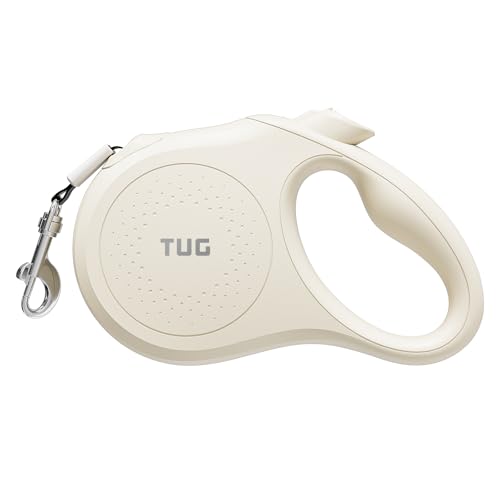
TUG Quest Retractable Dog Leash | 360° Tangle-Free | 16 ft Tape (S, Cream)

Mile High Life Bungee Dog Leash | Gentle Pull Training Lead | 3-5 Feet (Pink)

Tochibabe Purple 6FT No Pull Slip Lead for Small Medium Dogs
More Details On Our Top Picks
The Walkie takes a different route than most anti-pull gear: instead of squeezing or pinching, it routes pressure across the chest when your dog surges ahead, which naturally discourages the behavior. The small size is rated for dogs under 25 pounds, and it’s made in the USA, a detail shelters have valued for years.
In practice, this suits guardians who want results without a training course. There’s no learning curve for you, and the gentle action means a sensitive little dog isn’t punished for enthusiasm.
Strong Points
- Chest-guided pressure discourages pulling without choking or pinching
- Sized specifically for dogs under 25 lbs, so hardware stays proportionate
- No separate harness or headcollar to buy and fit
- Made in USA construction appeals to shoppers tracking origin
Things To Consider
- Fit matters more than with a standard clip leash, so measure before ordering
- Availability has been inconsistent at times, worth confirming stock on the product page
Who It Suits Best
Owners of determined sub-25-pound pullers who want a humane, no-training-needed fix.
A Better Fit Elsewhere
For structured heel drills in tight spaces, the Joytale Short Dog Leash gives you tighter physical control than any anti-pull design.
Where the Walkie changes how force reaches your dog, the Tpotato changes how quickly you can react. A second handle sits about 18 inches up the line, so crossing a parking lot or passing another dog becomes a short-grip situation rather than a wrestling match. The fuchsia nylon is reflective, which earns its keep on dim morning routes.
It also doubles as a car restraint via an integrated seat belt attachment, something none of the fixed-length picks here offer. For a household that walks and drives with the same leash, that consolidation is genuinely useful.
Highlights
- Traffic handle near the clip gives instant close control around cars and crowds
- Reflective stitching improves visibility on pre-dawn and after-dark walks
- Built-in car seat belt loop covers rides without extra gear
- Padded handles reduce rope burn during sudden lunges
- Heavy-duty nylon webbing holds up to daily use across seasons
Worth Noting
- The second handle adds slight weight compared with a single-handle leash like the Erbine below
- Nylon can fray at the clip over months of hard use, so inspect the stitching occasionally
Feature Snapshot
Made For
Urban walkers whose routes mix open sidewalk stretches with traffic crossings.
Swap It Out When
If your priority is featherlight simplicity rather than features, the Erbine 6FT Reflective Leash trims the extras down to one comfortable handle.
At just 24 inches, this Joytale keeps a pulling dog physically unable to build momentum. That’s the whole trick: a dog can’t lunge far on two feet of line, so heel position becomes the default. Trainers often call this setup a traffic lead, and it shines in vet lobbies, elevators, and crowded markets.
The honest caveat is that it’s a training tool, not an all-day walking leash. Your small dog gets almost no sniffing radius, so pair it with a longer option for casual outings.
Upsides
- Two-foot length eliminates lunging distance entirely
- Wide 1.2-inch strap spreads pressure comfortably across small frames
- Works with a collar or harness, and suits dual-dog handling setups
Minor Gripes
- Too short for relaxed neighborhood loops, plan a second leash
- Little slack means you’ll feel every head turn through your hand
At A Glance
Right Fit For
Owners running formal loose-leash drills or navigating dense crowds with a reactive small dog.
Reach For A Different Pick When
For open-field freedom, the Peflex retractable later in this list gives your dog twenty feet instead of two.
This is the no-drama option on the list: six feet of standard-length line, a cushioned handle, and reflective stitching woven into the webbing. Nothing here fights your dog, it simply makes the walk easier on both ends. Anyone whose hands sting after a small dog bolts toward a squirrel will appreciate the padding immediately.
Compared with the Tpotato above, you give up the traffic handle and seat belt loop, and what remains is lighter and cheaper to live with. For calm-ish walkers who still need occasional correction, that trade usually lands well.
Bright Spots
- Padded handle absorbs jolt force when your dog suddenly surges
- Reflective thread catches headlights on evening and early-morning routes
- Lightweight single-handle build stays comfortable on long loops
Softer Spots
- No secondary grip, so tight-control moments mean shortening by hand
Who Will Love This
Suburban walkers doing daily evening circuits with a mildly enthusiastic small dog.
Not Your Match When
Heavy, repeated pulling calls for purpose-built gear, and the Walkie at number one addresses the root behavior directly.
Retractable leashes get mixed press among trainers, but in open spaces they solve a real problem: a small dog that pulls toward every scent gets room to explore while you keep braking power. This Peflex model runs over twenty feet of flat nylon tape, wide enough that it won’t slice into your palm if your dog hits the end at speed.
The one-click brake and lock is the feature that matters day to day. One thumb press stops extension, a second locks it, and the ergonomic non-slip housing keeps the whole thing steady in damp weather. Note that retractables reward dogs who pull by granting more distance, so treat this as a park leash, not a training fix.
Reasons To Buy
- Twenty-foot tape range suits large parks and quiet trails
- One-click brake plus lock gives staged control near roads
- Reinforced nylon tape handles sustained pulling without thinning
- Rated for dogs from 10 to 100 lbs, covering growth spurts
Points To Note
- Retractable lines can teach pulling if used on every walk, rotate with a fixed lead
- The mechanism needs occasional debris cleaning to retract smoothly
- Heavier housing than any fixed leash here, expect some wrist weight
Spec Overview
Who Should Grab It
Park regulars with confident recall who want their small dog to roam farther safely.
Consider Something Else When
City walkers staying on sidewalks should look at the TUG Quest below, whose shorter sixteen-foot reach fits tighter environments better.
TUG built its reputation on the tangle problem, and the Quest carries that forward with a patented swivel that lets the line spin freely as your dog orbits you. Anyone who has untangled a twisted retractable mid-walk knows why that detail sells. The small size pairs with a sixteen-foot nylon tape, a touch shorter than the Peflex but plenty for suburban green space.
Brake and lock run off one hand, so holding a coffee or a phone doesn’t cost you control. In our view, this is the cleaner pick for genuinely small dogs, since the S-size housing keeps bulk down.
Plus Points
- Patented 360° swivel system prevents frustrating line tangles
- One-handed brake, pause, and lock operation frees your other hand
- Sixteen-foot tape balances freedom against sidewalk practicality
Small Caveats
- Smaller size caps suitability at lighter dogs, check the rating before upsizing your pet’s expectations
- Cream tape shows dirt faster than darker lines, occasional wiping keeps it presentable
Whose Shelf It Belongs On
Apartment dwellers with toy breeds who want retractable convenience without oversized hardware.
Another Choice May Suit
Owners of stronger pullers up to 100 lbs will find the Peflex 20.1 ft model’s heavier-duty tape a safer match.
A bungee section does something clever for tiny pullers: it stretches under load, so a three-foot lead extends to five feet and the surge arrives at your hand softened rather than sharp. The light, consistent tension also gives your dog feedback about drifting off course, which is why this style gets labeled a gentle training lead.
The webbing itself is rated to hold up to 100 lb of pull despite the soft texture, so durability isn’t the worry you might expect from something this plush. It’s sized for dogs and even cats under 20 lb, making it one of the few picks here that fits the smallest teacup breeds properly.
What We Like
- Stretch section absorbs shock from sudden small-dog lunges
- Gentle constant tension nudges your dog back toward your pace
- Soft, light grip texture stays pleasant on bare hands
- Webbing strength tolerates up to 100 lb of pull force
Honest Caveats
- Five-foot maximum feels restrictive next to the six-foot fixed leads earlier in this list
- Elastic sections wear out sooner than plain nylon, inspect periodically for loss of rebound
Quick Facts
Perfect Match For
Owners of Chihuahuas, Yorkies, and other sub-20-pound dogs whose pulling jars your arm on every walk.
Look Elsewhere When
Dogs over 20 pounds need a different scale entirely, and the Tochibabe slip lead below handles small-to-medium frames more appropriately.
A slip lead merges collar and leash into one piece: the loop slides over your dog’s head and an adjustable stopper keeps it seated. Vets and groomers favor this format because there’s nothing to clip, nothing to forget, and it works on any neck size. At a quarter-inch diameter and six feet long, this purple version stays light enough for French Bulldogs, Dachshunds, and similar small frames.
The trade-off deserves honesty. Because pressure lands on the throat rather than the chest, a slip lead rewards a dog who walks politely and corrects one who doesn’t. Fit it high on the neck, snug behind the ears, and never leave it on an unsupervised dog.
Standout Traits
- Leash and collar in one, so walks start in seconds
- Adjustable loop fits any neck size within the small-medium range
- Quarter-inch lightweight cord suits delicate small-breed builds
Areas To Watch
- Throat pressure makes proper high-neck placement essential, learn the fit first
- Never appropriate for tie-out or unsupervised wear, common guidance across trainers
Core Details
Built With In Mind
Multi-dog households and quick-trip walkers who value speed and simplicity over padded comfort.
Where A Sibling Pick Shines
Dogs with tracheal sensitivity do better on the Mile High Life bungee, which spreads force along the line instead of concentrating it at the neck.
What Matters Most Before Choosing Leashes For Small Dogs That Pull
Match The Tool To The Behavior
Occasional excitement pulling and habitual sled-dog dragging are different problems. Anti-pull designs like the Walkie address mechanics, while short traffic leads such as the Joytale simply remove the space needed to lunge. Identify whether your dog pulls constantly or only near distractions, then buy accordingly.
Handle Comfort Is Underrated
Small dogs generate surprising force relative to their size, and a thin unpadded handle concentrates all of it into your palm. Padded grips, bungee sections, or dual handles each soften that load differently. Daily walkers should prioritize this over almost any other feature.
Length Shapes The Lesson
Six feet is the sweet spot for teaching loose-leash habits because it limits forging ahead without isolating your dog. Retractables grant freedom but can accidentally reinforce pulling, so reserve them for open areas where exploration is the goal.
Weight And Hardware Scale
Hardware built for large breeds hangs heavy on a five-pound frame. Check the stated weight range on every option, and favor narrower straps and lighter clips for toy breeds.
Key Considerations Across These Picks
Where Shoppers Go Wrong
The most frequent mistake is buying a heavy-duty leash meant for large dogs and expecting it to fix a small dog’s habit. Oversized clips drag on tiny collars and dull the feedback your dog receives. Another common slip is choosing a retractable as a training solution, which tends to reward the exact behavior you’re trying to end.
When Paying More Pays Off
Higher-tier leashes earn their price through materials and engineering: reinforced tape, patented swivels, dual-handle layouts, and reflective integration all add manufacturing cost. Those upgrades matter most for daily walkers logging miles in traffic or low light. Casual weekend strollers rarely notice the difference, so spending up is situational rather than universal.
Frequently Asked Questions
Do no-pull leashes actually stop pulling?
They discourage it by redirecting pressure or limiting momentum, which most dogs respond to quickly. Consistent walks and rewards still do the heavy lifting over time.
Are retractable leashes bad for training?
Trainers generally avoid them during loose-leash lessons because extension rewards pulling. They work well once your dog already walks calmly.
What length works best for a small dog?
Six feet offers enough freedom to sniff while keeping your dog within correction range. Shorter 24-inch leads suit crowded areas and formal training drills.
Can a slip lead hurt my dog’s throat?
Improperly fitted, yes, since pressure concentrates at the neck. Positioned high behind the ears and used on a cooperative walker, it’s a standard professional tool.
Should I pair these leashes with a harness?
Most of these attach to either a collar or harness, and a front-clip harness often accelerates progress. Combining a no-pull harness with a quality leash covers both angles.
Closing Thoughts
Pulling is a habit, and the right leash makes breaking it easier on both of you. Start by matching the design to your dog’s size and your walking environment, then stay consistent for a few weeks. Any of these eight will serve a small dog well; the difference lies in how much control, comfort, and freedom your routine demands. Happy walking.
