

Leopard geckos spend their whole lives in one tank, so the enclosure you choose shapes everything: heat gradients, humidity pockets, how easy cleaning feels on a Tuesday night. This list covers glass terrariums, a stackable option, and the small tools that make daily care less fiddly. Whether you’re setting up a first hatchling tub or upgrading an adult to a proper 36-inch floor plan, there’s a fit here.
The Shortlist At A Glance

MYGIIKAKA Acrylic Insect Terrarium Pack of 3
REPTI ZOO 10 Gallon Glass Reptile Tank 20″ x 12″ x 10″

Novery Rubber Tip Feeding Tongs 10.6″, Straight & Curved

Phailozoo Stackable 50 Gallon Gecko Enclosure
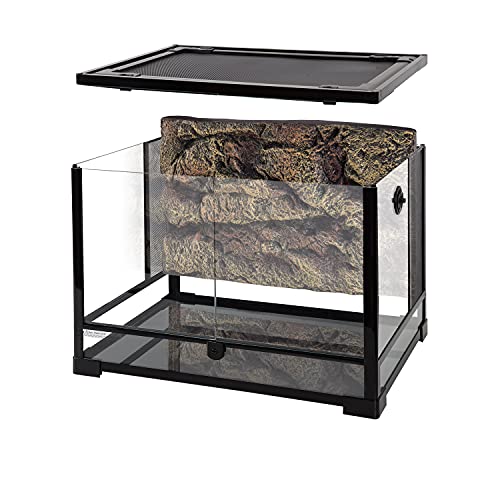
REPTI ZOO 34 Gallon Glass Terrarium with Foam Backgrounds
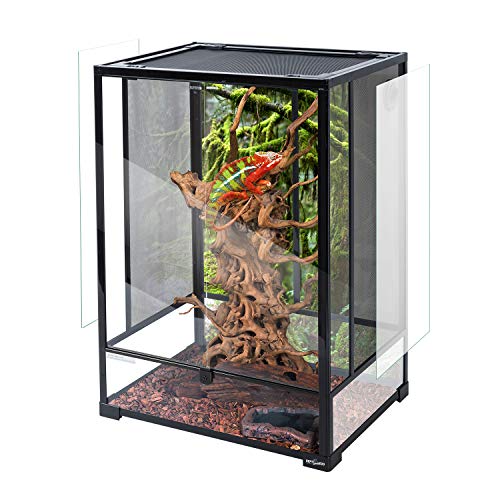
REPTI ZOO 67 Gallon Tall Glass Terrarium 24″ x 18″ x 36″
More Details On Our Top Picks
This is not your gecko’s forever home, and it doesn’t pretend to be. Each of the three acrylic boxes measures 7.87 by 4.72 by 4.33 inches, which suits hatchling temporary housing, feeder insect storage, or a mantis far better than an adult leopard gecko.
The fully transparent walls give you sightlines from every angle, handy when you’re spot-checking a sick animal or counting crickets before a feeding. A clam-shell lid opens with one hand, which matters when your other hand holds tweezers.
Strong Points
- Three boxes per pack, so you can rotate cleanups without scrambling
- All-around visibility makes health checks quick and stress-free
- Clam-shell top opens fast during feeding time
- Lightweight acrylic travels well to the vet or a reptile expo
Things To Consider
- Acrylic scratches more easily than glass, so skip abrasive pads when cleaning
- Floor space is far too small for any adult leopard gecko’s permanent setup
Who Should Grab It
New keepers raising hatchlings or anyone who needs tidy feeder-insect housing alongside a main tank.
A Better Fit Elsewhere
An adult gecko belongs in the Phailozoo 50 gallon enclosure below, where the 36-inch length gives real roaming room.
Every keeper starts somewhere, and this 20-by-12-by-10-inch glass tank is the classic first rung. The low profile keeps a juvenile gecko close to its heat source, and the wide footprint leaves room for two hides plus a shallow dish without feeling cramped.
The sliding screen top lifts and pulls open, and a built-in feeding port means you can drop in a worm without removing the whole lid. Compared with the MYGIIKAKA acrylic boxes above, this one offers real glass durability and proper screen airflow.
What We Like
- Full screen lid lets UVB light through while keeping escapes unlikely
- Feeding hole saves you lifting the entire top at every meal
- PVC tray under the substrate catches spills and simplifies cleaning
- Assembly takes minutes, so setup night stays painless
Worth Noting
- Ten gallons runs tight for a full-grown adult, so plan an upgrade later
- Sliding tops are widely reported to stick slightly if substrate crumbs collect in the track
At A Glance
Made For
First-time keepers settling in a juvenile, or anyone needing a clean quarantine tank on standby.
Where Another Pick Suits Better
Once your gecko passes about a year old, the REPTI ZOO 34 gallon model later in this list gives the floor space adults genuinely need.
A great tank means little if feeding time turns into a wrestling match. These stainless steel tongs stretch 10.6 inches, keeping your fingers well clear of an enthusiastic strike while still giving you fine control over a wiggling mealworm.
You get both a straight and a curved pair, and each tip is capped in soft rubber. That cushion matters more than it sounds: geckos lunge hard at tongs, and bare metal edges can nick a mouth. The curved shape also reaches into hides and around cork bark where straight tools can’t angle.
Highlights
- Rubber tips protect your gecko’s mouth during eager strikes
- Stainless steel resists corrosion after repeated washings
- Ergonomic grip stays comfortable through a whole feeding routine
- Two shapes cover both open-floor feeding and hide-cleaning reach
Small Caveats
- Rubber caps can loosen over months of heavy use, so check them occasionally
- Hand-washing is the safer route for keeping the tips firmly attached
Quick Facts
Right Fit For
Any leopard gecko owner who hand-feeds and wants strike-proof precision without spending much.
Swap It Out When
There’s no direct substitute here, but if budget is the constraint, the REPTI ZOO 10 gallon tank above is the smarter place to start before adding tools.
Leopard geckos think in floor space, not height, and this 36-by-18-by-18-inch build delivers exactly that. Fifty gallons of horizontal room fits a warm side, a cool side, and a humid hide with inches to spare, which is the layout adult geckos actually use.
The escape story here is strong: rigid tempered glass doors sit with only a 2mm gap inside a fully closed frame. Escapes are the nightmare scenario every keeper dreads, and this design closes that door almost literally. Stacking support also helps multi-animal households grow vertically instead of surrendering the whole room.
Reasons To Buy
- 36-inch length supports a proper thermal gradient end to end
- Tight 2mm door gap makes even determined gecko Houdinis unlikely to slip out
- Tempered glass doors feel sturdy against daily opening
- Stackable format suits keepers running several enclosures
- Dimensions suit bioactive substrates and layered decor
Points To Note
- Large glass panels deserve careful handling during delivery and setup
- Its width demands a dedicated stand, so measure your space first
Who Will Love This
Keepers housing one or more adult leopard geckos who want maximum floor space and serious escape security.
Consider Something Else When
If a naturalistic look matters most, the REPTI ZOO 34 gallon with foam backgrounds trades some length for a built-in rock-style backdrop.
Most starter tanks look like empty glass boxes. This 24-by-18-by-18-inch terrarium ships with high-density foam back and side panels pressed to mimic natural rock, so the habitat reads as a slice of arid hillside rather than a display case.
Function backs up the looks. The raised bottom frame leaves clearance for a substrate heater underneath, and the waterproof base handles damp substrate without complaint. Twin hinged doors open separately, meaning you can feed from one side while the other stays shut against a waiting gecko.
Bright Spots
- Foam rock background adds climbing texture and visual depth for free
- Raised base accepts an under-tank heater safely
- Independent doors cut escape chances during maintenance
- Screen top balances airflow with UVB and infrared penetration
Softer Spots
- Knock-down assembly means aligning panels yourself, which some owners find fiddly solo
- 18-inch depth eats more room than a standard 10-gallon footprint
Feature Snapshot
Whose Shelf It Belongs On
Intermediate keepers building a naturalistic adult setup who want the backdrop handled without DIY carving.
Not Your Match When
Keepers chasing maximum length should step up to the Phailozoo 50 gallon, whose 36-inch run outpaces this 24-inch floor.
Here’s the honest caveat first: leopard geckos are terrestrial, so three feet of height serves them less than it serves planted vivarium species. Where this 67-gallon tower earns its place is flexibility. The side panels swap between mesh and solid glass, letting you tune airflow for humidity-loving plants sharing the enclosure.
Front doors open wide for maintenance, and a locking mechanism keeps clever climbers contained. Against the shorter REPTI ZOO 34 gallon earlier, this one trades usable gecko floor ratio for sheer volume and planting headroom.
Upsides
- Convertible mesh-to-glass sides adapt ventilation to your setup
- Locking front doors add a second layer of escape prevention
- 36 inches of height fits tall plants, vines, and layered hardscape
- Double-hinge access makes deep cleaning less awkward
Honest Caveats
- Vertical volume is wasted on ground-dwelling geckos unless heavily decorated
- Assembly of a tank this size is genuinely a two-person job
Details At A Glance
Who It Suits Best
Experienced keepers designing a mixed planted vivarium who still want secure gecko housing within it.
Reach For A Different Pick When
A pure leopard gecko setup gets better value from the Phailozoo 50 gallon, whose horizontal layout matches the species’ instincts.
What Matters Most Before Choosing Leopard Gecko Enclosures
Floor Space Beats Height
Adult leopard geckos need a footrun of at least 36 inches to establish a proper thermal gradient, that warm-to-cool temperature range they self-regulate across. A 20-gallon long outperforms a tall narrow tank every time for this species. Measure your stand before ordering, because a 36-inch enclosure won’t squeeze onto a 30-inch dresser.
Ventilation And Heat Work Together
Screen tops allow UVB penetration and airflow, but too much mesh in a dry home can strip humidity from the moist hide your gecko sheds in. Solid-sided tanks hold warmth better in cool rooms. Match the design to your climate rather than to looks alone.
Security Is Non-Negotiable
Geckos are escape artists, and gaps around sliding lids or loose doors are the usual exit route. Look for tight door tolerances, locking mechanisms, or fully closed frames. The few inches of gap tolerance separate a calm household from a week-long search.
Access Shapes Daily Care
Front-opening doors spare your gecko the overhead-hand approach that spooks many reptiles. Feeding ports and independent doors mean faster routines, and faster routines get done consistently. That consistency is what long-term reptile health actually rests on.
Key Considerations Across These Picks
Traps First Timers Fall Into
The classic error is buying vertical over horizontal, drawn by dramatic tall tanks that suit arboreal species instead. Second is skipping the upgrade plan: a 10-gallon works for a juvenile, but adults outgrow it within a year. Budget for the larger tank from day one.
What Separates Premium From Basic
Higher-tier enclosures pay for tempered glass, tighter door engineering, foam backgrounds, and heater-compatible bases. Those features reduce escapes, simplify heating, and look better for years. Casual keepers can skip them; anyone planning a display-quality habitat will feel the difference daily.
Frequently Asked Questions
What size tank does an adult leopard gecko need?
A 36-inch-long enclosure around 40 to 50 gallons suits most adults comfortably. Floor space matters far more than height for this ground-dwelling species.
Are glass or acrylic enclosures better for geckos?
Glass resists scratches, holds heat steadily, and stays clear for years. Acrylic weighs less and costs less but scuffs easily with regular cleaning.
Do leopard gecko enclosures need a screen top?
A screen top provides ventilation and lets UVB light through, which benefits lighting setups. Just maintain one humid hide so shedding stays smooth.
Can I house two leopard geckos in one enclosure?
Co-housing is generally discouraged because these geckos are solitary and territorial. Separate enclosures prevent stress, food competition, and injury.
How often should I clean a leopard gecko tank?
Spot-clean waste daily and do a full substrate change roughly monthly. Front-opening doors and removable trays make those routines noticeably quicker.
Closing Thoughts
Match the enclosure to your gecko’s stage of life and your own routine, and everything else gets easier. Start juveniles in something modest like the REPTI ZOO 10 gallon, then graduate adults to the Phailozoo 50 gallon or the backdrop-equipped 34 gallon depending on your taste. Add the Novery tongs either way, since gentle feeding never goes out of style. Whichever direction you take, your gecko will thank you in calm, confident basking.
