

A robotic dog that actually feels alive can save a household from the “please-can-we-get-a-puppy” standoff, and it can bring quiet comfort to someone who lives alone. The catch is that these toys range from simple plush companions to programmable gadgets, and picking wrong means a toy that gathers dust within a week. This shortlist covers both ends of that range, from touch-responsive labradoodles to full pretend-care playsets. Each entry below notes who it genuinely suits and where it falls short.
The Shortlist At A Glance
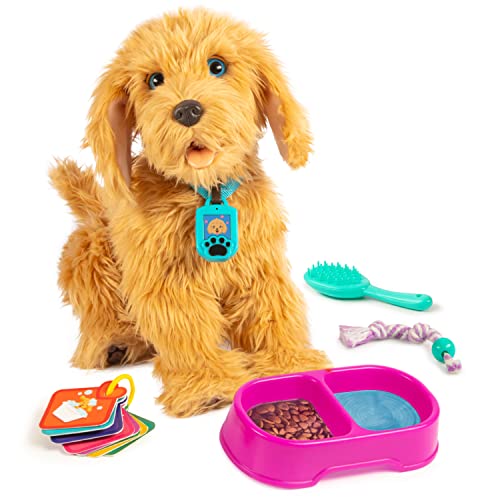
My Fuzzy Friends Moji Interactive Labradoodle

Chongker Golden Retriever Plush Dog with Magnetic Toys
OR OR TU Walking Barking Toy Dog with Remote Leash

VATOS Rechargeable Programmable Robot Dog (Pink)

Vanvimen 16 Pcs Robot Dog Toys Playset for Girls

Chongker Realistic Companion Robot Dog for The Elderly

GOBRILLFUN Interactive Walking Plush Puppy Toy Dog
More Details On Our Top Picks
Moji sits at the top of this list because he behaves less like a toy and more like a small pet with opinions. Pet him or talk to him and he answers with over 150 sounds and reactions, which keeps the novelty alive far longer than a single-button plush. The animated emoji collar acts as his mood ring, showing what he wants next.
In a busy playroom, that collar matters more than it sounds. A child who cannot read Moji’s cues gets frustrated; one who can learns cause and effect without realizing it. Compared with the simpler walkers further down this list, Moji asks for engagement rather than just observation.
Strong Points
- Over 150 sounds and reactions keep daily play from going stale
- Ten voice-commanded tricks, including Sit, Shake, and High Five, build listening skills
- The emoji collar translates his needs into pictures young kids understand instantly
- Rope and food bowl interactions add feeding and tug-of-war routines
- Twenty nurturing care cards extend bath-time and treat scenarios
Things To Consider
- Electronic components mean surface cleaning only, so plan around spills and sticky hands
- Voice recognition can be inconsistent in loud rooms, which some families report
Key Specs
Made For
Kids aged four to eight who want a responsive companion they can talk to, train, and care for daily.
A Better Fit Elsewhere
Households wanting pure cuddle comfort with no electronics should reach for the Chongker Golden Retriever Plush instead.
Not every lifelike dog needs batteries. This Chongker golden retriever leans entirely on softness and realism, arriving in a gift box with a greeting card, which makes it an easy present for birthdays or hospital stays. The magnetic toy attachments give small hands something to do beyond hugging.
Where Moji rewards interaction with sound, this one rewards it with silence, and that’s exactly the point for some households. Elderly relatives, nappers, and sensitive sleepers tend to prefer a companion that never barks at 2 a.m. The large size also makes it a proper lap dog rather than a shelf ornament.
What We Like
- No batteries or charging, ever, so it works anywhere from car seats to hospital beds
- Gift box and card packaging make it present-ready straight off the doorstep
- Magnetic accessories add light play value without complexity
Small Caveats
- Zero interactivity may bore kids who expect movement or sound
- Large plush bodies collect dust and need regular gentle vacuuming or spot washing
Right Fit For
Dog lovers of any age who want realistic comfort and decoration without electronics, noise, or upkeep.
Swap It Out When
A child under six wants walking and barking action; the OR OR TU leash-controlled puppy delivers that better.
This set understands what a three-year-old actually does with a toy dog: walks it everywhere, feeds it constantly, and names it seventeen times. At roughly nine inches tall, the plush pup walks and barks via a remote-control leash, wags its tail, and even performs a licking motion that younger children find endlessly funny.
The accessory count is where it pulls ahead of the GOBRILLFUN pick later on. Alongside the leash you get a ball, collar, name tag, bowl, feeding bottle, and rubber bone, enough props to run a full day of pretend ownership. Parents commonly note the walking gait works best on hard floors rather than thick carpet.
Bright Spots
- Remote-control leash puts the child in charge of walks, building confidence
- Licking and tail-shaking actions spark nurturing, sensory-rich play
- Seven included accessories support feeding, dressing, and naming routines
- All the fun of a pet with no bites, scratches, or allergies
Points To Note
- Walking performance drops noticeably on high-pile carpet, per widely reported owner feedback
- Small accessories like the name tag are easy to misplace in a shared playroom
At A Glance
Who Should Grab It
Preschoolers aged three to six who want to walk, feed, and fuss over a puppy of their own.
Reach For A Different Pick When
An older child craves programming and tricks; the VATOS robot dog offers far deeper interaction.
Everything before this point has been plush first, gadget second. The VATOS flips that ratio. Its metallic pink shell, finished with laser spraying for a shimmering, wear-resistant surface, houses a remote-control robot that records up to 100 custom commands, dances, sings, and runs 17 interactive functions.
That programmability is the real hook. A child chains together forward moves, greetings, and dance steps into their own routines, which is a gentle first taste of sequencing logic disguised as play. Volume adjustment saves parents’ sanity during long sessions, and recharging beats burning through disposable batteries week after week.
Standout Traits
- Records up to 100 commands, turning playtime into early programming practice
- 17 interactive functions including singing and dancing hold attention for months
- Rechargeable battery cuts ongoing running costs versus replaceable cells
- Adjustable volume keeps noise levels parent-tolerable
- Laser-sprayed metallic finish resists wear and looks striking under room lighting
Honest Caveats
- Hard plastic body offers none of the cuddle appeal of the plush picks here
- Command programming has a learning curve; younger users may need adult setup help
Quick Facts
Who Will Love This
Kids aged five to eight with a gadget streak who enjoy building routines and showing them off.
Consider Something Else When
Cuddle factor tops the wishlist; the Chongker elder-companion model below blends softness with smart sensors.
Some children care less about the dog itself than about everything that comes with it. This sixteen-piece set feeds that instinct completely: an electric stuffed puppy plus a kennel, leash, basin, bones, straps, combs, mirror, hair dryer, shampoo, soap, care solution, and a carry-along pet schoolbag.
The schoolbag deserves a mention because it solves the storage problem most playsets ignore. Grooming tools, bowls, and bottles have a home between sessions instead of scattering across the floor. Against the OR OR TU set earlier, this one trades the remote-control leash for sheer prop volume, so the right choice depends on whether your child prefers walking the dog or pampering it.
Plus Points
- Sixteen pieces cover feeding, bathing, grooming, and travel scenarios in one box
- Included pet schoolbag doubles as portable storage and encourages tidy-up habits
- Electric puppy adds sound and motion to an otherwise classic pretend set
Softer Spots
- More pieces mean more cleanup and more opportunities for lost parts over time
- Individual accessory quality tends toward lightweight play-grade plastic, based on common owner feedback
Built With In Mind
Children aged three to eight who gravitate toward caregiving roleplay and love organizing a full pet-care routine.
Another Choice May Suit
Families wanting fewer parts and stronger walking action will find the GOBRILLFUN leash puppy easier to manage.
Most robotic dogs on this list are built for children. This border collie is built for someone’s grandmother. Touch sensors sit across the head, back, neck, tail, and legs, each triggering authentic dog sounds and purrs when stroked, and a long press on the back sensor activates a simulated heartbeat designed to soothe.
That heartbeat detail separates it from every other pick here. For an older adult living alone, a warm-feeling companion that responds calmly to touch can ease long afternoons in a way a trick-performing toy never would. There’s no leash, no remote, nothing to fumble with; interaction happens naturally, the way it would with a sleeping pet.
Reasons To Buy
- Five touch-sensitive zones respond to natural stroking, no buttons required
- Heartbeat simulation activated by a long back-sensor press adds calming comfort
- Realistic dog sounds and purrs reinforce the sense of a living companion
- Simple operation suits anyone who finds remotes or apps frustrating
Worth Noting
- Electronics inside plush mean careful spot-cleaning only, never machine washing
- Sound effects may feel repetitive during very long sessions, some owners mention
Details At A Glance
Whose Shelf It Belongs On
Seniors living independently, or anyone recovering at home, who wants calm tactile companionship without demanding care routines.
Not Your Match When
A young child wants active play; the My Fuzzy Friends Moji labradoodle offers far more games and tricks.
For a child’s very first electronic pet, simplicity wins. This GOBRILLFUN puppy walks, barks, and wags its tail on leash control, and that’s honestly all a three-year-old needs. There’s no app, no programming menu, no twenty-card system to learn; attach the leash and go.
A compact grooming kit rounds things out, with shower gel, soap, comb, and scissors for pretend bath sessions. Compared with the Vanvimen sixteen-piece set above, this one trims the accessory pile down to essentials, which makes it easier to store in smaller homes and harder to lose pieces from. The trade-off is less variety once your child outgrows basic walk-and-groom play.
Highlights
- Leash-controlled walking, barking, and tail-wagging mimic a real neighborhood stroll
- Compact grooming set supports bath-time pretend play without cluttering the toy bin
- Dead-simple operation suits toddlers with no reading skills yet
Room For Improvement
- Limited feature depth means older kids may tire of it faster than the VATOS or Moji options
- Motorized legs and joints are the usual wear points, so gentle handling extends lifespan
Core Details
The Right Fit
Toddlers and young preschoolers meeting their first interactive pet, especially in apartments where toy space runs tight.
Look Elsewhere When
Your child already masters basic toys and wants voice commands; step up to the Moji Interactive Labradoodle.
Choosing Between These Companion Dogs
Match The Toy To The Child’s Stage
A two-year-old and a seven-year-old want completely different things from a robotic dog. Toddlers thrive on simple cause-and-effect, so leash-controlled walkers like the GOBRILLFUN fit best. School-age kids crave depth, which is where voice commands and programmable routines earn their keep. Buying ahead of developmental stage usually backfires.
Decide How Much Noise You Can Live With
Barking sounds charm children and grate on adults by hour three. Models with adjustable volume, like the VATOS, solve this cleanly. Pure-plush options such as the Chongker retriever sidestep it entirely. Honest self-assessment here prevents a toy that gets quietly banished to the closet.
Count The Ongoing Costs
Battery-powered toys drain cells quickly with daily use, and replacements add up over a year. Rechargeable designs cost more upfront but eliminate that recurring expense. Factor charging access too; a toy that must stay near an outlet loses some of its roam-the-house appeal.
Think About Who Actually Cares For It
Plush bodies with electronics need spot cleaning only, which matters in homes with messy snackers. Hard-shell robots wipe down easily but offer zero cuddle appeal. Seniors benefit from sensor-driven models requiring no dexterity, while accessory-heavy sets suit organized kids and frustrate chaotic ones.
Key Considerations Across These Picks
Traps First Timers Fall Into
The most common mistake is buying for the adult’s idea of cute rather than the child’s actual play style. A gorgeous plush that does nothing bores a gadget-loving kid within days. Another frequent slip: ignoring floor type. Walking robots perform poorly on deep carpet, a detail the product photos never show.
What Separates Premium From Basic
Higher-tier models justify their cost through sensor density, rechargeable power, and expandable features like command recording. You’re paying for months of engagement instead of weeks. Basic walkers still delight toddlers, so spend up only when your child has outgrown single-button play.
Frequently Asked Questions
Are lifelike robotic dogs suitable for very young children?
Most manufacturers mark their toys for ages three and up due to small parts and electronics. Always check the listed age rating before purchasing for a toddler.
Do these toys require batteries or charging?
It varies by model, with some using replaceable batteries and others featuring built-in rechargeable packs. The VATOS robot dog recharges, while several plush options run on standard cells.
Can robotic dogs be washed?
Plush models with internal electronics should only be spot cleaned with a damp cloth. Fully non-electronic plush dogs tolerate gentler hand washing depending on the manufacturer’s care label.
Will a robotic dog reduce a child’s fear of real dogs?
Many parents use them as a low-pressure introduction to pet behavior and care routines. Results differ by child, and a robotic dog is not a substitute for supervised exposure to real animals.
How durable are the moving parts?
Legs, tails, and leashes take the most stress during energetic play and are the first components to wear. Gentle handling and indoor-only use noticeably extend a toy’s working life.
Wrap Up
The right pick comes down to who’s receiving it. Moji suits talkative kids who want training games, the VATOS serves budding engineers, and the Chongker companion brings quiet comfort to older adults. Match the toy’s personality to the person, check the age rating twice, and whichever one lands on your doorstep should earn its spot in the daily routine rather than the donation pile.
