

Live plants change everything about a tank, but they only thrive under the right light. Too dim and your stem plants stretch and fade; too harsh and you’re scraping algae off the glass every weekend. This roundup covers eight fixtures across every tank size, from two-gallon desktops to four-foot planted showpieces, so you can match output to your setup instead of guessing.
The Shortlist At A Glance
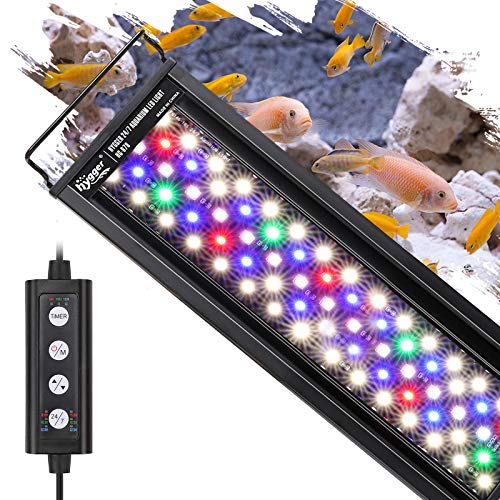
hygger 18W 24/7 Aquarium LED Light with Extendable Bracket

DaToo Mini Clip On Aquarium Light 7W Dimmable USB Lamp

FZONE 60W LED Aquarium Light for Plants (Light 90)

SEAOURA 24/7 Planted LED Aquarium Light with Timer, 30-36 in

Pawfly 6W LED Clip On Aquarium Light with Timer

Fluval Plant 3.0 LED Planted Aquarium Lighting, 22 Watts

FZONE Solo Series Nano LED Aquarium Light, App-Controlled

AQQA Clip On Aquarium Light, 24/7 & DIY Full Spectrum
More Details On Our Top Picks
The hygger’s headline trick is a built-in natural cycle: sunrise tones in the morning, full daylight through the day, then a soft blue moonlight phase before lights-out. That means your fish get a dawn and dusk instead of a jarring on-off switch, which matters more than most newcomers expect. The extendable bracket spans standard rimmed tanks without extra hardware.
Beyond the automatic mode, a DIY setting lets you program your own timing, colors, and brightness levels. For low-to-medium light plants like anubias or java fern, the 18-watt output is generally plenty.
Strong Points
- Automated sunrise-daylight-moonlight schedule runs itself once set, no daily fiddling
- Adjustable bracket fits a range of tank widths out of the box
- Seven color options make evening viewing genuinely pleasant
- DIY mode gives you control over time, hue, and intensity together
Things To Consider
- Owners commonly report the default schedule needs manual shifting to match your actual wake-up hours
- High-light carpeting plants may want more wattage than this unit delivers
Key Specs
Who It Suits Best
Busy keepers with mid-size community or lightly planted tanks who want a healthy photoperiod without programming anything complex.
Where A Sibling Pick Shines
Anyone chasing dense carpet growth should look at the FZONE 60W instead, since its higher output feeds demanding plants far better.
Oversized fixtures dwarf small tanks, and that’s exactly the problem DaToo built this lamp around. At roughly 2.7 inches, it clips onto glass up to about three gallons thick without blocking your view. USB power means you can run it from a phone charger or power bank, handy for office desks where outlets are scarce.
You get white, red, blue, and green diodes with ten brightness steps, so a betta bowl can glow warm at night or brighten fully for plant photosynthesis during the day. Compared with the Pawfly below, it’s smaller and simpler; compared with the hygger, there’s no automated schedule, just a timer and dimmer you manage yourself.
What We Like
- Genuinely tiny body keeps nano scapes unobstructed
- Ten brightness levels let you dial in algae-safe intensity
- USB input works with chargers and battery banks alike
Minor Gripes
- Manual control only, so expect to switch it on and off yourself
- Seven watts limits you to shade-tolerant plants in shallow water
Right Fit For
Desktop hobbyists keeping one- to three-gallon betta or shrimp bowls who value a clean look over automation.
Consider Something Else When
If hands-free scheduling matters more than size, the SEAOURA’s built-in clock and LCD timer will serve you better.
This is the muscle in the lineup. Sixty watts spread across six LED rows, including RGB, white, and UV diodes, gives demanding species like carpeting plants and red stem varieties the intensity they need over a 35 to 43 inch span. The wider four-inch emission surface helps reduce the patchy “color spots” that cheaper bars produce, so coverage stays even edge to edge.
App control handles scheduling, sunrise and sunset transitions, and per-channel tuning from your phone. In our view, that combination of raw output and granular software is what separates a display tank from a survival tank. The trade-off is real though: at this power level, CO2 injection and regular fertilizing stop being optional if you want to avoid an algae farm.
Highlights
- Six-row layout with UV support drives strong growth and richer plant coloration
- Wide light bar evens out distribution across long tanks
- Phone app manages timers plus gradual dawn and dusk ramps
- Enough headroom for high-tech planted builds
Trade Offs
- Overkill for low-tech tanks; pairing it with plain tap-water setups invites algae
- App-dependent features mean occasional firmware or connection quirks are worth expecting
At A Glance
Made For
Intermediate to advanced aquascapers running injected CO2 on larger planted tanks who want serious PAR headroom.
Reach For A Different Pick When
Smaller footprint setups get better value from the FZONE Solo Series, which packs similar channel control into a nano-friendly body.
Where the FZONE leans on a phone app, the SEAOURA puts everything on the fixture itself: a touch controller with an LCD screen and a built-in clock. That design choice matters in fish rooms or offices where you’d rather not open an app to check the schedule. Six rows of chips, mixing brighter 5054 units with efficient 2835 ones, deliver consistent illumination across a 30 to 36 inch tank.
The 24/7 mode mirrors what the hygger offers, ramping through day phases automatically, and owners tend to praise how vibrant the tank looks both morning and night. For medium planted tanks stocked with easy species, this hits a comfortable middle ground between price and capability.
Upsides
- On-unit LCD and touch controls mean no phone dependency
- Built-in clock keeps schedules accurate after power interruptions
- Six-row chip array produces even, vivid coverage
Small Caveats
- Menu navigation on compact screens takes a little patience to learn
- Output sits below the FZONE 60W, so carpet-heavy layouts may stall
Who Will Love This
Keepers of standard 30 to 36 inch community tanks wanting dependable automation without app accounts or Bluetooth pairing.
Swap It Out When
Desk-bound nano keepers should weigh the DaToo clip-on instead, since its tiny clamp suits small glass far better.
Pawfly squeezes a surprising amount into six watts: 6500K white for daylight, 450nm blue and 520nm green channels, plus a timer, all clipped onto tanks from one to five gallons. One detail shows thoughtful engineering: an overload warning makes the unit flash when the power supply can’t keep up, nudging you toward a proper 5V/2A adapter before flickering becomes a habit.
That adapter note is also the catch, since one isn’t included in the box. Compared with the DaToo above, you gain a timer and slightly broader tank compatibility while giving up nothing meaningful in size. For first-time shrimp or betta keepers planting java moss and crypts, this is an easy recommendation.
Plus Points
- Full-spectrum channels cover both plant needs and evening viewing
- Timer automates the photoperiod, protecting against algae from overexposure
- Overload flash warns you about weak adapters before problems start
Honest Caveats
- Power adapter sold separately, so budget for a quality 5V/2A brick
- Lower brightness settings are advised with weaker supplies to avoid flicker
Quick Facts
Whose Shelf It Belongs On
Beginners setting up their first planted nano who want spectrum variety and a timer without spending much.
A Better Fit Elsewhere
Shoppers wanting app-level color tuning on a similar footprint will prefer the FZONE Solo Series instead.
Fluval has decades of aquarium credibility behind this fixture, and it shows in the details. Six distinct LED band waves feed an adaptable spectrum you tune through the FluvalSmart app, while a programmable 24-hour cycle handles gradual sunrises and sunsets on its own. At 22 watts over a 15 to 24 inch span, it’s tuned for small-to-medium planted tanks rather than brute-force output.
The honest read is that you’re paying for polish: smoother software, consistent build quality, and a brand with replacement parts and support infrastructure. Hobbyists running aquascapes they plan to keep for years commonly report this unit holding up well. Against the FZONE 60W, it trades raw wattage for refinement, which suits slower-growing layouts beautifully.
Bright Spots
- Six-band spectrum adjusts precisely to your plant mix via app
- Programmable daily cycle mimics natural dawn and dusk
- Established brand backing tends to mean easier long-term support
- Compact housing suits rimmed and rimless tanks alike
Points To Note
- App reliance means setup takes longer than button-only rivals
- 22 watts won’t satisfy deep-tank carpeting projects
Feature Snapshot
Perfect Match For
Dedicated aquascapers with 15 to 24 inch planted tanks who value refined control and long-term reliability over maximum intensity.
Not Your Match When
Value-focused beginners on tiny bowls will find the Pawfly covers their needs at a friendlier entry point.
Nano tanks rarely get premium lighting treatment, and that’s what makes the Solo Series interesting. Eighteen RGB diodes sit alongside eighteen white ones, and each color channel adjusts independently over Bluetooth, letting you shift from growth-focused white to moody accent hues without touching the tank. Freshwater and terrarium builds both work here.
Think of it as the little sibling of the FZONE 60W reviewed earlier: same software philosophy, scaled down for desktop volumes. Dimming is smooth, and the full-spectrum output supports typical easy plants like mosses and buce without drama. You may find Bluetooth range limiting in larger rooms, but for a desk setup that’s rarely an issue.
Standout Traits
- Independent channel control enables true custom color scenes
- Bluetooth app adjusts brightness and spectrum remotely
- Full-spectrum output handles common nano plant species well
Softer Spots
- Bluetooth-only control excludes anyone preferring physical buttons
- Nano scale caps usable tank length
Built With In Mind
Style-conscious keepers running five to ten gallon planted or paludarium displays who want flagship features in miniature.
Another Choice May Suit
Larger planted rooms needing wall-to-wall coverage should step up to the FZONE 60W Light 90 for its wider bar and higher output.
Heat is the quiet enemy of clip-on fixtures, and AQQA attacks it with a widened, thickened aluminum shell whose broad surface sheds warmth efficiently. Cooler-running LEDs typically hold their output longer, which is why this pick earns its durability framing. Inside, 5050 and 2835 chips deliver the wavelengths plants use for growth.
Functionally it mirrors the hygger’s approach: a 24/7 automatic cycle plus a DIY mode where a single switch panel handles brightness, timing, and on/off. Unlike the DaToo’s minimalism, you get genuine scheduling here, making this a strong middle option for mid-size tanks where a hanging bracket isn’t practical. Cleaning the aluminum shell occasionally with a dry cloth keeps heat transfer at its best.
Reasons To Buy
- Wide aluminum body dissipates heat better than slim plastic housings
- 24/7 mode automates the full daily light rhythm
- DIY controls cover brightness, duration, and color in one place
- Clip mounting avoids bracket drilling or hood modifications
Areas To Watch
- Clip grip on very thick rims is a commonly reported weak point
- Button interface feels dated next to app-controlled rivals
Core Details
Who Should Grab It
Practical keepers of rimmed mid-size tanks who prioritize durable construction and simple physical controls over smartphone apps.
Look Elsewhere When
App-first hobbyists wanting remote scene control will be happier with the FZONE Solo Series or the Fluval Plant 3.0.
What Matters Most Before Choosing Lights For Aquarium Plants
Match Output To Your Plant List
Light intensity is measured in PAR, the usable photons plants convert into energy, and your species list dictates how much you need. Anubias, java fern, and most crypts flourish under modest output, while carpeting plants like dwarf hairgrass demand far more. Buying too much light for a low-tech tank causes algae faster than buying too little ever will.
Spectrum And Color Quality
Plants respond to specific wavelengths, mostly in the blue and red ranges, which is why full-spectrum fixtures listing Kelvin ratings and channel counts matter. White-dominant light grows plants fine but renders fish colors flatly. RGB channels add display flexibility without sacrificing growth performance.
Control Style Fits Your Routine
Consistency beats intensity for plant health, so a reliable timer or automated 24/7 cycle protects you from forgotten evenings. Button-controlled units suit shared spaces and server-room-like fish walls; app models reward tinkerers who enjoy dialing in custom scenes. Choose based on how often you’ll actually adjust things.
Mounting And Tank Compatibility
Measure your rim thickness and tank length before ordering. Extendable brackets suit standard rectangles, clips handle nano glass, and wide shells need clearance. A fixture that doesn’t physically fit well gets returned more often than any other category mistake.
Key Considerations Across These Picks
Traps First Timers Fall Into
The classic error is matching light to tank size instead of plant demand, ending with either starved stems or a green algae bloom within weeks. Another frequent slip is skipping the photoperiod entirely, leaving lights on twelve-plus hours daily. Cap runtime near eight hours and let a timer enforce it.
The Upgrade Payoff
Higher-tier fixtures buy you independent color channels, smoother dimming curves, and sturdier thermal design. Those features translate directly into denser growth and fewer replacements over the years. Low-tech keepers can skip the spend; high-tech scapers usually can’t.
Frequently Asked Questions
How many hours of light do aquarium plants need daily?
Most planted tanks do well with six to eight hours of consistent illumination. Longer photoperiods mainly feed algae rather than accelerating plant growth.
Can regular household LEDs grow aquarium plants?
Some low-demand species survive under generic bulbs, but spectrum and intensity aren’t designed for submerged growth. Purpose-built fixtures deliver the wavelengths plants actually use.
Do clip-on lights work for planted tanks?
They suit nano tanks with easy plants like mosses and anubias quite well. Deeper or densely planted layouts generally need a full-length fixture for even coverage.
Is more wattage always better for plant growth?
No, excess intensity without added CO2 and nutrients typically triggers algae outbreaks. Match output to your plant species and fertilization routine.
Do I need an app-controlled light?
Apps offer finer spectrum tuning and scene presets, which advanced aquascapers appreciate. Button and LCD models remain perfectly capable for straightforward planted tanks.
Bottom Line
Picking among these eight comes down to honest self-assessment: tank size, plant ambition, and how much control you want. The Fluval Plant 3.0 rewards dedicated scapers, the hygger and SEAOURA cover everyday mid-size tanks handsomely, and the Pawfly or DaToo make nano starts painless. Measure your tank, list your plants, and the right fixture becomes obvious.
