

Anyone who has watched fish gasp at the surface knows the frustration of invisible water problems. Ammonia spikes, nitrite surges, and pH swings rarely announce themselves until your tank’s inhabitants are already stressed. That’s where a reliable strip test earns its spot on the shelf: dip, wait, compare, act. This roundup covers seven options spanning basic 7-parameter kits to fuller 9-way panels, including picks with ammonia coverage and extras like thermometers. Whether you run a planted freshwater setup, a saltwater reef, or an outdoor pond, there’s a match here for your routine.
The Shortlist At A Glance

DIPSTIK 7-Way Fish Tank Pond Test Strips (100ct)

Umlecoa 7 in 1 Aquarium Test Kit with Thermometer

AAwipes Aquarium Ammonia Test Strips 8-in-1 (25 Strips)
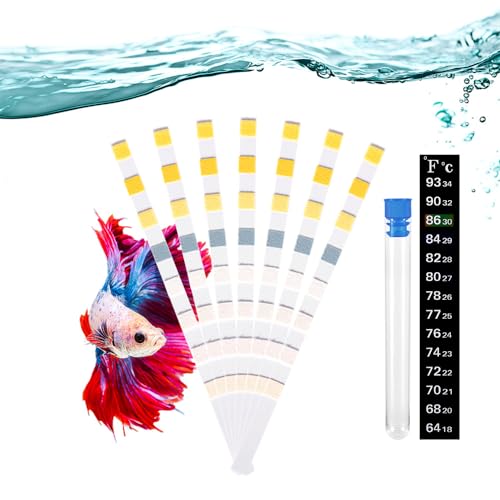
DaToo 8 in 1 Aquarium Test Kit Fish Tank Test Strips (100 Strips)

Wutest 9 in 1 Aquarium Test Strips 150 Count

Aqueon 7-in-1 Aquarium Test Strips (50 Count)

A QUILA 9-in-1 Aquarium Water Test Kit
More Details On Our Top Picks
A hundred strips in one bottle changes the math on testing frequency. Most hobbyists are told to check water at least twice weekly, and smaller kits tend to ration themselves into monthly guesses. With this DIPSTIK bottle sitting next to the tank, dipping before every water change becomes a habit instead of a chore.
The panel covers the core seven: nitrate, nitrite, general hardness, pH, carbonate hardness, total alkalinity, and total chlorine. That spread handles both freshwater and pond duty, which matters if you maintain an outdoor goldfish tub alongside indoor tanks.
Strong Points
- The 100-count supply supports twice-weekly checks for roughly a year in a single-tank home.
- Fiber-paper strips with non-bleeding pads keep color blocks readable instead of smearing into neighbors.
- Seven parameters in one dip means one wet hand, not seven separate vials.
- Works across freshwater aquariums and ponds, so one kit covers multiple setups.
Things To Consider
- No ammonia pad here, so newly cycling tanks still need a dedicated ammonia test alongside it.
- Keep the bottle sealed and dry; humidity is the usual culprit when strips fade or read inconsistently over months of storage.
Key Specs
Who It Suits Best
Established freshwater keepers and pond owners who want a long-lasting, low-effort weekly routine.
Where A Sibling Pick Shines
If you’re cycling a brand-new tank, the AAwipes 8-in-1 adds ammonia tracking that this kit leaves out.
First tanks fail on details, not disasters. The Umlecoa bundle anticipates that by pairing 125 seven-parameter strips with a test tube and thermometer, so a newcomer gets the full diagnostic bench in one purchase rather than piecing accessories together later.
The strip panel reads nitrate, nitrite, chlorine, general hardness, total alkalinity, carbonate hardness, and pH, which covers the standard checklist for both freshwater and saltwater. Compared to the DIPSTIK above, you trade some raw strip count for the bundled hardware, a fair swap for anyone starting from zero.
What We Like
- 125 strips outlast most starter-tank troubleshooting periods, including the wobbly first three months.
- The included thermometer catches temperature swings that stress bettas and tropical species even when chemistry looks fine.
- A dedicated test tube makes sample handling cleaner than dunking strips directly in the display tank.
Minor Gripes
- Like its rivals, this kit skips ammonia, the parameter that matters most during cycling.
- Reading seven color pads side by side takes a little practice under good lighting.
Made For
First-time aquarists setting up a community or betta tank who want everything in the box from day one.
Consider Something Else When
Planted-tank hobbyists chasing micronutrient data will get more mileage from the Wutest 9-in-1 further down this list.
Ammonia is the number that ends fish lives quietly, and most strip kits ignore it entirely. AAwipes closes that gap with an eight-pad design that folds ammonia nitrogen into the same dip as free chlorine, nitrate, nitrite, hardness, salinity, total alkalinity, and pH. During a tank cycle, that single strip tells the whole story.
The trade-off is volume: 25 strips won’t carry a year of twice-weekly testing. In our view, this kit works best as a focused tool for the risky early weeks, then hands off to a higher-count option once readings stabilize.
Reasons To Buy
- Ammonia nitrogen on every strip removes the biggest blind spot in budget strip testing.
- Non-bleeding color pads make the eight-block comparison manageable even for nervous beginners.
- Suits ponds as well as aquaria, useful for seasonal koi or goldfish tubs.
Small Caveats
- At 25 strips, heavy testers will restock often; pair it with a 100-count kit for the long haul.
- Strips have a shelf life once opened, so reseal the container promptly after each use.
Quick Facts
Right Fit For
Keepers running a new tank cycle or recovering from a die-off who need ammonia visibility now.
Swap It Out When
Past the cycling phase, the DaToo 8-in-1 delivers similar coverage with four times the strip count.
Here’s the compromise pick that solves both complaints from earlier entries: ammonia coverage plus a serious strip count. The DaToo panel runs eight parameters plus temperature, wrapping ammonia, pH, carbonate hardness, total alkalinity, free chlorine, nitrate, and nitrite into a 100-strip bottle.
That temperature reading sounds minor until a heater fails overnight. Bettas and discus react badly to cold shocks, and catching the drop during a morning test can save a stock. For nano tank owners juggling small water volumes, this breadth per dip is genuinely practical.
Highlights
- Ammonia plus temperature on one strip covers the two fastest-moving risks in small tanks.
- 100 strips sustain a proper twice-weekly schedule for months.
- Eight-plus-one parameter depth rivals liquid test workflows at strip-kit convenience.
Points To Note
- No iron or copper pads, so heavily planted or shrimp-focused tanks may want more granular data.
- Eight color zones demand decent lighting; dim rooms invite misreads.
Details At A Glance
Who Should Grab It
Betta, guppy, and nano-tank keepers who want ammonia and temperature oversight without buying separate tools.
Not Your Match When
Aquarists dosing fertilizers in planted displays should look at the Wutest 9-in-1 for its iron and copper pads.
Planted tanks live and die by trace elements, and this Wutest bottle is the only entry here that reads them. Beyond the familiar nitrate, nitrite, chlorine, GH, TA, KH, and pH pads, each strip adds iron and copper, the two metals that decide whether stem plants thrive or stall and whether shrimp colonies stay safe.
You give up ammonia to get that micronutrient depth, so the honest framing is specialization. Fertilizer dosers checking EI-style routines will find these pads genuinely useful; someone battling a cycling tank will not.
Standout Traits
- Iron and copper pads support real fertilizer-dosing decisions, not just waste tracking.
- 150 strips is the deepest supply in this roundup, ideal for multi-tank homes.
- Nine data points per dip consolidate what would otherwise take two separate kits.
Honest Caveats
- No ammonia measurement, a real gap during tank startup or after medication treatments.
- Nine color blocks reward careful timing; rushing the read window muddies results.
Spec Overview
Whose Shelf It Belongs On
Planted-tank and aquascape hobbyists running regular fertilizer schedules across one or more displays.
Reach For A Different Pick When
Newly cycled or unstable tanks belong with the AAwipes 8-in-1, whose ammonia pad fills this kit’s gap.
Brand familiarity counts in this category, and Aqueon has stocked fish-store shelves for decades. Its 7-in-1 strip reads pH, total alkalinity, general hardness, nitrate, nitrite, free chlorine, and iron, a slightly different mix than the DIPSTIK opener since iron replaces carbonate hardness.
That iron pad gives light planted setups a nutrient checkpoint without committing to the Wutest’s nine-panel depth. Fifty strips split the difference on supply size, enough for steady weekly checks across a season or two. Saltwater keepers will find the freshwater-and-marine compatibility label reassuring, though marine hobbyists running sensitive corals typically graduate to titration kits eventually.
Bright Spots
- Iron measurement suits lightly planted community tanks without extra purchases.
- An established aquatic brand backs the product line with wide retail availability.
- Simple dip-and-read workflow keeps maintenance nights quick.
Softer Spots
- 50 strips run out faster than the 100-plus bottles elsewhere on this list.
- No ammonia or carbonate hardness pads limits cycling-stage and buffering diagnostics.
Best Suited To
Saltwater newcomers and lightly planted freshwater keepers who value a recognized brand name.
Another Choice May Suit
Heavy testers get better longevity from the DIPSTIK 100-count bottle at a comparable feature level.
The widest panel in this roundup belongs to A QUILA, whose nine pads span pH, total alkalinity, hardness, chlorine, nitrite, sulfate, copper, iron, and ammonia. That combination is rare: ammonia for cycling safety, copper for shrimp and invertebrate caution, iron for plants, all on one strip.
Compared to the Wutest 9-in-1, this kit trades nothing chemically and adds ammonia while keeping the metal pads. Mixed-species community tanks, where plants, shrimp, and fish share water, are exactly the scenario this breadth was built for. Depending on your stocking, that versatility may be worth prioritizing over raw strip count.
Plus Points
- Ammonia, copper, and iron together cover fish, invertebrate, and plant needs in one dip.
- Rated for freshwater, saltwater, betta, marine, planted, and pond applications.
- Sulfate tracking adds a data point most strip kits never touch.
Areas To Watch
- Nine dense color zones call for consistent timing and bright, neutral lighting.
- As a newer listing, long-term batch consistency is less documented than legacy brands.
Core Details
Perfect Match For
Mixed-community keepers running plants, shrimp, and fish together who want maximum data per dip.
Look Elsewhere When
Simple goldfish or guppy tanks don’t need nine pads; the Umlecoa starter bundle covers them more affordably.
What Matters Before You Buy Fish Tank Test Strips
Match The Panel To Your Tank
Parameter lists vary more than marketing suggests. Every kit here tracks pH, hardness, and nitrogen compounds, but ammonia appears on only three, and iron or copper on just two. Cycling a new tank demands ammonia visibility; a mature planted display cares more about micronutrients. Write down your tank type first, then shop the panel, not the box art.
Strip Count Versus Testing Habits
Consistency beats intensity in aquarium care. Twice-weekly dips catch problems days before symptoms show, which means a 100-strip bottle serves a single-tank keeper far better than three 25-count packs bought piecemeal. Multi-tank households should lean toward the 125-to-150-count options simply because usage multiplies fast.
Reading Conditions And Shelf Life
Colorimetric strips, meaning pads that change shade to indicate concentration, depend on clean technique. Dip per instructions, hold horizontally, compare against the chart under daylight-spectrum light, and read within the stated window. Store bottles sealed away from humid fish-room air; moisture exposure is the most commonly reported cause of faded or unreliable pads over time.
Key Considerations Across These Picks
Traps First Timers Fall Into
The classic error is buying a cheap 7-in-1 for a cycling tank and missing ammonia entirely, then blaming the filter. Another slip: comparing colors under warm lamp light, which shifts every pad toward yellow. Read near a window or under a neutral white bulb, and always respect the timed development window printed on the bottle.
What Separates Premium From Basic
Higher-tier kits add the parameters that answer specific questions: ammonia for safety, iron and copper for plants and invertebrates, temperature for equipment failures. Paying up also tends to buy larger strip counts, which lowers the cost per test and removes the excuse to skip a week. For a single established tank, basics suffice; for mixed or planted systems, the upgrade pays for itself in avoided losses.
Closing Thoughts
Every tank tells on itself eventually, but strips let you hear it early. Match the panel to your livestock, buy enough strips to test consistently, and store the bottle dry. Start with the DIPSTIK for everyday freshwater care, reach for AAwipes or A QUILA when ammonia matters, and let the Wutest handle your planted ambitions. Your fish will repay the diligence in color and calm.
