

Live plants change everything about a tank, but they also demand more from your fixture than a basic hood light ever will. Too little output and your stem plants melt back; too much and you’re scraping algae off the glass every weekend. The seven fixtures below cover the full range, from a two-inch clip lamp for shrimp bowls to app-controlled 60-watt bars for long planted layouts, so you can match output to your tank instead of guessing.
The Shortlist At A Glance

DaToo Mini Clip On Aquarium Light 7W Dimmable USB

hygger Fish Aquarium LED Light 14W 24/7 Planted Tank

FZONE Aquarium Light for Plants 60W LED 35-43″

SEAOURA 24/7 Planted LED Aquarium Light with Timer

hygger Aquarium Programmable LED Light 12~18in
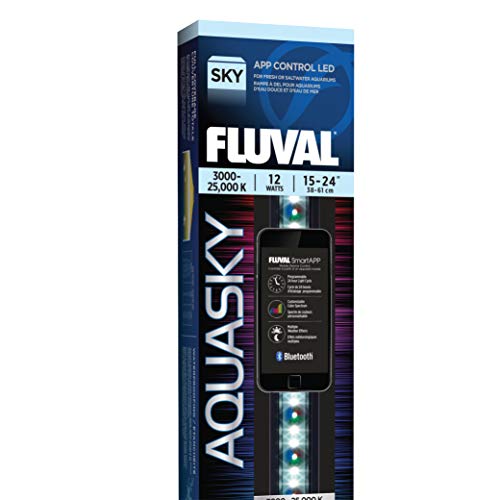
Fluval Aquasky 2.0 LED Aquarium Light 12W

Fluval Plant 3.0 LED Planted Aquarium Lighting 22W
More Details On Our Top Picks
Most fixtures dwarf a two-gallon desktop tank, and that’s exactly the problem this clip-on solves. The head measures roughly 2.7 inches, clamps onto thin glass rims, and draws power over USB, so it can share a desk outlet or a small power bank without extra cabling.
For low-light plants like anubias or java fern in a shrimp bowl, the 10-step dimmer gives you enough range to dial brightness down before algae takes hold. You may find the coverage narrow on anything wider than three gallons, which is the honest limit of a 7-watt unit.
Strong Points
- Clamp mount frees up lid space entirely, useful on open-top nano setups
- USB power means one less bulky transformer under the tank
- White, red, blue, and green LEDs let you tune the look of the tank, not just its brightness
- Timer and dimmer built in, so no separate plug timers to program
Small Caveats
- Output suits shade-tolerant plants; carpeting species will want far more wattage
- The clamp grip is sized for standard rim thickness, worth checking against your tank first
Quick Facts
Who Should Grab It
A first-time nano keeper running a betta or shrimp bowl on an office desk who wants simple, tidy lighting.
Swap It Out When
Step up to the hygger 14W 24/7 bar once your tank passes three gallons or you add faster-growing stem plants.
This is the fixture you buy when you want the tank to run itself. The default 24/7 mode walks through a soft orange sunrise, a full white daylight stretch, then a blue moonlight fade, all on an internal schedule you never touch again.
Compared with the DaToo clip above, you get a proper extendable bracket that spans the tank rim and noticeably more output at 14 watts, enough for easy and medium-light plants in modest tanks. A DIY mode lets you override the preset with custom timing, color, and brightness if the defaults feel too rigid.
What We Like
- Automated sunrise-to-moonlight cycle mimics natural day length without any programming
- Adjustable bracket fits a range of rim widths, so repositioning between tanks is painless
- Seven-color palette doubles as evening viewing lighting
- DIY mode covers keepers who want manual control later
Trade Offs
- The preset schedule can’t be shifted wholesale, only worked around through DIY settings
- Owners commonly report the bracket arms need careful seating to sit level on thicker rims
Made For
Busy keepers with small-to-medium planted tanks who want healthy plants on autopilot rather than another app to manage.
Where Another Pick Suits Better
Anyone wanting granular multi-stage scheduling should look at the hygger programmable model further down this list.
Long planted tanks live or die by light spread, and this is where FZONE spends its engineering budget. The housing emits across a four-inch width using six LED rows that blend RGB, white, and UV diodes, which keeps color patches from appearing on the substrate below.
In practical terms, that wide emission means foreground carpeting plants near the ends of a 40-inch tank get usable intensity, not just the center strip. App control handles scheduling, timer, and sunrise-sunset ramps from your phone. The honest caveat: 60 watts over high-light plants demands CO2 and consistent fertilizing, or algae will outpace your pruning.
Highlights
- Six-row LED array delivers even coverage across wide, long tanks
- UV channels support stronger growth and richer plant coloration
- Full app control removes the need to reach behind the tank for buttons
- 60-watt output has headroom for demanding, high-light species
- Built-in sunrise and sunset ramps reduce startling fish at lights-on
Points To Note
- Overkill for low-tech tanks; pairing it with slow plants invites algae
- App-dependent controls mean a phone is part of the ownership routine
Feature Snapshot
Right Fit For
Dedicated aquascapers running injected CO2 on 36-inch-plus tanks who treat plants as the main event.
Not Your Match When
Low-tech 20-gallon keepers will be better served by the SEAOURA 30-36 inch unit, which costs less effort to balance.
Not everyone wants their aquarium tied to a phone app, and SEAOURA builds its whole interface around that preference. A touch controller with an LCD screen and internal clock sits beside the tank, so schedules get set once and stay put even after a power blip.
Under the housing sit six rows of LEDs mixing brighter 5054 chips with efficient 2835 diodes, a combination aimed at consistent color from morning to night. Against the FZONE above, you give up raw wattage but gain simpler ownership: no accounts, no firmware, just a screen you glance at during water changes.
Upsides
- Standalone LCD controller works without any smartphone involvement
- 24/7 programming keeps photoperiods stable, which plants respond to well
- Dual chip rows produce even, vibrant illumination across 30 to 36 inches
- Touch controls make mid-cycle tweaks quick during maintenance
Room For Improvement
- Menu navigation on small LCD controllers takes a few sessions to memorize
- Output is moderate; very demanding plants may plateau under it
At A Glance
Who Will Love This
Keepers of medium planted community tanks who value dependable hardware over connectivity features.
Reach For A Different Pick When
High-energy aquascapes pushing fast growth belong with the FZONE 60W instead.
Where the 14W hygger earlier in this list automates everything, this 20-watt sibling hands you the keys. Eight schedulable stages, ten brightness levels per stage, and a full-spectrum channel mix mean you can build a photoperiod that matches your exact plant load, down to blue-only night phases.
An LCD setting display shows your program at a glance, which matters because deep customization is useless if you can’t verify it. There’s also a gradient mode cycling through six colors for keepers who mostly want show lighting. The trade-off is setup time; expect an unhurried evening with the manual to dial in your first schedule.
Reasons To Buy
- Eight-stage DIY scheduling offers rare flexibility at this price tier
- Full-spectrum white plus adjustable blue supports genuine plant growth
- LCD readout confirms programs without guesswork
- Four distinct modes serve novices and tinkerers alike
Honest Caveats
- Gradient mode locks out brightness and time adjustments entirely
- Initial programming is fiddly until the button logic clicks
- Some owners note the mounting legs feel lightweight on wider rims
Core Details
Whose Shelf It Belongs On
Budget-conscious hobbyists with 10 to 20 gallon planted tanks who enjoy fine-tuning gear themselves.
Consider Something Else When
Keepers who’d rather skip programming altogether will prefer the plug-and-play hygger 14W 24/7 model.
Fluval’s reputation in the hobby rests on polish, and the Aquasky 2.0 shows it. This 12-watt slim bar pairs RGB LEDs with 6500K whites, giving freshwater and fish-only marine tanks a clean, adjustable spectrum rather than a single fixed tone.
The signature trick is weather simulation: cloud cover and other ambient effects roll across the tank, which adds depth to a display shelf in a way flat lighting can’t. Compared with the Fluval Plant 3.0 next door, this one trades plant-specific output for looks and versatility. Easy plants like mosses and anubias cope fine; anything hungrier won’t.
Bright Spots
- RGB plus 6500K white blend produces natural, tunable color
- Weather-effect simulation adds visual depth few rivals attempt
- Slim profile disappears visually along the tank rim
- Suits both freshwater and fish-only marine setups
Softer Spots
- 12 watts limits serious plant growth to low-light species
- Effect-heavy modes tempt longer photoperiods, which algae loves
Who It Suits Best
Display-focused keepers prioritizing fish color and ambience over aggressive plant growth in 15 to 24 inch tanks.
A Better Fit Elsewhere
Growth-minded plant keepers should move straight to the Fluval Plant 3.0 in the next section.
This is the fixture Fluval built specifically for people whose tanks are gardens first. Six distinct LED band waves form a spectrum tuned around chlorophyll absorption, and the companion mobile app lets you reshape that spectrum channel by channel rather than accepting factory presets.
A fully programmable 24-hour cycle handles gradual dawn and dusk transitions automatically, protecting skittish fish while keeping photoperiods consistent. At 22 watts over 15 to 24 inches, it sits comfortably between the hygger units and the big FZONE bar, making it a strong middle path for serious planted tanks without CO2 injection.
Plus Points
- Six-band spectrum is engineered around what plants actually absorb
- Per-channel app tuning lets you correct for tinted water or floating cover
- Automated 24-hour cycle keeps light rhythm steady year-round
- Build quality and spare-part availability reflect Fluval’s hobby standing
Things To Consider
- App setup adds a learning curve compared with button-only fixtures
- Legs and brackets deserve gentle handling during tank cleaning, as owners commonly report
Details At A Glance
The Right Fit
Intermediate planted-tank keepers wanting proven plant performance and refined control in smaller footprints.
Another Choice May Suit
Tanks beyond 30 inches need the wider reach of the FZONE 60W rather than this 24-inch ceiling.
What Matters Most Before Choosing Lightings For Planted Aquarium
Match Output To Your Plant Load
Light intensity is the single biggest variable in planted keeping. Low-light species like anubias, java fern, and most crypts thrive under modest fixtures such as the DaToo or Aquasky 2.0, while carpeting plants and red stem varieties demand the output tiers of the FZONE or Plant 3.0. Overlighting a low-demand tank does more harm than good, since algae exploits every surplus watt.
Get The Spectrum And Photoperiod Right
Spectrum describes which wavelengths a fixture emits; plants use red and blue bands most heavily, which is why six-band designs like Fluval’s exist. Just as important is consistency: a stable 8-hour photoperiod beats a powerful but erratic one. Built-in timers and 24/7 cycles remove the human error factor entirely.
Measure Twice Before Ordering
Fixture length must suit your tank’s actual rim dimensions, not its nominal gallon size. A 36-inch light stretched across a 30-inch tank looks awkward and wastes spill light, while an undersized bar leaves dark ends where stem plants stretch. Check mounting leg adjustability against hoods, braces, and open-top setups alike.
Plan For Control Style
Decide early whether you want an app, an onboard LCD, or nothing at all. App-controlled units offer the deepest tuning but tie ownership to your phone; LCD controllers like SEAOURA’s keep things self-contained. Honest self-assessment here prevents regret more than any spec sheet comparison.
Key Considerations Across These Picks
Traps First Timers Fall Into
The classic error is buying on wattage alone, then wondering why algae exploded in a tank with no CO2. Balance light against nutrients and plant mass before upgrading. Another common slip: ignoring fixture length and discovering the coverage gap only after planting.
Where The Extra Money Goes
Higher-tier fixtures spend on LED count, spectrum engineering, and control software. That translates into even coverage, tunable channels, and reliable scheduling. The upgrade pays off once you run demanding plants; below that threshold, a well-made budget bar serves you just as well.
Frequently Asked Questions
How many hours of light do planted aquariums need?
Most planted tanks do well with 7 to 9 hours on a consistent daily schedule. Longer periods mainly feed algae rather than plants.
Can a regular LED shop light grow aquarium plants?
Some full-spectrum shop lights work, but they lack waterproofing, timers, and aquatic-tuned spectra. Purpose-built fixtures handle humidity and splashes safely.
Do planted tank lights need to be aquarium-specific?
Yes, ideally. Fixtures rated for aquarium use resist moisture and corrosion near open water, which household lamps don’t guarantee.
Is more wattage always better for plant growth?
No. Excess intensity without added CO2 and nutrients typically triggers algae outbreaks. Match output to your plant species and fertilizing routine.
How often should I replace an LED aquarium light?
Quality LEDs commonly run five years or more before noticeable dimming. Watch for fading plant growth as your cue to evaluate replacement.
Closing Thoughts
Every tank on your stand deserves light matched to its plants, not the other way around. Start with your species list, measure the rim honestly, then pick the control style you’ll actually use six months from now. Any of these seven will grow plants; the right one will grow yours without a fight.
