

Anyone who has scraped cemented litter off a plastic pan knows the daily grind: odors soak in, corners stain, and the box never quite looks clean again. The right setup changes that equation entirely. This roundup covers stainless steel pans, disposables, enclosed designs, and furniture-style enclosures so you can match the box to your cat’s size, your floor plan, and how much scrubbing you’re honestly willing to do each week.
The Shortlist At A Glance

KISENG Stainless Steel Cat Litter Box

Idymere Stainless Steel High Sided Cat Litter Box

Kitty Poo Club Disposable Cat Litter Box 2-Pack
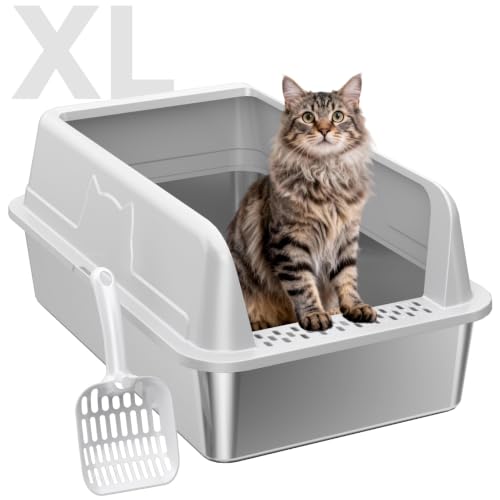
OneBug High-Sided Stainless Steel XL Cat Litter Box

Ohtomber High Sided Stainless Steel Cat Litter Box

SETVSON Cat Litter Box Enclosure Furniture (PE Rattan)

LCZLBRRD Foldable Enclosed Cat Litter Box with Lid

PAWISE Cat Litter Box Set Kitten Starter Kit
More Details On Our Top Picks
The KISENG pans out at just 17.3 by 13.4 inches with walls under eight inches tall, which makes it one of the most space-conscious steel boxes here. That low profile suits kittens, seniors, and cats who dislike climbing into deep pans.
Stainless steel is the headline material: unlike plastic, it doesn’t develop microscopic scratches that trap urine odor over time. In a small apartment where the box lives near your sofa, that difference shows up within weeks of ownership.
Strong Points
- Smooth non-porous surface means clumps release easily instead of welding to the floor of the pan
- Steel resists absorbing smells, so a quick wipe keeps the corner of your living room neutral
- Compact footprint slides into bathrooms, closets, or beside a washer without rearranging furniture
- No rust or staining buildup, which is where plastic boxes typically fail after a year
Things To Consider
- Sized specifically for small cats, so larger breeds will feel cramped during digging sessions
- Measure your space first; owners commonly report returns simply because the footprint was smaller than expected
At A Glance
Made For
Apartment dwellers with one small cat who want a hygienic box that disappears into a corner.
A Better Fit Elsewhere
Owners of bigger or multi-cat homes should look at the OneBug High-Sided Stainless Steel XL Cat Litter Box instead, since its 23-inch length gives large cats room to turn around.
Where the KISENG commits to one compact size, the Idymere gives you two: a 15.7-inch version and a slightly roomier 16.93-inch model with taller five-inch walls. That flexibility matters more than it sounds, because kitten-to-adult transitions are exactly when most people end up replacing their first box.
The open-top design keeps air moving through the pan, which does real work against ammonia smell between scoopings. For single-cat or two-small-cat homes, this is an easy recommendation, though you may find the shorter walls scatter-prone with enthusiastic diggers.
What We Like
- Two size choices let you match the pan to a growing kitten or a settled adult
- Open design promotes airflow, cutting down on lingering odor in small rooms
- Steel construction wipes clean without the permanent staining plastic develops
- Low entry height works well for elderly cats with stiff joints
Worth Noting
- Shallow walls mean litter tracking is likely unless you pair it with a good mat
- Best suited to small and medium cats; big breeds need more interior length
Right Fit For
First-time cat owners raising a kitten who want one box that lasts through adulthood.
Where A Sibling Pick Shines
Heavy diggers belong with the Ohtomber High Sided Stainless Steel Cat Litter Box, whose six-inch walls contain far more scatter.
This one solves a different problem altogether: the scrubbing itself. Each disposable box is engineered to run a full month before you toss the whole thing, and the leak-proof base is the brand’s patented claim to fame. Cardboard disposables have a reputation for soaking through onto floors; this design builds a watertight barrier instead.
Think road trips, temporary housing, post-surgery recovery setups, or a second box for a basement. The trade-off is ongoing cost and waste, so it’s a convenience purchase rather than a permanent fixture. Two boxes per pack covers roughly two months of single-cat use.
Bright Spots
- Patented leak-proof base keeps floors and rugs dry for the entire month of use
- Zero cleaning required: when the month ends, the whole box goes out
- Ideal backup for travel, vet-recommended confinement periods, or introducing a new cat
- Two-pack format means you always have a fresh box staged and ready
Small Caveats
- Recurring replacement cost adds up compared with a one-time steel pan
- Disposables generate packaging waste, which matters to some households
Quick Facts
Who Should Grab It
Renters, frequent travelers, and anyone managing a temporary or secondary litter station.
Swap It Out When
For everyday long-term use at home, the KISENG Stainless Steel Cat Litter Box costs less over time and cleans up in seconds.
Nearly 23 inches long and ten inches tall, the OneBug is the biggest steel pan in this lineup, and it’s built for the messiest scenarios: multiple cats, powerful diggers, and high-peeing tomcats. The tall walls do double duty, containing kicked litter while giving shy cats a sense of privacy.
A built-in anti-tracking step near the entry helps knock granules off paws before they reach your hallway. Compared with the compact KISENG, this is the pick that stays put in a dedicated laundry room or garage corner and handles whatever two or three cats throw at it.
Reasons To Buy
- Oversized interior gives large cats genuine room to dig, turn, and cover comfortably
- Ten-inch walls dramatically cut down on urine spills and scattered litter
- Anti-tracking step reduces the trail of granules that normally follows every visit
- High sides create privacy, which anxious cats often prefer in busy households
- Stainless steel shrugs off the rust and odor absorption that plague plastic in humid rooms
Points To Note
- The large footprint demands real floor space, so measure before committing
- Tall entry may challenge kittens or senior cats with mobility issues
- Steel pans weigh noticeably more than plastic when full, complicating relocation
Core Details
Who Will Love This
Households running two or more cats, especially large breeds or vigorous diggers.
Not Your Match When
Single-kitten homes should start with the PAWISE Cat Litter Box Set Kitten Starter Kit, whose low-entry pan suits tiny legs.
The Ohtomber splits the difference nicely between the shallow Idymere and the oversized OneBug. You get six-inch walls in either a 17.5-inch or a 23.4-inch length, so there’s a configuration for both a studio apartment and a bigger home. That sizing spread is its strongest argument.
Like the other steel pans here, it won’t absorb sticky smells or stains, and it accommodates everything from kittens to rabbits, according to the manufacturer. The honest caveat: six-inch walls help but won’t fully contain a determined excavator, so keep a mat underneath regardless.
Plus Points
- Two length options cover small apartments and spacious utility rooms alike
- Six-inch sides reduce scatter without making entry difficult for most cats
- Steel body resists odor, staining, and rust across years of daily scooping
- Works for small pets beyond cats, including rabbits, per the maker’s guidance
Softer Spots
- Mid-height walls are a compromise: better than open pans, short of the OneBug’s containment
- You’ll still want a trapping mat for gritty litters
Best Suited To
Small-to-medium cat owners who want steel hygiene without sacrificing much floor space.
Consider Something Else When
Maximum mess control calls for the OneBug High-Sided Stainless Steel XL Cat Litter Box and its ten-inch walls.
Not every box needs to look like a box. The SETVSON hides a standard pan inside hand-woven PE rattan, turning the least attractive necessity in cat ownership into something resembling a side table. The natural finish blends into living rooms where a bare plastic pan would be an eyesore.
Function isn’t an afterthought either: a soft mat with large holes catches stray litter at the exit, and two included S-shaped hooks hold the scoop within reach. Assembly takes some patience, and the enclosure only fits standard-size pans, so check interior clearances against your current box first.
Highlights
- Hand-woven rattan exterior conceals the litter area completely from guests
- Hole-pattern catch mat stops tracked granules right at the doorway
- Included hooks keep the scoop attached and handy for daily cleaning
- Gives timid cats a private, den-like space to do their business
Minor Gripes
- Assembly is reported to take longer than a simple open pan, sometimes requiring two people
- Interior clearance limits which litter boxes fit inside, so verify dimensions beforehand
Feature Snapshot
Whose Shelf It Belongs On
Design-conscious owners whose litter area sits in visible living space rather than a back room.
Look Elsewhere When
Budget-focused setups get the same hygiene basics from the Ohtomber High Sided Stainless Steel Cat Litter Box at a fraction of the footprint cost.
Flexibility is this gray-and-white box’s whole personality. It converts among three modes: fully open, high-fence, and completely enclosed with the lid on. A nervous new rescue can start open, then graduate to covered once trust builds, all without buying another product.
The enclosed mode includes a deodorizing bag and a cat-ear accent on top, plus a scoop in the package. Fully sealed construction keeps both litter and urine contained. The hard limit is weight: the maker caps suitability at 12 pounds, so chunkier cats need to shop elsewhere.
Upsides
- Three configurations adapt to a cat’s comfort level as it changes over time
- Fully enclosed mode contains litter scatter and urine splash inside the shell
- Deodorization bag helps manage odor in enclosed mode
- Foldable design stores flat between uses or moves easily between rooms
- Cat-ear styling reads as decor rather than pet equipment
Areas To Watch
- 12-pound weight cap rules out larger breeds entirely
- Some cats resist covered boxes, so the open mode may become the default anyway
The Right Fit
Kitten and small-cat adopters who want one adaptable box through the house-training phase.
Another Choice May Suit
Cats over 12 pounds fit better in the OneBug High-Sided Stainless Steel XL Cat Litter Box, which imposes no such limit.
Bringing a kitten home usually means three separate shopping trips. The PAWISE kit collapses them into one purchase: a low-entry PP plastic pan sized about 14.3 by 10.6 inches, a matching scoop, a double dish bowl, and two toys, a mouse and a ball. Everything a new arrival needs on day one.
The pan targets kittens up to roughly three pounds, so treat it as a first-stage box rather than a forever one. Plastic means eventual odor retention too, though at this stage of life you’ll likely upgrade before that becomes noticeable.
Standout Traits
- Complete kit covers toilet, feeding, and play needs in a single order
- Low entry point lets tiny legs climb in without struggle
- Lightweight PP plastic is easy to reposition as your kitten explores
- Included toys help burn kitten energy away from your furniture
Honest Caveats
- Three-pound suitability cap means a very short service life before upgrading
- Plastic surfaces hold odor over time, unlike the steel picks higher on this list
Details At A Glance
Who It Suits Best
First-time kitten adopters who want a complete, no-fuss welcome-home setup.
Reach For A Different Pick When
Once your kitten passes three pounds, step up to the Idymere Stainless Steel High Sided Cat Litter Box for a longer-lasting pan.
What Matters Most Before Choosing Litter Box And Litters
Size And Your Cat’s Anatomy
A box should run about one and a half times your cat’s body length, minimum. Kittens and seniors need low entries under four inches, while large breeds like Maine Coons demand 22-plus inches of interior length. Measure your cat nose-to-tail-base before ordering anything.
Material And Odor Behavior
Plastic develops micro-scratches that harbor bacteria and smell, which is why stainless steel dominates the premium end of this list. Steel wipes sterile, resists rust, and never absorbs urine. The trade-off is weight and upfront cost, both worth it for long-term owners.
Open Versus Covered Designs
Covered boxes trap odor for humans but can also trap it for the cat, and some felines refuse them outright. Watch your cat’s behavior: hesitation at the entrance usually means the enclosure isn’t working. Open pans with high sides split the difference well.
Lifestyle And Placement
Renters and travelers benefit from disposables, while visible living spaces justify furniture enclosures. Multi-cat homes need one box per cat plus one extra, so plan floor space accordingly before falling for a single stylish option.
Key Considerations Across These Picks
Traps First Timers Fall Into
The classic error is buying for your home instead of your cat. A gorgeous covered box means nothing to a 15-pound cat who can’t turn around inside it. Second mistake: skipping the size chart. Most returns in this category trace straight back to unmeasured footprints, especially with compact steel pans.
What Separates Premium From Basic
Higher-tier boxes earn their price through material longevity and mess engineering. Stainless steel lasts years without odor absorption, tall walls eliminate daily floor sweeping, and anti-tracking features save minutes every day. Paying up makes sense for permanent, multi-cat households; casual or temporary situations rarely justify it.
Frequently Asked Questions
How often should a litter box be cleaned?
Scoop solid waste daily and refresh litter weekly. Full washes with mild soap work best monthly for plastic and as needed for steel.
Are stainless steel litter boxes really better than plastic?
They resist odor absorption, staining, and scratches that permanently trap smells in plastic. They cost more upfront but typically outlast several plastic replacements.
Do cats prefer open or covered litter boxes?
Preferences vary individually, though many cats favor open designs for visibility and escape routes. Introduce covered styles gradually and watch for hesitation.
How many litter boxes does a multi-cat home need?
Follow the general rule of one box per cat plus one additional. Three cats therefore need four stations placed in separate locations.
Can a litter box be too big for a kitten?
Yes, deep-walled or oversized pans can discourage young kittens from entering. Start with a low-entry small pan and scale up as your cat grows.
Closing Thoughts
Match the box to the cat first and the décor second. Small apartments thrive with the KISENG or Idymere steel pans, busy multi-cat homes need the OneBug’s containment, and new kitten owners can’t go wrong starting with the PAWISE kit. Whichever direction you lean, measuring twice remains the cheapest insurance in this category.
