

A cat who sprays or overshoots the pan can turn a clean home into a constant cleanup job. The right setup, whether that’s a high-sided pan, a fully enclosed steel box, or a simple add-on shield, keeps mess where it belongs. This list covers eight options built for exactly that problem, from budget plastic to jumbo stainless steel.
The Shortlist At A Glance

Tailtastic Large Cat Playpen with Separate Areas

SANDPEAK Cat Litter Box Cover (4 Pcs)
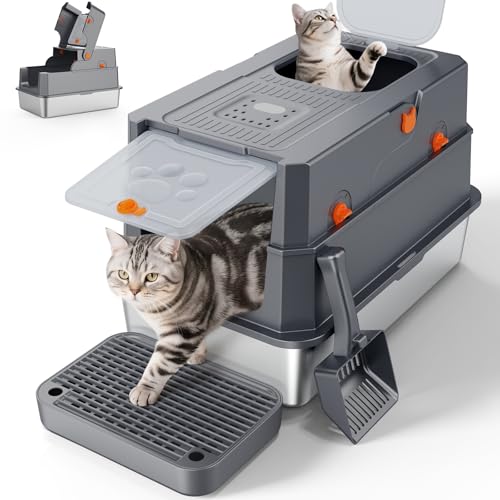
FURTIME Stainless Steel Litter Box with Lid
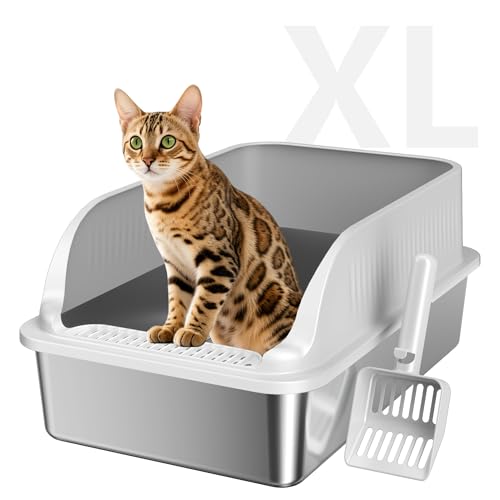
KISENG Stainless Steel Cat Litter Box with Lid XL

LCZLBRRD Covered Cat Litter Box Grey-White

Idymere Stainless Steel High Sided Cat Litter Box

Tevila XL Enclosed Stainless Steel Litter Box Black

So Phresh Scatter Shield High-Back Litter Box X-Large
More Details On Our Top Picks
This isn’t a litter box so much as a full containment zone, and that’s the point. The tent splits into two separate areas, so one cat can eat or rest while another uses the litter box without territorial drama. At 50.5 by 31.5 by 31.5 inches, there’s genuine room to move.
In a busy multi-cat home, that separation often reduces the stress-driven spraying that starts the whole problem. It also works as a recovery pen or a safe space for a new arrival, which adds value beyond litter duty.
Strong Points
- Two distinct zones let cats feed, rest, and eliminate separately, cutting tension in shared spaces
- The generous footprint fits cats of all sizes plus dogs up to 80 pounds if you need dual use
- A carry bag makes it portable between rooms or houses
- Mess stays inside the enclosure instead of on your baseboards
- Doubles as an indoor or outdoor play area
Things To Consider
- Fabric panels need regular spot cleaning where litter tracks out
- You’ll need to supply your own litter box and bowls inside
Key Specs
Who It Suits Best
Households managing two or more cats with spraying or territory disputes who want full-room protection rather than a single pan upgrade.
Where A Sibling Pick Shines
For a single cat whose issue is just overshooting the pan edge, the So Phresh Scatter Shield below handles it with far less floor space.
Sometimes the cheapest fix is the smartest one. These four flexible plastic shields, each 15 by 11.5 inches, attach to any open-top pan with the included velcro strips, turning what you already own into a higher-walled box. No new purchase of a full enclosure required.
Owners commonly report these work well against both kicked-out litter and urine aimed over the rim. Because they’re reusable and repositionable, you can experiment with height until your cat stops clearing the edge.
Bright Spots
- Retrofit onto nearly any open-top box you already have
- Velcro strips allow quick removal for deep cleaning sessions
- Shields can be cut down to match unusual pan dimensions
- Four pieces cover all four sides of a standard pan
Small Caveats
- Adhesive velcro tends to lose grip over time in humid bathrooms, so spare strips are worth keeping
- Flexible plastic won’t stop a determined sprayer targeting the wall above the box
Right Fit For
Anyone on a tight budget whose cat occasionally overshoots a low-sided pan but doesn’t spray walls or furniture.
Swap It Out When
Wall-spraying behavior calls for the Tevila enclosed steel box instead, since shields alone won’t contain vertical aiming.
Stainless steel is the material worth knowing here: unlike plastic, its non-porous surface doesn’t soak up ammonia odors over months of use. FURTIME pairs that with a flip-top lid, so daily scooping means opening the top rather than wrestling the whole cover off.
The three-layer shell assembles into either a fully enclosed or semi-enclosed configuration, which matters because some cats refuse covered boxes entirely. Starting semi-open and closing up later is a low-stress transition path for a picky feline.
What We Like
- Flip door design makes routine cleaning genuinely effortless
- Steel tray resists odor absorption that plagues older plastic pans
- Two configuration modes suit both shy and open-air preferring cats
- Detachable layers simplify deep cleans
Worth Noting
- Assembly of the three-layer shell takes some patience the first time
- Steel construction adds weight compared to plastic, making relocation a two-hand job
- Covered designs need more frequent scooping to stay appealing to sensitive cats
At A Glance
Made For
Apartment dwellers who keep the box indoors and care as much about lingering smell as about stray spray.
Another Choice May Suit
If budget is the priority, the KISENG high-sided steel pan delivers similar material benefits at a lower commitment.
Where the FURTIME leans on clever lid mechanics, this KISENG keeps things simpler: a roomy 22.83 by 14.57 inch steel pan with tall sides and a lid. The generous interior gives larger cats space to turn and dig comfortably, which alone can resolve avoidance issues rooted in cramped quarters.
The non-porous metal surface wipes clean without holding smells the way scratched plastic does. For most single-cat homes, that combination of size and material covers the two biggest causes of out-of-box accidents.
Plus Points
- XL interior suits big breeds like Maine Coons that outgrow standard pans
- High sides catch most kick-out and overshoot before it hits the floor
- Steel won’t absorb odors or stain over years of scooping
Honest Caveats
- No drawer or scoop included, so you’ll supply your own tools
- The lid reduces airflow, and some cats prefer a fully open pan
Who Will Love This
Owners of one large cat who want steel durability without paying for extra features they won’t use.
Reach For A Different Pick When
Multi-cat homes will get more mileage from the Tevila’s 80L capacity than from this single-cat footprint.
This is the tidy-looking option for smaller cats. The fully enclosed shell keeps tracked litter contained, and the pull-out drawer means you scoop from outside the box instead of leaning over an open pan. A deodorizing bag slots in to help keep surrounding air fresh.
Because it’s rated for cats up to 12 pounds, it fits kittens and small-to-medium adults best. The neutral grey-white finish is unobtrusive enough for a bedroom corner or bathroom, places where a bare pan usually isn’t welcome.
Highlights
- Drawer design makes waste removal cleaner and faster than top scooping
- Fully enclosed build stops litter scatter at the source
- Included deodorization bag helps control ambient smell
- Compact styling blends into living spaces rather than hiding in a laundry room
Points To Note
- The 12-pound limit rules out larger breeds entirely
- Plastic construction may hold faint odors after a year or more of heavy use, per common owner reports
Quick Facts
Who Should Grab It
Owners of kittens or petite cats who want an attractive, low-mess box that lives visibly in the home.
Not Your Match When
A cat over 12 pounds needs the KISENG XL steel pan, which offers far more interior room.
Open pans get overlooked in spray-control conversations, yet plenty of cats reject covers outright. This Idymere keeps the air moving with an open-top design while the raised steel sides still block most sideways scatter. Two sizes are offered, including a compact 15.7 by 11.8 inch version for tight spots.
The larger 16.93 by 12.99 by 5.12 inch model suits kittens, seniors, and medium cats doing their business without feeling boxed in. For small apartments, the shallow profile slides into corners other options can’t.
Standout Traits
- Open design promotes airflow, which naturally limits odor buildup
- Two size options fit everything from studio apartments to roomier homes
- Steel surface rinses clean without absorbing smells
Minor Gripes
- The 5.12-inch wall height is modest, so vigorous diggers may still clear it
- No lid means zero privacy for shy cats
Whose Shelf It Belongs On
City apartment dwellers with one calm, small-to-medium cat and limited floor space near a litter area.
Consider Something Else When
Strong kickers and sprayers need taller walls, and the So Phresh high-back pan is built precisely for that habit.
Size is the headline here, and it’s not close. The 23.6 by 15.7 by 15.7 inch body holds up to 40 liters of litter inside an 80-liter capacity, giving big cats room to turn and dig freely while letting you maintain deeper fill for proper burying. Deeper litter means fewer refills and better coverage of waste.
The non-porous steel tray resists sticking, scratching, and odor retention, and owners commonly report it holds up for years of daily scooping. In multi-cat households, that durability matters even more because usage volume doubles or triples.
Reasons To Buy
- Jumbo dimensions give large breeds genuine freedom of movement
- 80L capacity supports up to 40L of litter for deeper burying and less frequent topping up
- Scratch-resistant steel surface leaves no residue after cleaning
- Enclosed lid contains spray directed upward or outward
- Built to last through years of heavy multi-cat use
- Black finish hides dust between cleanings
Trade Offs
- The sheer bulk demands serious floor space, so measure first
- Steel plus litter depth makes the filled unit heavy to relocate
Feature Rundown
Best Suited To
Multi-cat households and owners of Maine Coons, Ragdolls, or other large breeds dealing with overshoot and crowding.
Look Elsewhere When
Small-space owners should step down to the LCZLBRRD covered box, which trades capacity for a compact footprint.
Cats that back into a corner before going are the exact problem this pan was drawn up for. The charcoal XL measures 24 by 18 by 10 inches, and the signature high rear wall guards the baseboard behind the box from both scatter and spray. Entry stays easy thanks to a lower step-in front lip.
It’s molded from strong plastic with half the material coming from recycled sources, a detail worth noting for anyone trying to shrink their household footprint. Unlike the enclosed steel picks earlier in this list, there’s no lid to trap smell or intimidate a cautious cat.
Positives
- High-back wall specifically targets corner-spraying behavior
- Step-in front entrance works well for kittens and senior cats with stiff joints
- X-large floor area gives big cats comfortable turning room
- 50% recycled plastic content reduces environmental impact
Areas To Watch
- Plastic can develop scratches that hold faint odor over long-term use, a widely reported trait of molded pans
- Side walls are standard height, so side-directed kickers may still escape
- Charcoal color shows dust less but scuffs more visibly than black
Core Details
The Right Fit
Homes with one cat that sprays backward toward walls, especially where the box sits against drywall or baseboards.
Skip It When
All-around containment for several cats points back to the Tailtastic playpen, which protects entire rooms rather than one wall.
What Matters Most Before Choosing Litter Boxes For Cats Who Pee Outside The Box
Match The Fix To The Behavior
Overshooting the rim calls for taller sides or a shield, while deliberate wall-spraying usually needs an enclosed box or a high back wall. Diagnosing the habit first saves money, since a $10 shield solves what a $100 enclosure sometimes can’t. Watch where the mess lands for a week before ordering anything.
Size And Material Go Together
A cat needs roughly one and a half times its body length in pan width to turn comfortably, and cramped quarters are a documented trigger for avoidance. Stainless steel costs more upfront but resists the odor absorption that builds up in scratched plastic. Multi-cat homes should scale capacity accordingly.
Cleaning Access Decides Long-Term Success
The best box is the one you’ll actually maintain. Drawer systems like the LCZLBRRD make scooping a thirty-second job, while flip-top lids such as FURTIME’s avoid removing the whole cover. Anything awkward to clean tends to get neglected, and a dirty box sends cats right back to your carpet.
Key Considerations Across These Picks
Traps First Timers Fall Into
The classic error is buying an enclosed box for a cat that has never used one, then blaming the cat when avoidance continues. Transition gradually with a semi-open config first. Another slip: ignoring floor space. Measure the intended spot before ordering an 80-liter steel tank.
What Separates Premium From Basic
Higher-tier steel boxes cost more because non-porous metal outlasts plastic by years and never traps ammonia smell. That pays off fastest in multi-cat homes where a plastic pan degrades within a year. Single-cat households on light budgets do fine with high-sided plastic or a shield kit.
Frequently Asked Questions
Why does my cat pee just outside the litter box?
Usually the pan feels too small, too dirty, or too exposed for their comfort. Upgrading to taller sides or a larger interior resolves most cases.
Do covered litter boxes stop spraying?
They contain spray effectively, but some cats dislike covers and may avoid the box altogether. Semi-enclosed designs offer a middle ground.
Is stainless steel really better than plastic?
Steel is non-porous, so it doesn’t absorb odors or stain over years of use. Plastic costs less but typically needs replacing sooner.
How many litter boxes do I need for two cats?
The common guideline is one box per cat plus one extra. Spacing them apart also reduces territorial tension that triggers marking.
Can high-sided boxes cause problems for older cats?
Very tall entry lips can discourage seniors with joint stiffness. Look for a step-in front entrance like the So Phresh design.
Wrap Up
Spray and overshoot problems almost always trace back to fit: wrong height, wrong size, or wrong material for your specific cat. Start by matching the solution to the actual behavior, whether that’s a four-piece shield kit or a jumbo steel enclosure. Any of these eight will contain the mess; the honest next step is measuring your space and watching your cat’s habits for a few days before committing.
