

Living with a dog diagnosed with inflammatory bowel disease means every meal becomes a decision. The wrong kibble can undo weeks of progress, while the right formula keeps stools firm, energy steady, and vet visits less frequent. This shortlist covers prescription wet foods, low-fat dry diets, limited-ingredient options, and one joint chew that supports a healthy inflammatory response from a different angle. Each entry explains who it fits, where it falls short, and which alternative on this list may suit your dog better.
The Shortlist At A Glance

Hill’s i/d Low Fat Digestive Care Wet Dog Food
Royal Canin GI Low Fat Adult Dry Dog Food

Native Pet Inflammatory Care Joint Chews

Hill’s i/d Digestive Care Wet Dog Food
Hill’s GI Biome Digestive/Fiber Care Wet Dog Food

VICTOR Sensitive Skin & Stomach Salmon Meal & Brown Rice Dog Food

Royal Canin Digestive Care Loaf in Sauce Wet Dog Food

KOHA Limited Ingredient Bland Diet Chicken & White Rice

Hill’s Science Diet Sensitive Stomach & Skin Dry Dog Food
More Details On Our Top Picks
Fat is one of the hardest nutrients for an inflamed gut to process, and this stew was built around that problem. Hill’s nutritionists and veterinarians formulated it specifically to settle digestive upsets in dogs that need restricted fat, using highly digestible protein so meals demand less work from the intestines.
In practice, that matters most during flare weeks. Owners commonly report firmer stools within days of switching, and the stew texture tends to tempt dogs whose appetite drops when their stomach misbehaves. It comes in a rice, vegetable, and chicken flavor across several can sizes, including a 12.5-ounce pack of 12.
Strong Points
- Low-fat formulation takes strain off a compromised digestive tract
- Highly digestible ingredients mean more nutrient absorption per bowl
- Stew format encourages eating during low-appetite stretches
- Developed by Hill’s veterinary nutrition team, not a generic recipe
- Multiple pack sizes suit both trial runs and long-term feeding
Things To Consider
- This is a prescription diet, so expect to confirm it with your vet before ordering
Who It Suits Best
Dogs whose IBD flares alongside fat intolerance, especially seniors or pancreatitis-prone pups needing a gentle daily staple.
Where Another Pick Suits Better
Dogs without a fat restriction may do better on Hill’s i/d Digestive Care Wet Dog Food below, which offers the same clinical approach at standard fat levels.
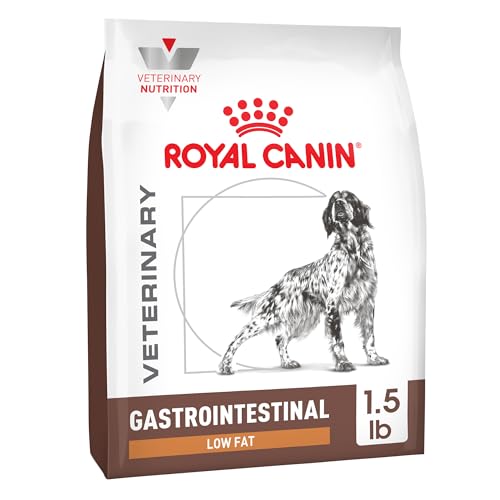
Where the Hill’s stew above handles fat intolerance in wet form, Royal Canin answers the same need with kibble. Prebiotics in the formula help maintain the balance of beneficial bacteria in the gut, and a blend of dietary fibers works alongside them to support the microbiome, the community of microbes that influences digestion day to day.
The practical upside of dry food is storage and cost per serving over months of management. Bags run from a 1.5-pound trial size up to 28.6 pounds, so you can start small before committing to bulk. One honest note: some dogs find therapeutic kibble less exciting than canned, so mixing in a wet topper is a common workaround.
What We Like
- Prebiotic fibers nourish good gut bacteria with every meal
- Low-fat design targets dogs that struggle to digest fat
- Sizes from 1.5 lb to 28.6 lb fit any stage of management
Worth Noting
- Kibble alone may not excite picky eaters during flare periods
- A veterinary diet, so a vet conversation comes first
At A Glance
Made For
Adult dogs managing long-term fat sensitivity whose households want the convenience and economy of dry feeding.
Consider Something Else When
Appetite is the sticking point, the KOHA bland diet later in this list gives you a ready-to-serve wet option for rough patches.
This entry plays a supporting role rather than replacing dinner. Native Pet built these chews around three actives: green-lipped mussel, a shellfish source of omega-3 fatty acids; turmeric, a spice long associated with a healthy inflammatory response; and collagen, the structural protein in cartilage and connective tissue. Together they aim at joint comfort and flexibility rather than digestion itself.
The chews are air-dried with real chicken, so there are no pills to hide, and they fit into any routine at mealtime or after. Dogs of all ages can take them daily or as needed. Worth remembering though, this is a supplement, not a treatment, and results tend to build gradually over weeks of consistent use.
Highlights
- Three-system care: omega-3s, turmeric, and cartilage-supporting collagen
- Air-dried chew format skips the pill-hiding routine entirely
- Flexible dosing, daily or as needed, for dogs of all ages
Trade Offs
- Contains chicken, a consideration for allergy-prone dogs
- Supplements work slowly, so patience and consistency matter
- Not a substitute for a therapeutic diet if gut symptoms persist
Right Fit For
Owners of stiff, slowing dogs who want to support joint comfort alongside an IBD-friendly diet.
Not Your Match When
Your priority is strictly digestive, the Hill’s GI Biome wet food further down targets gut health far more directly.
Think of this as the standard-bearer of the i/d line, the version most vets reach for first when a dog’s gut needs clinical nutrition without a specific fat restriction. Hill’s describes its nutrition as clinically proven to settle digestive upsets in adult dogs, and the high digestibility means the body absorbs more of what each can delivers.
The chicken and vegetable stew comes in 13-ounce cans sold in packs of 12, plus smaller 5.5-ounce portions handy for toy breeds or gradual transitions. Compared with the low-fat sibling reviewed earlier, this one trades the fat restriction for broader everyday use. If your dog tolerates normal fat levels, you likely lose nothing by choosing it.
Upsides
- Clinically proven nutrition aimed squarely at digestive upsets
- High digestibility supports easier nutrient absorption
- Meets complete adult maintenance needs, not just short-term rescue
- Two can sizes cover both large dogs and tiny portions
Minor Gripes
- Prescription status means a vet sign-off before purchase
Quick Facts
Best Suited To
Adult dogs with recurring digestive upset whose vets want a proven wet therapeutic diet without fat limits.
Look Elsewhere When
Loose stool and irregularity dominate the picture, the GI Biome formula next up adds targeted fiber the standard i/d lacks.
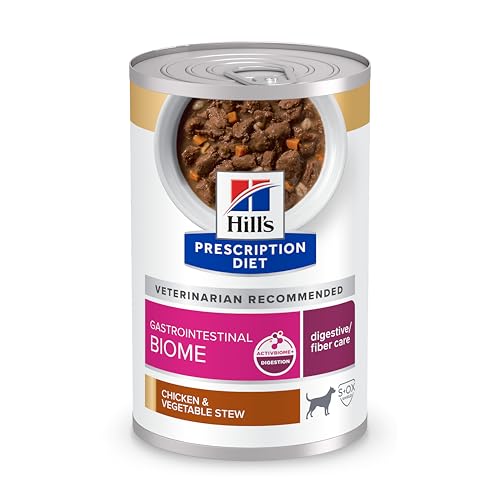
Fiber is the lever this formula pulls. Soluble fiber dissolves and feeds gut bacteria, while insoluble fiber adds bulk that keeps things moving, and Hill’s balances both here to promote regular bowel movements and steadier digestive function. Its ActivBiome+ ingredient technology is designed to rapidly activate beneficial gut bacteria and support a healthy GI microbiome balance.
There’s also meaningful omega-3 content in the form of DHA and EPA, fatty acids associated with a healthy inflammatory response. The chicken and vegetable stew format matches the other Hill’s entries above, so transitioning between them is straightforward. As with all Hill’s Prescription Diet products, a quick chat with your vet confirms whether it fits your dog’s specific diagnosis.
Standout Traits
- Optimally balanced soluble and insoluble fibers promote regularity
- ActivBiome+ technology activates beneficial gut bacteria quickly
- High DHA and EPA omega-3 levels support a healthy inflammatory response
- Formulated to encourage consistent, healthy stool quality
- Same stew platform as other i/d foods, easing diet switches
Room For Improvement
- Higher-fiber formulas can mean larger stool volume early on
- Requires veterinary confirmation like any prescription diet
Who Should Grab It
Dogs whose IBD shows up mainly as unpredictable stools and irregularity rather than fat intolerance.
A Better Fit Elsewhere
Fat is the trigger instead, circle back to the Hill’s i/d Low Fat stew at the top of this list.
Not every sensitive gut needs a prescription, and this is the strongest over-the-counter case here. Salmon meal leads the ingredient list, the recipe contains no chicken, corn, or soy, and it’s built on brown rice rather than wheat-based grains, sidestepping several of the most common canine allergens in one move.
VICTOR fortifies the kibble with prebiotics and probiotics, live microorganisms that support digestion and immune function, plus omega-3 and omega-6 fatty acids with vitamin E for skin and coat. The brand also publishes its protein-source percentages on the bag front, a transparency touch worth appreciating. Bag sizes span 5, 15, and 30 pounds, though the 5-pound bag suits a cautious first trial best.
Bright Spots
- Salmon meal is the first ingredient, no chicken anywhere in the recipe
- Prebiotics and probiotics reinforce gut health at every meal
- Omega fatty acids and vitamin E nourish skin alongside the stomach
- Protein percentages printed on the bag make comparison easy
Points To Note
- Over-the-counter formulas lack the clinical backing of prescription diets
- Grain-inclusive, so strict grain-avoidance plans won’t match
Feature Snapshot
The Right Fit
Dogs with mild sensitivities and itchy skin whose owners want grocery-shelf simplicity before stepping up to a vet diet.
Swap It Out When
Symptoms are severe or persistent, the Royal Canin GI Low Fat dry food carries the clinical weight this recipe doesn’t claim.
This loaf sits in Royal Canin’s Care Nutrition line rather than its Veterinary Diet range, which changes the paperwork but not the intent. It’s formulated for adult dogs of all sizes with sensitive stomachs, using a highly digestible recipe intended to aid digestion and support overall well-being.
The stated goal is optimal stool quality through balanced intestinal flora, the same microbial ecosystem the GI Low Fat kibble earlier in this list targets. Sold as 13.5-ounce cans in packs of 12, it slots neatly into mixed feeding routines alongside dry food. The trade-off against the prescription options is depth: it manages mild sensitivity well but isn’t positioned as clinical therapy for diagnosed IBD.
Reasons To Buy
- Highly digestible loaf designed for sensitive adult stomachs
- Supports balanced intestinal flora for better stool quality
- No prescription hurdle, unlike the Hill’s and vet-line entries
- Sized for all breeds, from toy dogs to giants
Small Caveats
- Less clinically targeted than true veterinary gastrointestinal diets
Whose Shelf It Belongs On
Households managing mild, occasional tummy trouble in otherwise healthy adults who still want a purpose-built wet food.
Another Choice May Suit
A formal IBD diagnosis calls for the Hill’s i/Digestive Care wet food instead, which brings clinical proof to the table.
Every IBD household eventually gets the same instruction: feed bland chicken and rice until things calm down. KOHA turns that chore into opening a can. Each 12.5-ounce portion is ready to serve, built on a single protein source, chicken, with white rice and pumpkin added to support healthy stools and regularity.
You can feed it exclusively during recovery windows or spoon it over regular kibble as a topper, and packs come in six-can or thirty-can counts. The convenience is real, no boiling chicken at midnight, no guessing at ratios. The limitation is equally real: a bland diet is a bridge, not a destination, and long-term exclusive feeding deserves a vet’s input on completeness.
Plus Points
- Ready-to-serve, zero cooking on stressful flare days
- Single animal protein keeps the ingredient load minimal
- Pumpkin and white rice support stool consistency naturally
- Works as a full meal or a topper over existing food
Honest Caveats
- Bland diets are short-term tools, not permanent complete nutrition
- Chicken base rules it out for poultry-sensitive dogs
- Per-serving cost runs higher than dry alternatives
Core Details
Built With In Mind
Owners who want a pantry standby for sudden loose-stool episodes without a stove involved.
Reach For A Different Pick When
Daily maintenance is the goal, the VICTOR salmon and brown rice kibble handles ongoing feeding more economically.
Closing the list is the maintenance candidate, the food many dogs land on once an acute episode settles. The standout detail is the protein: pollock meal paired with an insect-based recipe, a genuinely novel combination that most dogs have never encountered, which lowers the odds of a familiar-antigen reaction.
Prebiotic fiber fuels beneficial gut bacteria to support a balanced microbiome, and natural ingredients come fortified with vitamins, minerals, and amino acids. Bag choices run wide, from 3.5 pounds up to 24, including a 64-ounce four-pack. Against the VICTOR salmon recipe earlier, this one leans further into novel protein territory, while VICTOR wins on probiotic fortification. Your dog’s history decides which angle matters more.
Positives
- Pollock and insect proteins offer novelty few dogs have met
- Prebiotic fiber sustains a balanced gut microbiome daily
- Wide bag range from trial size to 24-pound value bags
- Backed by Hill’s Science Diet research pedigree
Softer Spots
- Insect protein may raise eyebrows, transition gradually to test acceptance
- Not formulated as therapy for active disease
Details At A Glance
Who Will Love This
Dogs moving into long-term management after a flare, especially those with skin sensitivities riding along.
Where A Sibling Pick Shines
Active symptoms call for the Hill’s GI Biome wet food, which carries prescription-grade fiber targeting this list’s namesake condition.
Choosing Wisely For A Sensitive Gut
Match The Formula To The Trigger
Inflammatory bowel disease isn’t one condition with one answer. Some dogs react to fat, others to specific proteins, others to fiber imbalance. The right starting point is your vet’s read on which axis drives your dog’s flares, because a low-fat stew and a high-fiber biome formula solve different problems despite sitting side by side on a shelf.
Prescription Versus Over-The-Counter
Veterinary diets such as Hill’s i/d and Royal Canin GI lines are formulated to clinical standards and typically require vet authorization. Over-the-counter sensitive-stomach foods cost less and need no approval, but they manage mild sensitivity rather than diagnosed disease. A fair rule of thumb: the more frequent or severe the symptoms, the stronger the case for the prescription tier.
Transition Slowly, Watch Closely
Whatever you choose, shift foods over seven to ten days, blending increasing amounts of the new formula into the old. An abrupt swap can mimic a flare and muddy the picture. Keep a simple log of stool quality, appetite, and energy during the switch so patterns become visible within a couple of weeks.
Plan For Flare Days Separately
Even a well-managed dog hits rough patches. Keeping a ready-to-serve bland option in the pantry means a bad morning doesn’t become a scramble. Discuss with your vet how long bland feeding should last before returning to the maintenance diet.
Smart Habits Around These Choices
Traps First Timers Fall Into
The most common mistake is switching foods too fast, hoping for overnight results, then abandoning a formula that might have worked given two full weeks. Another is self-diagnosing: persistent diarrhea deserves a vet visit before any bag purchase, since IBD shares symptoms with parasites and other conditions. Skipping the transition period ranks third.
When Paying More Pays Off
Prescription diets cost more per pound, and the premium buys clinical formulation, digestibility research, and consistency batch to batch. For a confirmed diagnosis, that difference usually pays for itself in fewer flare-ups and less medication adjustment. For mild sensitivity, the budget tier often suffices.
Frequently Asked Questions
Can diet alone manage inflammatory bowel disease in dogs?
Diet is a cornerstone of management, and many dogs improve significantly on the right formula. Most vets pair dietary change with medication during initial control, adjusting over time based on response.
How long before a new food shows results?
Stool quality often shifts within a week, but a fair evaluation window is three to four weeks. Give each formula that full runway before judging it a mismatch.
Is wet or dry food better for dogs with IBD?
Neither is universally better. Wet food tends to be more palatable and easier to digest, while dry food offers convenience and lower cost per serving, so many households mix both.
Do I need my vet’s approval for prescription diets?
Yes, these formulas are designed for diagnosed conditions and typically require veterinary confirmation. Your vet can also verify which specific variant, low fat versus high fiber, fits your dog.
Are supplements useful alongside an IBD diet?
Joint-focused supplements with omega-3 sources may support overall comfort, though they don’t treat intestinal inflammation directly. Always clear any addition with your vet first.
Final Verdict
Start with your vet’s read on what triggers your dog’s flares, then let that steer the choice: low fat points to the Hill’s i/d Low Fat stew, irregular stools point to the GI Biome formula, and mild sensitivity opens the door to VICTOR or Science Diet. Whatever lands in the bowl, transition slowly and give it a fair month. Your dog’s gut will tell you the rest.
