

Anyone who has come home after a long day to a full litter box knows the drill: scoop, bag, repeat, every single day. A self-cleaning litter robot takes that chore off your plate by sifting waste into a sealed bin on its own schedule. The catch is that this category has exploded with options at wildly different price points and quality levels, and picking wrong means an expensive plastic regret in your hallway. This roundup sorts eight of the strongest options for 2026, from budget-friendly open designs to premium multi-cat workstations, so you can match one to your cats, your space, and your patience for apps.
The Shortlist At A Glance

Automatic Self Cleaning Litter Box for Multiple Cats 65L+9L

Lohhuby Automatic Cat Litter Box Self Cleaning White

Mimfam AS11 Automatic Self Cleaning Litter Box Grey
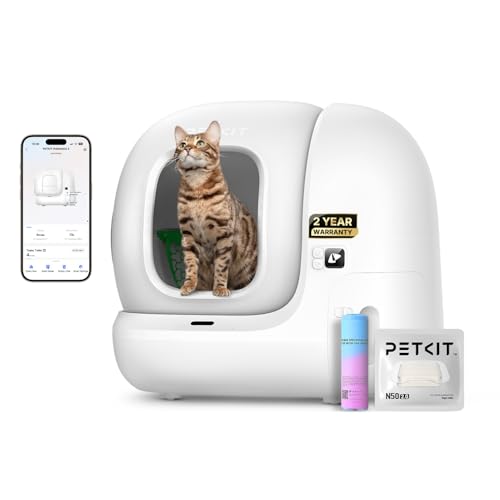
PETKIT PuraMax 2 Automatic Self-Cleaning Cat Litter Box

PetPivot Open Top Self Cleaning Cat Litter Box Dark Grey

PetSafe ScoopFree SmartSpin Self-Clean Cat Litter Box Black

PETKIT Purobot Max 3 Self-Cleaning Cat Litter Box

vivirata Self Cleaning Litter Box Gray
More Details On Our Top Picks
The headline here is raw volume: a 65-liter toilet chamber paired with a separate 9-liter waste collection space, which is generous territory for two or three cats sharing one unit. Instead of the usual pull-out drawer, this model combines the box and waste bin into a single all-in-one disposal path, so there’s no drawer track collecting grit over time.
For anyone juggling multiple cats in a smaller home, that capacity translates into fewer interruptions to empty the bin. App control lets you trigger cleans remotely, and the package arrives with three rolls of liner bags plus an odor eliminator, so you’re covered out of the box.
Strong Points
- 65L chamber comfortably serves a multi-cat home without constant emptying
- All-in-one waste disposal replaces the drawer method many owners find fiddly
- Ships with liner bags and an odor eliminator, cutting startup costs
- App control suits people who travel or work long shifts
- Sits at the accessible end of this category’s price range
Things To Consider
- Liner bags are a recurring purchase, so factor them into long-term ownership
- The large footprint needs floor space most enclosed-style units don’t demand
Key Specs
Who It Suits Best
Households with two or more cats who want maximum capacity without paying flagship prices.
Where Another Pick Suits Better
A single-cat apartment may fit the Lohhuby’s smaller open design more naturally.
Where the DuckSky unit above chases capacity, the Lohhuby keeps things modest and approachable. Its open-design layout targets medium cats and kittens specifically, which matters because enclosed globes can intimidate younger animals still learning litter habits. An easy, visible entrance tends to shorten that adjustment period considerably.
You get app-based scheduling and monitoring over 2.4GHz WiFi, plus anti-pinch protection and quiet operation, a sensible trio for a box that will likely sit near living space. One thing worth considering: availability has been inconsistent on the retailer’s listing, so confirm stock before committing. In our view, this is the gentlest on-ramp here for a first automatic box.
What We Like
- Open design helps kittens and cautious cats adapt faster
- Anti-pinch safety adds peace of mind around curious paws
- Quiet running keeps nighttime cycles from waking the house
Worth Noting
- Only connects via 2.4GHz WiFi, which older routers handle differently
- Sized for medium cats, so large breeds will feel cramped
- Listing availability has fluctuated, worth verifying before ordering
Made For
First-time automatic-box owners with a kitten or single medium-sized cat in an apartment.
Consider Something Else When
Multi-cat homes should step up to the Mimfam AS11 below for its bigger waste container.
The AS11 earns its spot on balance rather than any single flashy spec. Four pairs of infrared sensors work alongside three hall sensors to halt cleaning the moment a cat steps inside, resuming only after exit. That layered detection is the kind of redundancy you want when the machine runs unattended overnight.
Operation sits at roughly 32dB, quieter than a soft conversation, so light sleepers won’t hear the 3am cycle. The top entrance measures about 16.33 by 15.35 inches, roomy enough for larger frames, and the 10L waste bin stretches to around ten days between empties for a single cat. Liner bags and a litter mat come included, trimming your accessory list before you start.
Bright Spots
- Seven total sensors pause cleaning instantly when a cat enters
- 32dB operation stays below normal conversation level
- 10L waste bin means roughly ten days hands-off for one cat
- Oversized top entry suits big or stiff-jointed cats
Trade Offs
- Disposable liners add a small ongoing supply cost
- No companion app, so scheduling happens on the unit itself
Right Fit For
Noise-sensitive households and multi-cat owners who value hardware safety over smartphone control.
Not Your Match When
Remote monitoring fans will prefer the PETKIT PuraMax 2’s app ecosystem instead.
PETKIT approaches odor like an engineering problem, and the PuraMax 2 shows it. A sealed waste bin works with the N50 2.0 odor remover, a replaceable cartridge that neutralizes smells at the source rather than masking them. Together they make this one of the stronger picks for studio apartments where the box shares air with everything else.
The basic bundle ships thoughtfully complete: trash bags, a sifter, a magnetic litter remover, and a US adapter packed inside the waste bin itself, so check there first during setup. Two practical notes from the manufacturer deserve respect. Keep the unit off carpet, since soft flooring interferes with its weight sensors, and leave the entrance unobstructed. Clumping litters are broadly compatible, though this version skips K3 Smart Spray support.
Upsides
- Sealed bin plus N50 2.0 cartridge tackles odor at two levels
- Works with most clumping litters, no proprietary refill lock-in
- Low entrance eases access for shorter-legged cats
- Bundle includes sifter, bags, and remover accessories
Minor Gripes
- Requires hard flooring; carpet placement disrupts the sensors
- This version doesn’t support the K3 Smart Spray add-on
At A Glance
Best Suited To
Apartment dwellers who prioritize odor containment and want a mature app experience.
Look Elsewhere When
Cat-only carpeted rooms call for the PetPivot, whose sensors tolerate different placements better.
Not everyone wants another app account, and the PetPivot respects that. It runs entirely standalone: no downloads, no subscriptions, no WiFi dependency. You set it and it cleans, which makes it a natural fit for older owners or anyone tired of connectivity quirks.
Safety hardware is where this unit flexes hardest. Seven pairs of infrared sensors provide wide coverage, a touch-sensitive pedal interrupts motion on contact, and a mechanical limiter backs the whole system up physically. That triple-layer setup is the most redundant protection in this lineup. Senior cats get a dedicated access step for stable entry, and the modular shell breaks down tool-free in seconds, solving the dust-in-the-seams problem that plagues deep cleans on sealed units.
Reasons To Buy
- Runs fully offline with zero subscriptions or pairing headaches
- Triple-layer safety: seven sensor pairs, touch pedal, mechanical limiter
- Included step gives senior cats a stable, assisted climb
- Tool-free disassembly makes deep cleaning genuinely quick
- Open-top visibility helps skittish cats feel less trapped
Small Caveats
- No remote monitoring, so usage tracking happens by eye
- Modular seams need occasional wiping where residue collects
Quick Facts
Who Will Love This
Owners of senior cats, and anyone who wants automation without a smartphone in the loop.
A Better Fit Elsewhere
Data-driven owners tracking weight trends will get more from the PetSafe SmartSpin next.
PetSafe brings decades of pet-product history to this category, and the SmartSpin reflects that maturity. Its rotating drum sifts clumps into a sealed, deodorized bin and can stretch up to two weeks between manual attention, which is the longest hands-off window among these eight. Frequent travelers will read that number twice.
The companion app reports real-time weight and usage data, turning the box into a passive health log. Changes in visit frequency or output often show up there before anything else does, a quiet benefit worth having for aging pets. The honest trade-off is cost: this sits at the top of the price range here, and you’re partly paying for the brand’s support network and refinement rather than raw capacity.
Highlights
- Up to two weeks between manual cleanings for busy schedules
- App tracks weight and usage patterns over time
- Sealed, deodorized bin contains smell between empties
Honest Caveats
- Priced well above the budget entries in this lineup
- Rotating mechanism benefits from periodic wipe-downs around the drum
The Right Fit
Owners who travel often and want usage data alongside automated cleaning.
Skip It When
Tight budgets are better served by the DuckSky unit’s capacity-per-dollar math.
Think of the Purobot Max 3 as PETKIT’s answer to the complaints owners file against smaller units. The opening widens to 10.5 inches with a low threshold, welcoming heavyset, short-legged, senior, or mobility-limited cats from 3.3 to 22 pounds, and the 76-liter interior gives all of them breathing room.
Leak control gets real engineering attention here. The patented seamless ShieldBase wraps a 360-degree seal under the tray, while the third-generation mat uses an anti-stick surface that sheds wet litter instead of trapping it. Odor handling follows the same playbook as the PuraMax 2 reviewed earlier: semi-enclosed walls, immediate sweeping into a sealed compartment, and the N50 2.0 eliminator running continuously. Compared side by side, this is the pick for cats the standard globes exclude.
Plus Points
- 10.5-inch opening and low threshold suit limited-mobility cats
- ShieldBase delivers a full 360-degree leak seal
- Anti-stick mat resists residue buildup on the floor surface
- Three-stage odor stack keeps rooms smelling neutral
Room For Improvement
- Carries a flagship-tier price over mid-range rivals
- Large footprint demands deliberate floor planning
Feature Snapshot
Built With In Mind
Owners of oversized, elderly, or mobility-challenged cats who’ve been turned away by cramped globe designs.
Another Choice May Suit
Smaller apartments with one agile cat will find the Lohhuby lighter on both space and spend.
The vivirata closes this list by nailing the details new owners actually ask about. Dual sensing pairs infrared detection with weight measurement, so the rake pauses whether your cat walks in or simply settles inside. That combination covers the edge cases single-sensor units occasionally miss.
The app goes beyond basic scheduling. You’ll customize clumping wait times, get a full-bin reminder before overflow becomes a problem, and toggle dedicated Kitten Mode and Sleep Mode profiles. Sleep Mode alone justifies the pick for bedroom-adjacent placement, holding cycles until morning. A matching litter mat ships in the box, along with liners and a panel, rounding out a starter kit that rarely needs supplementing.
Standout Traits
- Infrared plus weight sensors double-check before every cycle
- Kitten Mode and Sleep Mode tailor behavior to household rhythm
- Full-bin alerts prevent messy overflow surprises
Softer Spots
- Mat and liners need routine rinsing to stay effective
- Gray finish shows dust more than darker shells
Core Details
Whose Shelf It Belongs On
Busy first-time owners who want guided modes and reminders doing the thinking for them.
Reach For A Different Pick When
Offline reliability matters more than presets, which points straight back to the PetPivot.
What Matters Most Before Choosing Litter Robots For Cats
Size And Access Come First
Measure your cat from nose to tail base, then check the unit’s entry dimensions against it. Large breeds like Maine Coons need openings north of ten inches, while kittens do better with low thresholds they can hop without effort. A box your cat avoids is a very expensive regular litter box.
Safety Sensing Deserves Scrutiny
Look for at least two independent detection layers, typically infrared beams paired with weight plates. Redundancy matters because a single failed sensor on a rotating drum is the scenario every owner dreads. Mechanical limiters, like the PetPivot’s, add a physical backstop electronics can’t provide.
Count The Ongoing Costs
Liner bags, odor cartridges, and proprietary refills quietly add up over a year of ownership. Models accepting any clumping litter, such as the PETKIT units, keep your supply chain flexible. Budget-conscious shoppers should price a year of consumables before comparing sticker figures.
Match Connectivity To Your Habits
App control shines for travelers checking in remotely, but it introduces WiFi requirements and occasional firmware friction. Offline units trade remote data for set-and-forget dependability. Neither approach is wrong; the right one depends on how hands-on you actually want to be.
Key Considerations Across These Picks
Where Shoppers Go Wrong
The most common mistake is buying for capacity a household doesn’t need, then resenting the footprint. A second frequent slip is placing the unit on carpet despite manufacturer warnings, which desensitizes weight sensors and triggers false errors. Read placement rules before the box arrives, not after.
What Separates Premium From Basic
Higher-priced models buy engineering depth: wider openings, sealed leak-proof bases, longer intervals between manual cleaning, and health-tracking software. Those features earn their cost for large cats, senior pets, or frequent travelers. For a single healthy young cat, a mid-range unit delivers nearly identical daily results.
Frequently Asked Questions
How often do I empty the waste bin?
It depends on cat count and model capacity. Single-cat homes typically manage one to two weeks, while multi-cat setups may need emptying every few days.
Will my cat actually use an automatic litter box?
Most cats adjust within a week, especially with open-top designs. Leaving the unit powered off for the first few days helps nervous animals acclimate to it as furniture first.
Do these boxes work with any cat litter?
Most accept standard clumping clay litter, though some brands recommend specific formulas. Always check the manual, since silica or non-clumping varieties can jam sifting mechanisms.
Are self-cleaning litter boxes safe to leave running unsupervised?
Reputable models use weight and infrared sensors that pause cycles when a cat enters. Units with layered sensing and mechanical limits offer the strongest unattended safety profile.
Do I still need to clean the unit itself?
Yes, roughly monthly. Wipe the drum or seams, refresh the odor cartridge, and wash the mat to keep performance consistent over years of use.
Closing Thoughts
The right choice comes down to honest self-assessment: how many cats, how much floor space, and how much you want a smartphone involved. Multi-cat homes should start with the DuckSky’s capacity, senior pets point toward the PetPivot or Purobot Max 3, and cautious first-timers will be happiest with the vivirata’s guided modes. Whichever direction you lean, any of these eight beats the daily scoop.
