

Teaching a dog to come back when called takes distance, and a standard six-foot leash simply can’t provide it. A long line gives your dog room to sniff, wander, and make choices while you keep a safety net attached. The eight options below cover rope check cords, waterproof webbing lines, and even a stake-and-cable setup, so there’s something here whether you’re working recall in a field or just want hands-free yard time.
The Shortlist At A Glance

ZALER Heavy Duty Reflective Check Cord Training Lead (10FT, Black)

Lynxking Reflective Rope Training Lead Check Cord

Lynxking Check Cord Obedience Recall Tracking Line 30ft
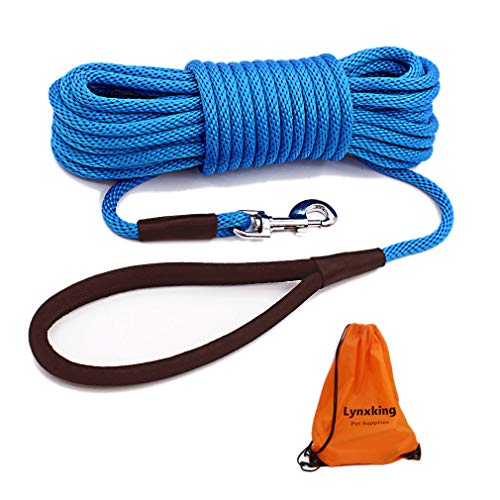
Lynxking Check Cord Obedience Recall Tracking Line 30ft
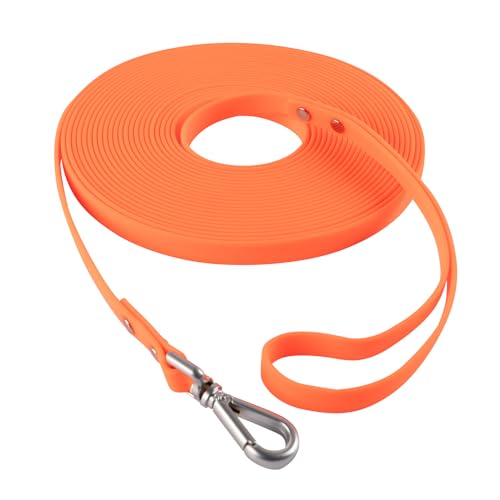
AUMAILI Waterproof Dog Training Long Line (Orange, 10FT)

Leterno Reflective Long Dog Leash with Lockable Hook

XiaZ Waterproof Long Leash for Dogs (30FT, Olive)

Catapamey Dog Tie Out Cable and Stake with 30FT Cable
More Details On Our Top Picks
The ZALER stands out for its hardware rather than its rope. Both ends carry a screw-lock carabiner, meaning the gate closes manually instead of relying on a spring alone. That matters most when you clip the line to a tree or railing and walk away, since an open-gate failure is the classic way dogs slip a tie-out.
In practice, the second clip doubles as a gear hanger for bags, bottles, or keys while your dog plays nearby. Owners heading to campsites will find that setup genuinely useful. The reflective nylon adds visibility after dusk, though the 10-foot length here is the shortest configuration available.
Strong Points
- Screw-lock carabiners reduce accidental gate openings during unsupervised tie-out.
- Two clips let you anchor the line and still hang personal items hands-free.
- Reflective threading improves visibility on early morning or evening sessions.
- Smooth screw action makes clipping and unclipping quick once you learn the motion.
Things To Consider
- Nylon absorbs water and mud, so expect occasional washing and longer drying times.
- The manufacturer notes it isn’t rated for climbing or hammock hanging, despite the climbing-style clips.
Key Specs
Made For
Campers and backyard trainers who anchor the line to fixed objects and value locking hardware over raw length.
A Better Fit Elsewhere
Handlers who want maximum range for field recall should look at the Leterno Reflective Long Dog Leash, which stretches to 100 feet.
Where the ZALER wins on hardware, this Lynxking lead wins on your hand. A padded handle sits at one end of a thick braided nylon rope, which makes a real difference during recall drills that involve sudden stops. Anyone who has burned a palm catching a sprinting dog knows why that padding earns its place.
Reflective straps run along the entire rope, not just near the handle, so visibility holds up on night jogs and dim trailheads. The heavy-duty rotating clip ties on and off without fuss. Lengths span 15 to 50 feet, giving you room to progress as your dog’s reliability improves.
What We Like
- Padded handle protects your grip during abrupt stops and strong pulls.
- Full-length reflective strapping keeps you and your dog visible in low light.
- Thick braided rope construction feels substantial without being cumbersome.
- Rotating clip attachment simplifies clipping in cold weather or with gloves on.
Worth Noting
- Braided nylon holds moisture after wet sessions, so hang it to dry before storage.
- Heavier than webbing alternatives, which some handlers notice on very small dogs.
Who Will Love This
Joggers and evening walkers who train on roads or shared paths and need consistent reflectivity end to end.
Swap It Out When
Handlers prioritizing minimal weight over handle comfort may prefer the Lynxking Check Cord Obedience Recall Tracking Line reviewed next.
This is Lynxking’s lighter take on the check cord concept, built around round climbing-style rope at a 3/8-inch diameter. That thickness is a deliberate compromise: enough tensile strength for medium and large dogs, thin enough that the line stays portable in a jacket pocket or training bag.
The 360-degree rotating clasp is the detail worth caring about. Round rope plus a freely spinning snap means the cord resists kinking both in use and when you coil it up afterward, which saves real frustration on hiking and camping trips. Compared with the padded-handle version above, you give up some grip comfort and gain a noticeably lighter carry.
Highlights
- 3/8-inch round rope balances strength against portability for daily training runs.
- 360-degree rotating clasp prevents twisting during use and while coiled.
- Lightweight enough to stuff into a pack without noticing it’s there.
- Suits tracking and obedience work where the handler moves constantly.
Small Caveats
- No dedicated handle section, so glove use is wise during hard recalls.
- Thin diameter can feel less secure with powerful pullers, depending on your dog’s size.
Quick Facts
Right Fit For
Trainers running repeated recall reps who want a light, pocketable cord rather than a heavy-duty tether.
Reach For A Different Pick When
Strong pullers and large breeds are better matched to the Catapamey tie-out cable later in this list.
This listing shares its core design with pick three: the same 3/8-inch round rope, the same rotating clasp, the same tangle-resistant behavior. The difference is positioning. It sits at the entry point of the price range, which makes it a sensible first long line for someone unsure how committed their training routine will become.
Nothing about the spec sheet suggests a downgrade in materials. You still get climbing-grade round rope, a spinning snap hook, and a 30-foot reach suited to open-field recall work. The honest read is that this is the same tool sold through a different variant, so choose based on availability and color preference rather than performance expectations.
Plus Points
- Entry-level cost lowers the barrier to starting structured recall training.
- Round rope and spinning clasp resist knots during use and storage.
- 30-foot length covers the distance most intermediate recall drills require.
Points To Note
- Identical design to another listing here, so compare current availability before deciding.
- Unpadded rope can chafe during long sessions of hard pulling.
Who Should Grab It
First-time long line owners testing whether structured recall training sticks with their dog.
Consider Something Else When
Handlers wanting a cushioned grip for frequent hard stops should step up to the Lynxking Reflective Rope Training Lead with its padded handle.
Switching from rope to coated webbing changes the ownership experience completely. This AUMAILI line wraps high-strength polyester webbing in a waterproof coating, so mud, drool, and pond water wipe off with a damp cloth instead of requiring a wash cycle. For anyone training near beaches, farms, or rainy-season fields, that single trait removes the biggest annoyance of nylon lines.
The bright orange color helps too, making the line easy to spot against grass so you won’t trip over slack. At 10 feet in this configuration, it suits early-stage recall and crowded park work better than wide-open fields. Five lengths run up to 50 feet for later stages.
Bright Spots
- Waterproof coating wipes clean with a cloth, eliminating smelly damp rope.
- Coated polyester stays lightweight yet handles outdoor abuse well.
- High-visibility orange reduces tripping hazards and lost-line moments in tall grass.
- Five length options support progressive distance training over months.
Softer Spots
- Coated webbing offers less stretch absorption than rope during sudden lunges.
- The coating can feel slick in wet gloves until broken in.
Details At A Glance
Who It Suits Best
Owners of small to large dogs training in muddy, wet, or high-traffic environments where easy cleaning matters most.
Where A Sibling Pick Shines
Handlers in consistently wet climates wanting a padded grip alongside waterproofing should consider the XiaZ Waterproof Long Leash covered below.
Few long lines stretch from 16 feet all the way to 100. That range is this Leterno’s defining trait, and it maps neatly onto a real training plan: start close for proofing, extend gradually, then run true long-distance recall in open fields once your dog is reliable. One purchase can cover the whole progression instead of three separate leads.
The lockable bone-shaped hook addresses the same failure mode as ZALER’s screw locks, keeping the gate shut under load. A soft padded handle and wear-resistant polyester webbing round out a package aimed at serious multi-month training. Reflective elements help during dawn sessions, though the longest lengths demand open space to use safely.
Reasons To Buy
- Lengths from 16 to 100 feet support every stage of distance training.
- Lockable hook prevents accidental unclipping during strong pulls.
- Padded handle keeps long sessions comfortable on your hand.
- Wear-resistant polyester webbing shrugs off dragging over rough ground.
- Reflective detailing aids visibility in early morning light.
Room For Improvement
- Webbing twists more readily than round rope, so occasional unkinking is part of ownership.
- The 100-foot version needs genuinely open terrain to be practical.
Core Details
Built With In Mind
Committed trainers running a structured multi-month recall program across parks, fields, and campgrounds.
Not Your Match When
Apartment dwellers and small-yard owners will get more use from the compact 10-foot AUMAILI line.
The XiaZ takes the waterproof idea further than the AUMAILI by using a two-layer build: polyester inside for strength, PVC outside for weather resistance. According to the manufacturer, the PVC layer stays flexible in extreme temperatures without melting or stiffening, which is the kind of durability claim that matters in both summer heat and freezing mornings.
Because the outer shell doesn’t absorb moisture, the line never develops that sour damp-dog smell that plagues nylon after a wet week. A rinse under the tap handles mud entirely. The padded handle and 30-foot olive-colored configuration suit camping trips and lakeside walks, and the muted color hides dirt better than bright webbing ever will.
Standout Traits
- PVC outer layer repels water, mud, and odor completely.
- Stays flexible across temperature extremes rather than cracking or going stiff.
- Padded handle supports comfortable control during long walks.
- Rinses clean in seconds, no soap or machine required.
Honest Caveats
- PVC coatings can show scuff marks over seasons of abrasive contact with pavement.
- Single 30-foot length means buying again for shorter or longer stages.
The Right Fit
Owners in rainy or humid regions who walk daily and refuse to deal with soggy, smelly rope.
Another Choice May Suit
Trainers needing multiple lengths in one purchase will find the Leterno Reflective Long Dog Leash more flexible.
This is the odd one out, and deliberately so. Instead of a handheld lead, the Catapamey pairs a 30-foot cable with a ground stake, creating a stationary tether system rated for dogs up to 150 pounds. The cable itself is 304 stainless steel wrapped in TPR coating, chosen for corrosion resistance and high tensile strength, with double-crimped ends for extra security at the connection points.
A 360-degree swivel on the stake keeps the cable from winding up as your dog circles, which is what separates usable tie-outs from tangled messes. Bundle options include a two-stake pack and a shorter 15-foot cable. Fair warning: this is containment, not training, so it complements rather than replaces the leads above.
Upsides
- 304 stainless steel core resists rust through years of outdoor exposure.
- Rated for dogs up to 150 pounds, covering most large breeds.
- Double-crimped cable ends add strength at the failure-prone connections.
- Swiveling stake prevents tangling as your dog roams in circles.
Minor Gripes
- Stake holding depends heavily on soil type, and soft or sandy ground may not anchor firmly.
- Steel cable offers no shock absorption compared with rope leads.
At A Glance
Whose Shelf It Belongs On
Owners of powerful large breeds who need reliable yard containment at campsites or unfenced properties.
Skip It When
Anyone doing active recall training should stick with a handheld option like the Lynxking Check Cord instead.
Choosing Between These Long Lines Without Guesswork
Match Length To Your Training Stage
Distance should grow with your dog’s reliability. Early recall work happens at 10 to 15 feet, where corrections stay timely and distractions remain manageable. Intermediate stages call for 30 feet, the sweet spot most trainers settle into for months. Only move to 50 or 100 feet in genuinely open areas, since a long line in a crowded park becomes a hazard for everyone.
Rope Versus Coated Webbing
Round rope, like the climbing-style cord on the Lynxking models, resists twisting and feels natural in hand. Coated webbing, found on the AUMAILI and XiaZ, trades some grip comfort for effortless cleaning and odor resistance. Handlers training near water, farms, or mud almost always prefer webbing once they’ve lived with both.
Hardware Deserves Your Attention
The clip is the most common failure point on any long line. Spring-gate snaps can pop open under sideways pressure, which is why screw-lock designs like ZALER’s and Leterno’s earn their place. Rotating clasps matter just as much, preventing the kinks that shorten a line’s usable life.
Know When You Need Containment Instead
A long line requires a human on the other end. For situations where your dog needs to burn energy while you cook at a campsite or garden nearby, a staked system like the Catapamey does the job a handheld lead cannot. Many households end up owning one of each.
Key Considerations Across These Picks
Traps First Timers Fall Into
The most common mistake is buying 50 feet before your dog understands recall at 15. Excess length teaches nothing and risks tangles around legs, trees, and other dogs. Another frequent error is ignoring soil conditions before purchasing a stake system; soft ground undermines even well-built anchors. Check your clip type too, since a cheap spring snap defeats an otherwise solid line.
Where The Extra Money Goes
Higher-tier lines spend their budget on three things: locking hardware, weatherproof coatings, and reinforced connection points. Screw-lock carabiners and double-crimped ends cost more to manufacture but address the exact points where budget lines fail. Paying up makes sense for large, strong dogs or daily training routines. Casual weekend users can comfortably start with an entry-level cord.
Frequently Asked Questions
How long should a first long line be?
Most trainers start at 15 to 30 feet, which balances freedom with control. Shorter lines keep corrections timely while your dog learns the cue.
Can a long line replace a regular leash for walks?
No, a long line is a training tool, not an everyday walking leash. Standard six-foot leashes remain safer and more manageable in traffic and crowds.
Are waterproof long lines really easier to maintain?
Yes, coated webbing wipes clean with a damp cloth and never develops the damp odor nylon absorbs. Rope lines need washing and air drying after muddy sessions.
What’s the difference between a check cord and a tie-out?
A check cord stays in your hand during active training, while a tie-out anchors to a stake or object for supervised containment. They solve different problems and many owners own both.
Do long lines work for small dogs?
They do, though thinner diameters and lighter webbing suit small frames better. A heavy rope can overwhelm a dog under 20 pounds.
Wrap Up
Your best choice depends on where you train and how far along your dog is. Start with the ZALER for anchored versatility, the Lynxking cords for classic fieldwork, or the AUMAILI and XiaZ if mud and rain dominate your routine. Committed trainers will appreciate the Leterno’s length range, while large-breed owners should look straight at the Catapamey stake system. Whichever direction fits, a good long line turns recall training from a gamble into a habit.
