

Extra weight creeps up on dogs the way it does on people: one extra scoop at a time. If your vet has flagged your dog’s waistline, or you’re managing a breed that gains easily, switching to a lower-calorie formula is usually the first step. The eight foods below cover wet pâté, premium kibble, senior blends, and low-fat therapeutic-style diets, so there’s a fit whether your dog is a picky eater, a senior with stiff joints, or a pancreatitis-prone pup. Each entry breaks down what’s actually in the bag or can, who it suits, and where it falls short.
The Shortlist At A Glance

Nutrish Healthy Weight Wet Dog Food Paté 13 oz., 12 Pack

Fromm Weight Management Gold Turkey Recipe Dry Dog Food, 5 lb
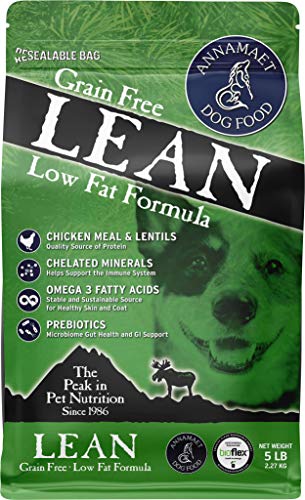
Annamaet Grain-Free Lean Reduced Fat Chicken & Duck, 5-lb Bag

Nulo FreeStyle Adult Trim Grain Free Cod & Lentils, 6 lb

Purina Pro Plan Adult 7 Plus Weight Management Shredded Blend, 6 lb

Hill’s Science Diet Adult Perfect Weight & Joint Support

Nutrish Healthy Weight Turkey Dry Dog Food, 4.5 lb

SquarePet VFS Low Fat Lean Whitefish Dry Dog Food, 4.4 lbs
More Details On Our Top Picks
Wet food earns its place in a weight-loss plan because dogs find it filling without a pile of calories. This Nutrish variety pack rotates four recipes, beef and pumpkin, chicken and apple, chicken with pumpkin and salmon, and turkey and pumpkin, so a twelve-can case doesn’t turn into mealtime monotony.
In a busy household, the 13-ounce cans work well as a topper over reduced-calorie kibble or as a standalone meal for smaller dogs. The formulas are built for adult dogs and skip fillers, which matters when every calorie has to earn its spot.
Strong Points
- Four different flavor combinations keep reluctant eaters interested week after week
- Formulated specifically to support healthy weight rather than just portioned down
- No filler ingredients, so calories come from meat and vegetables instead of padding
- Soft paté texture suits older dogs or those with dental sensitivity
Things To Consider
- Opened cans need refrigeration and should be used within a couple of days
- Wet feeding costs more per calorie than kibble for large breeds
Who It Suits Best
Owners of small-to-medium dogs or fussy eaters who want a weight-conscious wet food with genuine variety.
A Better Fit Elsewhere
Large-breed owners watching their budget will get more mileage from the Nutrish Healthy Weight dry turkey recipe further down this list.
Where the Nutrish cans above handle variety, Fromm handles consistency. This Wisconsin-made turkey recipe is designed for small and medium breeds that need calorie control without losing nutrients, and it meets AAFCO nutrient profiles for complete, balanced feeding.
The five-pound bag is a sensible trial size before committing to the larger formats the brand offers. Owners commonly report the kibble suits long-term feeding because the company is fifth-generation family operated, which tends to mean steady recipes rather than frequent reformulations.
What We Like
- Turkey-led recipe aimed squarely at weight reduction and maintenance
- Controls calorie intake while preserving nutrient density
- Meets established AAFCO nutritional levels for adult maintenance
- Family-owned production with a reputation for recipe stability
Worth Noting
- Sized for small and medium breeds, so large-dog owners should look elsewhere on this list
- Premium positioning means a higher cost per pound than mainstream brands
At A Glance
Made For
Owners of beagles, cocker spaniels, terriers, and similar mid-size dogs who want a premium, steady-state weight food.
Swap It Out When
Grain-sensitive dogs may do better on the Annamaet Lean grain-free formula reviewed next.
Annamaet built this formula around a simple idea: cut the fat roughly in half compared with its other grain-free recipes, then add L-Carnitine, an amino-acid-like compound associated with better fat utilization, to help dogs hold onto lean muscle. The result targets dogs that stay active but gain weight anyway.
Unlike Fromm’s turkey-forward approach, this one pairs chicken and duck and skips corn, wheat, soy, and grains entirely. The brand also uses chelated minerals, meaning minerals bound to amino acids for easier absorption, and slow-cooks in small batches.
Highlights
- Roughly half the fat of Annamaet’s other grain-free lines
- L-Carnitine supports fat metabolism and lean body mass
- Proteinated minerals aid absorption and immune function
- Corn, wheat, soy, and GMO-free ingredient standards
- Sustainable Bio-Flex packaging that degrades in landfills
Softer Spots
- Grain-free diets aren’t necessary for every dog, and some vets prefer grain-inclusive formulas
- Small-batch artisanal production can mean occasional availability gaps
Quick Facts
Right Fit For
Fit, energetic dogs from sporting or working lines that put on weight despite regular exercise.
Reach For A Different Pick When
Dogs needing digestive and probiotic support alongside weight control are often better served by the Nulo FreeStyle Trim below.
This is the most feature-packed formula here. Deboned cod leads the ingredient list, animal-based protein makes up roughly three-quarters of the recipe, and the fiber comes from lentils, chickpeas, and sweet potatoes rather than grains. That combination keeps dogs fuller between meals, which is half the battle in any weight plan.
Nulo also layers in BC30 probiotics, a spore-forming strain that survives cooking better than many others, plus prebiotic fibers and antioxidants like vitamins C and E. Notably, the recipe avoids chicken and egg proteins entirely, a real advantage for dogs with common protein sensitivities.
Upsides
- High animal protein helps preserve muscle during weight loss
- BC30 probiotics and prebiotic fiber support digestion day to day
- No chicken, egg, grain, corn, wheat, soy, rice, white potato, or tapioca
- Lentils and sweet potatoes add satiety without excess fat
- Sized for small through large breeds
Minor Gripes
- Fish-based recipes leave a noticeable odor some owners dislike storing indoors
- Novel-protein formulas typically carry a higher price tag than chicken-based rivals
Who Will Love This
Owners of allergy-prone or sensitive-stomach dogs who still want serious weight-management nutrition.
Not Your Match When
Senior dogs with stiff joints will get more targeted support from the Purina Pro Plan 7 Plus formula coming up next.
Senior dogs face a double problem: slower metabolisms and joints that ache under extra load. Purina addresses both. This shredded-blend chicken and rice formula carries fifteen percent less fat than the brand’s Complete Essentials equivalent, plus glucosamine and EPA, an omega-3 fatty acid, for joint health and mobility.
The texture mix of soft shreds and hard kibble tends to appeal to older dogs whose appetites fade. Natural prebiotic fiber feeds beneficial gut bacteria, and omega-6 fatty acids with vitamin A support skin and coat, areas that often dull with age.
Bright Spots
- Glucosamine and EPA target joint comfort in aging dogs
- Fifteen percent less fat than the standard shredded-blend recipe
- Supports muscle maintenance during weight loss
- Shredded-plus-kibble texture tempts finicky seniors
Points To Note
- Contains chicken and grains, so it won’t suit allergy-sensitive dogs
- Formulated for seniors seven and up, not younger adults
Details At A Glance
Whose Shelf It Belongs On
Homes with overweight seniors, especially Labs, golden retrievers, and other large breeds prone to joint strain.
Consider Something Else When
Younger adult dogs belong on a general adult formula like the Hill’s Perfect Weight covered next.
Hill’s approaches weight differently than most brands on this list. Instead of simply trimming fat, its Perfect Weight formula was developed around the cell biology of overweight dogs, aiming to influence metabolism itself. The company reports that over seventy percent of dogs fed the original Perfect Weight lost weight within ten weeks, a figure worth discussing with your vet.
This version adds clinically tested omega-3-rich fish oil for hips and joints, making it a strong middle ground between the senior-focused Purina above and the everyday Nutrish kibble later on. The chicken and brown rice base keeps it broadly palatable.
Reasons To Buy
- Formula designed around the metabolism of overweight dogs, not just calorie cutting
- Clinically tested fish oil supports hip and joint function
- Available in 3.5, 12, and 25-pound bags for different household sizes
- Chicken and brown rice recipe suits most adult palates
Small Caveats
- Weight results depend heavily on sticking to measured portions
- Contains grains and chicken, excluding allergic dogs
Core Details
Who Should Grab It
Adult dogs carrying extra weight who also show early stiffness after walks or naps.
Another Choice May Suit
Dogs with no joint concerns and tighter budgets will find the plain Nutrish Healthy Weight dry bag does the core job for less.
Real turkey leads the ingredient list here, followed by brown rice and venison in the full recipe, and L-Carnitine works behind the scenes to support metabolism. For households that found the wet Nutrish pack appealing but want a cheaper daily staple, this dry bag covers the same weight-support territory at kibble economics.
The formula is veterinarian reviewed and made without artificial flavors, and each purchase channels support to animals in need through the Rachael Ray Foundation. In most homes, the 4.5-pound size lasts a mid-size dog several weeks, though the 12-pound bag makes more sense once you know your dog likes it.
Plus Points
- Real turkey as the first ingredient, not a meal byproduct
- L-Carnitine added specifically for weight and metabolism support
- No artificial flavors, with added vitamins and minerals
- One of the most affordable weight-management options on this list
Room For Improvement
- Some owners report the kibble pieces run small for very large breeds
- Bag freshness fades quickly once opened, so an airtight container helps
Built With In Mind
Budget-minded owners of healthy adult dogs who need straightforward calorie control without premium pricing.
Look Elsewhere When
Dogs that struggle to digest fat, including pancreatitis-prone pups, need the SquarePet low-fat whitefish formula closing out this list.
Most low-fat veterinary diets require a prescription and a premium invoice. SquarePet’s VFS line positions itself as an alternative: a veterinarian-formulated, genuinely low-fat recipe built for dogs that struggle to digest fat, including those prone to pancreatitis, sold without a prescription. With a minimum crude protein around twenty-five percent, it aims to keep nutrition solid while stripping fat out.
The Pacific cod and ocean whitefish meal come from Marine Stewardship Council certified fisheries, and a proprietary fiber blend pairs soluble and insoluble fibers with prebiotics and probiotics for digestion. Omega-3 and omega-6 fatty acids, including DHA and EPA, round out skin, coat, immune, and brain support.
Standout Traits
- Genuinely low-fat formula aimed at fat-sensitive and pancreatitis-prone dogs
- No prescription required, unlike comparable veterinary diets
- Sustainably wild-caught, MSC-certified whitefish sourcing
- Fiber blend with prebiotics and probiotics aids digestion
- DHA and EPA included for skin, coat, and cognitive health
Honest Caveats
- Always loop in your vet before replacing a prescribed therapeutic diet
- Smaller 4.4-pound bag means frequent reordering for big dogs
Feature Snapshot
The Right Fit
Dogs with confirmed fat-intolerance issues whose vets agree a non-prescription low-fat diet is appropriate.
Where A Sibling Pick Shines
Healthy dogs simply needing moderate calorie cuts are better matched to the Annamaet Lean earlier in this list.
Choosing A Lighter Bowl Without Guesswork
Match The Formula To The Problem
Weight gain has different causes, and the right food depends on which one applies. A young, active dog that gains easily needs a reduced-fat, high-protein recipe like Annamaet Lean. A senior slowing down benefits from joint nutrients layered onto calorie control, which is exactly what the Purina 7 Plus and Hill’s formulas deliver.
Read The Fat And Fiber Numbers First
Calories matter, but fat percentage tells you how aggressive a formula really is. Pancreatitis-prone dogs need genuinely low fat, closer to what SquarePet offers, while most healthy dogs do fine with moderate reduction. Fiber deserves equal attention: lentils, chickpeas, and pumpkin keep a dieting dog from begging all afternoon.
Wet, Dry, Or Both
Wet food adds volume and moisture for fewer calories, which helps dogs that inhale their meals. Kibble is cheaper per serving and easier to measure precisely. Many owners combine both, using something like the Nutrish paté as a topper over a reduced-calorie dry base.
Transition Slowly And Measure Everything
Switch foods over seven to ten days, blending increasing amounts of the new formula into the old. Free-feeding undermines any weight plan, so use an actual measuring cup and weigh your dog every couple of weeks to confirm progress.
Key Considerations Across These Picks
Traps First Timers Fall Into
The biggest mistake is assuming “weight management” on a label means low calorie; some formulas only trim modestly. Another common slip is eyeballing portions instead of measuring them, which quietly erases the calorie savings. Skipping the gradual transition is third on the list, since abrupt switches often trigger stomach upset that gets blamed on the food.
The Case For Spending Up
Premium formulas justify their cost with named animal proteins leading the list, added functional nutrients like L-Carnitine, glucosamine, and proven probiotics, and stricter sourcing standards such as MSC-certified fish. Budget picks handle basic calorie control well. The upgrade pays off when your dog has allergies, joint issues, or a medical reason to need precise formulation.
Frequently Asked Questions
How quickly should a dog lose weight on these foods?
Most vets recommend a loss of one to two percent of body weight per week. Slower loss protects muscle mass and keeps the plan sustainable.
Can I mix wet and dry weight-management foods?
Yes, combining them is common and works well. Just count the calories from both so the daily total stays on target.
Do grain-free formulas help with weight loss?
Not inherently; grains aren’t what drives weight gain. Choose grain-free only for a diagnosed sensitivity or a vet’s specific recommendation.
Is a prescription diet always necessary for low-fat needs?
Not always, and options like SquarePet’s VFS line exist without one. Your vet should confirm whether a non-prescription formula meets your dog’s needs.
Should treats be counted in a weight-loss plan?
Absolutely, since treats can account for a surprising share of daily calories. Swap in green beans or small pieces of the dog’s own kibble to stay on track.
Wrap Up
Picking among these eight comes down to your dog’s specific situation rather than a single standout. Seniors with stiff joints have two purpose-built options, allergy-prone dogs have the Nulo, and fat-sensitive pups have SquarePet. Start with a measured transition, weigh your dog regularly, and let the results guide any switch. Your vet remains the best partner for setting a target weight and timeline.
