

Cats are obligate carnivores, which means their bodies are built to run on animal protein rather than the starch-heavy fillers found in many budget kibbles. A lower-carbohydrate formula can help with weight management, steady energy, and lean muscle maintenance, especially for indoor cats that burn fewer calories than they consume. The challenge is sorting genuinely meat-first recipes from marketing that simply swaps corn for peas and calls it progress.
This roundup covers eight dry foods chosen for their protein-forward formulas, from everyday value bags to veterinary therapeutic diets. You’ll find options for seniors, overweight cats, fussy eaters, and cats with specific metabolic needs. Each review breaks down what the formula actually delivers, where it falls short, and which cat it suits best.
Quick Look At Our Top Picks
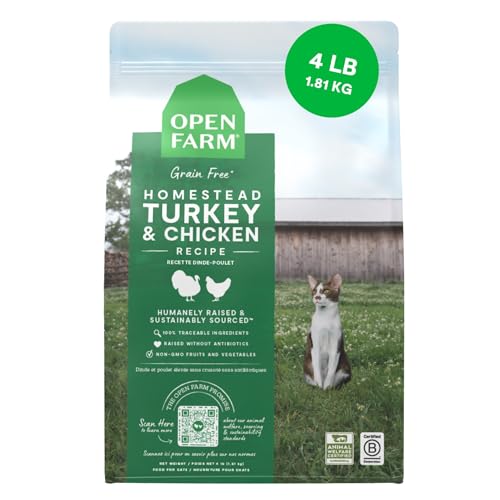
Open Farm Grain Free Turkey & Chicken Dry Cat Food 4lb

IAMS Proactive Health Healthy Weight Chicken Cat Food 3.5 lb

Nulo Freestyle Adult Trim Salmon & Lentils Kibble 4lb

Nulo FreeStyle Senior Alaska Pollock & Sweet Potato 4lb

Solid Gold High Protein Chicken Dry Cat Food

Stella & Chewy’s Raw Coated Cage-Free Chicken Kibble 2.5lb

Rawz Dehydrated Chicken & Turkey Recipe 7.8 Pound
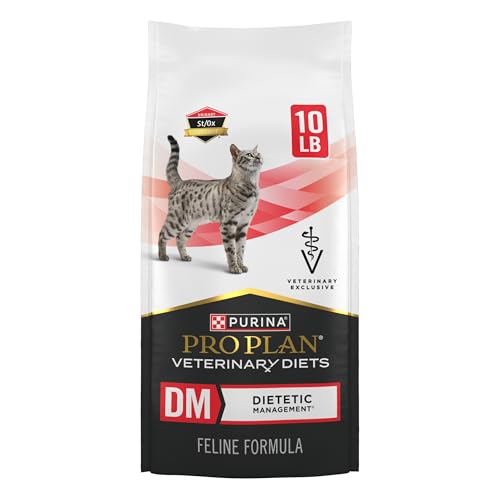
Pro Plan Veterinary Diets Purina DM Feline Formula 10 lb
More Details On Our Top Picks
The Homestead Turkey & Chicken recipe leads this lineup because Open Farm publishes where every ingredient comes from, something few brands in this price bracket bother doing. The grain-free blend pairs humanely raised poultry with functional ingredients aimed at digestion, which matters in multi-cat homes where one sensitive stomach can disrupt everyone’s routine.
In day-to-day use, the 4-pound bag suits single-cat households or trial runs before committing to the larger 8-pound option. Owners commonly report the kibble size works well for average adult mouths, though very small breeds may prefer a smaller piece.
Strong Points
- Humanely raised turkey and chicken give you traceable protein instead of vague “meat meal” labeling
- Grain-free formulation supports easier digestion for cats with sensitive stomachs
- Multiple flavor lines, including catch-of-the-season whitefish and wild-caught salmon, let you rotate proteins without switching brands
- Two bag sizes mean you can test palatability before stocking up
Things To Consider
- Premium sourcing usually means a higher cost per pound than mainstream grocery brands
- Once opened, the bag should be sealed tightly and used within a reasonable window to keep fats fresh
Key Specs
Who It Suits Best
Shoppers who prioritize ingredient transparency and ethical sourcing will get the most from this bag.
Where A Sibling Pick Shines
Households watching every dollar should compare the IAMS Proactive Health Healthy Weight formula, which delivers weight support at a friendlier price point.
Where Open Farm competes on sourcing, IAMS competes on accessibility. Real chicken is the first ingredient here, and the Proactive 5 framework targets five areas at once: muscles, energy, digestion, immunity, and skin and coat. That breadth is unusual at this price tier.
The Healthy Weight variant makes sense for indoor cats that have crept past their ideal body condition. With four bag sizes up to 22 pounds, multi-cat homes can buy in bulk without frequent reordering, though you’ll want an airtight container for the big bags since fat oxidation degrades kibble over months.
What We Like
- Chicken-first recipe provides quality protein without premium-brand pricing
- Weight-management focus helps less active cats maintain a healthy body condition
- Huge size range, from 3.5 to 22 pounds, fits both trial purchases and bulk buying
Worth Noting
- It’s not fully grain-free, so cats with grain sensitivities may do better elsewhere on this list
- Some owners report the aroma is milder than boutique brands, which occasionally matters with fussy eaters
Made For
Budget-conscious owners of slightly overweight indoor cats who still want a reputable, widely stocked formula.
Another Choice May Suit
Cats needing strict grain avoidance are better served by the Nulo Freestyle Adult Trim recipe reviewed next.
Nulo’s Trim recipe is built around a simple idea: cut calories without cutting protein. Deboned salmon leads the ingredient list, and roughly 83% of the protein comes from animal sources, which helps preserve lean muscle while a cat slims down. L-carnitine, a nutrient involved in fat metabolism, rounds out the metabolic angle.
Lentils and sweet potato supply natural fiber so cats feel fuller between meals, a real advantage in homes where a dieting cat begs constantly. The BC30 probiotic strain supports gut balance, and vitamins C and E add antioxidant coverage. Compared with the IAMS formula above, this one goes further on grain-free credentials and protein density, at a higher cost per pound.
Highlights
- 83% animal-based protein supports muscle retention during weight loss
- L-carnitine plus reduced calories targets fat metabolism directly
- Lentil and sweet potato fiber keeps appetite satisfied longer
- BC30 probiotics aid digestion and nutrient absorption
- Three bag sizes, from 2 to 14 pounds, suit trial runs and long-term feeding
Small Caveats
- Legume-heavy formulas aren’t for every cat; some owners report softer stools during the transition period
- Salmon flavor divides opinion, so a small first bag is a sensible move
At A Glance
Right Fit For
Owners of overweight adult cats who want a science-forward, grain-free approach to slimming down.
Swap It Out When
Senior cats losing muscle tone may benefit more from the Nulo FreeStyle Senior pollock formula covered below.
This is the senior counterpart to the Trim recipe, swapping salmon for Alaska pollock and tuning the nutrient profile toward aging bodies. The fish-first formula delivers about 78% animal-based protein, and omega-3 and omega-6 fatty acids from fish oils support skin hydration and coat condition, which often dulls with age.
Taurine appears here for heart function, alongside vitamin A for vision, two concerns that grow more relevant as cats pass ten years old. The small disc-shaped kibble encourages proper chewing, helpful for older cats with dental wear. Like its sibling, it excludes grains, corn, wheat, soy, rice, white potato, and tapioca, and it’s made in the USA.
Upsides
- 78% animal-based protein helps older cats hold onto muscle mass
- Omega fatty acids and taurine address coat, heart, and vision needs common in senior years
- Small disc kibble suits aging teeth and slower chewers
- Long exclusion list avoids common filler ingredients entirely
Points To Note
- Fish-based formulas carry a stronger odor some households notice near the bowl
- Only two bag sizes exist, so large multi-cat homes reorder more often
Feature Rundown
Whose Shelf It Belongs On
Cats aged seven and up, particularly those showing coat dullness or slowing activity levels.
Reach For A Different Pick When
Younger overweight cats should stick with the Nulo Adult Trim version, whose calorie profile is tuned for active adults.
Solid Gold takes a different route into the high-protein category by pairing chicken with whole egg, a combination that supplies a broad amino acid profile. Eggs are one of the most bioavailable protein sources in pet nutrition, meaning a cat’s body puts more of each gram to work. For growing kittens and young adults building muscle, that efficiency counts.
The formula is sold as a twin pack of 6-pound bags, which changes the ownership math: you’re buying ahead, so storage matters. An airtight bin in a cool pantry keeps the second bag fresh for weeks. In our view, this is the most flexible pick on the list for households mixing kittens and adults, since the protein density serves both life stages reasonably well.
Bright Spots
- Chicken and whole egg deliver complete amino acids for growth and metabolism
- High-protein recipe suits both kittens and energetic young adults
- Twin-pack format lowers the effective cost per pound versus single bags
Minor Gripes
- The two-bag format forces a larger upfront commitment than single-bag competitors
- Source data doesn’t specify a grain-free claim, so label-check before buying for allergic cats
Who Should Grab It
Owners of growing kittens or high-energy young cats who want dense nutrition without boutique pricing.
Not Your Match When
Single-cat homes wanting small trial portions will find the Open Farm 4-pound bag far more convenient.
Every kibble in this bag carries a freeze-dried raw coating, and that single design choice explains most of its reputation. Cats wired to reject ordinary dry food frequently accept this one, because the coating delivers the scent and taste of raw meat without any handling hassle on your end.
Beneath the coating sits a grain-free kibble built on cage-free chicken, with animal protein making up 65 to 70% of the formula. The pieces run small, which suits kittens, seniors, and cats with dental sensitivity alike. Natural fiber and probiotics round out the digestive support. The trade-off shows up at the register: raw-coated formulas cost noticeably more per pound than standard kibble, and the 2.5-pound starter bag disappears quickly in multi-cat homes.
Reasons To Buy
- Freeze-dried raw coating converts notoriously picky eaters
- 65-70% animal protein mirrors an ancestral, carnivore-appropriate diet
- Small kibble works for kittens, seniors, and dental-sensitive cats
- Probiotics and natural fiber support gentle digestion
Softer Spots
- Cost per pound runs high compared with every other pick here
- The raw coating can transfer grease to storage containers, so wipe bins regularly
Best Suited To
Owners battling a cat that refuses food, or anyone transitioning off an all-wet-food diet.
Look Elsewhere When
Budget-focused feeders should stay with the IAMS Healthy Weight formula, which costs far less per serving.
Rawz pushes furthest down the carbohydrate ladder of anything in this roundup. The recipe combines real chicken, turkey, and chicken liver into a concentrated protein base, and the brand states outright that the formula contains no grains and no starches. Most “grain-free” kibbles still rely on pea or potato starch as a binding agent; removing starch entirely is a rarer engineering feat.
Fats occur naturally at moderate levels rather than being added back in, which keeps the overall profile close to what a cat would encounter eating prey. The 7.78-pound bag offers solid value against the smaller 1.75 and 3.5-pound options, though the premium positioning means the price per pound still exceeds nearly everything else listed. Owners commonly report strong palatability, helped by the liver content.
Plus Points
- Grain-free and starch-free composition minimizes carbohydrates more aggressively than typical kibble
- Triple protein source of chicken, turkey, and liver concentrates nutrition
- Naturally occurring fats avoid rendered additions
- Large 7.78-pound bag stretches further for committed households
Trade Offs
- Premium pricing places it out of reach for tight budgets
- Dehydrated formats can crumble more than extruded kibble, so handle the bag gently when scooping
Core Details
The Right Fit
Owners committed to minimizing carbohydrate intake above all other factors, regardless of cost.
Consider Something Else When
Cost-sensitive homes wanting similar low-carb intent will find the Nulo Adult Trim a more affordable compromise.
This is the only therapeutic diet in the group, formulated specifically to help support healthy glucose levels in cats through a low-carbohydrate, high-protein structure. Unlike the lifestyle formulas above it, DM Dietetic Management is designed for cats under veterinary care, typically those with blood sugar concerns identified by a professional.
Two details set it apart technically. First, the St/Ox Defense system promotes a urinary environment unfavorable to both struvite and calcium oxalate crystal formation, addressing a secondary risk that often accompanies metabolic issues. Second, the high protein content helps maintain lean body mass and ideal body condition. The 10-pound bag suits long-term feeding once your veterinarian confirms the fit, and smaller 3.5 and 6-pound versions cover transition periods.
Standout Traits
- Low-carb, high-protein structure supports healthy glucose levels
- St/Ox Defense addresses struvite and calcium oxalate crystal environments
- Protein density helps preserve lean body mass
- Three bag sizes accommodate transitions and maintenance feeding
Honest Caveats
- This diet is intended for vet-supervised use, not casual selection off a shelf
- Therapeutic formulas generally cost more than comparable over-the-counter kibble
Details At A Glance
Who Will Love This
Cats with veterinarian-diagnosed glucose concerns whose care plan calls for a therapeutic dry diet.
Skip It When
Healthy cats need no therapeutic formula; the Open Farm turkey and chicken recipe covers everyday low-carb feeding better.
What Matters Most Before Choosing Low Carb Dry Cat Foods
Read The Ingredient List, Not The Front Of The Bag
Front-label claims like “grain free” say little about total carbohydrate content, since peas, lentils, potatoes, and tapioca all contribute starch. Flip the bag and check that a named animal protein, ideally whole meat rather than meal alone, occupies the first position. Formulas such as the Rawz recipe go a step further by excluding starches altogether, while others simply swap one plant carbohydrate for another.
Match The Formula To Your Cat’s Life Stage
A kitten burning energy around the clock has different needs from a sedentary twelve-year-old. High-protein recipes like Solid Gold serve growth phases well, whereas senior-specific blends such as Nulo FreeStyle Senior add taurine and omega fatty acids for aging hearts and coats. Feeding an adult maintenance formula to a kitten shortchanges development, so verify the life-stage statement on the packaging.
Factor In Transition Time And Palatability
Cats resist abrupt diet changes, and a sudden switch commonly triggers refusal or digestive upset. Plan a gradual transition over seven to ten days, blending increasing amounts of the new kibble into the old. Strongly scented options like raw-coated Stella & Chewy’s tend to win over hesitant eaters faster than plainer formulas.
Key Considerations Across These Picks
Traps First Timers Fall Into
The most common mistake is assuming “grain free” equals “low carb,” when legume-heavy recipes can carry just as much starch as rice-based ones. Another frequent slip is buying a 14-pound bag of an untested flavor, then discarding half when your cat rejects it. Start small, confirm acceptance, then scale up.
When Paying More Pays Off
Higher-tier formulas spend their extra cost on named animal proteins, probiotic strains, and targeted nutrients like L-carnitine or taurine. For a healthy young cat, a mid-priced option often suffices. The upgrade earns its keep for seniors, overweight cats, or animals with diagnosed conditions where ingredient precision directly affects outcomes.
Frequently Asked Questions
Are low carb diets safe for all cats?
For most healthy adult cats, moderate carbohydrate reduction aligns well with feline biology. Any significant dietary change deserves a quick conversation with your veterinarian first.
Does grain free automatically mean low carb?
No, many grain-free formulas replace grains with lentils, peas, or potatoes that still supply substantial starch. Check the guaranteed analysis and ingredient order instead of relying on the label claim.
How slowly should I switch my cat to a new food?
Plan on seven to ten days, gradually increasing the new kibble’s share each day. Faster switches often cause stomach upset or outright refusal.
Can dry food alone manage my cat’s weight?
Dry food can support weight goals when portions are measured carefully and calories controlled. Many veterinarians also recommend incorporating wet food for hydration benefits.
Why does veterinary therapeutic food require professional guidance?
Therapeutic diets are formulated for specific medical conditions and can be inappropriate for healthy cats. A veterinarian confirms whether the formula matches your cat’s actual needs.
Closing Remarks
Choosing among these eight comes down to your cat’s age, health status, and your own priorities on sourcing and budget. Everyday feeders get strong value from IAMS, while Rawz and Open Farm reward shoppers who put ingredient quality first. Match the formula to the cat in front of you, transition slowly, and let your veterinarian weigh in on anything therapeutic.
