

Leaving a dog home alone shouldn’t mean guessing whether it ate on time. A timed food dispenser handles breakfast and dinner while you’re stuck at work or running late, and it keeps portions honest for pets that would happily overeat. Some models add water reservoirs, cameras, or even refrigeration for wet food, so the right choice depends heavily on your routine and your pet’s diet.
This shortlist covers seven options built around scheduled feeding, from budget dry-food hoppers to a WiFi unit with a built-in camera. Each entry breaks down what the machine actually does well, where it falls short in daily ownership, and which type of household it fits. Skim the comparison table first, then read the detailed sections before committing.
The Shortlist At A Glance

Sarpaws FW1 Automatic Cat Feeder and Water Dispenser

Nityers 5L Anti-Clog Automatic Cat Feeder

oneisall Automatic Cat Feeder 12 Cups/3L (Black)

IMIPAW PET 3L Auto Food Dispenser
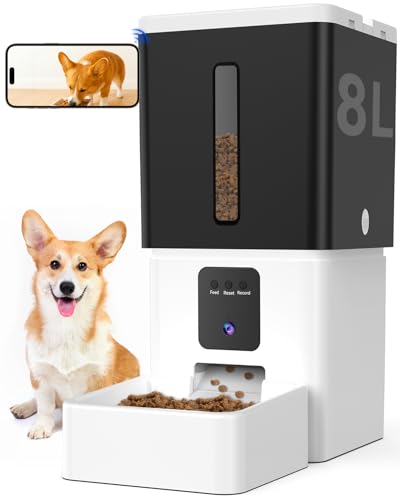
UTCG Automatic Dog Feeder with Camera 8L/33 Cups

ROJECO Automatic Cat Feeder & Water Dispenser

Bsemax Refrigerated Wet Food Cat Feeder
More Details On Our Top Picks
The Sarpaws FW1 runs on either a wall plug or batteries, which matters more than it sounds. Power outages and unplugged cords are the two most common ways a timed feeder fails, and this one shrugs off both. Four programmable daily meals cover most small-breed routines.
A locking lid keeps clever paws out of the hopper, and a desiccant bag inside helps kibble stay crisp between refills. There’s also a 10-second voice recorder, handy for calling a nervous dog to the bowl from another room.
Strong Points
- Dual power setup means missed meals during outages are unlikely
- Locking lid deters determined pets from raiding the hopper early
- Voice recording adds a familiar cue at mealtime
- Four daily meal slots suit dogs needing smaller, frequent portions
Worth Noting
- Hopper capacity is modest, so weekend trips may need a refill beforehand
- Desiccant bags need periodic replacement to keep doing their job
At A Glance
Who It Suits Best
Owners of small dogs or cats who want dependable scheduling without app complexity will get the most from this unit.
Where A Sibling Pick Shines
Households wanting a bigger hopper and longer battery life should look at the Nityers 5L feeder instead.
Freshness is where the Nityers earns its spot. A twist-lock lid with a silicone seal ring pairs with a dedicated desiccant compartment, so humid kitchens and summer apartments won’t turn your kibble stale or clumpy. The sealed outlet design also keeps ants and odors out between feedings, a detail owners in warm climates tend to appreciate.
Scheduling runs from one to six meals per day with programmable portions, and the 10-second voice recorder lets you greet your pet at each dispensing. Battery life is rated up to 180 days, which is genuinely long for this category. Cleaning is straightforward since the parts come apart without tools, though you’ll want to dry everything fully before reloading food.
Bright Spots
- Sealed outlet blocks moisture, ants, and odor between meals
- Rated battery life of up to 180 days suits extended absences
- Accepts kibble from 2 to 15mm, covering most standard dry foods
- Tool-free disassembly makes routine cleaning quick
Small Caveats
- No backup power option beyond batteries, unlike dual-power rivals
- Very large kibble near the top of the size range can slow dispensing
Made For
This feeder fits owners of small dogs who travel often and need multi-day unattended feeding with food staying fresh.
A Better Fit Elsewhere
Pets eating oversized kibble do better with the oneisall feeder, which is built specifically for larger pieces.
Most budget feeders choke on big kibble. This oneisall model is designed around it, accepting dry food up to 0.7 inches across along with treats, which immediately rules out the jamming complaints that plague smaller-aperture units. The 3-liter hopper holds about 12 cups, enough for several days of controlled feeding.
Scheduling allows up to six meals per day with as many as 12 portions per meal, each portion measuring roughly 0.17 ounces. That granularity works well for pets on strict calorie plans. Being corded, it trades outage protection for consistent power, so placement near an outlet is worth planning ahead.
Reasons To Buy
- Wide aperture handles kibble up to 0.7 inches without clogging
- Twelve portions per meal support precise calorie management
- Corded power means no battery swaps or mid-week charging
- Six daily slots fit pets needing grazing-style schedules
Trade Offs
- No battery fallback, so an outage pauses the schedule until power returns
- Needs an outlet within cord reach, limiting placement flexibility
Quick Facts
Right Fit For
Dogs and cats on large-kibble or treat-inclusive diets, especially those managed for weight, are the natural match here.
Reach For A Different Pick When
Outage-prone areas call for the Sarpaws FW1, whose battery mode keeps meals on schedule when the grid doesn’t.
Where the oneisall counts portions in grams, the IMIPAW goes finer still: up to 20 servings per meal at roughly 8 grams each, spread across one to six daily meals. For a small dog on a vet-guided diet, that level of dialing-in is hard to find at this tier. Setup is kept deliberately simple, and owners commonly report the programming takes minutes rather than an afternoon with the manual.
Dual power supply means it plugs in but keeps running on batteries when the outlet fails, closing the gap that holds back purely corded units. A desiccant bag keeps the 3-liter hopper contents dry. Cleaning is easy thanks to removable components, though like any hopper feeder it deserves a wash between food-brand switches to avoid stale residue.
Upsides
- Twenty servings per meal allow very precise diet control
- Dual power keeps schedules alive through outages
- Simple setup gets first-time users feeding quickly
- Desiccant bag protects kibble texture over long stretches
Points To Note
- Eight-gram servings are small, so big dogs need many portions per meal
- Hopper needs regular washing to prevent oil buildup from fatty kibble
Who Will Love This
Owners managing a small dog’s weight under veterinary guidance will value the fine-grained portion control most.
Not Your Match When
Larger breeds needing bigger single servings are better served by the UTCG camera feeder’s 8-liter capacity.
This is the pick for anyone who travels. The built-in 1080p camera includes night vision, so you can check on your dog from a hotel room at midnight and actually see whether the food landed. App control over 5G WiFi means schedule changes take seconds, no matter where you are.
The 8-liter hopper holds about 33 cups, comfortably covering a medium dog for a week or more depending on portion sizes. Up to 15 meals per day can be programmed, far more than any other unit here, which suits pets on medical feeding plans. One honest caveat: WiFi-dependent features only work as reliably as your home network, and the camera adds a component that needs occasional lens cleaning to stay clear.
Highlights
- HD camera with night vision enables real check-ins after dark
- App control over 5G WiFi makes remote adjustments effortless
- 15 daily meal slots exceed every other option on this list
- 33-cup hopper supports week-long absences for medium dogs
Honest Caveats
- Camera lens collects dust and needs occasional wiping
- Remote features depend on stable home WiFi coverage
Feature Snapshot
Whose Shelf It Belongs On
Frequent travelers and busy owners of medium dogs who want visual confirmation of every meal should start here.
Another Choice May Suit
Anyone skipping smart features entirely will find the simpler ROJECO combo unit easier to live with day to day.
Two bowls, one footprint. The ROJECO combines a 5-liter food hopper with a separate 3.5-liter water reservoir, keeping dry food away from moisture so it never turns soggy or moldy. For a two-cat household, the maker rates it at roughly seven days of coverage, which translates to a long weekend away without arranging pet-sitting for basics.
Button-based customization handles the feeding schedule, so there’s no app account to create and no pairing ritual. That simplicity cuts both ways: you adjust settings at the unit rather than from your phone. Compared with the UTCG’s tech-heavy approach, this is the low-maintenance route, and the separated compartments mean less cross-contamination between water spills and kibble.
What We Like
- Combined food and water station saves counter space
- Separated compartments prevent soggy, moldy kibble
- Roughly seven days of supply for two cats
- Button controls work without apps or accounts
Minor Gripes
- Water reservoir needs regular rinsing to stay fresh-tasting
- No remote adjustments, changes happen at the unit
Core Details
The Right Fit
Two-pet homes that want hydration handled in the same station, without smart-home fuss, will settle in quickly here.
Skip It When
Remote scheduling from work matters to you, in which case the UTCG camera feeder is the stronger match.
Every other feeder here handles dry kibble. The Bsemax flips the script for pets on canned or fresh food, using four timed compartments and two included ice packs to keep meals cool until the lid rotates open. Each compartment holds 240mL, roughly 100 to 120 grams of food, which lines up with a standard small-breed serving.
The feeding spout measures about 40 square centimeters, noticeably roomier than typical six-compartment designs, so flat-faced cats and broad-muzzled puppies can eat without scraping their whiskers. Ice packs need freezer time between uses, so owning a second set removes the overnight wait. It’s a niche tool, but for wet-food households there’s little else like it at this size.
Plus Points
- Ice packs keep four wet meals chilled until serving time
- Oversized spout suits flat-faced breeds comfortably
- 240mL compartments match standard small-pet portions
- Rotating lid design is simple to program and clean
Room For Improvement
- Only four meals per cycle, shorter runway than hopper feeders
- Ice packs require pre-freezing, adding planning to each refill
Key Specs
Who Should Grab It
Owners of kittens, puppies, or cats on prescribed wet diets who work long shifts will find this solves a problem dry-food feeders can’t touch.
Swap It Out When
Dry-kibble households get better value and capacity from the Nityers 5L feeder at a similar effort level.
What Matters Most Before Choosing Food Dispensers For Dogs With Timer
Capacity And Trip Length
Match hopper size to your longest realistic absence. A 3-liter unit covers a couple of days for a small dog, while the 8-liter UTCG stretches toward a week for medium breeds. Oversizing wastes counter space and risks stale food; undersizing means midweek refills that defeat the purpose.
Power Redundancy
A timer is useless if the machine is dead. Dual-power models like the Sarpaws FW1 and IMIPAW keep schedules alive through outages, while corded-only units such as the oneisall trade that safety for consistent output. Battery-only designs offer placement freedom but need monitoring as cells drain.
Portion Precision
Servings range from coarse cup-sized scoops down to 8-gram increments. Pets on weight-management or medical diets benefit from the finest control available, so prioritize models listing exact per-portion weights over vague “adjustable” claims.
Diet Compatibility
Dry kibble dominates this category, but not all machines accept every kibble size. Large pieces jam narrow apertures, and wet food requires refrigeration entirely. Confirm your food format against the feeder’s stated compatibility before anything else.
Key Considerations Across These Picks
Traps First Timers Fall Into
The most common mistake is buying capacity you don’t need, then leaving kibble sitting for weeks while oils go rancid. Another frequent slip: ignoring power backup, then discovering the schedule died with a tripped breaker. Measure your dog’s actual daily intake first, then size the hopper to roughly double your longest trip.
The Case For Spending Up
Higher-tier units buy three things: finer portion control, remote visibility, and redundancy. Camera models like the UTCG justify their cost for travelers who want proof of feeding, not just faith in a timer. For a homebody with one healthy dog on standard kibble, a basic programmable hopper does the same core job for less.
Closing Thoughts
A timed dispenser pays for itself the first time a late meeting stops meaning a hungry dog. Start by matching capacity and power setup to your real routine, then let features like cameras or water reservoirs tip the balance. Any of these seven will handle the fundamentals; the differences show up in the details of your specific week. Pick the one that fits how you actually live, and both of you will settle into the new rhythm faster than expected.
