

Anyone who has watched a tank crash knows the pattern: fish act off-color, water looks fine to the eye, and by the time trouble is visible, the damage is done. A reliable test kit catches nitrite spikes, pH drift, and ammonia long before your fish pay for it. This roundup covers seven strip-based kits suited to freshwater keepers, pond owners, and planted-tank hobbyists who want fast answers without liquid reagent bottles cluttering a cabinet.
The Lineup, Simplified

DIPSTIK 7-Way Freshwater Saltwater Fish Tank Pond Test Strips (100ct)

Umlecoa 7 in 1 Aquarium Test Kit for Freshwater and Saltwater, 125 Strips

AAwipes Aquarium Ammonia Test Strips 8-in-1, 25 Strips
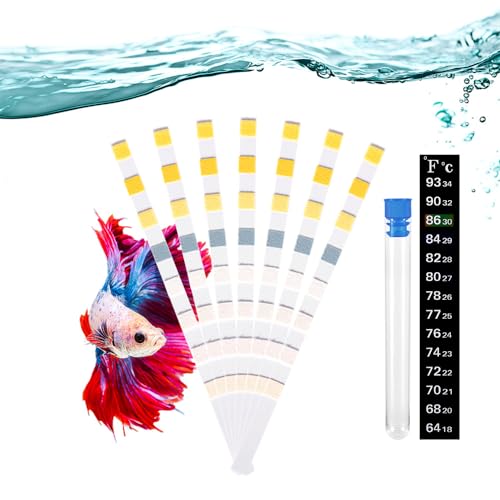
DaToo 8 in 1 Aquarium Test Kit Fish Tank Test Strips (100 Strips)

Wutest 9 in 1 Aquarium Test Strips, 150 Count

A QUILA Aquarium Water Test Kit 9-in-1 Ammonia Test Strips

SaySummer 9 in 1 Aquarium Test Strips for Fish Tank, 125 Counts
More Details On Our Top Picks
A hundred strips is enough testing runway to last most hobbyists through an entire year of weekly checks. That volume matters more than it sounds, because consistent monitoring is what keeps a stable tank stable, and running out of strips mid-cycle is how good habits die.
The seven-parameter panel covers the essentials: nitrate, nitrite, general hardness, pH, carbonate hardness, total alkalinity, and chlorine. Pads are built on fiber paper designed to resist color bleeding, which helps when you’re squinting at a chart under kitchen lighting.
Where It Delivers
- 100-strip supply supports roughly a year of twice-weekly testing without restocking
- Seven core readings on one dip means a full water picture in under a minute
- Works across freshwater, saltwater, and pond applications from a single bottle
- No-bleed pads make chart comparison less frustrating than cheap generic strips
Things To Consider
- No ammonia pad, so newly cycling tanks need a separate test for that parameter
- Strips degrade once exposed to humidity, so reseal the bottle promptly after each use
Who It Suits Best
Established freshwater or pond keepers who want maximum strips per purchase and already have ammonia covered elsewhere.
Swap It Out When
Cycling a brand-new tank calls for the AAwipes 8-in-1 instead, since its ammonia nitrogen pad tracks the exact parameter that spikes during a cycle.
Most strip kits hand you a bottle and wish you luck. Umlecoa bundles a sample tube and a thermometer alongside its 125 strips, which turns a first water check into a guided routine rather than guesswork. For someone setting up their first 10-gallon betta tank, that extra kit piece removes real friction.
The panel reads the same seven fundamentals as the DIPSTIK above, covering nitrogen compounds, hardness, alkalinity, carbonate levels, pH, and chlorine. One dip gives you everything needed to decide whether this week’s water change can wait.
Standout Benefits
- Included thermometer lets you confirm temperature and chemistry in the same session
- Sample tube makes dip-and-read technique easier to get right on early attempts
- 125 strips comfortably cover a new-tank cycle plus months of follow-up checks
- Valid for both freshwater and saltwater, useful if you plan to branch into marine later
Small Caveats
- Seven parameters skips ammonia, the number-one concern during a fishless cycle
- Color charts on budget strips can be tricky to read in dim rooms, so test near daylight
At A Glance
Made For
First-time aquarists who want a complete starter package rather than assembling tubes and thermometers piecemeal.
Reach For A Different Pick When
Planted-tank hobbyists should look at the Wutest 9-in-1, whose iron and copper pads matter far more for live plants than a bundled thermometer does.
Ammonia is the parameter that kills fish fastest, and it’s the one most seven-way strips leave out. AAwipes closes that gap with an eight-pad design that adds ammonia nitrogen alongside free chlorine, nitrate, nitrite, hardness, salinity, total alkalinity, and pH. During a new-tank cycle, checking ammonia every day or two is standard practice, and having it on the same strip you’re already dipping saves real time.
The trade-off shows up in supply: 25 strips runs out quickly against daily cycling schedules. Owners commonly report treating these as a focused diagnostic tool rather than a year-round workhorse, which is honestly the right way to use them.
What Stands Out
- Ammonia nitrogen pad covers the most dangerous compound in a young tank
- Non-bleeding color pads keep results readable during the critical first weeks of a cycle
- Fiber-paper construction aims for quick, consistent saturation on each dip
- Salinity reading adds value for brackish or lightly salted setups
Potential Drawbacks
- 25-strip count depletes fast under daily testing, so heavy users will reorder often
- Smaller bottle means less shelf life headroom once opened versus bulk packs
Feature Snapshot
Right Fit For
Hobbyists actively cycling a new aquarium or troubleshooting an unexplained fish loss who need ammonia data now.
Another Choice May Suit
Long-term weekly maintenance favors the DIPSTIK 100-count, whose larger supply outlasts this kit many times over once your cycle has settled.
Temperature and water chemistry are linked, and DaToo is the only kit here that puts both on a single strip. Its eight-plus-one layout reads ammonia, pH, total alkalinity, carbonate hardness, free chlorine, nitrate, and nitrite, then adds a temperature indicator along the edge. In a heated community tank where a stuck heater can quietly cook livestock, that combined readout is genuinely useful.
Against the AAwipes kit reviewed earlier, DaToo trades salinity for temperature and multiplies the supply fourfold to 100 strips. For a typical freshwater keeper running weekly checks, that’s the better long-term balance.
Everyday Perks
- Built-in temperature readout flags heater malfunctions during routine dips
- Ammonia inclusion makes it viable through a full tank cycle and beyond
- 100 strips support roughly a year of weekly testing in a single bottle
- Eight chemical parameters cover nearly every common freshwater failure mode
Points To Note
- Nine simultaneous pads give you more colors to match, which slows chart reading slightly
- Temperature accuracy on a strip won’t replace a dedicated digital thermometer for breeding work
Quick Facts
Whose Shelf It Belongs On
Busy freshwater keepers running heated community tanks who want one strip to answer both “is my water safe” and “is my heater behaving.”
Look Elsewhere When
Pond owners dealing with runoff metals will get more from the Wutest 150-count, whose copper and iron pads address issues a pond faces that indoor tanks rarely do.
Live plants change the testing equation. Iron feeds foliage, copper harms shrimp and invertebrates at low concentrations, and neither shows up on a standard seven-way strip. Wutest builds both into a nine-parameter panel that also covers nitrate, nitrite, chlorine, general hardness, total alkalinity, carbonate hardness, and pH, all backed by a 150-strip supply.
That’s the deepest combination in this roundup: the widest panel paired with the largest count. Fertilizer-dosing aquascapers can track iron after each dose, and shrimp keepers gain an early warning line for copper contamination from old pipes or tap water.
The Good Stuff
- Iron and copper pads serve planted tanks and invertebrate setups specifically
- 150 strips deliver the longest testing runway of any kit in this list
- Nine parameters in one dip replaces juggling multiple partial test products
- Full nitrogen-cycle coverage supports both cycling and mature-tank maintenance
Trade Offs
- No ammonia pad, so cycling tanks still need a dedicated ammonia test alongside
- Nine color zones per strip demand good lighting and careful timing for accurate matches
Core Details
Best Suited To
Aquascapers, shrimp keepers, and anyone dosing fertilizers who needs trace-metal visibility alongside standard water chemistry.
Not Your Match When
Someone cycling their very first tank gets more immediate value from the AAwipes 8-in-1, whose ammonia pad matters more right now than iron ever will.
Households juggling a betta bowl, a planted 40-gallon, and a backyard pond don’t want three different test products. A QUILA’s nine-parameter strip handles all of them, reading pH, total alkalinity, hardness, chlorine, nitrite, sulfate, copper, iron, and ammonia in a single dip. It’s the only kit here combining ammonia with both trace metals, which covers nearly every scenario a mixed-setup owner encounters.
Compared with the Wutest kit just above, you gain ammonia and sulfate but give up some supply volume. Depending on how many tanks you run, that exchange may favor either direction.
Everyday Advantages
- Ammonia plus copper plus iron on one strip spans cycling, plants, and shrimp safety
- Sulfate reading helps diagnose source-water quirks after a municipal change
- Rated for freshwater, saltwater, ponds, and planted tanks from one bottle
- Single-strip format keeps a multi-tank testing session down to minutes
Less Ideal Details
- Strip count isn’t stated prominently, so verify supply size before committing to heavy use
- Nine wetted pads need consistent dip timing, or adjacent colors can skew the read
The Right Fit
Mixed-collection hobbyists maintaining several different water types who want one universal strip for every tank they own.
Consider Something Else When
Volume testers running three or more tanks weekly will stretch further with the SaySummer 125-count, which pairs a similar nine-parameter panel with a confirmed large supply.
This is the kit that fits the widest range of situations without a glaring hole. SaySummer reads nine parameters, including ammonia nitrogen and copper, across 125 strips. You get the cycling-critical ammonia pad the Wutest lacks, the trace-metal awareness the DIPSTIK lacks, and a supply deep enough to last most of a year at weekly cadence.
The honest caveat is breadth over depth: nine color zones on one strip ask a bit more of your eyes than a five-pad design would. In our view, that’s a fair price for covering every major failure mode in a single dip, especially for keepers who’d rather not own two separate products.
Good Reasons To Consider
- Ammonia nitrogen pad makes it usable from day one of a new tank cycle
- Copper detection protects shrimp and snail populations from tap-water surprises
- 125 strips balance longevity against bottle size on a storage shelf
- GH, KH, and total alkalinity together give planted keepers full buffering insight
- One product replaces separate ammonia, metal, and general chemistry tests
Worth Bearing In Mind
- Denser color charts reward testing under natural light rather than warm indoor bulbs
- Moisture ingress is the usual killer of strip kits, so store the bottle upright and sealed
Essential Details
Who Will Love This
Intermediate freshwater keepers with established community or planted tanks who want one comprehensive kit for ongoing weekly maintenance.
Where A Sibling Pick Shines
Strictly budget-focused shoppers doing simple goldfish or betta upkeep may prefer the DIPSTIK 100ct, which trims the panel to seven essentials at a lower commitment.
What Matters Most Before Choosing Freshwater Aquarium Water Test Kits
Match The Panel To Your Tank’s Stage
A cycling tank lives and dies by ammonia readings, while a mature planted aquascape cares more about iron, copper, and nitrate accumulation. Buying a panel that ignores your current stage wastes money on pads you’ll never watch. List the three parameters that matter most to your setup, then confirm they appear on the strip before anything else.
Strip Count Should Match Your Testing Habit
Daily testing during a cycle burns through 25 strips in under a month, whereas weekly maintenance stretches 100 strips across two years. Overbuying risks expired pads losing accuracy in humid storage, and underbuying breaks the habit that keeps water safe. Honest self-assessment of your cadence beats guessing.
Readability Beats Parameter Count
Every extra pad adds another color zone to match against a chart, and poor lighting turns subtle shade differences into wrong conclusions. Nine-parameter strips reward testers working near a window with a timer handy. Seven well-read parameters beat nine misread ones every time.
Key Considerations Across These Picks
Traps First Timers Fall Into
The classic error is buying a seven-way kit for a tank that’s still cycling, then discovering it can’t read ammonia at all. Another frequent slip is leaving strip bottles open beside the tank, where evaporating moisture ruins the remaining pads within weeks. Check the parameter list first, seal the bottle second.
What Separates Premium From Basic
Higher-tier kits add the parameters that solve specific problems: ammonia for cycling, iron and copper for plants and invertebrates, temperature for heater monitoring. Paying up makes sense when those extras map to a real scenario in your tank. For a simple, stable community aquarium, a basic seven-way panel remains entirely sufficient.
Closing Thoughts
The right kit depends less on brand loyalty and more on matching parameters to your tank’s stage and inhabitants. Cyclers need ammonia, plant keepers need metals, and everyone needs a supply sized to their actual testing rhythm. Choose accordingly, test consistently, and your fish will quietly thank you for it.
