

Newborn feeding comes with enough guesswork already. A good glass bottle removes one variable: no plastic odors, no lingering stains, and a material that survives hundreds of wash cycles without degrading. This roundup covers seven options built for the first months of life, from ultra-slow-flow nipples for preemies to anti-colic vent systems designed around gassy babies. Whether you’re supplementing a breastfeeding routine or bottle-feeding exclusively at 3 a.m., there’s a fit here for your setup.
The Shortlist At A Glance

BIBS Baby Glass Bottle Complete Set 110 ml (Sage)

Dr. Brown’s Anti-Colic Options+ Wide-Neck Glass Baby Bottle, 5 oz
Pigeon PPSU Wide Neck Anti-Colic Nursing Baby Bottle, 5 oz, 2-Pack

YOHKOH Natural Glass Baby Bottle Wide Neck Mushroom (3.4oz, Pack of 4)

Thyseed Anti-Colic Glass Baby Bottle, Extra Slow Flow Nipple (0m+), 5 oz (1 Pack)
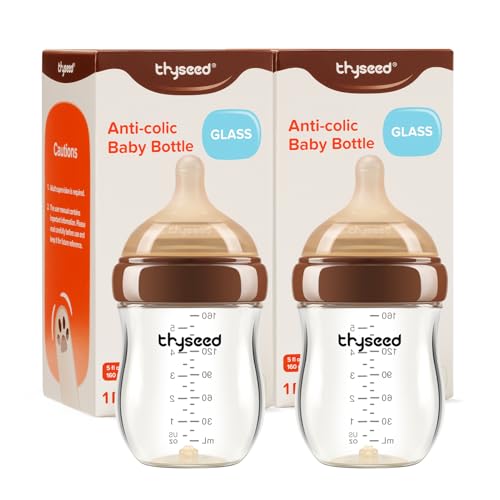
Thyseed Anti-Colic Glass Baby Bottle, Extra Slow Flow Nipple (0m+), 5 oz (2 Pack)
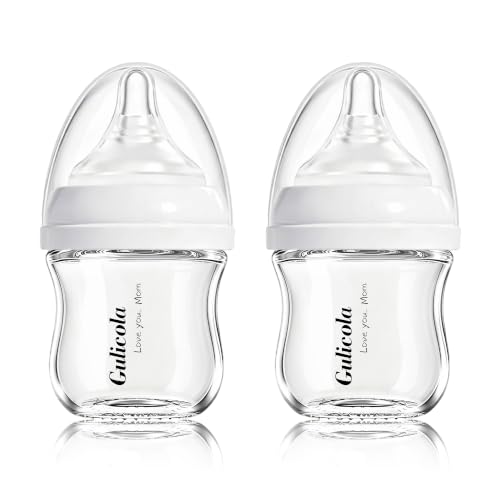
Gulicola Small Glass Baby Bottle, Preemie & Extra Slow Flow Nipples, 3 oz
What Each Pick Brings To The Table
Few baby brands carry the pedigree this Danish company does, with more than four decades spent making pacifiers before turning to bottles. The sage-toned 110 ml set arrives as a complete kit, so there’s no mixing and matching parts on day one.
In a small nursery where everything sits on open shelving, the muted colorway actually earns its keep. Parents who already own BIBS pacifiers get matching parts, which simplifies sterilizing routines considerably.
The Upside
- Glass body means no plastic smells or stains after repeated formula feeds
- Natural rubber nipple pairs with the brand’s well-regarded pacifier feel
- Complete set format removes compatibility guesswork for first-time parents
- Made in Denmark, backed by a long track record in baby feeding products
Things To Consider
- The 110 ml capacity runs out fast once your baby moves past cluster-feeding stage
- Natural rubber nipples need replacing more often than silicone ones, a common upkeep point owners mention
Key Specs
Who Will Love This
Design-conscious parents starting a newborn on small feeds who want a coordinated, all-in-one set.
A Better Fit Elsewhere
Once appetite grows past 4 ounces, the Dr. Brown’s Anti-Colic Options+ 5 oz bottle handles larger volumes with its vent system intact.
This is the pick most pediatric-night nurses will recognize on sight. The internal vent system, a tube running through the center of the bottle, pulls air away from milk so your baby swallows less gas along with the feed. Compared with the simple BIBS set above, it trades minimalist looks for engineering aimed squarely at fussy tummies.
Vacuum-free feeding also lets babies pace themselves closer to how they nurse at the breast, and the silicone nipples hold a consistent flow rate. For households dealing with spit-up and burping cycles, that combination matters more than aesthetics ever will.
Benefits That Matter
- Internal vent separates air from milk, targeting gas and spit-up at the source
- Consistent flow rate supports self-paced feeding similar to nursing
- Wide neck makes formula scooping and brush cleaning far easier than narrow designs
- Available singly or in bulk packs, handy for building a rotation gradually
Worth Noting
- The vent insert adds an extra part to wash and assemble at 2 a.m.
- More components mean more places for milk residue to hide if cleaning slips
Feature Snapshot
Right Fit For
Parents of gassy or reflux-prone newborns who prioritize fuss reduction over minimal part counts.
Swap It Out When
Hate extra parts? The Thyseed Anti-Colic Glass Bottle delivers air separation through a base vent instead, with nothing inside the bottle to assemble.
A note up front: this Pigeon model uses PPSU, a high-performance plastic rather than glass, included here because its nipple design is genuinely relevant to mixed-feeding families. The Japanese brand based the nipple on observed sucking behavior, mapping the three natural movements a baby makes during a feed.
The result is an ultra-soft silicone nipple with a latching curve that guides a proper latch, which helps enormously when you’re alternating between breast and bottle. Two bottles per pack covers a basic day-and-night rotation right out of the box.
Notable Upsides
- Nipple geometry is grounded in infant sucking research, not guesswork
- Latch-on line helps you position the bottle correctly every time
- PPSU body survives drops that would end a glass bottle
- Soft silicone allows natural tongue movement for smoother breast-to-bottle switches
Points To Note
- Plastic construction won’t suit shoppers committed to glass-only feeding gear
- PPSU can cloud slightly over many dishwasher cycles, a widely reported trait of the material
Who Should Grab It
Exclusively pumping or combo-feeding parents who need their baby to move between breast and bottle without protest.
Where A Sibling Pick Shines
For a true glass alternative with a breast-like nipple, the Gulicola Small Glass Baby Bottle offers a similar latch-guided design in borosilicate glass.
Four bottles in one purchase changes the math for busy households. Instead of washing between every feed, you can run a full day on this set and sanitize everything in one evening batch. Each 3.4 oz bottle uses borosilicate glass, a heat-resistant type that tolerates rapid temperature swings better than standard soda-lime glass.
The wide mushroom-shaped nipple ships at Level 1 slow flow, appropriate for the earliest weeks. The liquid silicone nipple design also helps air escape upward as milk drains, keeping bubbles away from your baby’s mouth during the feed.
Key Advantages
- Four-bottle pack supports a genuine daily rotation without constant washing
- Borosilicate glass handles boiling water and cold formula prep without stress
- Slow-flow Level 1 nipple matches newborn pacing needs
- Wide neck accepts standard brushes and formula funnels easily
Small Caveats
- At 3.4 oz, these will be retired within a few months as intake climbs
- Red coloring limits the neutral-nursery appeal some parents want
Quick Facts
Made For
Budget-aware parents stocking a nursery before the due date who want quantity without sacrificing glass quality.
Consider Something Else When
Planning to buy once and grow into bigger sizes? The YOHKOH line itself extends to larger capacities, though the Dr. Brown’s 5 oz offers a longer runway per bottle.
Where Dr. Brown’s solves colic with an internal tube, Thyseed approaches it from the bottom. A base vent separates air from milk before bubbles form, and the company points to published clinical research in JAMA supporting the approach. No internal parts means assembly stays as simple as screwing on a nipple ring.
The nipple itself uses multiple micro-openings rather than one hole, producing an even, paced flow that discourages gulping. Breastfed babies accustomed to working for milk tend to accept this slower rhythm more readily, in our view the strongest argument for this pick.
Everyday Perks
- Base vent reduces swallowed air without any insert to assemble or lose
- Micro-opening nipple delivers steady flow, cutting down gulping and frustration
- Extra slow flow rate suits breastfed newborns used to nursing effort
- Simple two-part cleanup after late-night feeds
Less Ideal Details
- Base vents demand a thorough rinse underneath the bottle floor, or residue builds there
- Single-bottle pack means ordering again quickly for a real rotation
At A Glance
Whose Shelf It Belongs On
Breastfeeding parents introducing an occasional bottle who want minimal parts and maximum pacing control.
Reach For A Different Pick When
Feeding volume is heavy and constant, the two-pack version of this same Thyseed bottle keeps a clean spare on hand without reordering.
Same bottle, smarter quantity. Everything covered in the single-pack Thyseed above applies here: the JAMA-studied base vent, the micro-opening nipple, the extra slow 0m+ flow. What changes is ownership logistics, because two bottles turn a promising product into a workable daily system.
One bottle feeds while the other waits clean in the drying rack, and night shifts stop depending on a mid-feed wash. For twins, grandparents’ houses, or daycare bags, having a matched pair removes the single-point-of-failure problem every one-bottle household eventually hits.
The Case For It
- Matched pair enables a clean-dirty rotation from day one
- Identical nipples mean no flow-rate surprises between bottles
- Base vent design keeps assembly to two pieces per bottle
- Extra slow flow remains appropriate through the earliest months
Trade Offs To Consider
- Still capped at 5 oz, so larger-appetite babies will outgrow these within months
- Two identical bottles offer no backup if both are dirty simultaneously during growth spurts
Who It Suits Best
Combo-feeding households running regular bottle sessions daily who already know they’ll need more than one.
Another Choice May Suit
Wanting variety in capacity instead? Pairing one Thyseed with the Gulicola 3 oz gives you a small top-up option alongside full feeds.
Most bottles on this list start at 5 oz. Gulicola starts smaller, at 3 oz, with preemie-rated SS nipples alongside the extra slow flow option. That sizing niche matters more than it sounds: premature and low-birth-weight babies take tiny volumes, and a half-full large bottle is awkward to angle and hard to pace.
The borosilicate glass body skips BPA, BPS, and phthalates entirely, and the nipple carries small guide points that encourage a correct latch. Nursing mothers commonly report this style of textured nipple helps train suction habits rather than fight them.
Practical Pluses
- 3 oz size suits preemies and newborns with small appetites precisely
- Includes both preemie SS and extra slow flow nipples for flexibility
- Borosilicate glass free of BPA, BPS, and phthalates
- Textured nipple points guide latch positioning during feeds
Details To Watch
- Outgrown quickly by average-appetite babies, plan for a larger follow-up purchase
- Smaller bottles mean more frequent refills during cluster-feeding evenings
Core Details
Perfect Match For
Parents of premature or petite newborns, or anyone topping up breastfeeds in small measured amounts.
Look Elsewhere When
Your baby already takes 4-plus ounces per feed, the Thyseed 5 oz two-pack covers those volumes without constant refilling.
Choosing Between These Bottles Without Regret
Match The Nipple To Your Feeding Style
Flow rate is the attribute that decides whether a bottle gets accepted or refused. Breastfed newborns usually need extra slow or preemie flows, since a fast nipple lets milk flood in and creates preference problems. Formula-fed babies often tolerate standard slow flow from the start. Check the age rating printed on the nipple before assuming one size fits all.
Count The Parts Before You Commit
Anti-colic engineering comes in two shapes: internal vents like Dr. Brown’s tube system, and passive designs like Thyseed’s base vent. Internal vents generally deliver stronger air separation but add a component to scrub with a narrow brush every wash. Passive designs trade some performance for dramatically simpler cleanup, which matters at 3 a.m. more than most product pages admit.
Size For The Season, Not The Year
Newborn stomachs grow fast, moving from under 3 ounces per feed toward 5 or more within a couple of months. Buying only 3 oz bottles guarantees a second purchase; buying only large bottles wastes formula early on. A mixed approach, small bottles for the first stretch plus one or two 5 oz options, tracks reality better.
Key Considerations Across These Picks
Traps First Timers Fall Into
The most common mistake is buying a dozen identical bottles before learning what your baby accepts. Nipple shape preferences vary wildly between infants, so start with one or two units of a given design. Another frequent slip: ignoring capacity labels and pouring 4 ounces into a 3 oz bottle, which causes leaks and overfeeding. Read the fill line, not habit.
Where The Extra Money Goes
Higher-priced bottles typically pay for research-backed nipple geometry, borosilicate rather than soda-lime glass, and clinical validation of anti-colic claims. That spend is justified when your baby struggles with gas or refuses cheaper nipples. For an easygoing feeder, a value multipack like the YOHKOH set performs the same core job, and the difference shows up mostly in durability and refinement rather than outcomes.
Bottom Line
Glass rewards patience: it costs a little more upfront, weighs more in the diaper bag, and asks for careful handling, then repays you with years of odor-free, stain-free service. Start small, match the nipple flow to your feeding situation, and scale quantities once you know what works. Any of these seven will serve a newborn well; the right one is simply the one your baby takes willingly.
