

A strong dog on a leash can turn a pleasant stroll into a tug of war. The right no pull harness shifts pressure away from the throat and redirects your dog’s momentum, so walks stop being a wrestling match. This roundup covers eight options built for big breeds, from padded everyday vests to heavy-duty nylon rigs with control handles. Measure your dog’s chest before ordering, because fit is what makes any of these work.
A Side-By-Side Look
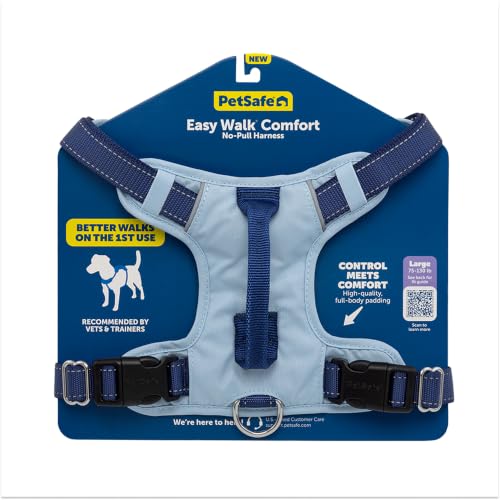
PetSafe Easy Walk Comfort No Pull Dog Harness
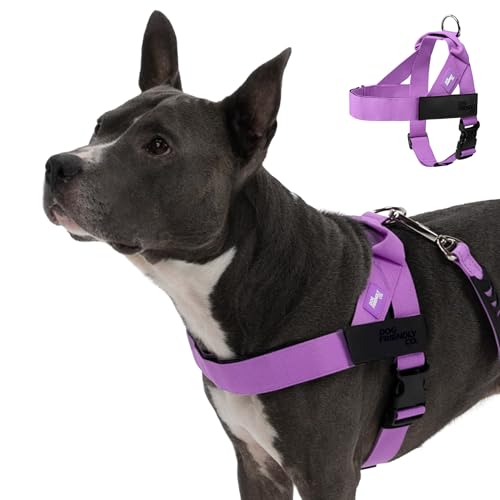
Dog Friendly Co. Dog Harness for Large Dogs (Purple)

Forestpaw No Pull Dog Harness with Large Handle (XL)
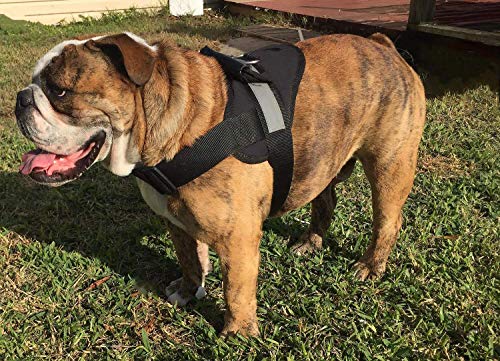
HDP Big Dog Soft No Pull Harness (Black)

APAKBAK No Pull Dog Harness with Handle

Lukovee No Pull Dog Harness and Leash Set

Didog No Pull Dog Harness for Large Dogs (Blue)

Yintrest Adjustable Reflective Front Clip Pet Vest (Black)
Inside Each Recommended Option
The Easy Walk line has been around long enough that most trainers recognize it on sight, and the Comfort version adds padding where a big dog feels it most. The vest-style body spreads leash tension across the chest instead of concentrating it at the neck, which matters when an eighty-pound Lab decides a squirrel is worth chasing.
For daily neighborhood walking, the design aims at discouraging pulling rather than merely restraining it. PetSafe recommends measuring your dog before ordering, and that advice is worth following here since a loose harness lets determined dogs back out.
Where It Delivers
- Padded construction keeps long walks comfortable for thick-coated breeds
- No pull geometry deters even committed pullers without throat pressure
- Vest shape distributes force over the chest, easier on aging joints
- A trusted name in the category with widely available replacement guidance
Things To Consider
- Sizing runs specific, so measure the girth carefully before checkout
- Owners commonly report the straps need re-tightening after the first few wears
Who It Suits Best
Households with strong, persistent pullers who want a padded, walk-focused solution from an established brand.
Where A Sibling Pick Shines
For rugged trail use with heavy breeds, the Forestpaw’s 1000D nylon shell handles abrasion better than this softer vest.
This one takes a modular approach that the others don’t. The base harness ships with a single heavy-duty back D-ring, and the front D-ring is a separate add-on you buy only if your training plan calls for it. That structure keeps things simple for calm walkers while leaving room to upgrade.
Adjustable straps run through both the neck and chest, spanning XXS through XL, so a growing adolescent dog can keep the same harness for a while. The trade-off shows up immediately: anyone wanting true no pull control out of the box needs to budget for that front attachment.
Positive Takeaways
- Adjustable neck and chest straps prevent choking or strain on awkwardly proportioned dogs
- Heavy-duty back D-ring handles everyday leash duty without flexing
- Broad size range suits multi-dog households buying once
Small Caveats
- Front D-ring sold separately, so factor that into the total cost
- Out of the box it’s a standard harness, not a dedicated anti-pull tool
Feature Rundown
Made For
Owners who like configuring gear themselves and already have decent leash manners established.
Swap It Out When
If redirecting a strong puller is the immediate goal, the APAKBAK’s built-in front clip works from day one.
Where the PetSafe leans soft and comfortable, the Forestpaw leans tough. Its 1000D nylon shell, the same denier rating used in tactical gear, resists tearing and abrasion, paired with a POM buckle and alloy D-ring that won’t deform under load. For owners of breeds like Rottweilers or Malamutes, that spec sheet reads like insurance.
The oversized top handle is the practical standout: grabbing a dog near traffic or lifting a senior pet into a car becomes far easier. Sizing is generous too, with the XL fitting pets from 80 to 110 pounds.
Notable Gains
- 1000D nylon with tightly woven surface shrugs off brush, gravel, and claws
- Large top handle gives instant physical control in tight spots
- Alloy D-ring holds up to sustained pulling better than stamped hardware
- XL range covers giant breeds other harnesses top out below
Points To Note
- The front chest measurement isn’t adjustable, so confirm the 21-inch figure against your dog first
- Heavier fabric means more warmth, something short-nosed breeds may feel in summer
Quick Facts
Right Fit For
Owners of muscular working breeds who hike, jog, or walk in rough terrain regularly.
Consider Something Else When
Elderly or gentle dogs will find the HDP Big Dog’s extra padding and lighter feel kinder on stiff joints.
HDP built this halter-style harness around one idea: a pulling dog should never feel pressure on its throat. Instead of a narrow strap, a wide chest panel carries the load, spreading force across the strongest part of a big dog’s frame. That makes it a natural match for seniors and brachycephalic breeds whose airways deserve protection.
Compared with the Forestpaw’s rugged shell, this pick prioritizes softness and simplicity. Click buckles snap shut quickly and resist slip-outs, and the included handle adds a layer of control without bulk.
Everyday Advantages
- Wide chest panel distributes pressure, so hard pullers aren’t choked
- Extra padding suits older dogs and sensitive skin
- Easy click buckles speed up gearing up an impatient dog
- Built-in handle offers backup control on busy sidewalks
Honest Caveats
- Halter-style designs offer less steering correction than front-clip vests
- Thick padding can trap heat during summer walks, per common owner feedback
Core Details
Who Will Love This
Families with senior large breeds or gentle giants who need soft, throat-safe support on slow walks.
Another Choice May Suit
Active night walkers get more value from the Yintrest vest’s reflective threading than from this plain black design.
Two leash points make this vest genuinely versatile. Clip to the front ring during training to gently turn a pulling dog back toward you, then switch to the back ring for relaxed strolls once manners improve. That dual setup mirrors what trainers often recommend, without needing two separate harnesses.
The mesh padding keeps airflow moving, a real advantage over the denser HDP padding in warm weather. Adjustment points sit at both chest and belly, letting you dial in a snug fit that stays put without restricting stride.
The Practical Payoff
- Front clip encourages better leash manners through gentle redirection
- Back ring handles casual walks and recall drills
- Chest and belly adjustments create a secure, escape-resistant fit
- Soft mesh padding breathes better than solid foam layers
Less Ideal Details
- Mesh construction may show wear sooner under constant dragging from very strong dogs
- Two adjustment zones take a few minutes to set correctly the first time
Who Should Grab It
Owners mid-way through loose-leash training who want one harness covering both correction and comfort phases.
Look Elsewhere When
Anyone wanting a matched leash in the box will find the Lukovee set more convenient than buying separately.
Everything arrives together here: harness and matching leash, sized for medium and large dogs. For someone bringing home a new rescue or upgrading from a collar, that removes the guesswork of pairing hardware. The soft padding throughout keeps pressure points quiet even on longer outings.
The anti-pull mechanics are thoughtfully laid out. A triangular body design spreads force across the chest, and the brand notes the front clip suits mild to moderate pulling rather than extreme cases, which is refreshingly honest positioning.
Useful Strengths
- Front chest D-ring redirects direction to discourage mild-to-moderate pulling
- Back O-ring switches to relaxed walking mode instantly
- Triangle frame spreads force, helping avoid choking on sudden lunges
- Leash included means a matched, ready-to-walk kit
What To Weigh
- Designed for moderate pullers, so serious sled-dog strength calls for the Forestpaw instead
- Set pricing means paying for a leash even if you already own one
Feature Snapshot
Built With In Mind
First-time large dog owners who want a coordinated starter kit without piecing components together.
Reach For A Different Pick When
Walkers who value one-buckle speed will prefer the Didog’s quick-fit design over this two-point setup.
Morning routines reward gear that goes on fast, and Didog’s single-buckle design is the quickest in this lineup. One clip, slide it over the head, adjust, done. The vest stays light despite sturdy construction, so it works equally well for jogs and weekend hikes.
Like the APAKBAK, it splits duties between a front D-ring that discourages rushing forward and a back D-ring suited to casual walking, jogging, and trail time. The soft padded handle adds a grab point for crowded areas.
Practical Pluses
- One-buckle closure makes on-and-off nearly effortless
- Front D-ring curbs forward rushing during training walks
- Back D-ring covers jogging, hiking, and easy strolls
- Sturdy yet lightweight body avoids weighing down athletic dogs
Room For Improvement
- Single-buckle vests fit over the head, which some broad-skulled breeds dislike
- Straps benefit from periodic checks, as loosening over weeks of use is commonly reported
Whose Shelf It Belongs On
Busy commuters and early-morning walkers who need reliable control with minimal fuss.
Not Your Match When
Giant-breed owners needing maximum fabric strength should step up to the Forestpaw’s 1000D nylon build.
Dark winter evenings change the calculus for big-dog walking, and this vest bakes visibility into the fabric itself. Highly reflective thread runs through the material in all directions, catching headlights from any angle. Underneath that safety layer sits abrasion-resistant Oxford cloth with reinforced stitching at stress points.
Two metal leash rings give you the familiar front-and-back choice, and pulling pressure distributes evenly across the body rather than concentrating anywhere uncomfortable. Against the plainer HDP, this is the pick for anyone whose walks happen after sunset.
The Helpful Details
- 360° reflective threads keep your dog visible to drivers at night
- Oxford fabric with reinforced stitching resists daily wear and tear
- Two metal rings support both training clips and relaxed walking
- Even pressure distribution protects the neck during pulls
Factors To Consider
- Reflective thread helps visibility but replaces nothing, so dark routes still demand caution
- Oxford fabric wipes clean easily, though mud in stitching lines needs attention after wet walks
Technical Reference
The Right Fit
Joggers and dog walkers whose regular route includes unlit streets or early-dark winter evenings.
Skip It When
Daytime-only suburban walkers get equal function from the cheaper-feeling but simpler Lukovee set.
What Matters Most Before Choosing No Pull Harnesses For Large Dogs
Fit Beats Everything Else
A harness that fits wrong fails regardless of price. Measure your dog’s chest girth at its widest point and check each product’s size chart against that number, adding room for two fingers of slack. Breeds with deep chests like Greyhounds and barrel-chested ones like Bulldogs need different shapes, so a chart matters more than a size label.
Clip Placement Shapes Training
Front-clip harnesses attach the leash at the chest, so a pulling dog gets gently turned sideways instead of dragged forward. Back-clip designs suit dogs that already walk politely. Many of the picks above offer both, which lets you shift modes as training progresses without buying twice.
Material Matches Lifestyle
Nylon denier ratings tell you how much abuse fabric survives; 1000D nylon, as on the Forestpaw, handles brush and rough play, while padded mesh vests prioritize airflow for hot climates. Night walkers should treat reflectivity as a requirement, not a bonus.
Key Considerations Across These Picks
Traps First Timers Fall Into
The most common mistake is ordering by breed name instead of measurements, then discovering the harness rides up or slips off. Another frequent misstep: buying a front-clip model and attaching the leash to the back ring anyway, which cancels the anti-pull benefit entirely. Check buckle quality too, since plastic hardware on powerful dogs is a known failure point.
What The Higher Tier Buys
Pricier harnesses generally spend the difference on hardware and fabric: alloy D-rings instead of stamped metal, higher-denier shells, and reinforced stitching at load points. For dogs under 60 pounds with decent manners, those upgrades rarely matter. For a 100-pound puller, they’re the difference between a harness that lasts years and one that frays in months.
Frequently Asked Questions
Do no pull harnesses actually stop pulling?
They reduce pulling by redirecting your dog’s momentum rather than punishing it. Consistent training alongside the harness produces the lasting results.
Are front-clip harnesses safe for large dogs?
Yes, when properly fitted, they distribute force across the chest safely. Avoid leaving any harness on unsupervised for long periods.
How tight should a no pull harness be?
You should fit two fingers flat between the straps and your dog’s body. Snug enough that paws can’t slip through, loose enough to breathe.
Can my dog wear a harness all day?
Most manufacturers recommend removing harnesses after walks. Continuous wear can rub fur and skin, especially under padding seams.
How do I clean a padded dog harness?
Hand wash with mild soap and air dry to protect padding and stitching. Machine drying tends to warp buckles and shrink webbing.
Closing Thoughts
Strong dogs deserve gear built for their strength, and every option here earns its place for a specific owner. Match the harness to your dog’s measurements, your walking routine, and your training stage, and the pulling problem usually shrinks within a few weeks. Measure first, clip smart, and enjoy the calmer walks ahead.
