

Open terrariums reward people who want greenery without the humidity headaches of a sealed jar. The catch is that most listings sell you a container, a kit, or plants separately, so assembling a setup that actually works takes guesswork. This roundup covers both routes: ready-to-plant kits and glass vessels that pair well with succulents, cacti, moss, and air plants. Whether your shelf space is a sunny apartment windowsill or a desk that needs life, one of these eight fits.
Your Options, Compared

Hirt’s Gardens Terrarium Kit with 3 Plants

PYEF CRAFTS DIY Succulent & Plant Terrarium Kit
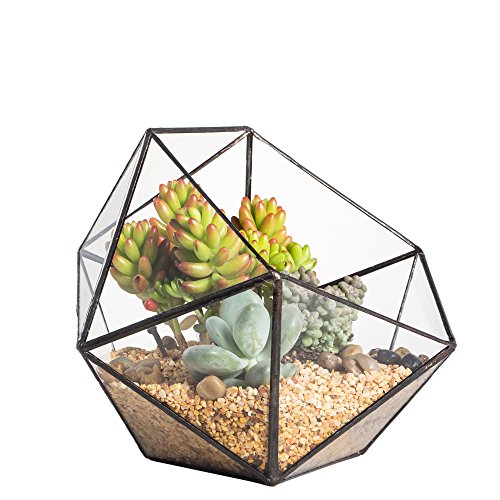
NCYP Opened Geometric Glass Terrarium 6.69″ Bowl

Mkono Glass Tabletop Terrarium Globe, M

LUCKYRUNES Live Moss Duo Pack

YIMORENCE V Tall Glass House Terrarium with Tray

Moonorange Reptile Artificial Plants 4-Piece Set

libproqia No-Door Glass Terrarium Planter
Meet The Standout Selections
Most starter kits stop at supplies, but this one from Hirt’s Gardens ships three live miniature plants alongside them. That matters because sourcing tiny plants locally is often the hardest part of a first build. You still supply the glass container, which keeps shipping simple and lets you use any jar or bowl you already own.
The plant varieties change with the season, so two orders in different months can look completely different. For anyone assembling their first open terrarium on a weekend afternoon, that removes nearly every decision except the container itself.
Features That Help
- Three live miniature plants arrive with the kit, saving a separate nursery trip.
- Includes sheet moss and natural terrarium potting soil, so the growing medium is handled.
- Carbonized charcoal is bundled in, which helps keep soil odors down over time.
- Decorative mulch and reindeer moss give an instant finished top layer.
Things To Consider
- Seasonal variety swaps mean you cannot request specific species, which may disappoint planners.
- A container is not included, so budget for a jar or bowl before planting day.
Key Specs
Who It Suits Best
Total beginners who want live plants and all layers supplied in a single order.
Where A Sibling Pick Shines
Shoppers who already own a favorite jar will get better value from the PYEF CRAFTS DIY kit, which supplies materials only at a lower commitment.
Unlike the Hirt’s kit above, this PYEF CRAFTS set skips the plants entirely and focuses on the layered foundation every healthy terrarium needs. Potting soil, decorative stones, sphagnum moss, activated charcoal, and bamboo tools come packed together, so you bring only the container. Step-by-step instructions are written for first-timers rather than hobbyists.
That structure suits anyone repurposing a large mason jar, fishbowl, or thrifted vase into a self-sustaining glass ecosystem. In our view, it is the smartest route for craft-minded shoppers who enjoy choosing their own plants anyway.
Where It Delivers
- All core layers ship together, eliminating piecemeal garden-center runs.
- Bamboo tools keep small hands clean during delicate layering work.
- Instructions are beginner-level, so no prior gardening experience is assumed.
Potential Drawbacks
- No plants or container included, so the true cost lands higher once you shop for both.
- Owners commonly report needing to source succulents sized to fit narrow vessel openings.
The Right Fit
Crafty DIYers who already have a container picked out and want full control over plant selection.
Skip It When
Anyone wanting plants in the box should reach for the Hirt’s Gardens kit instead, since it bundles three live miniatures with similar layering supplies.
This NCYP piece reads as décor first and planter second, an irregular faceted bowl cut from clear sodium calcium glass. At roughly 6.69 inches across and tall, it sits comfortably as a dining-table centerpiece without crowding the surface. The fully open top makes it naturally suited to drought-tolerant plants like succulents, cacti, and air plants, which prefer airflow over trapped humidity.
Because no drainage hole exists, careful layering with charcoal and gravel becomes essential, a technique covered by kits like the PYEF CRAFTS set. Style-forward renters and gift-givers get the most from this one.
Points In Its Favor
- Geometric facets catch light beautifully, doubling as sculpture between waterings.
- Open design prevents the condensation buildup that plagues closed jars in humid homes.
- Sized to hold ferns, air plants, or small cacti collections with room to arrange.
Small Caveats
- No drainage hole means overwatering risk; owners commonly recommend misting rather than pouring.
- Ships empty, so factor in soil, charcoal, and plants before it’s display-ready.
Feature Snapshot
Who Should Grab It
Design-conscious decorators styling coffee tables, balconies, or entryway consoles with sculptural planters.
Another Choice May Suit
Growers wanting taller vertical planting room should compare the YIMORENCE V house-shaped terrarium later in this list.
Hand-blown glass gives this Mkono globe a slightly organic character that machine-made bowls lack, and the oblique mouth is the detail worth knowing about. The angled opening makes arranging tiny air plants far easier than fishing fingers through a narrow neck. High borosilicate construction resists corrosion and holds its clarity through repeated cleaning, which matters for anything living on a desk.
In a busy office or dorm room where maintenance windows are short, a single air plant plus a handful of sand is genuinely enough. The medium size keeps it unobtrusive next to monitors and keyboards.
What Makes Sense
- Oblique mouth simplifies planting and occasional rinsing compared to straight-neck globes.
- Borosilicate glass handles temperature swings near sunny windows better than thin soda-lime alternatives.
- Compact footprint works on crowded desks, bookshelves, and nightstands alike.
Less Ideal Details
- No drainage or tray, so excess water has nowhere to go; light misting is the safer habit.
- Medium size limits arrangements to one or two small specimens at most.
Whose Shelf It Belongs On
Office workers and students wanting a low-effort air plant display within arm’s reach.
Reach For A Different Pick When
Collectors planning multi-succulent scenes will find the wider NCYP geometric bowl more accommodating.
Live moss is the finishing touch that separates a flat terrarium from a forest-floor scene, and this LUCKYRUNES pack ships two distinct greenhouse-grown varieties. Each piece runs roughly 3.5 by 7 inches, giving contrasting color and texture to work with across bonsai pots, vivariums, or tabletop builds. Moss is also a staple substrate for snake and gecko enclosures, so reptile keepers get double duty here.
The clever part is the shipping method: pieces arrive dry and dormant, then rehydrate within roughly 30 to 60 minutes of generous misting or a light soak. That approach avoids rot in transit, though expect a brownish first impression before revival.
Everyday Perks
- Two different moss textures let you landscape depth instead of one flat carpet.
- Dry-dormant shipping keeps pieces clean and mold-free on arrival.
- Revives quickly with misting, returning soft and vibrant within the hour.
- Serves plant décor and reptile humidity substrates equally well.
Points To Note
- Initial appearance looks dried out, which surprises some recipients until rehydration.
- Ongoing misting is required to keep moss alive long-term in dry indoor air.
Quick Facts
Made For
Vivarium builders and terrarium hobbyists layering authentic ground cover under miniature plants.
Consider Something Else When
Zero-maintenance households should look at the Moonorange artificial plant set instead, since plastic greenery never needs misting.
Everything earlier in this list lives on a tabletop, but this YIMORENCE V house-shaped terrarium stands 11.4 inches tall and claims floor or console territory. The swing lid provides ventilation control, letting humidity-loving ferns and mosses thrive while still airing out on demand. A brass tray with four small wheels sits underneath, and a thin built-in plastic liner makes the base fully waterproof.
That liner is the practical win: spilled water stays contained instead of marking wood floors or furniture. Compared to the compact Mkono globe, this is a statement piece for a corner near a bright window, and it rewards growers ready to maintain a taller planted environment.
Everyday Wins
- Tall interior accommodates upright ferns and layered moss scapes smaller vessels cannot hold.
- Waterproof lined tray protects surfaces, a real concern on hardwood and rugs.
- Swing-open lid balances humidity retention against needed ventilation.
- Wheeled brass base makes repositioning a heavy planted unit manageable.
Trade Offs To Consider
- Larger footprint demands dedicated floor or table space many apartments lack.
- Assembly and glass panel care take more effort than a single-piece bowl.
At A Glance
Best Suited To
Fern enthusiasts and plant parents with a bright corner ready for a substantial glass feature.
Not Your Match When
Apartment dwellers tight on surface area will serve their space better with the libproqia rectangle planter closing out this list.
Live plants are not always the answer, particularly in reptile habitats where a gecko may flatten real foliage in a week. This Moonorange four-piece set offers thick, lush plastic greenery that doubles as climbing branches and hiding cover for snakes, geckos, and amphibians. The same pieces work in aquariums and low-light terrarium corners where real plants would slowly decline.
Leaves sometimes arrive curled from packaging, and the maker notes a brief warm-water soak relaxes them back into shape. Just avoid very hot water, which can soften the fixing glue. For busy pet households, zero upkeep is the entire appeal.
The Value In It
- Four pieces create instant density and multiple hideout branches in one purchase.
- Safe for aquariums and reptile tanks alike, covering several habitat types.
- No watering, lighting, or pruning ever required, ideal for frequent travelers.
Details To Watch
- Transit curling is common; plan on a warm-water soak before installation.
- Plastic foliage offers none of the humidity benefits live moss provides.
Right Fit For
Reptile and aquarium keepers decorating habitats where live plants would not survive pet activity.
Swap It Out When
Growers building planted terrarium scenery should choose the LUCKYRUNES live moss duo for authentic texture and humidity contribution.
Small rectangle, big clarity: this libproqia planter drops the door altogether, leaving an open front that maximizes both airflow and viewing angles. Closed terrariums trap moisture for ferns, but drought-tolerant succulents, cacti, and air plants do far better with this kind of constant air exchange. The rectangular footprint tucks neatly against walls and along window sills where round bowls waste space.
You may find the compact interior limits you to two or three small specimens, depending on root ball sizes. For a windowsill succulent collection in a studio apartment, though, that constraint is usually the point.
Useful Highlights
- Open-front geometry delivers continuous airflow, reducing rot risk for desert plants.
- Rectangle shape uses sill and shelf space more efficiently than spherical designs.
- Clear glass on all sides keeps arrangements visible from multiple angles.
Worth Noting
- Compact capacity restricts plant count, a squeeze for ambitious collectors.
- Like most glass planters, it ships without drainage holes, so gravel layering is advised.
Core Details
Who Will Love This
Succulent collectors in small apartments wanting a tidy windowsill or desk arrangement.
Look Elsewhere When
Anyone wanting humidity control for ferns should step up to the YIMORENCE V lidded house terrarium reviewed earlier.
Choosing Well Before You Buy
Match The Vessel To The Plant First
The biggest decision is not decorative, it’s biological. Succulents and cacti evolved in dry air and need open tops like the NCYP bowl or libproqia rectangle, while ferns and mosses want the humidity a lidded house shape preserves. Buying a sealed-style container for desert plants is the fastest way to watch roots rot. Start with the plant list, then shop containers.
Count What The Box Actually Contains
Listings in this category range from complete kits to bare glass. The Hirt’s bundle includes live plants and every soil layer, while PYEF CRAFTS covers materials only and NCYP ships an empty vessel. Total cost means adding whatever is missing, so compare finished-project budgets rather than sticker figures.
Think About Drainage And Cleaning Upfront
Most glass terrariums lack drainage holes, which puts layering discipline on you: gravel, then activated charcoal, then soil. Charcoal keeps stagnant moisture from turning sour, a trick both featured kits build in. Plan on occasional glass cleaning too, since hard-water spots dull clarity over months.
Weigh Space Honestly
An 11-inch-tall house terrarium anchors a room; a hand-blown globe disappears onto a crowded desk. Measure the spot before ordering, including clearance for lids that swing open.
Key Considerations Across These Picks
Traps First Timers Fall Into
The classic error is overwatering an open glass planter with no drainage hole. Mist sparingly and let the soil dry between sessions. Another slip is buying a beautiful closed jar for cacti; trapped humidity kills desert species within weeks. Finally, check whether plants are actually included before assuming a “kit” means everything.
The Case For Spending Up
Higher-priced vessels earn it through material and engineering details: borosilicate glass resists thermal stress, brass trays with waterproof liners protect furniture, and swing lids add climate control. Those features matter most for large, permanent installations. For a first desktop project, a basic open bowl does the job fine.
Frequently Asked Questions
Do open terrariums need drainage holes?
Most glass versions ship without them, so internal layering does the work. Gravel and activated charcoal beneath the soil keep roots from sitting in water.
Which plants suit an open terrarium best?
Succulents, cacti, air plants, and certain mosses thrive with constant airflow. Moisture-loving ferns perform better in lidded designs.
How often should I water an open terrarium?
Light misting every one to two weeks typically suffices for arid species. Always let the soil dry out between sessions.
Can live moss survive indoors year-round?
Yes, with regular misting and indirect light. Dry winter heating usually demands more frequent spraying than summer conditions.
Are artificial plants acceptable in terrariums?
Absolutely, especially in reptile habitats or dim corners where live plants struggle. They contribute decoration without any humidity or care requirements.
Wrap Up
Your best starting point depends on what you already own. Complete beginners get the smoothest launch from the Hirt’s Gardens kit with its three live plants, while jar-in-hand DIYers save money with PYEF CRAFTS. Design-led spaces call for the NCYP bowl or the tall YIMORENCE V house, and pet households will lean on Moonorange’s artificial greenery. Match the container to the plant, layer carefully, and your little glass ecosystem settles in nicely.
